Orange Dog Poop With Mucus or Blood: When to Call the Vet
Orange stool in a dog can mean bile is passing through the gut too quickly, but mucus, blood or vomiting alongside it points to inflammation, infection or bleeding that needs a veterinary exam. Call your vet the same day if your dog is also vomiting, weak or refusing food.
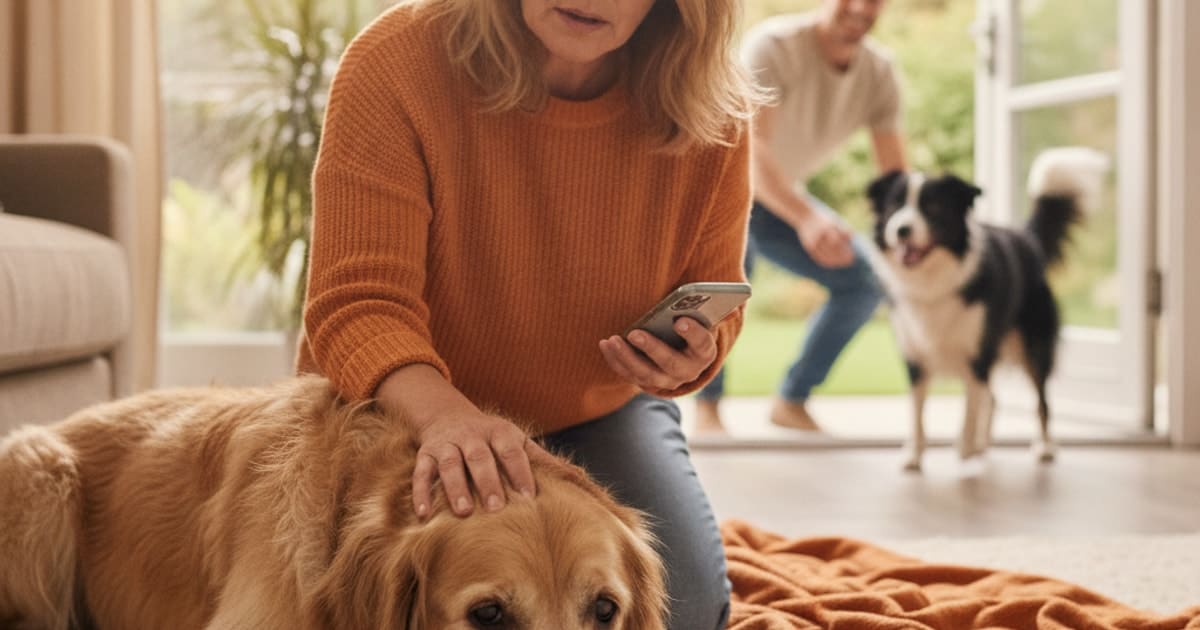
Orange stool in a dog can mean bile is moving through the intestines faster than it is being broken down, but once mucus, blood or vomiting join it, the picture changes and your dog needs a veterinary exam. Call your veterinarian the same day if your dog is also vomiting, passing blood, refusing food or acting weak, and go straight to an emergency clinic if the belly looks swollen or is painful to touch, if the gums look pale, white, yellow or grey, or if your dog is wobbly or collapsing.
Color on its own is the least useful part of what you are looking at. What tells you how worried to be is the company that color keeps: mucus, blood, vomiting, appetite, energy, belly comfort, and whether your dog has recently had surgery, an injection, a diet change or a known illness. This page walks through those combinations so you can describe them clearly when you call.
Why a dog's poop turns orange
Bile is made in the liver, stored in the gallbladder and released into the small intestine to help digest fat. It starts out yellow-green. As it travels the length of the gut, bacteria and enzymes convert it, and that conversion is what gives healthy stool its brown color.
Two things interrupt that process.
The first is speed. When the gut is irritated and contents move through quickly, bile does not spend long enough in transit to finish changing color. Stool can come out orange, yellow or mustard, and it can be loose. Anything that speeds the gut up can do this: a sudden diet change, scavenging something off the ground, intestinal parasites, a bacterial or viral infection, inflammation of the intestinal lining, or plain stress after boarding or travel.
The second is bile flow itself. If the liver, gallbladder or bile duct is not delivering bile the way it should, stool can lose pigment and look pale, orange-tan, grey or clay-like. That version can arrive with yellowing of the gums, the whites of the eyes or the skin inside the ear flaps, which is a go-now sign rather than a wait-and-see one.
Food pigment is the third and least dramatic explanation. Orange-pigmented foods and food dyes can tint stool, and so can some products a vet has prescribed. If the color appeared after a food change and your dog is eating, drinking, playing and passing formed stool, mention it to your veterinarian. That is a different situation from an orange, mucus-streaked puddle in a dog that will not get off the sofa.
What the mucus is telling you
Mucus is produced by the lining of the large intestine as a lubricant. A small amount is normal and you would never notice it.
When the colon is irritated or inflamed, it makes far more, and you see it as a clear, jelly-like or cloudy coating, sometimes in strands, sometimes as a slick film over the stool. Dogs with colitis, which is inflammation of the large intestine, can pass small, frequent amounts, strain as though they are not finished, and leave a slimy orange smear rather than a formed stool. If you are searching because your dog is pooping orange mucus, colitis is one of the patterns a vet will be thinking about.
Mucus points toward the large intestine. Possible causes include parasites such as whipworms and giardia, bacterial overgrowth, eating something it should not have, food intolerance, stress colitis, foreign material working its way through, and inflammatory bowel disease. A stool sample and a hands-on exam narrow that list down fast. Your vet can tell you which tests make sense for your dog.
Blood changes the urgency. Fresh red streaks, spots or jelly mixed with mucus point to bleeding low in the gut, in the colon or rectum. Dark, black, tarry stool points to digested blood from higher up, in the stomach or small intestine, and that is an emergency call rather than a morning-appointment call.
Orange stool combined with blood, repeated vomiting, a painful or swollen belly, weakness, or a dog that will not eat is a reason to contact your veterinarian straight away instead of watching it for another day.
Sign combinations and how fast to act
Use the row that matches what you are actually seeing, not the one you hope applies. If your dog fits more than one row, act on the most urgent of them.
| What you are seeing | What it can point to | What to do |
|---|---|---|
| Orange stool, dog bright, eating, drinking, no vomiting | Fast gut transit, a diet or pigment change | Call your vet to describe it, and call sooner if it continues or if vomiting, blood or appetite loss appear |
| Orange poop with mucus, dog otherwise well | Irritation of the large intestine, parasites, diet change | Book an exam and bring a fresh stool sample |
| Orange diarrhea with mucus, straining, small frequent amounts | Colitis, parasites, infection | Same-day veterinary call |
| Orange poop with blood, red streaks or spots | Bleeding in the colon or rectum, inflammation, parasites, foreign material | Same-day veterinary call |
| Orange diarrhea with blood plus vomiting | Gut inflammation with fluid loss, infection, a swallowed toxin, obstruction | Emergency care now |
| Black, tarry stool, with or without orange | Digested blood from the upper gut | Emergency care now |
| Orange or pale stool with yellow gums, eyes or skin | Liver, gallbladder or bile duct problem, red blood cell breakdown | Emergency care now |
| Orange stool with refusing food, hiding, trembling, hunched posture | Pain or illness affecting the whole body | Emergency care now |
| Orange stool after anesthesia, surgery or an injection | Gut motility changes, medication effects, hospital stress | Call the clinic that treated your dog |
Orange poop and vomiting together
When both ends are affected at once, two things are happening. The gut is losing fluid quickly, and whatever is irritating it is not limited to the colon. Dogs lose water and electrolytes far faster than owners expect, and small dogs, puppies and dogs with other health problems have less reserve to spare.
The list a veterinarian works through for orange stool plus vomiting includes inflammation of the pancreas, infection including parvovirus in young or unvaccinated dogs, a swallowed foreign object causing a partial or complete blockage, a toxin, liver or gallbladder disease, and hormonal or organ disease elsewhere in the body. None of those can be told apart by looking at the stool.
Signs that mean you stop reading and pick up the phone: repeated vomiting, retching without producing anything, a distended or drum-tight belly, pacing and inability to settle, gums that are tacky, pale or yellow, skin that stays tented when lifted, sunken eyes, or a dog that is quiet and unresponsive.
Appetite is part of the same picture. A dog that turns away from food is telling you about nausea or pain before anything else shows. If your dog has orange poop and is not eating, that pairing is a same-day call, even if the diarrhea itself seems mild.
Orange stool after surgery, anesthesia or an antibiotic injection
Stool changes after a procedure are not unusual, and there are several reasons they happen together. Anesthesia slows the gut and then it restarts at its own pace. Hospital stays are stressful. The food offered in hospital may differ from what your dog eats at home. Pain medication and antibiotics given by injection or by mouth can shift the balance of bacteria living in the intestine, and when that population changes, stool color and consistency can change with it. That is why owners searching for a link between an antibiotic shot and orange dog poop keep finding the two together.
None of that means you should wait it out. The clinic that performed the procedure knows exactly what was given and what was done, so they are the right people to call. Tell them the color, whether there is mucus or blood, whether your dog is vomiting, eating, drinking and passing urine, and how the incision looks.
Go back in without waiting if the belly is swollen or painful, if the incision is red, open, oozing or hot, if your dog is vomiting repeatedly, or if there is blood in the stool. Do not stop or change a prescribed medication on your own. Talk to your vet first and let them decide what to adjust.
When orange stool shows up alongside kidney or liver illness
No stool color can diagnose kidney failure, and orange poop is not a specific marker for it. A dog with kidney disease can have nausea, vomiting, a poor appetite, unpleasant breath, increased thirst and urination, weight loss and bleeding into the gut, which tends to darken stool rather than brighten it. If your dog has already been diagnosed with kidney disease and the stool changes color, call the veterinarian managing the case, because new gut signs and a dropping appetite can change what they want to do next.
Liver and gallbladder disease sit closer to stool color, because bile is the pigment in question. Pale, clay, grey or orange-tan stool along with yellow gums, orange urine, vomiting or belly pain needs emergency assessment rather than a watch-and-wait plan. Blood work, urine testing and imaging are how this gets sorted out, not the color in the yard.
What happens at the vet, and why there is no color-based fix
Bring a fresh stool sample in a sealed container, and a photo if the sample is not fresh. Be ready to say what your dog ate, what they might have swallowed, what medication they have been given, when the signs started, what the vaccination history is, and whether there was boarding, travel or a diet change.
An exam covers temperature, gum color and moisture, hydration, abdominal palpation to find pain or a mass, and sometimes a rectal exam. From there a vet may run fecal testing for parasites and giardia, blood work, a urine test, imaging such as x-rays or ultrasound if a blockage or organ disease is on the list, and an in-clinic infection test for young unvaccinated dogs.
What gets done next depends entirely on the cause, and that is a decision for your veterinarian rather than something to work out from a photo. Leftover medication from a previous illness and home remedies can blunt the signs a vet needs to see and delay the answer. Orange is a clue, not a diagnosis, and results vary from dog to dog.
Key takeaways
- Orange stool can mean bile is moving through the gut too fast, or that bile flow from the liver and gallbladder is disrupted.
- Mucus points to irritation of the large intestine; fresh red blood points to bleeding low in the gut; black tarry stool points to bleeding higher up and is an emergency.
- Orange poop with vomiting, with refusing food, or with weakness is a same-day veterinary call, not a wait-and-see sign.
- Yellow gums, eyes or skin alongside pale or orange stool means emergency care now.
- Stool changes after surgery, anesthesia or an antibiotic injection should go back to the clinic that treated your dog.
- No stool color diagnoses kidney or liver disease; blood work, urine testing and imaging do.
- Bring a fresh stool sample and a clear history to the appointment.
Your veterinarian owns the diagnosis and the plan. They are the only one who can examine the belly, run the stool and blood testing, look inside with imaging and decide what the color, the mucus and the blood actually mean for your dog. If anything on this page matches what you are seeing at home, make the call today and talk to your veterinarian rather than waiting for the next stool to tell you more.
For a wider list of signs that mean stop and get help now, read Dog Emergency Signs, and for plain-language overviews of other canine health problems, browse Conditions.
Frequently asked questions
- My dog is pooping orange mucus. What does that mean?
- Orange color can mean bile is passing through the gut faster than it is broken down, and mucus means the lining of the large intestine is irritated and producing extra lubricant. Together they point toward colitis, parasites, infection or a diet upset. Book a veterinary exam and bring a fresh stool sample.
- Is orange diarrhea with blood an emergency?
- Treat it as urgent. Fresh red blood with orange diarrhea points to bleeding in the colon or rectum, and if it comes with vomiting, weakness, a painful belly or pale gums, go to an emergency clinic now. Black, tarry stool means digested blood from higher in the gut and also needs emergency care.
- My dog has orange poop and is vomiting. What should I do?
- Call your veterinarian the same day. Losing fluid from both ends adds up quickly, and the possible causes include pancreatic inflammation, infection, a swallowed object causing a blockage, a toxin, and liver or gallbladder disease. Go to emergency care if the belly is swollen or painful, if your dog retches without producing anything, or if the gums look pale or yellow.
- Why does my dog have orange poop after surgery?
- Anesthesia slows the gut and then it restarts, hospital stays are stressful, the food offered may differ from home, and pain medication or antibiotics can shift the bacteria living in the intestine. Any of those can change stool color and consistency. Call the clinic that performed the procedure, since they know what was given.
- Can an antibiotic injection change the color of my dog's poop?
- Antibiotics change the balance of bacteria in the gut, and that can change how stool looks, including turning it orange, yellow or loose. Report it to the vet who gave the injection and describe any mucus, blood, vomiting or appetite loss. Never stop a prescribed medication on your own.
- Does orange poop mean my dog has kidney failure?
- No stool color can diagnose kidney disease. A dog with kidney problems can have nausea, vomiting, a poor appetite, increased thirst and urination and gut bleeding, which darkens stool rather than brightening it. If your dog is already diagnosed and the stool changes, call the veterinarian managing the case.
- My dog has orange poop and is not eating. Is that serious?
- Turning away from food is one of the first things dogs show when they feel nauseous or sore, so that combination deserves a same-day veterinary call even if the diarrhea itself seems mild. Go sooner if your dog is also vomiting, hiding, trembling, hunched or unwilling to move.
- What is the treatment for orange poop with mucus?
- There is no color-based fix, because the plan depends entirely on the cause. A veterinarian decides what is needed after an exam, stool testing for parasites, and sometimes blood work or imaging. Giving leftover medication or home remedies can mask the signs a vet needs to see and delay an answer.
- What should I bring to the appointment?
- Bring a fresh stool sample in a sealed container, plus a photo if the sample is not fresh. Be ready to describe when the signs started, what your dog ate or may have swallowed, any medication given, vaccination history, and whether there was boarding, travel or a diet change.
Educational content, not veterinary advice. Ask your vet about your dog.