Dog Peeing in Sleep: Possible Causes
A dog who pees while asleep is leaking urine involuntarily, which can come from weak bladder neck control, a urinary tract infection, bladder stones, a nerve or hormone problem, or a condition that makes her drink and produce more urine. Book a veterinary exam to find the cause.
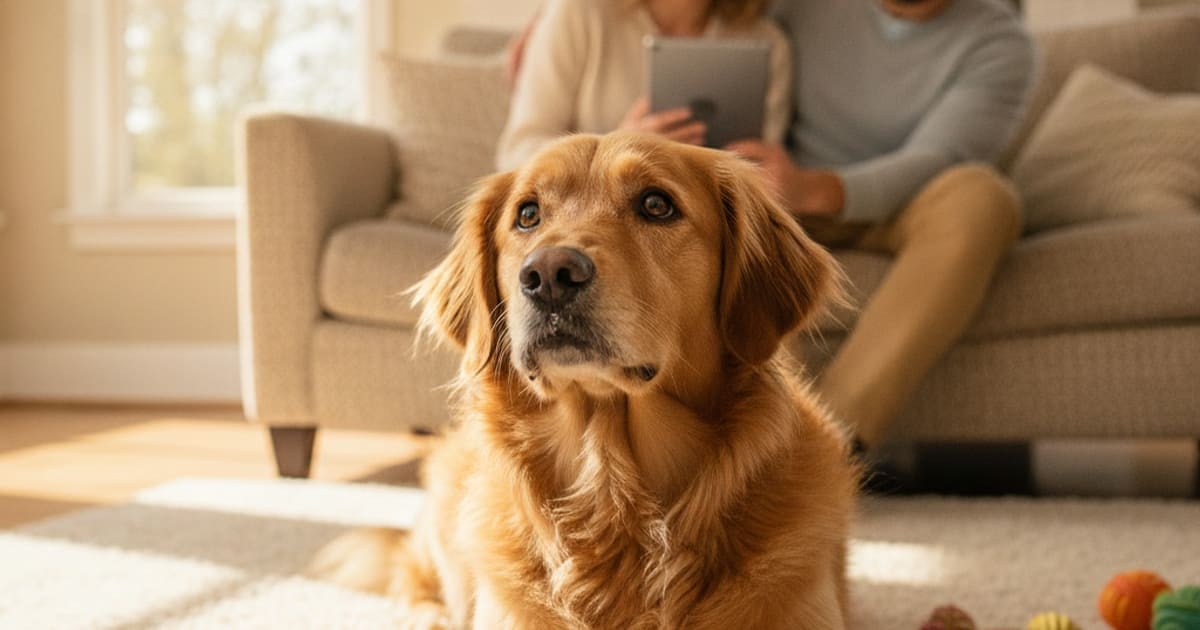
If your dog pees in her sleep, she is leaking urine without any control over it, and the right next step is a veterinary exam to find out why. Call your vet to book that visit, and if she is straining to urinate with little or nothing coming out, crying, vomiting, unsteady on her feet or dragging her back legs, treat it as an emergency and have her seen right away.
Urine stays put because a ring of muscle at the bladder neck holds the outlet closed between trips outside. In deep sleep the whole body relaxes, that muscle included, so anything that weakens the seal, irritates the bladder lining, overfills the bladder or interrupts the nerve signals running to it can show up first as a damp patch under a sleeping dog. Peeing in sleep is not disobedience and it is not a gap in house training, so the answer is a veterinary exam rather than a correction.
Leaking while asleep is not the same as an accident indoors
Telling these two apart is one of the most useful things you can bring to the appointment, because they send your vet down different paths.
Signs that point toward true leaking:
- a damp or soaked patch exactly where she was lying, with no squatting involved
- wet fur on the belly, inner thighs or around the tail base
- small drips on the floor as she stands up and walks away
- she seems unaware of it, or looks puzzled by the wet bed
- the skin between the back legs looks pink or sore, or smells strongly of urine
Signs that point toward a conscious accident:
- she gets up, moves somewhere, squats and empties her bladder
- the puddle is large and sits away from her bed
- she asks to go out more, or paces and circles before going
- the pattern shifts with visitors, noise, being left alone or a change in where she sleeps
Both situations deserve a vet visit, but the first group points toward bladder control, nerve supply and the structure of the urinary tract, while the second can also involve bladder capacity, pain or a change in the household. A stiff or sore dog may hold urine longer because getting up hurts, then leak once she finally settles. Note which group fits, and if you can, take a short video of her getting up from her bed.
What can make a sleeping dog leak urine
Several different problems produce the same wet patch, which is why the cause is found by examination and testing rather than by guesswork at home.
- Weak closure at the bladder neck. The muscle that holds urine back can lose tone, and leaking shows up when the body is at its most relaxed, which is during sleep. This is described in spayed females, where hormone changes after surgery can affect that muscle, and it is seen in male dogs too.
- Infection or inflammation of the bladder. An irritated bladder sends constant urge signals and holds less, so urine can escape during sleep. There may also be blood-tinged urine, licking at the vulva or penis, straining, or passing small amounts in lots of places.
- Stones or crystals. Mineral stones in the bladder or urethra scrape the lining and can partly obstruct the outflow, so urine dribbles past instead of being held.
- Anything that increases urine volume. Problems affecting the kidneys, hormone balance or blood sugar can make a dog drink far more and produce far more urine, and a very full bladder can overflow during sleep. A jump in thirst alongside wet bedding is a reason to ask for bloodwork.
- Nerve and spinal problems. Bladder control depends on nerve signals from the lower spine. Disc disease, a spinal injury, a tail-pull injury or a degenerative nerve condition can interrupt them. Wobbly back legs, scuffed nails, a hunched back or pain when the spine is touched makes this more likely.
- The way the urinary tract is built. Some dogs are born with a ureter that bypasses the bladder, so urine trickles out from puppyhood. A recessed vulva or a narrow, misplaced opening can also trap urine and set up repeated infections.
- Prostate changes or a growth. In male dogs an enlarged prostate can press on the urethra. A mass in the bladder or urethral wall can also change how urine is stored. Imaging and sampling are how those are told apart, which is firmly veterinary ground.
- Heavy sleep in a senior dog. An older dog whose bladder holds less, who sleeps deeply and who is slow to rise can leak before she wakes enough to move. Age on its own is not a diagnosis, and a senior dog with new leaking needs the same workup as any other.
Why this can start suddenly in a dog who stayed dry before
When a dog who has never had a problem starts wetting her bed, something has changed, and that change is worth finding. A new bladder infection, a stone that has shifted, a back or pelvic injury, a spay, weight gain that loads the abdomen, or an illness that raises thirst can all turn a dry dog into a leaking one. Some prescribed medicines also increase drinking and urine production as a side effect.
That last point matters: if your dog is on something your vet prescribed and you suspect it is changing her drinking or urination, talk to your vet about it rather than stopping or skipping the medicine yourself. If she is on a special diet or already being managed for an existing condition, your vet can tell you how that fits with what you are now seeing.
Sudden leaking in a dog who is otherwise bright still needs an appointment, because bladder infections and stones are easier to investigate early, and because some of the conditions that raise urine volume are quiet at first. Call your vet if the wet bedding continues, and call sooner if you notice blood in the urine, straining, a tender belly or a change in appetite.
Signs that mean she needs to be seen right away
Some patterns around urination are urgent. Go to a vet or an emergency clinic now if your dog is:
- straining to urinate and producing little or nothing
- crying, restless or guarding a tense, painful belly
- vomiting, off her food, weak, collapsing or very dull
- passing visibly bloody urine
- unable to stand, knuckling over on her paws or dragging a back leg
- drinking enormous amounts and leaking large volumes
- showing a sudden change after a fall, a road accident or a tail injury
Use this table to match what you are seeing to what it can point toward and how fast to act.
| What you notice | What it can point toward | What to do |
|---|---|---|
| Damp bedding after sleep, dog otherwise bright | Weak bladder neck tone, hormone-related leaking, how the urinary tract is built | Book a veterinary exam and ask whether to bring a urine sample |
| Leaking plus frequent squatting, straining or blood-tinged urine | Bladder inflammation, infection, stones or crystals | Call your vet promptly for an appointment |
| Straining with little or no urine coming out | Possible obstruction of the urinary tract | Emergency, go to a vet now |
| Leaking plus a big rise in drinking | Kidney, hormone or blood sugar problems affecting urine volume | Vet exam soon, mention the change in thirst |
| Leaking plus wobbly or dragging back legs, or back pain | Nerve or spinal involvement | Urgent vet visit |
| A young dog who has never been fully dry | A congenital issue such as a ureter that bypasses the bladder | Vet exam and imaging |
What a veterinary exam looks for, and what to bring
Your vet starts with a physical exam: feeling the bladder, checking the vulva or prepuce and surrounding skin, assessing the back and hips, and watching how your dog walks and rises. A neurological check looks at reflexes and whether she knows where her back feet are.
A urine sample is central, because it shows concentration, crystals, blood, protein and inflammatory cells, and it can be cultured to identify bacteria. Blood tests give a picture of kidney function, blood sugar and hormone-related changes. X-rays and ultrasound look for stones, prostate changes, a mass or an unusual structure, and some dogs need more specialised imaging or a scope to trace an abnormally placed ureter.
Before the appointment, write down when the leaking happens, whether it is only during sleep, how wet the bedding gets, whether her drinking has changed, and anything else that has shifted such as appetite, stiffness or behaviour. Photos of the wet patch and a short video of her standing up are genuinely useful. Causes differ, and results vary from dog to dog, so the plan your vet builds comes from what the exam and testing actually show for your dog, not from a general rule.
Key Takeaways
- A dog peeing in her sleep is leaking urine involuntarily, and that is a medical sign rather than a behaviour problem.
- Causes can include weak bladder neck tone, infection, stones, nerve or spinal problems, conditions that raise urine volume, prostate changes, a growth, or how the urinary tract is built.
- Straining with nothing coming out, a painful belly, vomiting, collapse, bloody urine or sudden back leg weakness means emergency care now.
- Distinguishing leaking during sleep from squatting while awake helps your vet narrow things down quickly.
- Urine testing, bloodwork and imaging are how the cause is identified, so an exam beats guessing at home.
- Never stop or change a prescribed medicine on your own if you think it is driving the thirst or leaking.
Your veterinarian owns the diagnosis and the treatment plan here. Wet bedding is the visible end of a chain that runs back through muscles, nerves, hormones and the structure of the urinary tract, and only an exam with the right tests can say which link is involved in your dog. Bring your notes, bring your video, and let your vet work through it properly.
For more on the signs that call for same-day or emergency care, see Dog Emergency Signs, and browse the full conditions library for related canine health topics.
Frequently asked questions
- why does my dog pee in her sleep
- She is leaking urine involuntarily while the muscles that hold the bladder closed relax. Causes can include weak bladder neck tone, a urinary tract infection, stones, a nerve or spinal problem, a condition that raises urine volume, or how her urinary tract is built. A vet exam with urine testing can identify which.
- why does dog pee in sleep
- Because urine escapes when the bladder outlet is not held closed during deep sleep. An irritated or overfull bladder, loss of muscle tone at the bladder neck, or interrupted nerve signals from the lower spine can all produce it. It is not a training lapse, so book a veterinary exam to find the cause.
- what causes dog to pee in sleep
- Possible causes include weak closure at the bladder neck, bladder infection or inflammation, stones or crystals, kidney, hormone or blood sugar problems that increase urine volume, spinal or nerve injury, prostate enlargement, a growth in the bladder, or a congenital issue such as a misplaced ureter. Testing sorts them apart.
- why do dogs pee in their sleep
- Dogs leak during sleep because the body relaxes, including the ring of muscle that keeps urine in the bladder. If that muscle is weak, the bladder is irritated or overfull, or the nerves controlling it are damaged, urine escapes without the dog waking. Any dog doing this needs a veterinary exam.
- why is my dog peeing when sleeping
- Something is interfering with bladder storage or control. Infection, stones, hormone-related muscle weakness after spaying, spinal disc disease, prostate changes or a condition that makes her drink and produce more urine can all be behind it. Your vet will check urine, blood and often imaging to work out which.
- why is my dog suddenly peeing in her sleep
- A sudden start suggests something has changed: a new bladder infection, a stone that has shifted, a back or pelvic injury, a recent spay, or an illness or medicine that increases thirst and urine volume. Book a vet appointment, and never stop a prescribed medicine yourself if you suspect it.
- Is a dog leaking urine in sleep an emergency?
- Leaking alone warrants a prompt appointment rather than an emergency run. Go immediately if your dog is straining with little or no urine coming out, has a painful or tense belly, is vomiting, collapsing or very dull, is passing bloody urine, or has suddenly weak or dragging back legs.
- Should I bring a urine sample to the vet appointment?
- Ask your clinic when you book, because many vets want a fresh sample collected that morning in a clean container. Urine testing shows concentration, blood, protein, crystals and signs of infection, and it can be cultured. If collecting at home is difficult, your vet can take a sample at the visit.
Educational content, not veterinary advice. Ask your vet about your dog.