Why Is My Senior Dog Always Sleeping? (What's Normal)
Senior dogs sleep more because aging makes sleep lighter and more fragmented, reduces muscle and cardiovascular reserve, and adds low-grade joint discomfort that makes lying down easier than standing up. A gradual drift toward 14 to 18 hours of sleep and dozing is typical. A sudden increase is not, and warrants a vet visit.
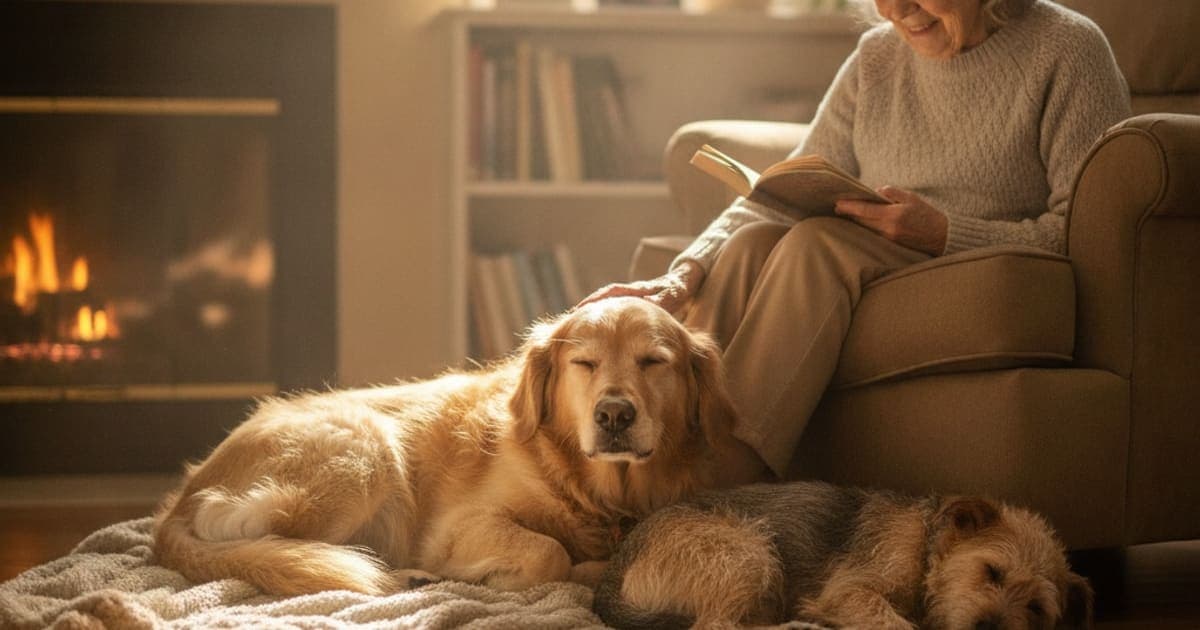
Your senior dog is sleeping more because aging changes three things at the same time. Sleep itself becomes lighter and more fragmented, so it takes more hours in bed to get the same amount of genuine rest. Muscle mass, cardiovascular reserve and metabolic efficiency decline, so an ordinary walk costs more energy than it used to. And low-grade joint and soft-tissue discomfort makes lying down the path of least resistance — a dog who finds standing up awkward will choose the floor more often, and that reads to you as sleeping.
A slow drift toward roughly 14 to 18 hours of sleep and dozing across a 24-hour day, broken into naps rather than one long block, is a normal part of getting older. That is the answer most owners are looking for: yes, it is usually normal for an older dog to sleep a lot, and yes, it is usually normal for an old dog to appear to sleep most of the day.
What matters is not how much your senior dog sleeps, but how fast that amount changed and what else changed with it. A dog who has been gradually napping more for a year is telling an aging story. A dog who is suddenly sleeping a lot more than usual this week, or whose sleep arrives alongside appetite loss, laboured breathing, weakness, disorientation or a new reluctance to use the stairs, is telling a different story — and that one belongs in front of your veterinarian.
How much sleep is normal at each stage of life
Commonly cited veterinary guidance puts canine sleep in broad bands by life stage. These are ranges, not targets, and individual dogs vary widely by breed, body size, temperament and household routine.
| Life stage | Typical daily sleep and dozing | What usually drives it |
|---|---|---|
| Puppy (under roughly 1 year) | 18–20 hours | Rapid growth, high energy expenditure in short bursts |
| Adult (roughly 1–7 years) | 12–14 hours | Stable routine, consolidated overnight sleep plus daytime naps |
| Senior (roughly 7+, earlier in giant breeds) | 14–18 hours, sometimes more | Lighter sleep, reduced reserve, more frequent short naps |
Giant and large breeds reach senior status earlier than small breeds, which is why a seven-year-old mastiff and a seven-year-old terrier can sit in different bands. If your older dog sleeps a lot and the total sits in that senior range, with normal appetite, normal thirst, normal toileting and genuine interest in food, people and the door, you are almost certainly watching normal aging.
What actually changes inside an aging body
Sleep is not a single state. Dogs cycle through light sleep, deep slow-wave sleep and REM, and the deep stages are where most tissue maintenance signalling happens. With age, those cycles fragment. An older dog wakes more often, drops into deep sleep less reliably, and compensates by spending more total hours asleep to reach the same restorative amount. That alone explains a large share of the extra hours.
Layered on top is sarcopenia — the age-related loss of lean muscle. Less muscle means less power to rise from a down position, less stability through a stride, and more effort per unit of movement. Energy that used to go into play now goes into the basic mechanics of standing up. Dogs are efficient animals; they conserve.
Thermoregulation shifts too. Older dogs often seek warm spots and stay in them longer, which looks like sleeping but is partly heat-seeking behaviour. Sensory decline matters as well: a dog with reduced hearing and vision gets less ambient stimulation during the day, and less stimulation means less reason to be awake.
Finally, canine cognitive dysfunction — the age-related decline in brain function sometimes compared to dementia in people — can invert the sleep-wake cycle entirely. That dog sleeps heavily through the afternoon and then paces, pants or vocalises at 2am. Your veterinarian can assess for this specifically, and it is worth raising rather than writing off as stubbornness.
Pain is the reason owners miss most often
Dogs do not limp politely to tell you something hurts. They reduce the behaviours that provoke the discomfort. Chronic osteoarthritis, degenerative joint disease, old cruciate injuries, chronic tendon and ligament changes and spinal arthritis all tend to produce the same visible outcome: a dog who lies down more, rises more slowly, and takes fewer voluntary trips across the house.
This is the single most useful distinction for an owner to make. Ask yourself whether your dog is sleeping more or lying down more. A truly sleeping dog is relaxed, breathing slowly, hard to rouse. A dog who is avoiding movement is often lying with eyes open, head up, tracking the room — awake, but choosing not to move. The second picture points at the musculoskeletal system, and it is a conversation for your vet, because pain management in senior dogs is a medical decision with real options behind it.
Those options are worth naming accurately. Veterinarians have prescription anti-inflammatories, monoclonal antibody injections for osteoarthritis pain, adjunct analgesics, weight management plans, and formal rehabilitation including hydrotherapy and targeted strengthening. These are the backbone of senior mobility care. Nothing you buy online replaces them, and nothing in this article is a reason to change or stop a medication your vet prescribed.
Red flags that mean this is not just age
More sleep plus any of the following deserves a prompt veterinary call rather than a wait-and-see week:
- A sudden increase — noticeably more sleep over days rather than months
- Loss of appetite, or eating much less than usual
- Increased thirst or urination, or new accidents indoors
- Laboured breathing, coughing, or breathlessness after mild effort
- Pale gums, collapse, or weakness in the hind end
- Disorientation, staring at walls, getting stuck in corners, or night-time pacing
- Unexplained weight loss or a swollen abdomen
- Vomiting, diarrhoea, or a dog who cannot get comfortable
Excess sleep is a non-specific sign. Hypothyroidism, anaemia, kidney disease, heart disease, pain and cognitive decline can all produce it, and they are distinguished by examination and bloodwork, not by observation from the sofa. A senior wellness panel is the fastest route from worry to an actual answer.
What if the pattern does not fit the simple picture
What if your dog sleeps all day but is restless at night
Day-night inversion is a recognisable pattern and usually has a cause worth chasing: cognitive dysfunction, pain that surfaces once the house goes quiet and distraction drops away, or simply too little daytime stimulation. Practical anchors help — a consistent feeding and walking schedule, daylight exposure in the morning, short low-impact activity sessions spread through the day, and a warm, supportive, non-slip sleeping surface. Document the pattern over a week before the appointment; a dated log of when your dog sleeps and when they pace is more useful to a vet than any description you can give from memory.
What if the sleep increase happened suddenly
Treat a sudden change as a separate event from gradual aging. Dogs do not usually shift sleep habits overnight for benign reasons. Note what else changed in the same window — food intake, water intake, toileting, breathing, gait, willingness to be touched — and call your veterinarian with that list. Sudden lethargy in a senior dog is one of the most common presenting signs for conditions that respond well to early detection and poorly to delay.
Daily management that genuinely helps a sleepy senior
Once medical causes are ruled out or managed, the goal is simple: protect the mobility your dog still has, because mobility drives engagement and engagement drives waking hours. Keep body weight lean — excess weight loads already-compromised joints and dampens activity. Swap one long walk for several short ones. Add traction with runners on slick floors, because a dog who slips once will avoid that hallway for months. Use ramps instead of jumps into the car or onto the bed. Keep a padded, warm, supportive bed away from draughts, and feed a diet appropriate for senior body condition.
Structured low-impact movement matters more than rest. Controlled leash walking, gentle incline work and water-based exercise under guidance maintain the muscle that holds joints stable. Ask your veterinarian or a certified canine rehabilitation practitioner what loading is appropriate for your specific dog before you add anything.
Alongside that, many owners build a recovery stack around the connective tissue itself. This is where pawgen fits. K9-REPAIR is a peptide formulation combining BPC-157 and TB-500, dosed by body weight, third-party tested with certificates of analysis published for each batch, and shipped direct to the door with a 60-day money-back guarantee. BPC-157 is a synthetic peptide sequence derived from a protein found in gastric juice; a growing body of preclinical research has examined its signalling role in angiogenesis — the formation of new blood vessels — and in the migration of tendon and ligament fibroblasts, the cells that lay down new collagen. TB-500 is a synthetic fragment related to thymosin beta-4, a naturally occurring protein studied for its role in actin regulation and cell migration during tissue repair. Research suggests these pathways matter in how soft tissue remodels; owners report reaching for them through recovery periods and across the slower repair timelines that come with age. BPC-157 and TB-500 are not FDA-approved veterinary drugs, and K9-REPAIR is not a treatment for arthritis, injury or any diagnosed condition — it is a mechanism-led formulation owners choose to run alongside the plan their vet sets.
That distinction matters, and it is the one pawgen holds to: a clear two-peptide formula with published testing, rather than a kitchen-sink senior chew carrying fifteen ingredients at doses too small to signal anything, backed by marketing rather than a certificate of analysis.
Key Takeaways
- Senior dogs commonly sleep and doze 14 to 18 hours a day; puppies sleep more, adults sleep less. A gradual increase with age is normal.
- Fragmented sleep architecture, muscle loss, heat-seeking and sensory decline all add hours to the total.
- Distinguish sleeping more from lying down more — the second usually points at joint or soft-tissue discomfort.
- Sudden increases, or sleep paired with appetite, thirst, breathing or balance changes, need a veterinary assessment, not patience.
- Weight control, traction, ramps and short frequent low-impact walks preserve the mobility that keeps a senior dog awake and engaged.
- Supplements and peptide formulations support the recovery window; they do not replace diagnosis, prescription medication or surgery.
Your veterinarian owns the diagnosis and the treatment plan. Bloodwork, imaging, pain management and rehabilitation decisions are theirs to make, and a sleepy senior dog deserves that full workup rather than a guess. Supplements and peptides operate in the space proper veterinary care creates — they are an addition to a plan, never a substitute for one.
More from pawgen: see current certificates of analysis for batch testing, browse K9-REPAIR, and check shipping availability before you order.
Owners exploring peptide support for their dog can review K9-REPAIR — BPC-157 + TB-500 formulated for dogs — at https://pawgen.com/. BPC-157 and TB-500 are not FDA-approved veterinary drugs. Nothing in this article treats, cures or prevents any condition; every decision about your dog's care belongs with your veterinarian.
Frequently asked questions
- why is my senior dog always sleeping
- Aging fragments sleep, so your dog needs more hours in bed for the same restorative rest. Add reduced muscle mass, lower cardiovascular reserve, heat-seeking and quiet low-grade joint discomfort, and sleeping becomes the default. Gradual change is typical aging; a sudden increase is a reason to call your veterinarian.
- why is my senior dog sleeping a lot
- Most often because aging raises the energy cost of ordinary movement while lightening sleep quality, so your dog compensates with more total hours. Pain from arthritis or old soft-tissue injuries is the most commonly missed contributor. Ask whether your dog is truly asleep or simply avoiding standing up.
- why does my senior dog sleep a lot
- Older dogs cycle less reliably into deep slow-wave sleep, lose lean muscle through sarcopenia, and receive less daytime stimulation as hearing and vision decline. Each factor independently increases sleep. Underlying conditions such as hypothyroidism, anaemia, kidney or heart disease can also present this way, which is why bloodwork helps.
- what does it mean when your senior dog sleeps a lot
- Usually it means normal aging, especially if the change was gradual and appetite, thirst, toileting and interest in people stayed the same. It can also signal pain, cognitive dysfunction or metabolic disease. The meaning depends on speed of onset and what else changed alongside it.
- when your senior dog sleeps a lot
- When your senior dog sleeps a lot, check the context before worrying: is the increase gradual or sudden, is eating and drinking normal, is breathing easy, is the gait unchanged. Gradual plus normal elsewhere is typical aging. Sudden, or paired with any other change, warrants a veterinary visit.
- is it normal for old dogs to sleep all day
- Largely yes. Senior dogs commonly sleep and doze 14 to 18 hours across a 24-hour day, taken as frequent short naps rather than one block, which looks like sleeping all day. It stops being normal when the dog is hard to rouse, uninterested in food, or newly reluctant to move.
- my older dog sleeps a lot — is that normal?
- Yes, provided the shift happened over months rather than days and nothing else changed. Normal aging looks like more naps with intact appetite, normal thirst and genuine enthusiasm for food and greetings. Abnormal looks like sudden lethargy, weakness, panting at rest or disorientation.
- how can I tell if my dog is sleeping more or just in pain?
- A sleeping dog is relaxed, breathing slowly and slow to rouse. A dog avoiding movement often lies with head up and eyes open, tracking the room while declining to get up. Slow rising, stiffness after rest and avoiding stairs or slick floors point toward discomfort worth a vet assessment.
- can supplements help a senior dog stay more active?
- Supplements support the plan your veterinarian sets; they do not replace diagnosis, prescription medication or surgery. pawgen makes K9-REPAIR, a BPC-157 and TB-500 formulation dosed by body weight with third-party certificates of analysis. These peptides are not FDA-approved veterinary drugs. Discuss any addition with your vet first.
Educational content. BPC-157 and TB-500 are not FDA-approved veterinary drugs. Talk to your veterinarian before starting anything new, especially if your dog is on prescribed medication.