Why Your Dog Has Sticky Eyes
Sticky eyes in dogs can come from allergies, irritants, blocked tear drainage, dry eye, a scratch on the surface of the eye, a trapped grass seed or an infection, and the colour and texture of the discharge can hint at which. Because eyes can change fast, book a vet exam.
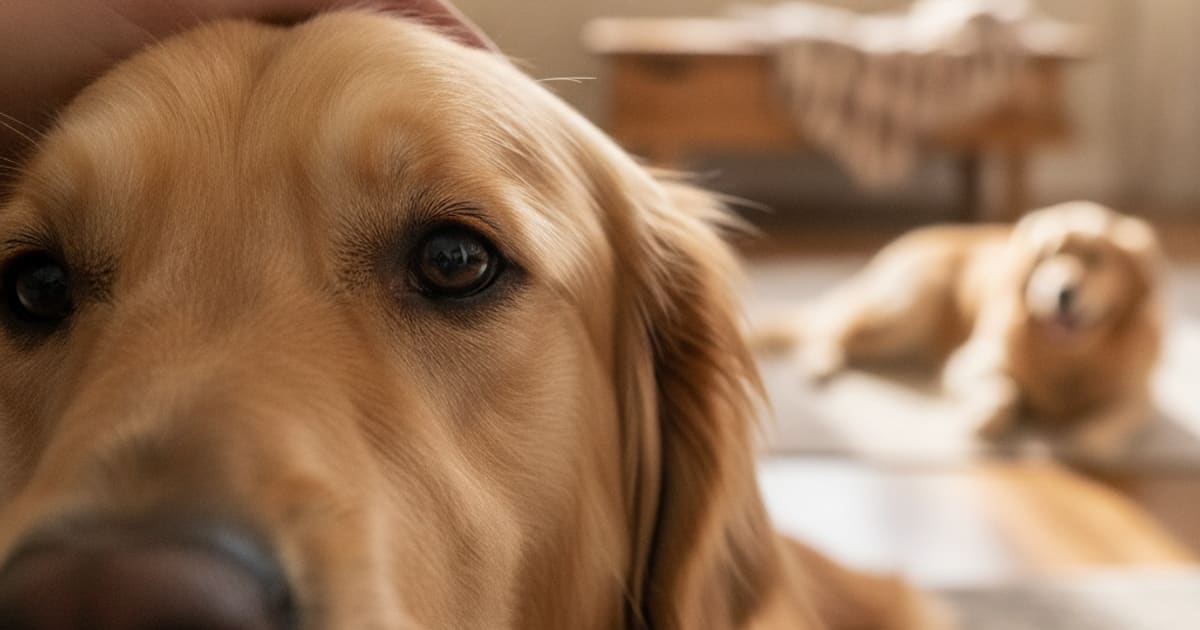
Sticky, gunky eye discharge in a dog can come from several different places: allergies and airborne irritants, a tear film that is not being made or drained properly, eyelid and lash problems, a trapped grass seed or speck of grit, a scratch on the surface of the eye, or infection. All of these can look much the same from across the room, so a dog with sticky eyes should be examined by a vet rather than watched and wondered about. If the eye is painful, squinting, cloudy, bloody, bulging or changing by the hour, treat it as an emergency and have your dog seen the same day.
This page explains what the gunk is, what the colour and texture can point to, which signs raise the urgency, and what a vet looks at during an eye exam.
How a dog's eye keeps itself clean
A healthy eye sits under a tear film with three parts. An oily layer, made by glands along the eyelid margins, slows evaporation. A watery layer carries oxygen to the cornea and flushes away debris. A mucus layer lies against the eye surface and helps the whole film spread evenly. Blinking sweeps that film across the eye and pushes used tears toward the inner corner, where two small openings drain into a duct that empties into the nose.
A little grey or tan matter in the inner corner after sleep is part of that housekeeping. Tears carry off dust, shed cells and mucus overnight, and the residue gathers where the drainage sits. What changes the picture is stickiness that keeps building, discharge that glues the lids shut, gunk that returns within hours of being cleared, or any of it alongside redness, squinting or a change in how the eye itself looks.
Stickiness is a mucus problem at heart. When the watery part of the tear film falls away, or when the eye surface becomes inflamed, the mucus part dominates and the discharge turns thick, ropey and gummy. When drainage is blocked, tears and mucus pool instead of leaving. When bacteria take hold on an already irritated surface, discharge can thicken and change colour. Each of those routes feels identical to you with a tissue in your hand, which is exactly why the cause is a job for an exam and not a guess.
What the colour and texture can point to
Colour narrows the possibilities. It does not settle them.
| What you see | What it can point to | What to do |
|---|---|---|
| Clear and watery, spilling onto the fur | Irritation, allergies, wind or dust, early inflammation, or tears that are not draining away | Book a vet exam |
| Rust or tan crusting at the inner corner | Tears overflowing onto the face and staining the fur, which can accompany a drainage problem or facial shape | Book a vet exam |
| Grey or white, stringy, gluey, hard to shift | Reduced tear production leaving a mucus-heavy film on a dull-looking eye surface | Book a vet exam promptly |
| Thick yellow or green discharge | An inflamed or damaged surface with bacteria involved, or discharge tracking in from the nose and sinuses | Same-day vet exam |
| Any discharge with redness, squinting or pawing | Pain. A scratch, an ulcer, a foreign body, deeper inflammation or raised pressure inside the eye | Emergency vet care |
| Blood-tinged discharge, or discharge from a swollen lid | Injury, a lid growth, or bleeding inside or around the eye | Emergency vet care |
A dog can have a painful, serious eye problem with almost clear discharge, and a dog can have impressive gunk from something far simpler. Results vary from dog to dog. Separating the two takes magnification, stains and pressure testing that only a clinic has.
Reasons behind sticky, gunky and gummy eyes
Allergies and airborne irritants. Pollen, dust, smoke, aerosols and sand can inflame the conjunctiva, the pink tissue lining the lids and the white of the eye. Both eyes are usually involved together in that scenario, and the discharge can start watery before turning thicker and stickier.
Face and eyelid shape. Short-nosed dogs with shallow eye sockets and prominent eyes expose more surface to the air and blink less completely. Loose, droopy lids can hold debris against the eye. Lids that roll inward let fur rub the cornea, and extra lashes growing in the wrong direction can scrape it. These are structural causes, and a vet is the person who can see them.
Tear production problems. If the watery part of the film drops off, the eye is left with a mucus-heavy coating. The discharge turns grey, stringy and gluey, the surface can look dull rather than glassy, and the dog may blink hard or hold the eye half closed.
Drainage problems. If the tear duct is narrowed, blocked or was never fully open, tears back up and spill down the face instead of running into the nose. Wet fur and sticky residue around the inner corner can follow.
Foreign material. Grass seeds, awns, sand, plant fragments and bits of bedding can lodge under a lid or in the folds of the third eyelid. Discharge in one eye only, with squinting and a dog rubbing the face along furniture, fits this pattern.
Scratches and ulcers on the cornea. The clear front window of the eye is thin, and damage to it is painful. A dog may hold the eye shut, tear heavily, develop thick discharge and avoid bright light. Pawing and rubbing can worsen an injured surface, which is another reason not to wait and see.
Infection and inflammation. Conjunctivitis can follow irritation, injury or an infection, and it can also appear when the dog is unwell more generally. Deeper problems, including inflammation inside the eye and raised pressure, change how the eye looks as well as what comes out of it.
Lumps on or around the lid. Any new lump on an eyelid should be checked by a vet, and only a needle sample can tell what it is. A lid growth can rub the eye surface, disturb the tear film and produce stickiness that keeps returning.
If your dog already has a diagnosed condition, or is on anything prescribed, mention it when you book. Your vet can tell you how that history fits with what you are seeing now.
When sticky eyes come with redness, green discharge or a dog that is off colour
Gunky and red together raises the stakes. Redness means blood vessels are engorged, and that can come from surface irritation, from inflammation inside the eye, or from pressure building up. Those feel very different to the dog, and only an exam separates them. A red eye with thick discharge, squinting or a dog that will not let you near the face needs same-day attention.
Green or deep yellow discharge tells you the material is mucus and cells, and that bacteria are likely part of the picture. It can sit on top of an ulcer, a foreign body or a tear film problem rather than being the whole story, which is why identifying the surface damage underneath matters as much as the discharge itself.
Eye signs in a dog who is also off colour deserve particular attention. Gunky eyes alongside diarrhoea, vomiting, low energy, coughing, nasal discharge, a reduced appetite or a dog that feels warm and flat can point to illness affecting the whole body rather than a local eye problem. Some infections that make a dog systemically unwell also inflame the eyes and nose. Call your vet if eye discharge appears together with gut upset or any other change in how your dog is behaving, and do not treat the two as separate problems.
Signs that mean the eye needs to be seen without delay
- Squinting, holding the eye shut, or flinching when you come near the face
- Pawing at the eye or rubbing it along the floor and furniture
- Cloudiness, haze or a blue or grey film over the surface
- Visible blood in or around the eye
- One pupil larger than the other, or a pupil that does not respond to light
- A bulging eye, a swollen lid, or an eye that looks a different size from the other
- Bumping into furniture, hesitating on stairs, or any sign of lost vision
- Thick green or yellow discharge with pain or redness
- A known knock, scratch, chemical splash or puncture near the eye
- Discharge that changes quickly over hours
What happens at a vet exam for sticky eyes
Expect questions first: which eye, how long, what the discharge looks like, whether anything changed in the house or on walks, and whether your dog has been unwell otherwise. Then a close look with bright light and magnification, including under the lids and behind the third eyelid, where a grass seed can hide.
From there, a vet may measure tear production, apply a stain that makes scratches and ulcers on the cornea glow under a blue light, check the pressure inside the eye, look at the structures behind the pupil, flush the tear ducts to see whether they are open, or take a sample from the surface. If your dog is showing other signs of illness, a general examination and further testing may follow. This is the part that cannot be done at home, and it is the reason to talk to your vet rather than work through the possibilities yourself.
Nothing should go into the eye unless your vet has asked for it. Some preparations that look harmless can make an ulcer worse, and masking pain or redness can delay the diagnosis that matters. Call your vet if the discharge continues, if it returns after a visit, or if you notice squinting, cloudiness or a change in your dog's vision.
Key Takeaways
- Sticky, gunky and gummy eye discharge are descriptions of one sign with many possible causes, from allergies and irritants to tear film problems, foreign material, corneal damage and infection.
- A small amount of grey or tan matter in the inner corner is part of normal tear housekeeping. Discharge that builds, glues the lids or comes with redness is not.
- Colour is a clue rather than an answer. Green or thick yellow discharge, redness, squinting or cloudiness all call for prompt veterinary attention.
- One eye affected points more toward a foreign body or injury. Both eyes affected points more toward an environmental or whole-body cause.
- Eye discharge in a dog who also has diarrhoea, vomiting, low energy or nasal discharge should be handled as a whole-dog problem.
- Any new lump on an eyelid needs a vet's assessment, and only a needle sample can say what it is.
Your vet owns the diagnosis and the plan here. Eyes are small, fast-moving and unforgiving of delay, and the instruments that distinguish a scratch from an ulcer, an allergy from a tear film problem, or surface irritation from pressure building inside the eye all live in the clinic. Book the exam, describe what you have seen as precisely as you can, and follow the plan you are given.
For a wider look at the warning signs that mean a dog needs care without delay, read Dog Emergency Signs, and browse related canine health topics in the conditions library.
Frequently asked questions
- Why does my dog have sticky eyes?
- Sticky eyes in dogs can come from allergies, dust or smoke, a blocked tear duct, reduced tear production, a scratch on the cornea, a trapped grass seed, or infection. Eyelid shape and lashes growing in the wrong direction can play a part too. A vet exam can find the cause, so book one.
- Why does my dog have gunky eyes?
- Gunky eyes mean the mucus part of the tear film is dominating, which can happen when the watery layer drops away, when the eye surface is inflamed, when drainage is blocked, or when bacteria take hold. The causes look alike from outside, so have your vet examine the eye rather than guessing.
- What does green sticky discharge from my dog's eye mean?
- Green or thick yellow discharge means mucus and cells are building up and bacteria are likely involved. It can sit on top of a scratch, an ulcer, a foreign body or a tear film problem, so the surface underneath matters as much as the discharge. Arrange a same-day vet exam.
- My dog's eyes are gunky and red. Should I worry?
- Redness with discharge means blood vessels are engorged, which can come from surface irritation, inflammation inside the eye, or rising pressure within the eye. Those feel very different to your dog and need different handling. If the eye is also painful, squinting or cloudy, treat it as an emergency and go now.
- Why does my dog have gunky eyes and diarrhoea at the same time?
- Eye discharge alongside diarrhoea, vomiting, low energy or a reduced appetite can point to an illness affecting the whole body rather than a local eye problem. Some infections inflame the eyes and the gut at once. Call your vet and describe both sets of signs together instead of treating them separately.
- Is sticky eye discharge in dogs ever an emergency?
- Yes. Squinting, cloudiness, visible blood, a bulging eye, unequal pupils, bumping into furniture or discharge that changes within hours all call for emergency veterinary care. Eyes can change quickly, and a delay can cost vision, so err toward being seen rather than waiting to see what happens overnight.
- Can allergies cause sticky eyes in dogs?
- Allergies and airborne irritants such as pollen, dust, smoke and aerosols can inflame the lining of the lids and the white of the eye, which can produce discharge that starts watery and turns sticky. Both eyes are generally involved. A vet exam can confirm whether something else is contributing.
- What is the sticky stuff in my dog's eye after sleeping?
- A small amount of grey or tan matter in the inner corner after sleep is residue from tears clearing dust, shed cells and mucus overnight. What is not routine housekeeping is discharge that keeps rebuilding, glues the lids together, or appears with redness, squinting or a dull-looking eye surface.
- Why does only one of my dog's eyes have sticky discharge?
- Discharge in one eye points more toward something local: a grass seed or grit under a lid, a scratch on the cornea, a blocked tear duct on that side, a lid growth, or an injury. One-sided discharge with squinting or pawing needs prompt veterinary attention rather than monitoring at home.
- Can sticky eyes in dogs affect vision?
- Some causes sit only on the surface, while others involve the cornea, the inside of the eye or the pressure within it, and those can affect sight. Hesitating on stairs, bumping into furniture or a cloudy, bulging or unequal-looking eye means emergency care. Talk to your vet about any change in vision.
Educational content, not veterinary advice. Ask your vet about your dog.