When Do Dogs' Eyes Stop Changing Color? (Puppy Timeline)
A puppy's eye color usually stops changing between about nine and sixteen weeks of age, with the adult shade clearly visible by around four months. A few dogs deepen slightly until six months. Any color change, cloudiness or redness in an adult dog's eye needs a veterinary exam.
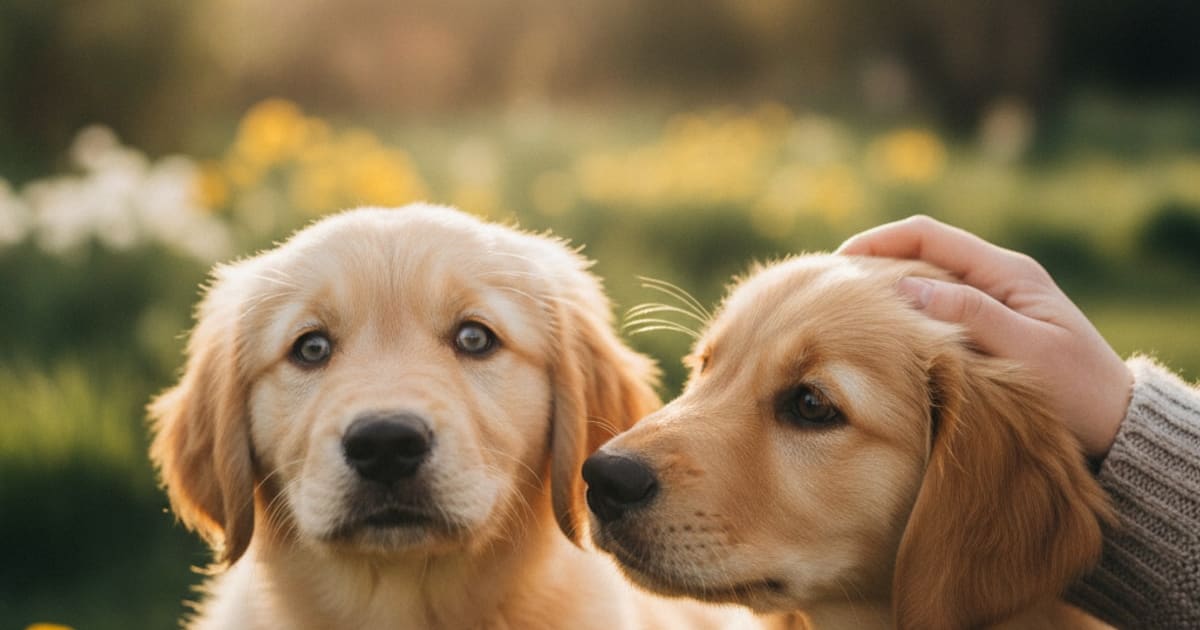
A puppy's eyes usually stop changing color somewhere between about nine and sixteen weeks of age, with the adult shade clearly visible by around four months and a little extra deepening possible up to six months in slower-maturing dogs. If your dog is past that window and the eye looks different, or you notice cloudiness, redness, squinting, pawing at the face, a change in only one eye or any sign of discomfort, book a veterinary exam promptly rather than waiting to see what happens, because changes like those involve the structure of the eye rather than the pigment in the iris.
Everything below describes normal development: why puppies start out blue, what shifts at each stage, which dogs keep blue eyes for life, and where the line sits between an ordinary change and one worth a phone call.
Why every puppy starts out blue eyed
Puppies are born with their eyelids fused shut. The eyes open at roughly ten to fourteen days of age, though the exact day varies by litter and by breed, and what appears is nothing like a finished eye.
At that point the iris holds very little melanin, the pigment responsible for brown, amber, gold and green tones. With almost no pigment present to absorb incoming light, the iris scatters it instead, and scattered light reads as blue or grey to the human eye. It is the same optical effect that makes a clear sky look blue. The color is not really sitting in the tissue. It is a product of how light bounces off a structure that has not been pigmented yet.
That is why so many newborn puppies look blue eyed no matter what the adult dog will be. For the great majority of dogs the blue is a developmental stage rather than a trait. For a handful of breeds and genetic backgrounds it turns out to be both.
Vision is also immature at this stage. Newly opened eyes are hazy, pupils are still learning to respond crisply to light, and a young puppy sees shapes and movement long before fine detail. Eye color is simply the visible part of a much wider process happening behind the cornea.
The week-by-week timeline of puppy eye color
Here is the sequence owners typically watch unfold. Treat the ages as approximate rather than a schedule, because results vary from dog to dog even within a single litter.
| Age | What is happening with the eyes |
|---|---|
| Birth to about 10 days | Eyelids fused shut. The eye continues developing behind closed lids. |
| About 10 to 14 days | Eyes open. Appearance is hazy blue or blue grey with limited vision. |
| About 3 to 4 weeks | Haze clears, vision sharpens, the blue looks brighter and more defined. |
| About 4 to 7 weeks | Melanin starts depositing in the iris. The first hints of brown, amber or gold may appear as flecks or a ring near the pupil. |
| About 7 to 9 weeks | Color shifts noticeably week to week. Many puppies look muddy or in between during this stretch. |
| About 9 to 12 weeks | The adult shade becomes recognizable. Dogs that will keep blue eyes still look clearly blue here. |
| About 12 to 16 weeks | Color is generally final. Changes after this point are subtle at best. |
| 4 to 6 months | Some dogs deepen slightly, for example a light amber darkening toward brown. |
So when do dog eye colors change in practice? The active window is roughly three weeks to four months, and the heaviest shifting happens between about four and ten weeks. If you are asking at what age a dog's eye color stops changing, four months is the honest answer for the overwhelming shape of the change, with six months as the outer edge for small refinements in tone.
If you want to track it, photograph your puppy's face in indirect natural daylight once a week, always in similar light. Indoor bulbs, camera flash and bright sun all distort how an iris reads, and plenty of owners think the color has shifted when only the lighting has.
Breeds and genes that keep blue for life
Will your dog's eye color change? For a puppy with two brown-eyed parents and no unusual coat genetics, almost certainly yes, and toward brown. Some dogs, however, hold their blue permanently, and that comes down to how pigment genes behave.
Several genetic routes lead to lasting blue or partly blue eyes:
- The merle pattern. Merle dilutes pigment in patches across the coat and can do the same inside the eye, producing blue eyes, one blue eye, or a blue wedge within an otherwise brown iris. Australian shepherds, border collies, Catahoulas, dachshunds and great danes are among the breeds that carry it.
- White spotting and piebald patterns. Heavy white markings around the face reduce pigment locally and can leave an eye on that side blue.
- Breed-specific blue. Siberian huskies frequently have blue eyes with no merle and no white facial markings at all, and the trait runs strongly in family lines. Border collies and some herding breeds carry their own tendencies.
- Coat dilution. Liver, isabella and other dilute coat colors often pair with lighter eyes, giving amber, hazel or pale gold rather than deep brown, though these are usually not true blue.
A puppy whose blue stays bright and clear past twelve weeks, rather than dulling toward grey and then warming into brown, is likely keeping it. Parents and siblings are a reasonable guide, though genetics does not read like a recipe and littermates frequently land in different places.
Blue eyes themselves are not a disease. What matters is the context around them: dogs bred from two merle parents can carry a higher risk of eye and ear abnormalities, which is why responsible breeders avoid that pairing and why a puppy from a double merle background deserves a thorough eye exam early. If you do not know your puppy's breeding history, mention that at the first wellness visit.
Two different colored eyes and other normal variations
Heterochromia, the term for two different colored eyes, is well recognized in dogs and in a healthy puppy it is a cosmetic difference rather than a medical problem. It comes in a few forms. Complete heterochromia means one blue eye and one brown. Sectoral heterochromia means a single iris carries two colors, often a blue slice in a brown eye. Both appear as pigment settles, so you may not know which your puppy has until the eight to twelve week range.
Other normal variations show up at the same time. Flecks and speckles of darker pigment scattered across an iris are common. Some dogs land on a color that genuinely sits between categories, shifting between hazel and amber depending on the light. A yellow or very pale green iris is unusual but not inherently a concern in a young dog with otherwise clear, comfortable eyes.
The key distinction is timing. Heterochromia that is simply how your puppy's eyes finished developing is static. It arrived during the normal window and then stopped. A difference between the two eyes that appears in an adult dog, or that gets more pronounced over weeks or months, is a different situation entirely and belongs in front of a veterinarian.
When a change in eye color is not about pigment
Once a dog is past six months, the iris should hold its color for life, so any new change in how an eye looks is a reason to call your veterinarian rather than something to monitor at home.
Several things can alter the appearance of an eye without touching iris pigment at all. A bluish or greyish haze deep in the eye may be a change in the lens, and distinguishing a benign age-related lens change from a cataract requires a proper examination with the right instruments, not a judgement from across the room. Inflammation inside the eye can make an iris look duller, darker, muddy or reddened and is usually painful. Raised pressure inside the eye can make it look cloudy and enlarged and is an urgent problem. Surface injuries and ulcers on the cornea can create a white, blue or grey film. Pigment spots that grow or thicken on the iris also need assessment.
Signs that justify a call the same day include squinting or holding an eye shut, visible redness, discharge, rubbing the face on furniture, an eye that looks bigger or cloudier than the other, bumping into things, hesitating on stairs, or obvious sensitivity to light. One eye changing while the other stays the same is particularly worth acting on quickly.
Eyes have very little margin for delay. Problems that would be straightforward on day one can become far harder to manage after a week of watching, so talk to your vet early rather than searching for photographs that look similar to your dog's.
Key Takeaways
- Puppy eyes open around ten to fourteen days and look blue or grey because the iris has not yet been pigmented, not because blue is the dog's actual color.
- Pigment starts arriving around four to seven weeks, and the color shifts fastest between roughly four and ten weeks of age.
- Eye color generally stops changing between nine and sixteen weeks, with the adult shade clear by about four months and small refinements possible until six months.
- Merle, heavy white markings and certain breed lines, including Siberian huskies, can leave blue eyes permanently.
- Heterochromia that develops during the normal window is cosmetic in a healthy dog; a new difference between the eyes in an adult is not.
- Cloudiness, redness, squinting, discharge or any change in an adult dog's eye is a structural issue, not a pigment one, and warrants prompt veterinary attention.
For a puppy, this is one of the simpler things to follow: watch the color weekly in consistent daylight, expect the big shifts before ten weeks, and assume what you see at four months is what you will have. For an adult dog, the opposite rule applies. Stability is normal, change is not, and your veterinarian owns the diagnosis. A proper eye exam can tell the difference between a harmless age-related lens change and a condition that needs treatment, and no amount of online comparison can do that from the outside. Bring it up at the next wellness visit if it is subtle, and sooner if your dog looks uncomfortable.
If you are trying to judge how quickly an eye problem needs attention, the rundown of dog emergency signs covers which symptoms cannot wait until morning.
Frequently asked questions
- When do dogs eyes stop changing color?
- A dog's eyes usually stop changing color between about nine and sixteen weeks of age. The adult shade is normally clear by four months, and some dogs deepen slightly until around six months. After that, the iris color should stay stable for life.
- What age do dogs eye color change?
- Puppy eye color starts changing around four to seven weeks of age, when melanin begins depositing in the iris. The fastest shifts happen between roughly four and ten weeks, and the process is largely finished by twelve to sixteen weeks, though timing varies between littermates.
- When do dog eye color change?
- Dog eye color changes during a single window in puppyhood. Eyes open blue or grey at ten to fourteen days, pigment arrives from about four weeks, and the final color settles by roughly four months. Healthy adult dogs do not change iris color afterward.
- When does dog eye color change?
- It changes as pigment fills the iris during the first few months of life. Expect visible shifts weekly between four and ten weeks, a recognizable adult shade by nine to twelve weeks, and little or no further change past sixteen weeks in nearly all dogs.
- Will my dogs eye color change?
- Probably, if your dog is still a young puppy. Nearly all puppies start blue and shift toward brown, amber or hazel. Dogs carrying merle, heavy white face markings or certain breed lines such as Siberian huskies may keep blue eyes permanently instead.
- At what age does a dog's eye color stop changing?
- Four months is the practical answer for nearly all dogs, with six months as the outer limit for minor deepening in tone. If the color looks the same from one month to the next at that age, it is settled and will not change again.
- Do all puppies have blue eyes at birth?
- Almost all do, because the iris holds very little pigment at first and scatters light in a way that reads as blue or grey. It is an optical effect rather than true blue coloring, which is why it fades as melanin fills in.
- Why does my dog have two different colored eyes?
- That is heterochromia, and in a healthy dog whose eyes finished developing that way it is cosmetic. It is linked to merle, white spotting and certain breed lines. A difference that appears in an adult dog, however, needs a veterinary exam.
- Is a cloudy or grey eye in an older dog normal?
- Cloudiness is never just a color change and should be examined. Some lens changes with age are benign, while cataracts, inflammation and raised eye pressure are not, and they can look similar from the outside. Talk to your vet rather than monitoring it at home.
Educational content, not veterinary advice. Ask your vet about your dog.