What Are Dog Stroke Symptoms? (Signs to Recognize)
Dog stroke symptoms come on suddenly and include head tilt, loss of balance, circling or falling to one side, flickering eyes, facial droop, drooling, weakness on one side, sudden blindness or collapse. Any of these warrant an urgent call to your veterinarian or the nearest emergency hospital today.
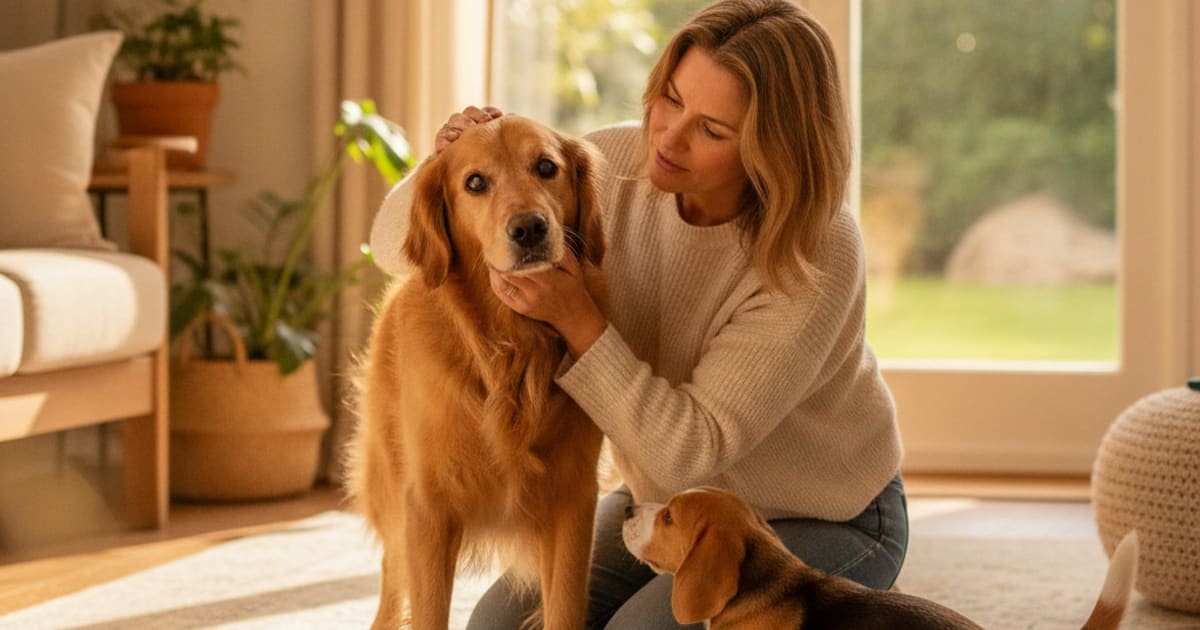
Dog stroke symptoms appear suddenly and usually affect balance, the eyes, the face or one side of the body: a head tilt, circling or falling to one side, eyes that flick rapidly back and forth, a drooping lip or eyelid, unexpected drooling, weakness or dragging of the legs on one side, sudden blindness, disorientation, or collapse. If your dog is showing any of these signs right now, stop reading and call your veterinarian or the nearest emergency veterinary hospital.
Yes, dogs can have strokes. A stroke means blood flow to part of the brain is interrupted, either because a vessel is blocked (ischemic) or because one has bled (hemorrhagic). Strokes are recognized less often in dogs than in people, partly because dogs do not get the same pattern of cholesterol-driven artery disease, and partly because confirming one requires advanced imaging that not every case receives. But they happen, and the signs are recognizable if you know what you are looking at.
A stroke is not something to wait out at home: a dog with sudden loss of balance, facial droop, flickering eyes, one-sided weakness or collapse needs to be examined by a veterinarian immediately.
The signs that come on suddenly
The single most useful clue is speed. Stroke signs arrive abruptly, often over seconds or minutes, in a dog who was behaving normally shortly before. They are frequently at their most severe at the very beginning and then plateau. A problem that has crept in slowly over weeks is more likely to be something else, though it still needs a veterinary assessment.
The signs owners most often describe include:
- Head tilt. The head is held persistently to one side, sometimes dramatically.
- Loss of balance and coordination. The dog staggers, leans, stumbles, falls over, or cannot stand without support.
- Circling. Repetitive turning, usually in one direction, as though the dog cannot steer straight.
- Abnormal eye movement. The eyes drift or jerk rhythmically on their own, or one eye sits at an odd angle compared to the other.
- Weakness or paralysis on one side. Dragging a front or back paw, knuckling over, or an obvious difference between the left and right side of the body.
- Facial changes. A drooping lip, ear or eyelid, an inability to blink on one side, or a face that looks asymmetrical.
- Drooling and trouble eating. Food dropping out of the mouth, difficulty swallowing, or saliva pooling on one side.
- Sudden vision loss. Bumping into furniture, missing a treat held out in front of the nose, or pupils that no longer respond normally to light.
- Changed mentation. Dullness, confusion, failure to respond to a familiar name, pressing the head against a wall, or pacing with no purpose.
- Nausea and vomiting. Often secondary to the spinning sensation that comes with a balance problem.
- Collapse or seizure activity. Always an emergency, whatever the cause.
A dog does not need all of these to be having a stroke. One sudden neurological sign is enough to justify an urgent appointment.
What the eyes, the face and the drooling are telling you
Two of the most searched details about canine strokes are the eyes and the drooling, and both are worth understanding because they are easy to see from across a room.
The eyes. Rapid involuntary eye movement, called nystagmus, is one of the clearest indicators that something is wrong in the balance centers of the brain or the inner ear. The eyes may flick side to side, up and down, or in a rotating pattern. A veterinarian pays close attention to the direction of that movement and whether it changes when the dog's head position changes, because the pattern helps separate a problem inside the brain from one in the inner ear. You may also notice unequal pupil sizes, one eye turned in a different direction from the other, a drooping upper eyelid, or a dog who no longer tracks movement. Note what you see, and if you can safely do so, record a short video on your phone. Those few seconds of footage are genuinely useful to the clinician, because the signs can shift between the moment you notice them and the moment you arrive.
The drooling. Drooling after a sudden neurological event usually reflects one of two things: either the nerves supplying one side of the face are not working properly, so the lip hangs and saliva escapes, or the dog is profoundly nauseated from the vertigo that comes with a balance disturbance. Food falling out of the mouth, water spilling while drinking, or saliva soaking only one side of the chest all point toward facial weakness. Drooling on its own has many causes, including dental pain, something lodged in the mouth, and nausea from unrelated illness, so it matters most when it appears alongside the other signs above.
Conditions that look like a stroke but are not
The distinction matters because the workup and the management differ. Only your veterinarian can make that call, and only after a physical and neurological examination.
| Condition | How it usually begins | Signs that overlap with a stroke | Features that often point elsewhere |
|---|---|---|---|
| Ischemic or hemorrhagic stroke | Abruptly, in a dog who seemed fine | Head tilt, circling, one-sided weakness, abnormal eye movement, altered awareness | Signs are often asymmetrical and may include changes in alertness or behavior |
| Idiopathic vestibular disease | Abruptly, most often in older dogs | Head tilt, falling, circling, nystagmus, nausea | The dog is usually bright and aware, with normal limb strength |
| Inner or middle ear disease | Over days, sometimes suddenly | Head tilt, balance loss, facial droop | Ear discharge, odor, pain, or a history of ear infections |
| Seizure | Sudden, in episodes | Collapse, drooling, disorientation afterward | Paddling, chomping, loss of bladder control, a recovery period between events |
| Fainting from a heart or blood pressure problem | Sudden, often during exertion or excitement | Collapse, weakness, brief unresponsiveness | Rapid return to normal, pale gums, an abnormal heart rhythm |
| Toxin or drug exposure | Sudden, after access to a substance | Wobbliness, drooling, disorientation, tremors | Known or suspected exposure; several body systems affected at once |
| Brain tumor or head trauma | Trauma is sudden; tumors are usually gradual | Circling, vision loss, behavior change, seizures | A history of a knock to the head, or signs that have been slowly worsening |
If you suspect your dog swallowed something harmful, call your veterinarian or an animal poison control service such as the ASPCA Animal Poison Control Center or the Pet Poison Helpline without waiting to see what develops.
Older dogs and sudden neurological change
Most of the dogs whose owners search for stroke symptoms are seniors. In a thirteen, fifteen or sixteen year old dog, a sudden head tilt and a stagger can look catastrophic, and the first instinct is often to assume the worst. Try to resist that. Idiopathic vestibular disease, which is far more common in older dogs than true stroke, produces a near identical picture and frequently improves with supportive care. That is one of the many reasons an in-person examination matters rather than a diagnosis made at home.
Age is relevant in another way. When a veterinarian does diagnose a stroke in a dog, they generally look for an underlying reason, because canine strokes are often secondary to another disease process rather than isolated events. High blood pressure, kidney disease, heart disease, hormonal disorders such as Cushing's disease or hypothyroidism, clotting abnormalities and certain cancers all come into the conversation. Finding and managing that underlying condition is usually the most important part of the plan, which is why a stroke workup in an older dog often includes blood work, urine testing and a blood pressure reading alongside the neurological exam. If you want background on the illnesses that commonly sit behind this kind of event, a general overview of canine conditions is a reasonable starting point for reading between appointments.
Wherever you live, the advice is the same: sudden neurological signs are an out-of-hours emergency, and most areas have an emergency or after-hours veterinary service precisely for nights and weekends like this one.
Key takeaways
- Dog stroke symptoms are sudden and usually one-sided: head tilt, circling, falling, nystagmus, facial droop, drooling, limb weakness, sudden blindness, confusion or collapse.
- Speed of onset is the strongest clue. Signs that appear over minutes in a previously normal dog deserve emergency attention.
- Flickering or mismatched eyes and one-sided drooling are among the easiest signs to spot, and both are worth filming on your phone before you travel.
- Many conditions mimic a stroke, including vestibular disease, ear infections, seizures, fainting and toxin exposure. Do not self-diagnose.
- In older dogs, a stroke is frequently linked to an underlying illness, so the workup usually looks beyond the brain.
- There are no safe home treatments for a suspected stroke. Keep your dog quiet, padded and upright if possible, and get to a clinic.
Working with your vet from here
Your veterinarian owns the diagnosis and the treatment plan. They decide which tests fit your dog, which may include a neurological examination, blood work, blood pressure measurement, imaging such as MRI or CT, or referral to a veterinary neurologist. Advanced imaging is the only way to confirm a stroke and to distinguish a blocked vessel from a bleed, and whether it is appropriate depends on your dog's age, stability, other health problems and what the examination finds. Care for a dog recovering from a brain event is typically supportive, aimed at keeping the dog comfortable, hydrated, safe from falls and well nursed while the brain compensates, alongside treatment of any underlying disease that is discovered. Research suggests dogs can make meaningful functional improvements after a vascular brain event, but results vary from dog to dog, and no one can promise a particular outcome in advance.
If you are reading this because something about your dog looks wrong right now, talk to your vet today rather than tomorrow. Sudden neurological signs are one of the few situations in canine medicine where the clock genuinely matters, and a same-day examination costs you nothing but time if it turns out to be something milder.
For more on what sits behind these events and how to judge an emergency at home, read Stroke in Dogs: Causes and Dog Emergency Signs.
Frequently asked questions
- What are dog stroke symptoms?
- Dog stroke symptoms include a sudden head tilt, loss of balance, circling or falling toward one side, rapid involuntary eye movement, facial droop, drooling, weakness or paralysis on one side, sudden blindness, confusion and collapse. They appear abruptly in a dog who seemed normal. Contact a veterinarian immediately.
- How do I know if my dog's having a stroke?
- You cannot confirm it at home, and you should not try. Look for signs that appeared suddenly and affect one side more than the other: head tilt, circling, flickering eyes, a drooping lip, one-sided drooling or limb weakness. Film what you see and go to a veterinarian now.
- Can dogs have strokes symptoms?
- Yes. Dogs can have both ischemic strokes, where a vessel is blocked, and hemorrhagic strokes, where a vessel bleeds, and both produce recognizable symptoms. The signs reflect which part of the brain lost blood flow, which is why balance, eye movement, facial nerves and one-sided strength are commonly affected.
- Can dog have stroke symptoms?
- Yes, a dog can show stroke symptoms, and they usually arrive suddenly rather than building over weeks. Typical signs are a head tilt, staggering, circling, abnormal eye movement, facial droop, drooling, sudden vision loss or disorientation. Any of these need same-day veterinary assessment to identify the actual cause.
- What do dog stroke symptoms look like in the eyes?
- The most common eye sign is nystagmus, a rapid involuntary flicking of both eyes side to side, up and down, or in a rotating pattern. You may also see unequal pupils, a drooping eyelid, one eye pointing differently, or a dog who no longer tracks movement.
- Does drooling mean my dog has had a stroke?
- Not on its own. Drooling after a sudden neurological event usually means either the facial nerves on one side are weak, so the lip hangs and saliva escapes, or the dog is nauseated from vertigo. Drooling matters most when it appears alongside balance loss or facial droop.
- What are stroke symptoms in an elderly or 15 year old dog?
- The signs are the same at any age: sudden head tilt, staggering, circling, flickering eyes, facial droop and disorientation. In senior dogs, idiopathic vestibular disease produces a very similar picture and is more commonly diagnosed, so an examination is essential rather than assuming the worst.
- Can a dog recover from a stroke?
- Many dogs show functional improvement after a vascular brain event, particularly with supportive nursing care and treatment of any underlying disease. Recovery depends on which part of the brain was affected, the dog's age and other health problems. Results vary from dog to dog, so ask your veterinarian for a realistic outlook.
- Is a sudden head tilt always a stroke in dogs?
- No. A sudden head tilt can come from idiopathic vestibular disease, middle or inner ear infection, a brain tumor, trauma or inflammatory disease, as well as a stroke. Only a veterinary examination, and sometimes imaging, can separate these, so treat any new head tilt as urgent.
Educational content, not veterinary advice. Ask your vet about your dog.