What Causes Spinal Stroke in Dogs? (FCE Explained)
A spinal stroke in dogs, known as a fibrocartilaginous embolism or FCE, happens when a fragment of disc material blocks a small blood vessel supplying the spinal cord, cutting off oxygen to that segment. The result is sudden, usually painless weakness or paralysis, most often in the back legs. Call your vet the same day.
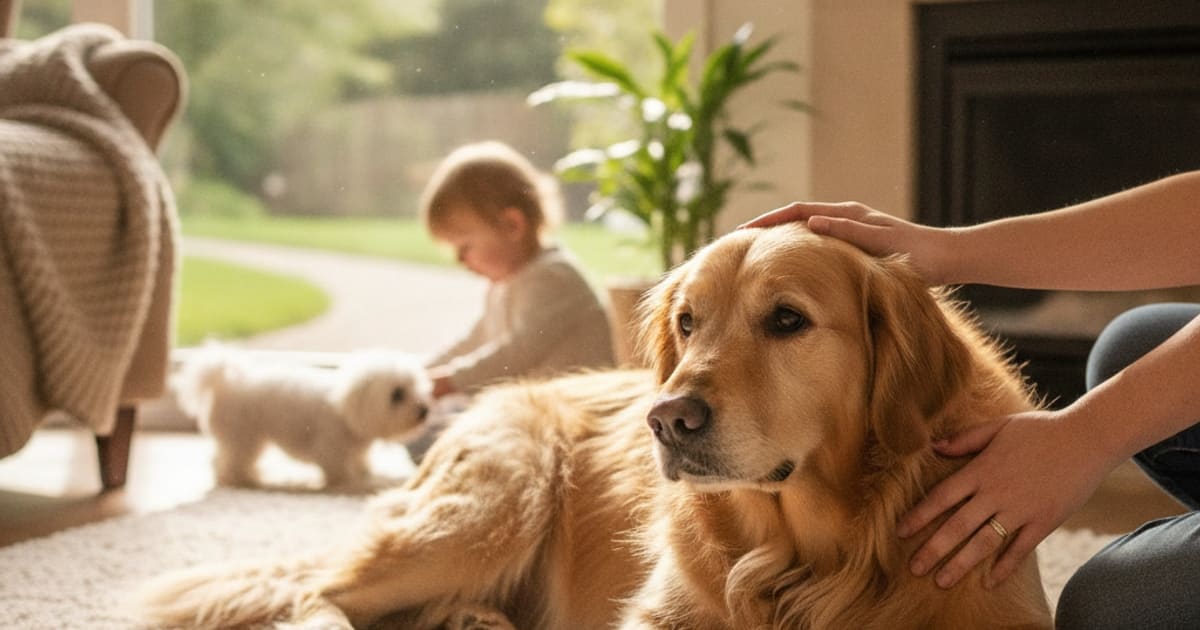
A spinal stroke in dogs is caused by a small fragment of material, most often fibrocartilage from the soft centre of an intervertebral disc, breaking loose and lodging inside one of the tiny blood vessels that supply the spinal cord. If your dog has just lost the use of one or both back legs, stop reading and call your veterinarian or the nearest emergency clinic now, because sudden weakness or paralysis needs same-day assessment and only a veterinary exam can separate a spinal stroke from the conditions that look identical in the first hour.
That blockage cuts off oxygen to a short segment of spinal cord. The nerve tissue in that segment stops signalling almost immediately, and the legs it controls go weak or limp. The medical name is fibrocartilaginous embolism, usually shortened to FCE, and it is the reason the phrase stroke in dog spinal cord turns up so often alongside searches about back-leg collapse.
How a blocked vessel starves a segment of spinal cord
The discs between the vertebrae have a tough outer ring and a gel-like core. In an FCE, a tiny piece of that core material ends up inside the arterial or venous supply of the cord. Exactly how it gets there is still debated among veterinary neurologists, and several routes have been proposed. What is agreed is the consequence: the vessel is plugged, blood flow to that short stretch of cord stops, and the grey matter, which is the most metabolically hungry tissue there, is damaged within minutes.
Because the spinal cord is supplied by small vessels that often serve one side more than the other, the damage is frequently lopsided. That is why so many dogs with a spinal stroke drag one back leg badly while the other still carries some weight.
The trigger is usually ordinary. Owners describe a hard sprint in the garden, a jump off the sofa, a twist while wrestling with another dog, or a skid on a slick floor. Sometimes nothing unusual happened at all. There is no infection to catch, nothing toxic involved, and nothing an owner did wrong.
FCE is reported most often in young to middle-aged large and giant breeds with normal body proportions, such as Labradors, German Shepherds and Great Danes, though it is also recognised in some smaller breeds, Miniature Schnauzers and Shetland Sheepdogs among them. It is not the same problem as the disc herniation seen in long-backed breeds like Dachshunds, even though both involve disc material.
The signs owners notice in the first minutes and hours
The signature of a spinal stroke is how fast it arrives. One second the dog is running, the next it is down. Many owners hear a single yelp or cry at the moment it happens, and then nothing. The dog is not screaming, not panting in distress, and often seems mentally fine, which is exactly what makes it so disorienting.
Spinal stroke symptoms in dogs commonly include:
- Sudden weakness, wobbliness or complete paralysis of the back legs, often during or just after activity
- Worse function on one side than the other
- Knuckling, where the paw turns under and the dog walks on the top of the foot
- Dragging the back legs or sitting down suddenly and not being able to rise
- A limp tail, or loss of bladder or bowel control
- No obvious pain when the back is touched after the first moments
- A bright, alert, responsive face, with normal eyes and no head tilt
If the affected segment is in the neck, all four legs can be involved and the dog may struggle to lift its head. Milder events exist too. The phrase signs of mini stroke in dogs back legs is not a veterinary diagnosis, but it describes something real: a brief episode of swaying, a scuffed toe, or a few days of a back leg that does not track properly. Those dogs still need an exam, because a mild presentation does not confirm a mild cause.
One detail matters more than any other: a spinal stroke peaks within the first several hours and then stops getting worse, so a dog that keeps deteriorating over days is telling you something else is going on and needs to be rechecked urgently.
Telling it apart from a slipped disc or a brain stroke
Owners search for stroke in dogs symptoms back legs and land on three very different problems. Here is how they usually separate in the consulting room.
| Feature | Spinal stroke (FCE) | Slipped disc (IVDD) | Brain stroke |
|---|---|---|---|
| Onset | Seconds, often during play or exercise | Sudden, or building over hours to days | Sudden |
| Pain | A cry at the moment, then usually comfortable on handling | Often painful, dog guards the back or neck | Not usually painful |
| Symmetry | Frequently much worse on one side | More often even on both sides | Signs often affect one side of the body |
| Progression | Peaks in the first hours, then static | Can worsen over hours or days | Peaks early, then stabilises |
| Head and mind | Normal, bright and alert | Normal | Head tilt, circling, abnormal eye movement, altered awareness |
| How it is confirmed | Neurological exam plus MRI, often a presumptive diagnosis | Neurological exam plus MRI or CT | Neurological exam plus MRI of the brain |
These patterns guide a vet, they do not replace one. Plenty of dogs present atypically, and spinal tumours, trauma, bleeding and inflammatory cord disease can all mimic the picture.
How a vet reaches the diagnosis
The first step is a neurological examination. Your vet checks reflexes, posture, pain response and limb placement to work out which segment of cord is affected, then builds a shortlist of causes for that location and that speed of onset. Bloodwork and a blood pressure check help rule out systemic problems.
Plain x-rays cannot show the spinal cord itself, so they are used mainly to look for fractures, obvious disc space changes or bone disease. MRI is the imaging test that shows cord tissue, and in a spinal stroke it may reveal a focal area of damage with no compressive material pressing on the cord. Some cases also have cerebrospinal fluid sampled to look for infection or inflammation.
Even then, FCE is often a presumptive diagnosis, because the definitive confirmation is microscopic. What matters clinically is that compression and other treatable causes have been excluded, since those change the plan completely. Referral to a neurologist and advanced imaging are not available everywhere, and costs vary widely by clinic and region, so talk to your vet early about what is realistic for your situation.
Treatment, rehabilitation and what home care actually involves
There is no procedure that unblocks the vessel once it has happened, and there is nothing to reverse in the minutes after. Care is therefore supportive, aimed at protecting the dog while damaged tissue settles and the nervous system reorganises around the injury. Your vet decides what that looks like, including any medication, and nothing in that plan should be started, stopped or adjusted without them.
Searches for treatment for spinal stroke in dogs at home usually mean nursing care, and nursing care is genuinely where owners make the biggest difference. Under a plan from your veterinary team, that typically covers:
- Bladder care, since a dog that cannot walk may not be able to empty properly, and retained urine causes infection
- Clean, dry, well padded bedding, with regular turning to protect pressure points
- Checking the skin daily for sores, urine scald and rubbed hocks or elbows
- A sling or support harness for toileting trips, with the dog never left to drag itself across hard floors
- Non-slip runners over tile and laminate, and ramps instead of stairs and jumps
- Keeping weight down, because every extra kilo is carried by legs that are already compromised
- Passive range of motion work, massage and structured exercises taught by a qualified canine rehabilitation professional
Formal rehabilitation, including underwater treadmill work where a clinic offers it, is often recommended once a vet has cleared the dog for it. Research suggests that structured physical rehabilitation has a meaningful role in recovery from spinal cord injury in general, and veterinary neurologists routinely build it into FCE aftercare. Results vary from dog to dog, and the honest answer about outcome is that it depends on how much cord was affected, where, and whether deep pain sensation is still present.
Improvement, when it comes, usually begins in the first days to weeks and then continues more slowly. Some dogs walk again with a mild residual wobble. Others keep a permanent deficit and do well with a cart. A few do not regain function.
When quality of life and euthanasia come into the conversation
This is a fair question, not a defeatist one, and it comes up with spinal stroke more than owners expect. The factors a vet weighs with you include whether the dog can feel deep pain in the affected limbs, whether bladder and bowel function return, the size of the dog relative to the household's ability to lift and support it, whether skin sores or infections keep recurring, and, above all, whether the dog is still engaged, eating and interested in life.
Size and support matter honestly. A small dog that cannot walk can often be managed well for years. A giant breed in the same state asks much more of the people around it. Neither answer is a moral failure.
Give recovery a fair window before judging it, set review points with your vet rather than deciding on a bad afternoon, and ask directly for their read on the neurological exam findings. If you are facing that decision, talk to your vet about what they are seeing, and ask about a quality of life assessment so the choice rests on observations rather than guilt.
Key Takeaways
- A spinal stroke, or FCE, is caused by a fragment of disc material blocking a small blood vessel feeding the spinal cord, starving that segment of oxygen.
- It arrives in seconds, often during exercise, and classically produces sudden back-leg weakness that is worse on one side and not painful after the first moment.
- Signs peak within hours and then stop worsening. Anything that keeps progressing needs urgent reassessment.
- Diagnosis rests on a neurological exam plus MRI, mainly to rule out compressive and inflammatory causes.
- There is no way to clear the blockage, so care is supportive: nursing, bladder management, skin protection, non-slip footing and veterinary-guided rehabilitation.
- Prognosis depends on the extent of cord damage and whether deep pain sensation is preserved, and it varies widely between individuals.
Your veterinarian owns the diagnosis and the treatment plan here. They localise the lesion, order the imaging, rule out the causes that need surgery or medication, and tell you what is safe to do at home and when. Everything an owner contributes, the nursing, the footing, the rehab homework, the patience, works inside the space that proper veterinary care creates, not instead of it.
For a wider look at the symptoms that mean a dog needs to be seen immediately rather than in the morning, read Dog Emergency Signs.
Frequently asked questions
- what causes spinal stroke in dogs
- A spinal stroke is caused by a small fragment of fibrocartilage, most likely from an intervertebral disc, lodging in a blood vessel that supplies the spinal cord. The blockage cuts oxygen to that segment within minutes. It is often triggered by ordinary running, jumping or twisting, and nobody is at fault.
- what is spinal stroke in dogs
- A spinal stroke in dogs is an ischaemic injury to the spinal cord, properly called a fibrocartilaginous embolism or FCE. Blood flow to a short section of cord is blocked, so the nerves in that section stop working and the legs they control become weak or paralysed, usually suddenly.
- what is a spinal stroke in dogs symptoms
- Symptoms appear in seconds, often during play: sudden back-leg weakness or paralysis, frequently worse on one side, knuckling or dragging paws, sometimes a single yelp at onset, possible loss of bladder control, and a dog that seems bright and not painful afterwards. Signs peak within hours.
- Is a spinal stroke painful for a dog?
- Usually not after the first moments. Many dogs cry out once as it happens, then show no pain when the spine is handled, which is one of the features that helps distinguish it from a slipped disc. Persistent pain suggests a different problem and warrants immediate veterinary reassessment.
- Can a dog recover from a spinal stroke?
- Many dogs regain useful function, some fully and some with a lasting wobble or deficit. Recovery depends on how much cord was damaged, where the lesion sits, and whether deep pain sensation is preserved. Results vary from dog to dog, so ask your vet for their read on the exam findings.
- Is there any treatment for spinal stroke in dogs at home?
- Home care is supportive nursing under a veterinary plan, not treatment of the blockage itself. It centres on bladder management, padded bedding and skin checks, a support sling for toileting, non-slip flooring, weight control, and rehabilitation exercises taught by a qualified canine rehabilitation professional.
- How is a spinal stroke different from a slipped disc?
- A spinal stroke starts in seconds, is usually not painful afterwards, is often worse on one side, and stops worsening after the first hours. A slipped disc is frequently painful, can progress over days, and may involve material compressing the cord that imaging shows and surgery can address.
- When do owners consider euthanasia after a spinal stroke?
- The conversation usually arises when deep pain sensation is absent, bladder and bowel function do not return, pressure sores or infections recur, or the dog's size makes safe daily care impossible. Set review points with your veterinarian and ask for a structured quality of life assessment.
Educational content, not veterinary advice. Ask your vet about your dog.