Dog Yeast Infection Skin Medicine: Shampoos vs Creams
Medicine for a dog's yeast skin infection falls into three categories: medicated antifungal shampoos and wipes, topical creams for focal spots, and prescription oral antifungals. Which one fits depends on how widespread the overgrowth is and what is driving it, so diagnosis by your veterinarian comes first.
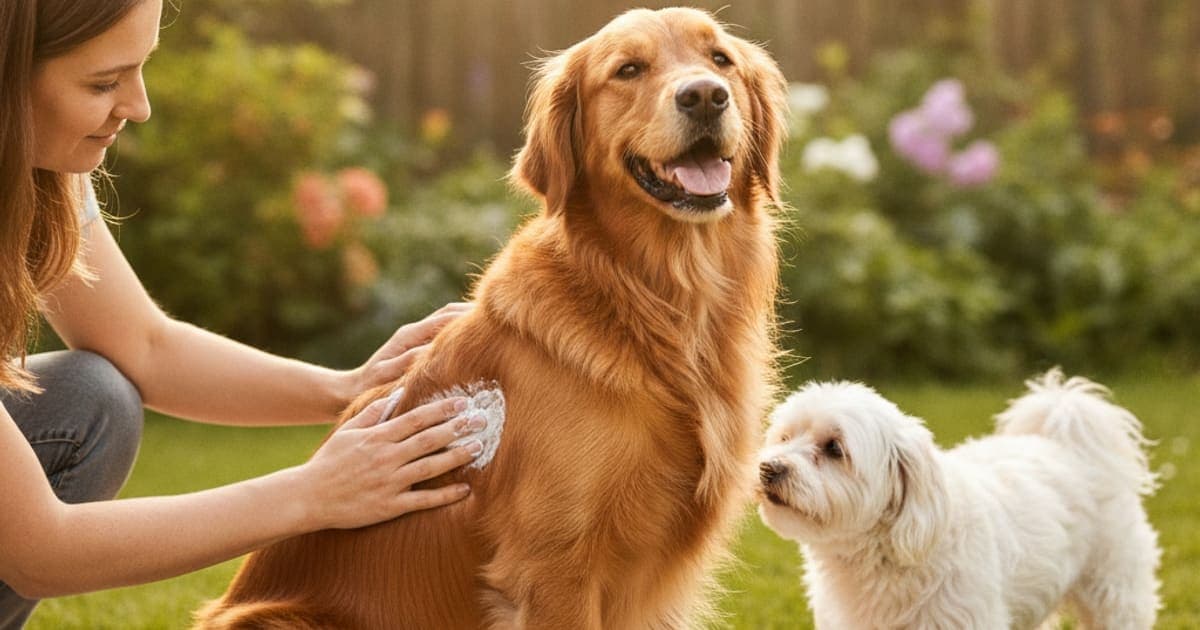
Medicine for a dog's yeast skin infection sorts into three practical categories. First, topical antifungal washes — medicated shampoos, mousses, sprays and wipes built around actives like chlorhexidine, miconazole, ketoconazole or climbazole. Second, topical creams and ointments for small, defined areas such as a skin fold, a lip margin or the webbing between toes. Third, oral systemic antifungals — ketoconazole, itraconazole, fluconazole and terbinafine — which are prescription-only and reserved for widespread, stubborn or deep involvement.
Underneath all three sits the part that decides whether any of them hold: finding and managing whatever let the yeast overgrow in the first place. Which category your dog needs is a diagnostic question, not a shopping question, and it is answered with a microscope in a veterinary exam room.
What yeast overgrowth on a dog's skin actually is
The organism involved is almost always Malassezia pachydermatis, a yeast that lives on normal canine skin and in normal ear canals without causing trouble. It becomes a problem when the local environment shifts in its favour — moisture trapped in a fold, a damaged skin barrier from allergic inflammation, excess sebum, altered skin immunity, or a hormonal disorder changing how the skin behaves.
The clinical picture is fairly recognisable once you have seen it:
- A greasy or waxy coat with a distinctive musty, sweetish odour
- Red, inflamed skin that the dog licks, chews or rubs relentlessly
- Over time, thickened, darkened, leathery skin — often described as elephant skin
- Brown-red staining on the paws and nail beds from chronic licking
- Concurrent ear problems, with dark waxy discharge
- A strong preference for warm, humid sites: armpits, groin, neck folds, between the toes, under the tail
Yeast overgrowth on a dog's skin is almost always secondary to something else, which is why the plans that actually hold pair an antifungal with a diagnosis of the underlying driver. Environmental or food allergy is the most common companion. Endocrine disease such as hypothyroidism or hyperadrenocorticism shows up regularly in older dogs. Conformation matters too — deep facial folds, heavy ears and dense coats hold moisture against the skin.
Diagnosis is done with cytology: a tape impression or slide smear of the affected skin, stained and read under a microscope. This matters more than owners expect, because bacterial pyoderma, demodectic mange and yeast dermatitis can all present as a red, smelly, itchy dog, and they need different medicine. Treating the wrong one wastes weeks.
Antifungal shampoos: read the actives, ignore the front label
For generalised skin involvement, medicated bathing is the workhorse. It physically removes yeast, surface debris and excess oil while leaving antifungal residue behind, and it does so without the systemic exposure of an oral drug.
The ingredients worth knowing on a dog yeast infection skin shampoo:
- Chlorhexidine — a broad antiseptic active against both yeast and the bacteria that frequently tag along
- Miconazole — an azole antifungal, very commonly paired with chlorhexidine in veterinary formulations
- Ketoconazole — another azole used in medicated shampoos
- Climbazole — an azole seen in some veterinary skin and ear products
- Selenium sulfide — degreasing and antifungal, though it can be drying
- Benzoyl peroxide — strongly degreasing and follicular-flushing, useful on very oily coats
- Acetic and boric acid — used in some rinses and wipes to make the skin surface less hospitable
Two things determine whether a medicated shampoo does anything. The first is contact time: these products need to sit lathered on the skin before rinsing, and rushing the bath is the single most common reason owners conclude a shampoo did nothing. Follow the label and whatever schedule your veterinarian sets — do not improvise frequency, because over-bathing strips the barrier you are trying to restore.
The second is honest labelling. Plenty of shelf products put yeast, fungal or hot spot on the front and carry no antifungal active at all in the ingredient panel — just oatmeal, aloe and fragrance. Soothing is not the same as antifungal. Turn the bottle over and find the active ingredients section. If there is not one, it is a cosmetic shampoo.
Creams, sprays, wipes and mousses: match the format to the body part
Topical format is a practical decision driven by where the yeast is and how much of the dog is involved. A dog yeast infection skin cream is the right call for a focal lesion and completely impractical for a whole-body problem.
| Format | Best suited to | Typical actives | Practical notes |
|---|---|---|---|
| Medicated shampoo | Widespread or multi-site involvement | Chlorhexidine, miconazole, ketoconazole, selenium sulfide | Requires full contact time; needs a warm space and a tolerant dog |
| Cream or ointment | Small focal lesions, folds, interdigital spaces | Miconazole, clotrimazole, ketoconazole | Must be absorbed before the dog licks it; may need a cone or distraction |
| Leave-on spray or mousse | Between baths, large areas, bath-averse dogs | Chlorhexidine, miconazole, climbazole | Easier compliance; less mechanical cleaning of debris |
| Medicated wipes | Facial folds, ear flaps, paws, under the tail | Chlorhexidine, ketoconazole, acetic/boric acid | Excellent for daily maintenance of fold-prone sites |
| Otic (ear) preparations | Ear canal yeast | Combination antifungal, antibiotic and steroid | Prescription territory — the eardrum must be assessed first |
Ear involvement deserves a specific warning. Dark, waxy, smelly ears often do involve yeast, but nothing should go into a dog's ear canal before a veterinarian has looked at the eardrum. If the tympanic membrane is ruptured, certain medications and cleaners can reach the middle ear and cause real harm. An ear that smells yeasty is a vet visit, not a pharmacy decision.
Prescription versus over-the-counter: where the line sits
This is where most searches for dog yeast infection skin medicine actually land, so here is the division plainly.
Available without a prescription are the majority of medicated shampoos, mousses, sprays and wipes containing chlorhexidine, miconazole, ketoconazole or acetic/boric acid blends, plus human-market topical azole creams such as clotrimazole and miconazole. Being purchasable does not make them automatically appropriate — a cream meant for human skin on a dog who licks the site, or on skin that is actually infected with bacteria rather than yeast, can delay the right plan. Use them under veterinary direction.
Prescription only are oral antifungals — ketoconazole, itraconazole, fluconazole and terbinafine — along with combination otic preparations, corticosteroids, and the drugs aimed at the underlying allergic itch such as oclacitinib and lokivetmab. Oral antifungals are gated for solid reasons: they are processed by the liver, they interact with a long list of other medications, and they often warrant baseline and follow-up bloodwork. They also require that the diagnosis be correct, because a systemic antifungal does nothing for a bacterial pyoderma or a mite infestation.
There is no dosing information in this article for any of these, deliberately. Dose, frequency and duration for a dog yeast infection skin treatment depend on the drug, the dog's weight, their liver and kidney status, their other medications and how extensive the overgrowth is. Talk to your veterinarian and get those numbers from the person who examined the dog.
What owners report in forums — and what to take from it
Search dog skin yeast infection treatment Reddit and the same themes repeat. Owners report that medicated baths help while they are happening and that the smell and itch return within weeks if nothing else changes. They report frustration with recurrence, enthusiasm and disagreement about low-carbohydrate or grain-free yeast diets, and strong opinions about apple cider vinegar rinses and tea tree oil.
The useful signal in that noise is the recurrence pattern. It is consistent with what dermatology practice already holds: yeast is a symptom amplifier, and the plans that stick are the ones that also control the allergy, the endocrine disease or the moisture trap. The unhelpful signal is improvised home chemistry. Diluted vinegar on broken, inflamed skin stings badly, and concentrated tea tree oil is toxic to dogs. Anecdotes are a reasonable place to feel less alone and a poor place to get a protocol.
Where pawgen fits, and where it honestly does not
Straight answer: pawgen's K9-REPAIR is a BPC-157 and TB-500 peptide formulation for dogs focused on joint, tendon and mobility recovery. It is not an antifungal, and it is not a product for skin yeast. If your dog's problem is Malassezia, the medicine comes from the categories above and the plan comes from your vet.
It is worth saying what the compounds are for, because the dogs who arrive at this page are often the same dogs who are also stiffening up. BPC-157 is a synthetic peptide studied for its role in tissue-repair signalling and new blood-vessel formation at injury sites. TB-500 is a synthetic form of a thymosin beta-4 fragment, studied for actin regulation and cell migration — two processes central to how soft tissue reorganises after damage. This is emerging and promising science that a growing number of owners are adopting through recovery, and research suggests these mechanisms are relevant to how tendon, ligament and joint tissue remodel over the weeks after an injury.
Neither BPC-157 nor TB-500 is an FDA-approved veterinary drug, and nothing here is a claim about what will happen to your dog. What pawgen can state plainly is descriptive: K9-REPAIR is dosed by body weight, is third-party tested with certificates of analysis available per batch, ships direct to the door, and carries a 60-day money-back guarantee. Work out suitability and dosing with your veterinarian — especially for puppies, pregnant or nursing dogs, where the answer is always a conversation with your vet and never a number from a website.
Key Takeaways
- Yeast skin medicine for dogs comes in three tiers: medicated topical washes, focal creams and ointments, and prescription oral antifungals.
- Chlorhexidine, miconazole, ketoconazole and climbazole are the actives that make a medicated shampoo worth buying — check the ingredient panel, not the front label.
- Contact time during a medicated bath matters as much as the product itself.
- Oral antifungals are prescription-only because of liver metabolism, drug interactions and the need for an accurate diagnosis.
- Smelly, waxy ears need an eardrum check before anything goes in the canal.
- Recurrence usually means the underlying allergy, endocrine disease or moisture trap has not been addressed.
- pawgen's K9-REPAIR is a joint, tendon and mobility peptide formulation — not a skin antifungal.
More from pawgen: the full peptide lineup is on the products page, ordering and what ships is covered in the shop, batch testing documents live on the certificates of analysis page, and availability details are here.
The diagnosis and the treatment plan belong to your veterinarian. Cytology tells you whether it is yeast, bacteria or mites; an exam and workup tell you why the skin let it happen; and the prescription, if one is needed, is theirs to write and monitor. Supplements and peptides operate only in the space that proper veterinary care creates — they do not substitute for it, and they never replace a medication your vet has prescribed.
Owners exploring peptide support for their dog can review K9-REPAIR — BPC-157 + TB-500 formulated for dogs — at https://pawgen.com/. BPC-157 and TB-500 are not FDA-approved veterinary drugs. Nothing in this article treats, cures or prevents any condition; every decision about your dog's care belongs with your veterinarian.
Frequently asked questions
- What is the best medicine for a dog's yeast skin infection?
- There is no single best option — it depends on how widespread the overgrowth is. Localised spots are usually managed with topical azole creams, generalised skin with medicated chlorhexidine or miconazole shampoos, and severe or stubborn cases with prescription oral antifungals. Your veterinarian decides which tier applies after cytology.
- Which shampoo ingredients actually work against yeast on dogs?
- Look for chlorhexidine, miconazole, ketoconazole or climbazole in the active ingredients panel, sometimes alongside selenium sulfide or benzoyl peroxide for very greasy coats. Oatmeal and aloe shampoos soothe but contain no antifungal active, regardless of what the front of the bottle says.
- Can I use a human antifungal cream on my dog?
- Human topical azoles such as clotrimazole and miconazole are sometimes used on dogs, but only under veterinary direction. The risks are licking and ingestion, applying it to skin that is actually bacterially infected, and masking a problem that needs a different medicine entirely. Ask your vet before reaching for the bathroom cabinet.
- Do dogs need a prescription for yeast infection medicine?
- Most medicated shampoos, sprays and wipes are available over the counter. Oral antifungals such as ketoconazole, itraconazole, fluconazole and terbinafine are prescription-only, as are combination ear preparations and steroids, because they require accurate diagnosis, liver consideration and monitoring.
- Why does my dog's yeast infection keep coming back?
- Recurrence almost always means the underlying driver is still active. Environmental or food allergy, hypothyroidism, hyperadrenocorticism, and moisture-trapping skin folds or ear conformation are the usual culprits. Antifungals clear the overgrowth; only addressing the cause changes the pattern, which is a conversation to have with your veterinarian.
- How often should I bathe a dog with a yeast skin infection?
- Follow the schedule your veterinarian sets and the product label. Bathing too often strips the skin barrier you are trying to restore, and bathing too rarely leaves insufficient antifungal contact. This is one of the details worth confirming at the appointment rather than guessing.
- Are home remedies like apple cider vinegar or tea tree oil safe?
- Diluted vinegar rinses are widely discussed in owner forums but sting significantly on broken, inflamed skin. Concentrated tea tree oil is toxic to dogs and should not be applied. Neither is a substitute for a diagnosed plan, and both can delay effective care.
- Does K9-REPAIR help with skin yeast infections?
- No. K9-REPAIR is a BPC-157 and TB-500 peptide formulation that pawgen offers for joint, tendon and mobility recovery, not an antifungal and not a skin-infection product. BPC-157 and TB-500 are not FDA-approved veterinary drugs, and any use should be discussed with your veterinarian.
Educational content. BPC-157 and TB-500 are not FDA-approved veterinary drugs. Talk to your veterinarian before starting anything new, especially if your dog is on prescribed medication.