Glaucoma in Dogs Treatment: Drops, Surgery, Limits
If your dog has glaucoma, call your veterinarian immediately, because acute high eye pressure is an emergency. Treatment usually combines pressure-lowering eye drops, oral medication and, in some cases, laser surgery, a drainage implant or removal of a blind, painful eye. Glaucoma can be managed, but it cannot be cured.
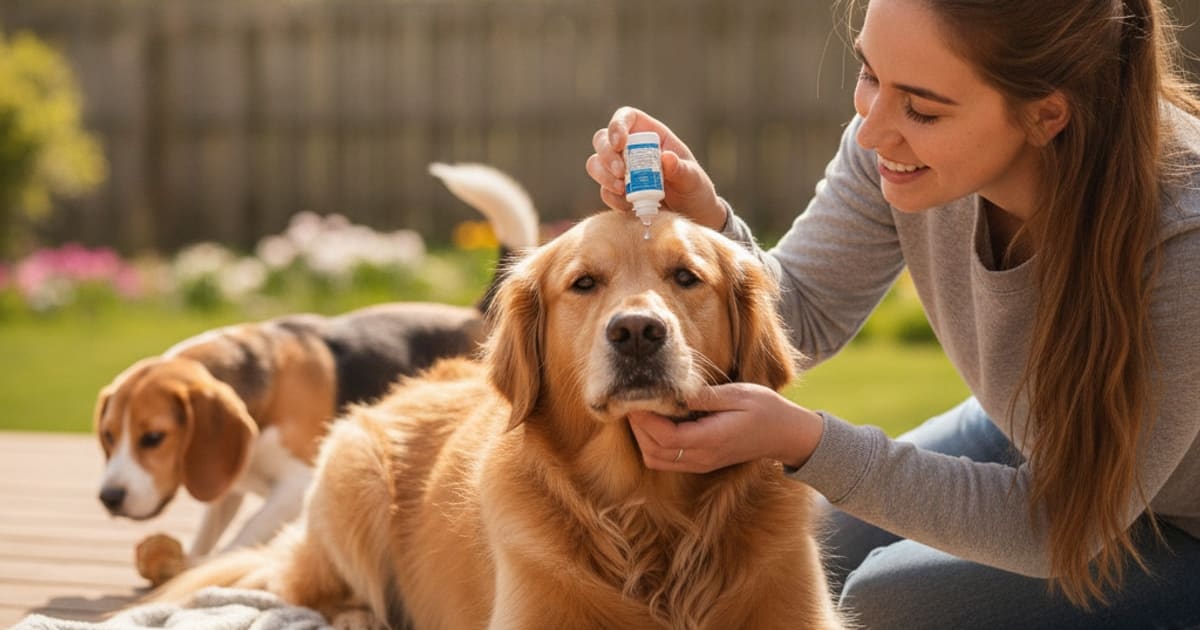
If you think your dog has glaucoma, call your veterinarian now and ask to be seen today. If the eye has suddenly turned red, cloudy or painful, or if your dog is squinting and unwilling to have the head touched, treat it as an emergency and go to the nearest emergency clinic rather than waiting for a routine appointment. Glaucoma means the pressure inside the eye has risen above what the retina and optic nerve can tolerate, and the only thing that helps is getting that pressure down quickly under veterinary supervision. In practice that means pressure-lowering eye drops, oral or injectable medication during a crisis, treatment of whatever caused the pressure rise, and, when medication stops holding, surgical options ranging from laser treatment and drainage implants to removal of a blind, painful eye. Glaucoma in dogs can be treated and often managed for a long time, but it cannot be cured, and vision already destroyed by high pressure does not come back.
What follows describes the standard options at the level of what each one does and when it tends to be considered. Which combination fits your dog depends on the eye, the cause, how long the pressure has been high and whether sight remains. That judgement belongs to your veterinarian or a veterinary ophthalmologist.
Why a suddenly red or cloudy eye cannot wait
Glaucoma is genuinely painful. The pain is often compared to a severe migraine, and dogs rarely show it the way we expect. Instead of crying out, they go quiet, sleep more, turn the head away from a reaching hand, eat less, or simply seem flat.
Signs that justify a same-day call include:
- A red eye with prominent vessels across the white
- A cloudy, hazy or bluish cornea
- Squinting, excess tearing or a partly closed eyelid
- A pupil that stays wide and does not shrink in bright light
- One eye looking visibly larger or more prominent than the other
- Bumping into furniture, hesitating on stairs, or obvious loss of sight
- Lethargy, reduced appetite or sensitivity around the head
The urgency is biological. The retina and optic nerve are nerve tissue, and sustained high pressure injures them permanently. In an acute attack, time is the variable you can actually influence. Even when sight cannot be saved, lowering pressure relieves pain, which is reason enough to go in immediately.
How vets confirm the diagnosis and look for the cause
The diagnosis rests on measuring intraocular pressure with a tonometer, a small handheld instrument used after a numbing drop. It takes seconds and compares both eyes. Your vet will also examine the cornea, pupil response, lens position and, where possible, the back of the eye.
A veterinary ophthalmologist may add gonioscopy, which uses a special lens to inspect the drainage angle where fluid leaves the eye, and ocular ultrasound when the eye is too cloudy to see through. These tests separate the two broad categories, and that distinction drives everything that follows.
Primary glaucoma arises from an inherited abnormality of the drainage angle. It is recognised in breeds such as cocker spaniels, basset hounds, beagles, shar pei, chow chows, Siberian huskies and Boston terriers, among others. When one eye is affected, the other is usually considered at risk.
Secondary glaucoma happens because something else blocked drainage: inflammation inside the eye, a lens that has slipped out of position, an advanced cataract, bleeding, trauma, or a mass within the eye. Here, treating the underlying problem is part of treating the glaucoma.
This is also why glaucoma is never a condition to manage with leftover medication or anything bought without a prescription. A drug class that helps one form of glaucoma can be actively harmful in another. Talk to your vet before giving anything to a painful eye.
Eye drops and medication used to lower eye pressure
Medical treatment works in one of two ways: it reduces how much fluid the eye produces, or it improves how much fluid drains out. The main drug classes used in dogs include:
- Prostaglandin analogues, which increase fluid outflow and act quickly. They are often reached for first in acute primary glaucoma, but they are not appropriate in certain secondary cases, such as lens luxation or active inflammation inside the eye.
- Topical carbonic anhydrase inhibitors, which reduce fluid production and are commonly used for long-term maintenance.
- Topical beta blockers, which also reduce production and are frequently combined with other classes.
- Oral carbonic anhydrase inhibitors, given by mouth when drops alone are not enough. Because they act on the whole body, side effects such as panting, stomach upset or lethargy are monitored.
- Hyperosmotic agents, given in hospital during a crisis to draw fluid out of the eye rapidly.
- Anti-inflammatory medication, when inflammation is driving the pressure rise.
- Pain relief, which is part of good care even when the eye cannot be saved.
No dosing figures appear here on purpose. Frequency, combination and duration are decisions your veterinarian makes based on repeated pressure readings, and the wrong drug in the wrong type of glaucoma can make an eye worse.
A few practical realities are worth knowing before you start. Drops are usually lifelong. Timing matters more than with most medications, so phone alarms and a written schedule help. Pressure is rechecked regularly, and the plan is adjusted as the eye changes. Over months or years, medication can gradually lose ground, which is when surgical options enter the conversation. Results vary from dog to dog, and a plan that holds beautifully in one dog may need revision in another.
The second eye deserves attention too. In primary glaucoma, the unaffected eye is usually considered at risk, and research suggests that preventive pressure-lowering therapy may delay the onset of glaucoma in that fellow eye. Ophthalmologists commonly recommend monitoring it closely and often treating it before anything goes wrong.
Surgical and laser options when medication stops holding
Procedures fall into two groups: those intended to preserve a seeing eye, and those intended to end pain in an eye that is already blind. Availability depends on referral access and equipment, and costs vary widely by clinic and region.
| Procedure | What it does | Usually considered when | Honest limit |
|---|---|---|---|
| Laser cyclophotocoagulation | Uses a laser to reduce the tissue that produces fluid inside the eye | The eye still sees and drops no longer control pressure | Does not restore lost sight; pressure can climb again; drops often continue |
| Cyclocryotherapy | Freezes the same fluid-producing tissue | Where laser equipment is not available | Less precise than laser, more post-procedure inflammation |
| Drainage implant or shunt | Places a tiny tube that channels fluid out of the eye | Often combined with laser in an eye that still has vision | The tube can scar over and stop draining |
| Chemical ablation of the fluid-producing tissue | An injection that shuts down fluid production in a blind eye | A permanently blind, painful eye, often when general anaesthesia is a concern | Blind eyes only; the eye may shrink and change appearance |
| Intrascleral prosthesis | The contents of a blind eye are removed and replaced with a sphere | A blind, painful eye where owners want to keep the eye's outward shape | Cosmetic only, the eye stays blind; not used if a tumour or infection is suspected |
| Enucleation | The blind, painful eye is removed and the lids closed over | Pain cannot be controlled, or there is a tumour or ruptured globe | Permanent and irreversible, though owners report dogs often seem markedly more comfortable afterwards |
What if the eye is already blind or only one side is affected
The eye is blind and painful
Once sight is gone, the goal changes completely. Nothing will bring vision back, so the question becomes how to end chronic pain in the most reliable way. Long-term drops on a blind, painful eye are often a holding pattern rather than a solution, and many ophthalmologists will discuss a definitive procedure instead. Enucleation sounds drastic to owners and almost always looks worse to us than it feels to the dog.
Only one eye is affected so far
If the diagnosis is primary glaucoma, protecting the remaining eye becomes the priority. That usually means scheduled pressure checks, preventive medication where your veterinarian advises it, and a clear plan for what to do if that eye suddenly becomes red or cloudy. Know in advance which emergency clinic you would use at 2am.
The glaucoma came from another eye problem
In secondary glaucoma, the underlying cause dictates the plan. Inflammation is treated as inflammation. A displaced lens may need surgical removal. A mass inside the eye needs its own workup. Lowering pressure alone, without addressing the cause, tends to be a short-lived fix.
Daily care, monitoring and life afterwards
Living with a glaucoma dog settles into a rhythm: drops on schedule, pressure rechecks at the interval your vet sets, and watchful attention to the look of the eye between visits. Photograph the eyes in good light occasionally, because subtle changes in redness, cloudiness or size are easier to spot in comparison than in memory.
Blind dogs generally adapt far better than owners expect. Keeping furniture in place, using textured mats at thresholds, narrating your approach, and keeping the dog on a lead in unfamiliar places all help. Scent and routine do most of the work.
Key Takeaways
- Sudden eye redness, cloudiness, squinting or an enlarged eye is an emergency; call your veterinarian or an emergency clinic the same day.
- Glaucoma is treatable and manageable, but it is not curable, and sight already lost cannot be restored or reversed.
- Medical treatment uses pressure-lowering eye drops, oral medication and, during a crisis, hospital-administered drugs, with the drug class chosen according to the type of glaucoma.
- Laser procedures and drainage implants can help eyes that still see; chemical ablation, an intrascleral prosthesis and enucleation are comfort-focused options for blind eyes.
- In primary glaucoma, the second eye is usually monitored and often treated preventively.
- Never give a painful eye any medication that was not prescribed for that eye and that diagnosis.
Glaucoma is one of those conditions where the diagnosis, the pressure readings and the treatment plan belong entirely to your veterinarian, and where referral to a veterinary ophthalmologist is often the difference between a comfortable dog and a painful one. Bring your questions to the appointment, ask what the pressure numbers are and what target your vet is aiming for, and ask what you should watch for at home between rechecks.
For a wider rundown of symptoms that warrant an emergency visit rather than a morning appointment, see Dog Emergency Signs.
Frequently asked questions
- What can you do for glaucoma in dogs?
- Call your veterinarian the same day, because acute glaucoma is an emergency. Your vet measures eye pressure, then uses pressure-lowering eye drops, oral or injectable medication, and treatment for any underlying cause. If medication stops working, laser surgery, a drainage implant or removal of a blind, painful eye may be discussed.
- Can you treat glaucoma in dogs?
- Yes. Glaucoma in dogs is treatable, although treatment controls pressure rather than removing the disease. Vets combine topical and oral medication to lower intraocular pressure, address the underlying problem in secondary cases, and consider laser or surgical options later. Results vary from dog to dog, so recheck appointments matter.
- Can glaucoma in dogs be treated?
- It can, and the sooner the better. Early treatment aims to drop the pressure fast enough to protect the retina and optic nerve and to relieve pain. How much vision is preserved depends largely on how long the pressure was high before treatment began, which is why same-day care matters.
- Is glaucoma in dogs treatable?
- Glaucoma is treatable but not curable. Most dogs need lifelong medication, regular pressure checks and, in primary glaucoma, preventive care for the second eye. When drops eventually lose control of the pressure, surgical and laser options exist. Your veterinarian decides which approach suits your dog's specific eye.
- Can you fix glaucoma in dogs?
- Not in the sense of a permanent repair. Pressure can be lowered and pain controlled, sometimes for years, but the underlying drainage problem remains. Surgery can improve outflow or reduce fluid production, and in a blind, painful eye, enucleation permanently ends the pain. None of this restores lost sight.
- Can glaucoma in dogs be fixed?
- No treatment fixes glaucoma permanently, though several control it well. Medication and laser or implant surgery manage pressure in a seeing eye, while comfort-focused procedures resolve pain in a blind one. In primary glaucoma, preventive treatment of the unaffected eye is a central part of the long-term plan.
- Can glaucoma in dogs be cured?
- No. There is no cure for canine glaucoma. The aim of treatment is to keep intraocular pressure within a safe range, preserve whatever vision remains, and keep the dog comfortable. Primary glaucoma in particular is a lifelong condition requiring ongoing medication and monitoring by your veterinarian.
- Can you reverse glaucoma in dogs?
- A pressure spike can be reversed if it is caught quickly, but damage to the retina and optic nerve cannot. Once those nerve tissues are injured, that vision is permanently gone. This is why a red, cloudy or painful eye should be treated as an emergency rather than monitored at home.
- What eye drops are used for glaucoma in dogs?
- Vets use drug classes rather than one standard drop: prostaglandin analogues to increase fluid outflow, carbonic anhydrase inhibitors and beta blockers to reduce fluid production, and anti-inflammatories where inflammation is involved. The right choice depends on the type of glaucoma, and some classes are harmful in certain cases.
- Is glaucoma painful for dogs?
- Yes, often severely. The pain is frequently compared to a bad migraine, but dogs tend to hide it, showing only lethargy, reduced appetite, squinting or reluctance to be touched near the head. Pain relief is part of treatment, and resolving pain is the goal even when vision cannot be saved.
Educational content, not veterinary advice. Ask your vet about your dog.