Lump on a Dog's Back: When to See the Vet
A lump on a dog's back can come from a cyst, a fatty mass, an abscess, a reaction to a bite, or a growth that needs testing, and the texture alone cannot tell you which. Book a vet exam, because only a sample of cells taken with a needle can identify a lump.
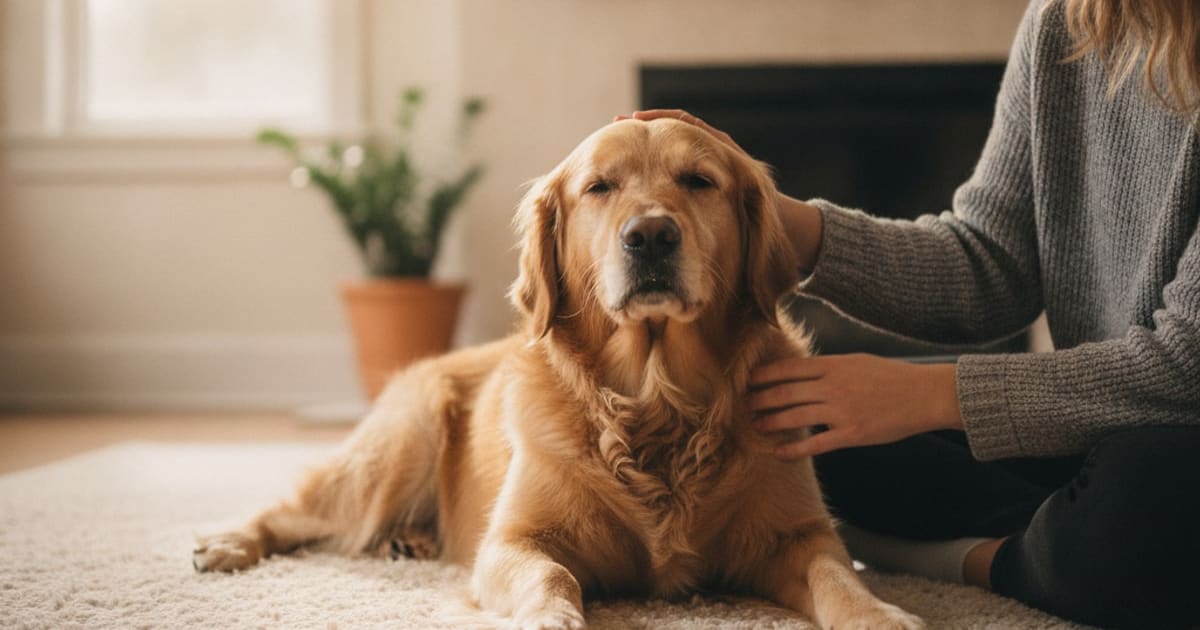
A lump on a dog's back can be a blocked skin cyst, a soft fatty mass, an abscess under the skin, a swelling from a bite or a knock, or a growth that needs testing. Book a veterinary exam for any new lump you find, because only a vet can sort one from another, and a small sample of cells drawn with a fine needle is the only way to say what a lump is actually made of.
There is no single cause behind a lump appearing on a dog's back. That stretch of the body carries skin, hair follicles, oil glands, a layer of fat, muscle, the shoulder blades, the ribs and the spine, and a lump can start in any one of those layers. Two lumps that feel identical under your fingers can turn out to be two completely different things, which is why feel alone, yours or anyone else's, is not a diagnosis.
What the lump on a dog's back can be
When a vet examines a lump along a dog's back, these are some of the possibilities being worked through:
- A cyst formed when an oil gland or hair follicle blocks. It can feel firm and round, sit just under the skin surface, and sometimes releases a thick discharge.
- A soft fatty mass sitting in the layer between skin and muscle. These are seen more in middle-aged and older dogs and tend to feel squishy and loose.
- An abscess, which is a pocket of infection following a puncture, a bite from another animal, a thorn or an embedded grass seed. It can feel warm, tense and painful, and it can appear quickly.
- A bruise or a pocket of blood after the dog was knocked, kicked, stood on or landed badly.
- A swelling at the site of a recent injection or a sting, which can come up fast and may be sore to touch.
- A wart or a skin tag sitting on the surface rather than under it, often with a stalk or a rough cauliflower texture.
- A tick that has attached and swollen, which can feel like a small hard bump fixed to the skin.
- A raised, button-shaped growth of the kind seen on younger dogs, sometimes on the back or the limbs.
- A tumour of the skin or the tissue beneath it. Some of these are harmless once identified and some are not, and they can look and feel like any of the items above.
- A swelling coming from bone, joint or muscle rather than skin, including along the midline of the spine.
Where the lump sits adds a little information but never settles the question. A bump between the shoulder blades is a frequent spot for injection-site swellings and for fatty masses. A lump right on the spine's midline deserves a careful look, especially if the dog is wobbly on the back legs, reluctant to jump, or flinches when that area is touched. A lump near the base of the tail or over the hips can involve glands, fat or deeper tissue. Share the exact location with your vet, and point to it during the appointment, because small lumps are easy to lose in a thick coat.
Hard, soft, moveable or fixed: what the texture can and cannot tell you
A lump that feels hard is not automatically more serious than a soft one, and a soft one is not reassuring: texture alone cannot identify a lump, which is exactly why a needle sample matters.
Still, the way a lump feels and behaves tells your vet where to start, so it is worth knowing what you are describing.
| What you notice | What it can point to | What to do |
|---|---|---|
| Soft, squishy, slides freely under the skin | A fatty mass or a fluid-filled pocket, though other growths can feel the same | Book a routine exam and have it sampled |
| Firm or hard, moves together with the skin | A cyst, a scar, a skin growth or a tick attached to the surface | Book an exam, do not squeeze or pick at it |
| Hard and fixed, will not slide over the bone or muscle underneath | Something involving deeper tissue, bone or the spine | Call your vet promptly and mention that it does not move |
| Warm, red, painful, weeping or with a scab | An abscess, a bite wound or an inflamed area | Call your vet the same day |
| Changing size, growing, or shrinking then returning | A growth that can fluctuate, or inflammation that comes and goes | Call your vet and describe the pattern |
| Appeared overnight | A sting, a bite, a knock or a reaction at an injection site | Call your vet; go to an emergency clinic if there is facial swelling, hives, vomiting or any trouble breathing |
| Several lumps, not just one | Several possibilities, including a skin condition affecting multiple sites | Book an exam and ask for each one to be mapped |
A lump under the skin on a dog's back and a lump on the surface are different starting points. Something under the skin moves beneath a layer of normal skin that slides over the top of it, while a surface growth moves with the skin because it is part of it. Both still need examining. The one thing you should never do is decide a lump is nothing because it feels soft, moves nicely and does not bother your dog.
Signs that mean the appointment cannot wait
Most lumps are checked at a routine visit, but some situations call for the phone rather than the calendar. Call your vet, or an emergency clinic if yours is closed, if you see any of the following:
- The lump is growing quickly or has changed noticeably in a short time.
- It is bleeding, open, ulcerated or has a bad smell.
- It is hot, very painful, or your dog yelps or turns when you touch the area.
- Your dog is dull, off food, vomiting, drinking more, or breathing faster than normal.
- There is swelling of the face or muzzle, hives, or any difficulty breathing.
- The dog is weak, wobbly, dragging a back leg, or will not stand after the lump appeared.
- The gums look pale, white or grey, or the dog collapses.
- There are enlarged lumps elsewhere, such as under the jaw, in front of the shoulders or behind the knees.
If you are unsure which category you are in, that uncertainty is itself a reason to ring the clinic and describe what you are seeing.
What happens at the vet exam
The appointment starts with history. When did you first feel it, has it changed, has your dog been bitten, scratched or injured, and is the dog otherwise behaving normally. Then the vet goes over the whole dog, not just the lump, because finding a second or third one changes the picture.
The lump is measured and its position recorded, so any future change can be compared against a real number rather than a memory. In many cases the next step is a fine needle sample: a small needle is passed into the lump, cells are drawn into it, spread on a slide and examined under a microscope. It is quick, needs no anaesthetic for a cooperative dog, and it is the step that turns guesswork into information.
Depending on what those cells show, the vet may suggest removing the lump or taking a tissue sample for a laboratory to process. Imaging may be used when a lump is fixed to deeper structures, sits over the spine, or when the vet wants to see how far it extends. Blood work may be added if the dog is unwell in any other way. What happens next depends on what is found, and results vary from dog to dog, so talk to your vet about the plan for your specific dog rather than working from what happened to someone else's.
If your dog already has a skin condition, an allergy plan or another ongoing problem, your vet can tell you how this new lump fits alongside it.
What to do between finding the lump and the appointment
Your job in the meantime is observation, not intervention.
- Write down the date you first noticed it and roughly where it sits, for example a hand's width behind the shoulder blades, slightly left of the spine.
- Take a clear photo with a coin or a ruler beside it for scale, and take another the morning of the appointment.
- Note whether the skin over it looks normal, thinned, reddened or hairless.
- Note whether your dog licks, chews or scratches at the spot.
- Leave it alone. Do not squeeze it, lance it, pick at a scab or apply anything to it, as that can inflame the area and make the sample harder to read.
- Check the rest of the body with your hands while you are at it, including the chest, belly, legs and under the collar line, and bring a list of anything else you find.
- Keep harnesses and collars clear of the lump if they rub against it.
Key Takeaways
- A lump on a dog's back can be a cyst, a fatty mass, an abscess, a bite reaction, a wart, a swelling from an injury, or a growth that needs testing.
- Hard or soft, moveable or fixed, painful or painless: none of these settle what a lump is. A vet exam may help find the cause.
- Only a sample of cells, taken with a fine needle or by removing tissue, can identify a lump.
- Call the clinic without waiting if the lump is growing fast, bleeding, hot and painful, or if your dog is unwell, wobbly or breathing oddly.
- A lump that appears overnight points toward a sting, bite or injury, and any facial swelling or breathing difficulty is an emergency.
- Record the date, the location and a photo with something for scale, and leave the lump itself untouched.
- Check the whole dog, since finding more than one lump matters to the vet.
A lump is a physical finding, not a diagnosis, and the gap between those two is closed in the exam room. Your veterinarian owns the diagnosis and the plan that follows it, from the needle sample through to whatever is recommended afterwards, and no description on a screen can substitute for hands on your dog and cells under a microscope. Book the appointment, bring your notes and your photos, and call your vet if the lump changes before you get there or if you notice any of the urgent signs above.
For more on the warning signs that mean an emergency clinic rather than a morning appointment, read Dog Emergency Signs, and you can browse lumps alongside other canine health topics in Dog Health Conditions.
Frequently asked questions
- Why has my dog got a lump on his back?
- A lump there can come from a blocked oil gland or follicle, a soft fatty mass, an abscess after a bite or a thorn, a bruise from a knock, a sting, a wart, an attached tick, or a growth that needs testing. Book a vet exam, since a cell sample is what identifies it.
- What is the lump on my dogs back?
- Nobody can tell you from a description, a photo or how it feels, because cysts, fatty masses, abscesses, warts and tumours overlap in size, shape and texture. A vet exam may help find the cause, and a fine needle sample examined under a microscope is the step that gives you a real answer.
- What is the hard lump on my dogs back?
- A hard lump can be a cyst, a scar, an attached tick, a firm skin growth, a swelling involving bone or deeper tissue, or a tumour. Hardness alone does not make it more or less serious. Call your vet for an exam, and mention if the lump will not slide over the tissue underneath.
- What does it mean if a dog has a lump on its back?
- It means something has changed in one of the layers there: skin, hair follicle, oil gland, fat, muscle, bone or spine. It does not by itself mean cancer, and it does not mean the lump is harmless either. Have a vet examine any new lump and sample it to find out which.
- My dog's back has a lump that appeared overnight. Should I worry?
- A lump that comes up within hours points toward a sting, an insect bite, a puncture wound, a knock or a reaction at an injection site. Call your vet the same day. Go to an emergency clinic straight away if there is facial swelling, hives, vomiting, collapse or any difficulty breathing.
- Can a hard lump on a dog's back be cancer?
- Yes, a lump anywhere on the body can be a tumour, and skin tumours can feel hard, soft, fixed or moveable. That is why guessing from texture is unreliable. A vet can take a fine needle sample and have the cells examined, which is the only way to tell what the lump contains.
- Is a lump under the skin on a dog's back different from one on the surface?
- They are different starting points. A lump under the skin sits beneath normal skin that slides over the top of it, while a surface growth moves with the skin because it is part of it. Both need a vet exam, and the location and depth help guide which tests are suggested.
- Should I watch a dog lump on the back or get it checked right away?
- Get it checked. Watching and waiting lets a lump change before anyone knows what it is, and a fine needle sample is quick. Call sooner rather than later if it grows, bleeds, feels hot or painful, or if your dog seems unwell, wobbly or off food.
- My dog has lumps in more than one place. Does that change anything?
- It can, so tell your vet about every one you find. Several lumps may be several separate things, or one process affecting multiple sites. Run your hands over the whole dog, including the chest, belly, legs and neck, write down what you feel and where, and bring the list to the appointment.
- Does it matter if the lump does not bother my dog at all?
- No. Plenty of lumps cause no pain, no itch and no change in behaviour, and a dog acting completely normal tells you nothing about what the lump is made of. Comfort is reassuring for daily life, but it is not a screening test. Talk to your vet and have the lump sampled.
Educational content, not veterinary advice. Ask your vet about your dog.