Dog Hives: What They Are and What They Look Like
Dog hives, also called urticaria, are raised welts in the skin caused by a sudden allergic or irritant reaction. They often appear as round bumps that make the coat look rippled or dimpled, and they can be itchy. Hives with facial swelling or breathing trouble need an emergency vet.
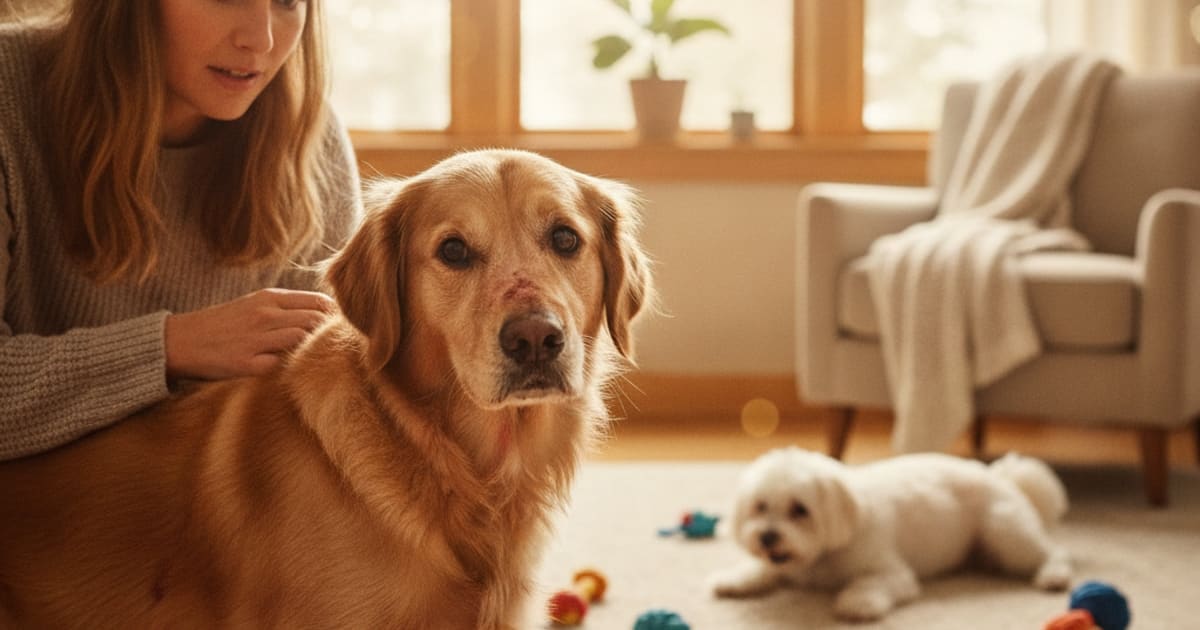
Dog hives, known medically as urticaria, are raised welts in the skin that appear when the body reacts suddenly to something it treats as a threat. If your dog has broken out in hives, call your veterinarian now, and go straight to the nearest emergency clinic if the face is swelling or breathing looks laboured.
Hives combined with swelling of the face, lips, eyelids or muzzle, trouble breathing, heavy drooling, vomiting, weakness, collapse or pale gums is an emergency: get to an emergency veterinarian immediately rather than waiting to see whether it settles on its own.
Many hives reactions are less dramatic than that, and a dog can look otherwise bright, eat normally and still be covered in welts. That does not mean the reaction should be ignored. Skin is a visible readout of what the immune system is doing, and a vet is the right person to decide whether this is a nuisance or the early edge of something that needs urgent care.
What hives are, in plain terms
Underneath the surface of your dog's skin sit mast cells, immune cells loaded with signalling chemicals, histamine among them. When something triggers those cells to release their contents, small blood vessels in the skin widen and become leaky. Fluid seeps out into the surrounding tissue, and the skin lifts into a firm, raised patch called a wheal. A cluster of wheals is what owners recognise as hives.
That is the whole mechanism in one sentence: a sudden local release of inflammatory chemicals, fluid pushing into the upper layers of skin, and the surface rising in response. It explains why hives can come up so quickly, why they often feel warm, and why they can shift position on the body rather than staying in one fixed spot.
When the same process happens deeper in the tissue, in the loose skin around the lips, eyelids and muzzle, it produces puffy swelling instead of discrete bumps. That deeper form is called angioedema, and it travels with hives often enough that the two are frequently discussed together. Angioedema matters more than surface welts because swelling near the throat and airway can interfere with breathing.
So the short answer to what hives for dogs actually means: an acute, histamine-driven swelling reaction in the skin, not an infection, not a parasite, and not something caused by anything you did wrong.
What dog hives look like on different coats
The classic picture is a field of round or oval raised bumps, roughly the size of a small coin, sometimes smaller, sometimes merging into larger irregular plaques. On a dog with pale, thinly haired skin, they usually look pink or red. On dark skin they may not change colour at all, and you will feel them before you see them.
Coat type changes the picture more than anything else:
- Short, smooth coats. The welts are obvious. The outline of each bump shows through the hair and the surface looks pebbled or quilted. Belly, chest, inner thighs and groin are easy places to check because the hair is thin there.
- Medium and long coats. You often see the fur before you see the skin. Hair stands up in small tufts over each wheal, giving the coat a rippled, dimpled or moth-eaten look. Part the hair and the raised patches become clear.
- Wrinkled or loose-skinned faces. Early swelling can be mistaken for normal folds. Compare one side of the face with the other, and compare with a recent photo of your dog at rest.
Hives can be confined to one area or spread over the whole body. Face, muzzle, ears, neck, trunk and limbs are all fair game, and a reaction that starts in one region can extend across the body within a short time. Run your hands slowly over your dog from nose to tail. If the skin feels like bubble wrap under the coat, you have found them.
People search for dog hives pictures for a reason: a static image never quite matches the dog in front of you. The more useful move is to make your own. Take clear, well-lit photos with the hair held back, include a hand or a coin in frame for scale, and photograph the face straight on so swelling can be compared later. Note the time. If your dog is examined hours later when the skin has calmed, those images become the most valuable part of the history you hand your vet.
Symptoms that show up alongside the welts
Hives themselves are a sign, not the whole illness. The symptoms owners report around them include:
- Itching, which can range from barely noticeable to frantic rubbing, scratching, chewing and rolling
- Face rubbing on carpet or furniture, or pawing at the muzzle and ears
- Restlessness, pacing, an inability to settle
- Warm skin over the affected areas
- Hair standing up in patches, giving the coat an uneven texture
- Red, watery or squinting eyes when the swelling involves the eyelids
- Puffy lips or muzzle that changes the shape of the face
And the signs that change the situation from concerning to urgent: noisy or laboured breathing, open-mouth breathing in a dog who is not hot, stretching the neck out to breathe, drooling, retching, vomiting, diarrhoea, weakness, wobbliness, collapse, cold limbs, or gums that look pale, white, grey or blue. Those point to a reaction affecting more than the skin, and they belong in an emergency room, not in a wait-and-see plan.
Severity and speed vary, and results vary from dog to dog. A dog who shrugged off a reaction last season may respond differently to the same trigger next time, which is one reason veterinary input matters rather than pattern-matching to a previous episode.
What tends to set a hives reaction off
Triggers fall into a handful of familiar categories, and in plenty of cases the exact culprit is never pinned down:
- Insect stings and bites. Bees, wasps, hornets, ants and biting flies are classic provocateurs, particularly when the sting lands on the face.
- Something eaten. A new food, a new treat, a dropped scrap, or something scavenged on a walk.
- Something given by a vet. Reactions can follow a vaccination or a medication. This is a reason to tell your clinic what your dog received and when, never a reason to skip or change veterinary care on your own.
- Contact with plants or chemicals. Shampoos, flea products, cleaning agents, lawn treatments or plant sap on a thinly haired belly.
- Inhaled or environmental allergens. Pollens, moulds and dusts.
- Physical triggers. Heat, cold, pressure on the skin or exertion can provoke welts in some dogs.
When you call your clinic, think back over the previous few hours. New food, new walk route, new product in the house, time spent in long grass, a yelp outdoors, a recent appointment. That timeline is often more useful than the appearance of the skin itself.
Conditions that can be mistaken for hives
Several skin problems produce bumps, and they are managed very differently. This table is for orientation only: distinguishing them is a job for an examination.
| Skin problem | What it looks like | How it behaves |
|---|---|---|
| Hives (urticaria) | Round raised welts, often widespread, coat looks rippled | Comes up quickly, can shift location, often itchy |
| Angioedema | Puffy swelling of lips, eyelids, muzzle, sometimes the throat | Deeper swelling, can affect breathing, urgent |
| Insect bite or sting | One or a few swollen lumps, sometimes with a central point | Localised, though a wider reaction can follow |
| Hot spot | A single wet, raw, oozing patch with hair loss | Painful, spreads as the dog licks and chews it |
| Bacterial skin infection | Small pimple-like bumps, crusts, circular scaly patches | Builds over days, often with greasy skin or odour |
| Contact irritation | Redness and small bumps on belly, groin or paws | Matches exactly the area that touched the substance |
If you are asking yourself whether your dog has hives or something else, that uncertainty is itself a good reason to book an appointment. Talk to your vet rather than working from photographs online.
What to expect when you take your dog in
Triage comes first. Clinics prioritise airway, breathing and circulation, so a dog with facial swelling or respiratory signs is seen ahead of a dog with itchy welts and normal vital signs. Expect staff to ask you to describe breathing over the phone before you set off.
The visit itself usually begins with a full physical examination: gum colour, heart and lungs, temperature, and a careful look at the distribution of the welts. The history you supply does a lot of the work here, which is why the timeline and your photos matter. Your vet may look at the skin surface more closely, or sample it, if the appearance is not typical of a straightforward swelling reaction, because the look-alikes above need different handling.
From there, your veterinarian decides what, if anything, to give, how long your dog should be observed, and what warning signs should bring you back. Those decisions depend on the individual dog, the severity of the reaction and the suspected trigger, which is exactly why no article should be making them for you.
Key takeaways
- Dog hives are raised welts caused by a sudden swelling reaction in the skin, not an infection or a parasite.
- Hives with facial swelling, breathing difficulty, vomiting, weakness, collapse or pale gums is an emergency, and emergency care should not be delayed.
- On short coats the bumps are visible; on longer coats the first sign is often a rippled, dimpled look to the fur.
- Hives can stay in one region or cover the entire body, and can move position over time.
- Itching, face rubbing, restlessness and warm skin commonly accompany the welts.
- Triggers include stings, foods, contact with plants or chemicals, inhaled allergens and physical factors; many episodes never get a confirmed cause.
- Clear, timestamped photos taken at home are one of the most useful things you can bring to the appointment.
Your veterinarian owns this diagnosis
Hives look alarming and often resolve into something routine, but the only reliable way to separate a passing skin reaction from the early stage of a serious one is an examination by a veterinarian who can see your dog, assess breathing and circulation, and weigh the history against what the skin is doing. Call your clinic when hives appear, go to emergency care without hesitation if the face is swelling or breathing changes, and follow the plan your veterinarian sets rather than adjusting it based on what you read.
Related reading: Dog Emergency Signs, which covers the warning signs that mean a same-day or overnight visit.
Frequently asked questions
- what is dog hives
- Dog hives, or urticaria, is a sudden swelling reaction in the skin. Immune cells release histamine, small blood vessels leak fluid into the upper skin layers, and the surface lifts into raised welts. It is a reaction, not an infection, and it warrants a call to your veterinarian.
- what are dog hives
- Dog hives are clusters of raised, often itchy welts that appear when the skin reacts to a trigger such as a sting, a food, a contact irritant or an allergen. They can be localised or cover the whole body, and they often come up within minutes to hours.
- what is hives for dogs
- For dogs, hives means an acute allergic or irritant skin reaction that produces firm raised bumps called wheals. The same process in deeper tissue causes puffy swelling of the lips, eyelids and muzzle, which is more urgent because swelling near the airway can affect breathing.
- what does dog hives look like
- Dog hives look like round or oval raised bumps, often coin-sized, sometimes merging into larger patches. On pale thin skin they appear pink or red; on dark skin colour may not change and you feel them instead. On longer coats the fur looks rippled or dimpled.
- what do dog hives look like
- They look like a field of firm raised welts across the belly, chest, neck, trunk or face, with hair standing up in small tufts above each bump. Run your hands over your dog: skin that feels like bubble wrap under the coat is the giveaway.
- does my dog have hives
- If your dog has suddenly developed raised bumps you can feel under the coat, with itching, face rubbing or restlessness, hives are a strong possibility. Several skin problems look similar, so talk to your vet, and take clear timestamped photos before the skin changes.
- What are the symptoms of dog hives?
- Raised welts, itching, scratching or chewing, face rubbing, restlessness, warm skin and hair standing in patches. Swollen lips, muzzle or eyelids can accompany them. Breathing difficulty, drooling, vomiting, weakness, collapse or pale gums signal a reaction beyond the skin and need emergency veterinary care immediately.
- Can hives appear all over a dog's body?
- Yes. Hives can stay confined to one region or spread across the trunk, limbs, neck and face, and a reaction that begins in one area can extend widely in a short time. Welts can also shift position. Widespread involvement should be assessed by a veterinarian promptly.
Educational content, not veterinary advice. Ask your vet about your dog.