How Can I Get My Dog to Lose Weight Quickly? (Safe Rate)
Most dogs can safely lose about 1 to 2 percent of their body weight per week, which is the fastest rate most veterinary weight-management guidance supports. Getting there means a measured calorie target set with your veterinarian, weighed meals, a strict treat budget and low-impact movement that protects joints.
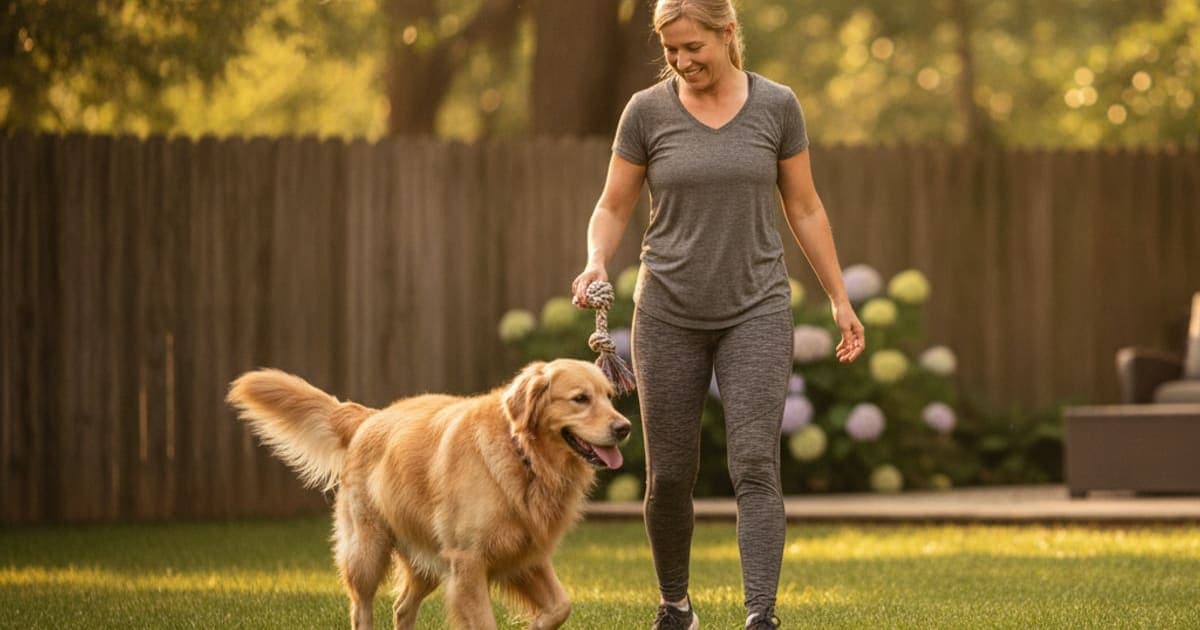
The fastest pace a dog can safely lose weight is roughly 1 to 2 percent of body weight per week. For a 60 pound dog, that is somewhere around half a pound to just over a pound a week. You get there by having your veterinarian calculate a daily calorie target for your dog's goal weight, weighing every meal on a kitchen scale instead of scooping it, capping treats at a small fraction of the day's calories, and adding short, low-impact walks that build gradually. Anything faster than that range is not a better diet, it is a different problem: dogs stripped of weight too fast lose lean muscle along with fat, and muscle is the tissue that holds a stiff, aging dog upright.
So the honest reframe is this. You can start today, and you can see the scale move inside two weeks. But "quickly" for a dog is measured in months, not weeks, and the owners who get the best results are the ones who treat it like a four to six month project with weekly weigh-ins.
The safe dog weight loss rate, and why pushing harder backfires
About 1 to 2 percent of current body weight per week is the figure most veterinary weight-management guidance points to. It sounds slow. On a 90 pound dog who should be 70, it still adds up to real change by the end of a season.
Go faster and three things tend to happen. First, lean muscle goes with the fat, and in an older dog that accelerates the loss of the hind-end strength that was already fading. Second, severe calorie cuts on a standard maintenance food can shortchange protein and micronutrients, which is exactly why veterinary therapeutic weight-loss diets exist: they are built to keep protein and nutrient density high while total calories drop. Third, a hungry dog becomes a counter-surfing, bin-raiding dog, and the household gives up in week three.
The fastest weight loss a dog can actually complete is the one you can sustain for four months, and it runs on a measured calorie target your veterinarian sets, not on skipped meals.
One more thing worth ruling out before you start cutting food. Sudden or stubborn weight gain can have a medical driver, including thyroid issues, and some medications change appetite. Ask your veterinarian whether bloodwork makes sense before you assume the problem is purely the bowl.
How to reduce your dog's weight: building the calorie deficit
Weight loss in dogs is arithmetic, the same as it is in people. Calories in have to sit below calories burned, consistently, for long enough to matter.
Start with a number, not a vibe. Your veterinarian can calculate a daily calorie allowance based on your dog's goal weight and body condition score, which is the 1 to 9 scale vets use to judge how much fat is covering the ribs and whether there is a waist when you look down from above. Learn to do that hands-on check yourself. You should feel ribs under light pressure, the way you feel the knuckles on the back of your hand.
Then fix the measuring. A scoop or a cup is the single biggest source of accidental overfeeding, because kibble settles differently every time and most people round up. Weigh the food in grams on a cheap kitchen scale and portion the whole day out in the morning so nobody in the house double-feeds.
Feeding guides on the bag are a starting point for an average dog at maintenance, not a weight-loss plan for yours. Neutered, under-exercised and older dogs commonly need less than the bag suggests. If your dog is starving on the new amount, talk to your veterinarian about a therapeutic weight-loss formula: higher protein and fiber for the same calories means a fuller stomach on less food.
Split the daily ration into two or three meals, use a slow feeder or a puzzle bowl so the meal lasts longer than nine seconds, and weigh the dog on the same scale, at the same time of week, every week. Many clinics will let you use their walk-on scale for free.
The treat budget almost everyone gets wrong
A common veterinary rule of thumb is that treats and extras should stay at or under about 10 percent of daily calories. On a small dog that is a startlingly tiny allowance, which is why toy breeds gain weight on what looks like nothing.
The real damage is rarely the training treats. It is the uncounted stuff: the crusts, the cheese used to hide a pill, the dental chew that carries meaningful calories, the lick of ice cream, the three family members each giving "just one." Write the day's treat allowance on a sticky note on the fridge and have everyone draw from the same pile.
Useful swaps that keep the ritual without the calories include green beans, cucumber, carrot and plain air-popped popcorn, plus simply using part of the measured kibble ration as training rewards. Keep grapes, raisins, onions, macadamia nuts, chocolate and anything sweetened with xylitol off the list entirely, and check with your veterinarian before adding any new human food if your dog has kidney, pancreatic or other dietary restrictions.
What works, what wastes four months
| Approach | What it actually does | Verdict |
|---|---|---|
| Vet-calculated calorie target, weighed meals | Creates a measurable, repeatable deficit you can adjust from weigh-in data | The backbone of every successful plan |
| Therapeutic weight-loss diet | Keeps protein and nutrient density high while calories drop, so the dog stays fuller | Worth discussing if hunger is wrecking compliance |
| Free feeding, bowl topped up | Removes all control over intake; grazing dogs are the hardest to reduce | Stop first, before anything else |
| Cutting the normal food by half | Drops nutrients and protein along with calories, risks muscle loss | Common, understandable, counterproductive |
| Switching food brands and hoping | Changes the label, not the calorie math | Rarely moves the scale alone |
| Long runs with an unconditioned, heavy dog | Loads already-stressed joints and soft tissue before fitness exists | Build up instead |
| Short, frequent, low-impact walks | Burns calories, preserves muscle, tolerable for stiff dogs | Start here and extend weekly |
Exercise that burns calories without punishing the joints
An overweight dog is usually already carrying some degree of joint strain, so the instinct to launch straight into long runs is the one instinct to resist. More load on a heavy, deconditioned frame is how a diet plan turns into a limp.
Build the way you would build any athlete coming back from a layoff. Start with walks the dog comfortably finishes, then add a few minutes each week. Multiple short walks beat one long one for a dog who stiffens up. Flat ground and grass beat hills and pavement early on. Swimming and underwater treadmill work, where a canine rehab facility is available, take weight off the limbs entirely while still demanding effort, which is why rehab vets lean on them for heavy or arthritic patients. Sniff walks count: twenty minutes of slow scent work tires a dog out and costs the joints almost nothing.
If your dog is panting hard early, lagging, or sore the next morning, that is data. Back the volume off and tell your veterinarian, particularly if you see a limp, a bunny-hopping gait behind, or reluctance on stairs. Those are orthopedic signs that deserve a proper exam, not more walking.
What the forum threads get right, and what they miss
Dog weight loss threads on reddit and similar forums get a surprising amount right. The recurring advice there, weigh the food, count the treats, use green beans, get a body condition score, weigh in weekly, mirrors what veterinary nutritionists say.
Where crowd advice goes wrong is in the extremes: wildly restrictive homemade diets built without a nutritionist, fasting schedules borrowed from human dieting, and the assumption that a dog who slows down is simply lazy rather than sore. It also tends to skip the orthopedic half of the story. Weight and mobility feed each other in both directions. A dog who hurts moves less, a dog who moves less gains, and the added load makes the hurting worse. Breaking that loop takes both a calorie plan and real attention to how the dog's joints and soft tissue are holding up.
Where joint and mobility support fits alongside a weight plan
Diet drives the weight. Comfort and tissue quality drive whether your dog can do the movement the plan depends on, and that is the part owners underestimate.
That is the space K9-REPAIR from pawgen is built for. It is a BPC-157 and TB-500 peptide formulation for dogs, focused on joint, tendon and mobility recovery, and it has become part of the stack many owners run through rehab and recovery periods. Research on BPC-157 suggests it may support angiogenesis, the formation of new blood vessels, and the activity of tendon and ligament fibroblasts, the cells that lay down connective tissue. TB-500 is related to thymosin beta-4, a naturally occurring protein studied for its role in actin regulation and cell migration during tissue repair. The science here is emerging and genuinely promising, and owners are adopting it on that basis.
To be clear about the rails: BPC-157 and TB-500 are not FDA-approved veterinary drugs, nothing here is a treatment for any condition, and dosing is a conversation for your veterinarian rather than something to guess at from a blog. What pawgen can state plainly is what is in the bottle, that amounts are scaled by body weight, and that batches are third-party tested with certificates of analysis published. There is also a 60 day money-back guarantee, which is the right structure for a product an owner is trying for the first time.
Be far more skeptical of the aisle of kitchen-sink chews promising hip and joint miracles with ingredient lists long enough to hide how little of anything is actually in them. Dose transparency and published testing are the things worth demanding.
Key Takeaways
- The safe maximum dog weight loss rate is about 1 to 2 percent of body weight per week. Faster costs muscle.
- Get a daily calorie target for goal weight from your veterinarian, then weigh meals in grams instead of scooping.
- Treats and extras should stay at or under roughly 10 percent of daily calories, and every person in the house draws from the same allowance.
- Rule out medical causes, including thyroid issues, before assuming the bowl is the whole story.
- Build exercise gradually and keep it low-impact: short frequent walks, sniff walks, swimming where available.
- Weigh in weekly on the same scale and adjust from data, not from guesswork.
- Weight and mobility are a loop; supporting joint comfort is what lets the exercise half of the plan actually happen.
If you want to read further into how pawgen handles quality and supply, batch certificates of analysis are published on the COAs page, the full product range sits in the shop, and shipping coverage is listed on the location page.
Your veterinarian owns the diagnosis and the plan: the body condition score, the calorie target, the decision about a therapeutic diet, the bloodwork, and any prescription or surgical recommendation for an orthopedic problem. Nothing in a supplement or peptide bottle replaces that, and nothing here is a reason to change or stop anything your vet has prescribed. Supplements and peptides work in the space that proper veterinary care creates, which is exactly where a well-run weight loss plan lives too.
Owners exploring peptide support for their dog can review K9-REPAIR, BPC-157 + TB-500 formulated for dogs, at https://pawgen.com/. BPC-157 and TB-500 are not FDA-approved veterinary drugs. Nothing in this article treats, cures or prevents any condition; every decision about your dog's care belongs with your veterinarian.
Frequently asked questions
- How can I get my dog to lose weight quickly?
- Have your veterinarian calculate a daily calorie target for your dog's goal weight, weigh every meal in grams, cap treats at around 10 percent of daily calories, and add short low-impact walks. Expect about 1 to 2 percent of body weight lost per week, which is the fastest safe pace.
- How can a dog lose weight quickly?
- Through a consistent calorie deficit, not a crash diet. A measured portion of a nutritionally complete food, strict treat control and gradually increasing low-impact exercise will move the scale within a few weeks. Dropping weight faster than roughly 1 to 2 percent weekly tends to cost lean muscle rather than fat.
- How do I reduce my dog's weight?
- Start with a vet exam and a body condition score, then get a daily calorie allowance based on goal weight. Stop free feeding, weigh food on a kitchen scale, split it into two or three meals, budget treats, and weigh your dog on the same scale weekly to track progress.
- How to help dogs lose weight?
- Control the inputs first: measured meals, no table scraps, one shared treat allowance for the whole household. Then add movement your dog tolerates comfortably and extend it weekly. A therapeutic weight-loss diet, discussed with your veterinarian, helps when hunger is making the plan impossible to stick to.
- How to make your dog lose weight quickly?
- Quickly for a dog means steady, not extreme. Set the calorie target with your veterinarian, weigh portions, eliminate uncounted extras, and build walks gradually. Most owners see visible change over two to four months. Severe food restriction causes muscle loss and nutrient shortfalls, and it usually triggers a rebound.
- How to lose weight fast for a dog?
- The fast version is simply the well-executed version: accurate portions, counted treats, daily low-impact activity and weekly weigh-ins so you can adjust. Target roughly 1 to 2 percent of body weight per week. Ask your veterinarian to rule out thyroid or other medical causes before cutting food further.
- What is a safe dog weight loss rate per week?
- About 1 to 2 percent of current body weight per week is the range most veterinary weight-management guidance supports. On a 50 pound dog that is roughly half a pound to a pound weekly. Slower is fine; consistently faster is a reason to check in with your veterinarian.
- Can joint problems make it harder for my dog to lose weight?
- Yes. A sore dog moves less, which lowers calorie burn, and the extra weight increases joint load, which worsens the soreness. Addressing comfort and mobility with your veterinarian is often what makes the exercise half of a weight plan realistic rather than aspirational.
Educational content, not veterinary advice. Ask your vet about your dog.