How Long Can a Puppy Go Without Eating? (And When to Call)
Most healthy puppies over four months should not go beyond roughly twelve hours without food, and very young or toy breed puppies far less, because low blood sugar develops quickly. A puppy refusing two meals in a row, or acting flat, needs a veterinary call that day.
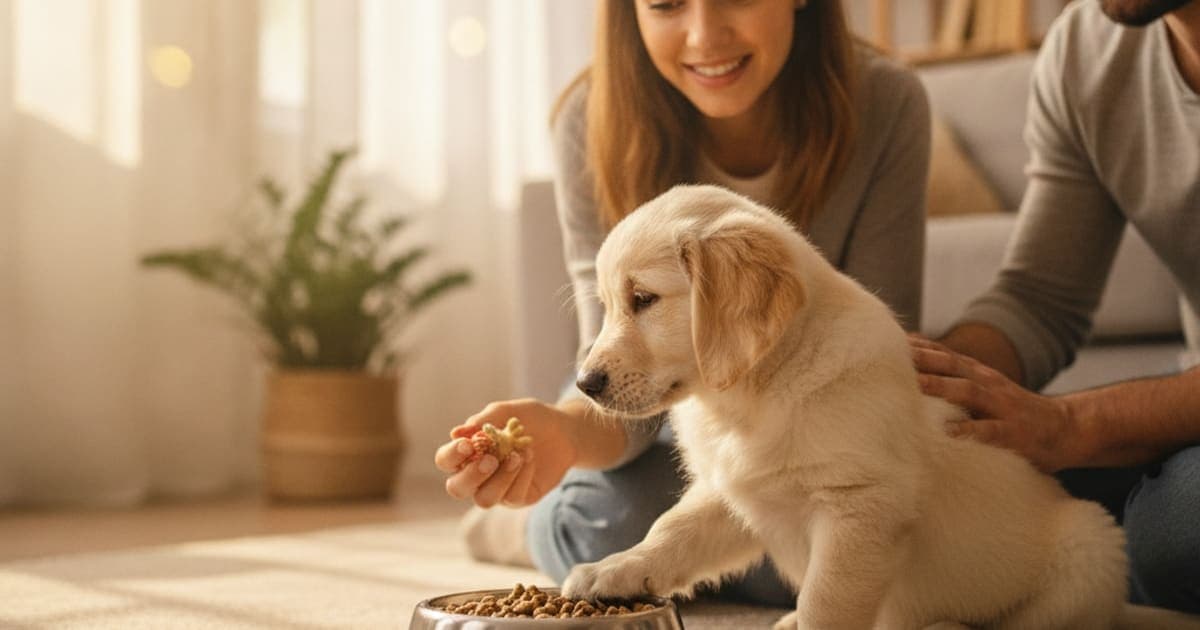
A healthy, bright puppy older than about four months can usually ride out a missed meal, but should not go much beyond roughly twelve hours without food, and puppies under four months, toy and small breeds, and any puppy that seems unwell have a far shorter safe window than that. If your puppy has refused food for most of a day, or has skipped even one meal while also being sleepy, wobbly, vomiting or trembling, call your veterinarian now rather than waiting to see whether the appetite comes back on its own.
This is the part that catches experienced dog owners out. An adult dog in good condition can fast for a day or more without much consequence. A puppy cannot. The safe window shrinks with age and size, and in the smallest puppies it is measured in hours, not days.
A puppy that will not eat is not being fussy until a veterinarian says so: in a young dog, lost appetite is a symptom, and it can turn into a medical emergency inside a single afternoon.
Why young dogs run out of fuel so quickly
Puppies are small engines with tiny fuel tanks. They have a high metabolic rate, very little body fat to draw on, and immature systems for storing and releasing glucose between meals. Research suggests that young puppies have a limited capacity to mobilise stored glucose compared with adult dogs, which is why low blood sugar, known as hypoglycaemia, is a recognised risk in neonates and in small and toy breed puppies.
What that looks like in practice: a puppy that goes too long between meals can become quiet, then wobbly on its feet, then tremble, then have pale or greyish gums. In serious cases this progresses to collapse or seizures. These signs are a go-now emergency, not a wait-and-see.
Dehydration is the second clock running. A small body loses fluid proportionally faster than a large one, and a puppy that is refusing food and also vomiting or passing loose stool can become dehydrated remarkably quickly. Skin tenting and tacky gums are late signs rather than early ones, so do not rely on them to tell you when it is time to act.
The third factor is simply that puppies are exploratory. The reason a puppy stops eating is quite often something it swallowed, something it caught, or something it was exposed to, rather than a mood. Appetite is one of the few honest signals a young dog gives you, and it tends to drop before anything else looks wrong.
How fast to act, by age, size and symptom
Use the table below as a triage guide, not a diagnosis. When in doubt, the phone call costs you nothing and your veterinary team would far rather hear from you early.
| Situation | What it can point to | How soon to contact a vet |
|---|---|---|
| Puppy under about twelve weeks, or any toy breed puppy, refuses a single meal | Highest hypoglycaemia risk group | Same day, and immediately if the puppy is sluggish |
| Puppy over four months skips one meal but is bright, playful and drinking | Often minor: heat, excitement, stress, teething, a recent clinic visit | Watch closely, call if the next meal is also refused |
| Two meals refused in a row, any age | Unlikely to be fussiness alone | Call your veterinarian that day |
| Not eating plus vomiting, diarrhoea, blood in stool, or a tense, swollen belly | Possible parvovirus, obstruction or other urgent illness | Emergency, go now |
| Not eating but drinking normally and acting flat | Nausea, fever, mouth or throat pain, systemic illness | Call same day |
| Not eating and not drinking | Dehydration builds fast in a small body | Emergency, go now |
| Weak, wobbly, trembling, pale gums, collapsed or seizing | Possible severe low blood sugar | Emergency, go now |
| Known or suspected contact with a toxin, plant, medication or unknown object | Poisoning or foreign body | Call your veterinarian or an animal poison control service such as the ASPCA Animal Poison Control Center or the Pet Poison Helpline straight away |
If you cannot reach your own clinic, go to the nearest emergency veterinary hospital. Puppies deteriorate on a steeper curve than adult dogs, and the margin for watching and waiting is thin.
Common reasons a young dog stops eating
The move itself. A puppy in a new home is dealing with new people, new smells, a new food and the absence of littermates. A quiet first day is common. A quiet second day is not, and that is the point where you call.
Teething and mouth pain. Between roughly four and seven months, puppies are losing baby teeth and erupting adult ones. Dry kibble can genuinely hurt. A puppy that approaches the bowl, tries, then backs off, or that chews on one side only, may be telling you its mouth is sore. Retained teeth, a splinter or a cut gum are all worth a look by a veterinarian.
After a vaccination or veterinary visit. Some puppies are subdued and off their food for a short period after a clinic appointment. Vaccination decisions, timing and any reaction to them belong in a conversation with your vet, not with the internet. Report any appetite change that persists or any facial swelling, hives, vomiting or breathing difficulty immediately.
Parasites. Intestinal worms, coccidia and giardia are extremely common in young dogs and can cause poor appetite, loose stool, a pot-bellied look and poor growth. Diagnosis needs a faecal sample, not guesswork.
Infectious disease. Parvovirus is the one every puppy owner should know by name. Lethargy, loss of appetite, vomiting and foul-smelling or bloody diarrhoea in an incompletely vaccinated puppy is an emergency, and it is treatable when caught early.
Swallowed objects. Socks, stones, corn cobs, toy parts and string are classic puppy acquisitions. An obstruction often shows up as repeated vomiting, refusal of food and water, and a painful abdomen.
Pain anywhere. Dogs with pain eat less. An injury from a fall off the sofa, a sore joint or an ear infection can all suppress appetite before you see a limp or a head shake.
Food and routine. Abrupt diet changes, food left down all day until it goes stale, too many training treats, or a bowl placed somewhere loud and busy can all reduce intake in a puppy that is otherwise fine. These are real causes, but they are the ones you consider after illness has been ruled out, not before.
What if the puppy is drinking water but refusing food?
This is one of the most common ways the problem presents, and it is reassuring only up to a point. Drinking tells you the swallow reflex works and the puppy is not yet collapsing. It does not tell you the puppy is well.
Drinking normally, bright, playful, one meal missed
Keep the routine calm, offer the next meal at the usual time, and do not start swapping foods repeatedly, which teaches a puppy to hold out for something better. If the second meal is also refused, stop experimenting and call.
Drinking a lot and acting flat
Increased thirst alongside lost appetite is a combination worth taking seriously. It can accompany fever, nausea, pain or a systemic problem that needs blood work and an examination to sort out. This is a same-day call.
Refusing both food and water
Treat this as urgent at any age. A puppy that will not drink is on a short road to dehydration, and the underlying cause is more likely to be significant.
Eating nothing and vomiting everything
Repeated vomiting, retching that produces nothing, or a hunched, tense posture means an emergency assessment. Do not withhold water for hours as a home remedy in a young puppy without veterinary direction.
Getting a sick puppy to eat again
First, the boundary: anything described below is comfort and encouragement for a puppy a veterinarian has already assessed, or for one being actively monitored on veterinary advice. None of it substitutes for a diagnosis, and none of it should delay a phone call.
Warmth and smell do most of the work. Gently warming food releases aroma, and puppies eat with their noses first. Offering a small amount of a veterinary-recommended bland or recovery diet, hand feeding a little from your palm, or sitting quietly on the floor beside the bowl can all reduce the pressure around the meal. Small, frequent offerings suit a nauseated puppy better than one large bowl.
Remove competition and noise. Feed away from other pets, children and traffic. Take uneaten food up after a short period rather than leaving it to sour, and offer fresh at the next meal.
What not to do matters just as much. Do not force food into a puppy that is sleepy, weak or vomiting, because of the aspiration risk. Do not syringe feed, offer honey or sugar syrup, or give any human medication unless your veterinarian has specifically instructed you to, including the amount. Appetite stimulants and anti-nausea medication exist and can help, but they are prescription decisions, and dosing in puppies is a conversation to have with your vet rather than a number to find online. Results vary from dog to dog, and what settles one puppy's stomach does nothing for another.
Key takeaways
- A bright puppy over four months should not go much beyond roughly twelve hours without food; younger and smaller puppies have far less margin.
- Two refused meals in a row, at any age, is a same-day veterinary call.
- Low blood sugar is the specific danger in neonates and toy breeds: wobbliness, trembling, pale gums or collapse is an emergency.
- Drinking water while refusing food is not an all-clear, especially if the puppy is flat or the thirst is excessive.
- Lost appetite plus vomiting, bloody diarrhoea, a swollen belly, or suspected toxin or object ingestion means emergency care now.
- Encouragement at home is for puppies already under veterinary care, never a reason to postpone an examination.
Your veterinarian owns the diagnosis and the plan here. Examination, faecal testing, blood work and imaging are what separate teething from parasites from an obstruction, and in a young dog that distinction is time-sensitive. Everything you do at home, from a calm feeding routine to careful monitoring of gums, energy and stool, works inside the space that proper veterinary care creates. When the picture is unclear, talk to your vet rather than waiting out another meal.
For a plain-English overview of the health problems that commonly sit behind appetite changes in dogs, see Conditions.
Frequently asked questions
- How long can a puppy go without eating?
- A healthy puppy over four months should not go much beyond roughly twelve hours without food, and puppies under four months or of toy breeds have a far shorter safe window because low blood sugar develops quickly. Any puppy refusing two meals in a row needs same-day veterinary advice.
- How long can a puppy go without food for?
- Far less time than an adult dog. Older, larger puppies may tolerate a missed meal if they are bright and drinking, but very young and small breed puppies can become hypoglycaemic within hours. Treat a skipped meal in a young puppy as a reason to call your veterinarian, not to wait.
- How long can a puppy go for without eating?
- The safe gap shrinks with age and size. A playful puppy past four months might miss one meal without harm, while a neonate or toy breed puppy should not miss any. Lethargy, trembling, wobbliness or pale gums alongside refusal of food means emergency care immediately.
- How to get a sick puppy to eat?
- Only after a veterinarian has assessed the puppy. Gently warming food to release aroma, offering small frequent amounts of a vet-recommended diet, hand feeding and removing noise or competition can all help. Never force feed a sleepy or vomiting puppy, and ask your vet before giving anything else.
- My puppy is refusing to eat but drinking water. Is that okay?
- Drinking is reassuring only up to a point. It shows the puppy can swallow, but it does not rule out fever, nausea, pain or infection. If the puppy is flat, drinking unusually large amounts, or has refused a second meal, book a same-day veterinary appointment.
- Is it normal for a new puppy not to eat on the first day home?
- A subdued first day in a new home is common, since the puppy has lost its littermates and is facing new food, smells and people. A quiet second day is not normal. If appetite has not returned by the next day, or the puppy seems unwell, call your veterinarian.
- Why is my puppy not eating but still playful?
- A bright, playful puppy that skips one meal may be reacting to heat, excitement, teething pain, too many treats or a recent diet change. Keep the routine steady and watch closely. If the next meal is also refused, or any vomiting or diarrhoea appears, contact your vet.
- When is a puppy not eating an emergency?
- Go to emergency care if a puppy that is not eating is also weak, wobbly, trembling, collapsed, seizing, vomiting repeatedly, passing bloody diarrhoea, has a tense swollen abdomen, or has refused water. Suspected toxin or object ingestion is also an immediate emergency at any age.
Educational content, not veterinary advice. Ask your vet about your dog.