The First Week With a Puppy: Setup and Settling In
The first week with a puppy centres on three things: a small, safe space rather than free run of the house, a predictable routine of potty breaks, meals, play and naps, and gentle early socialization. Expect broken sleep, book the first vet visit, and keep introductions calm and short.
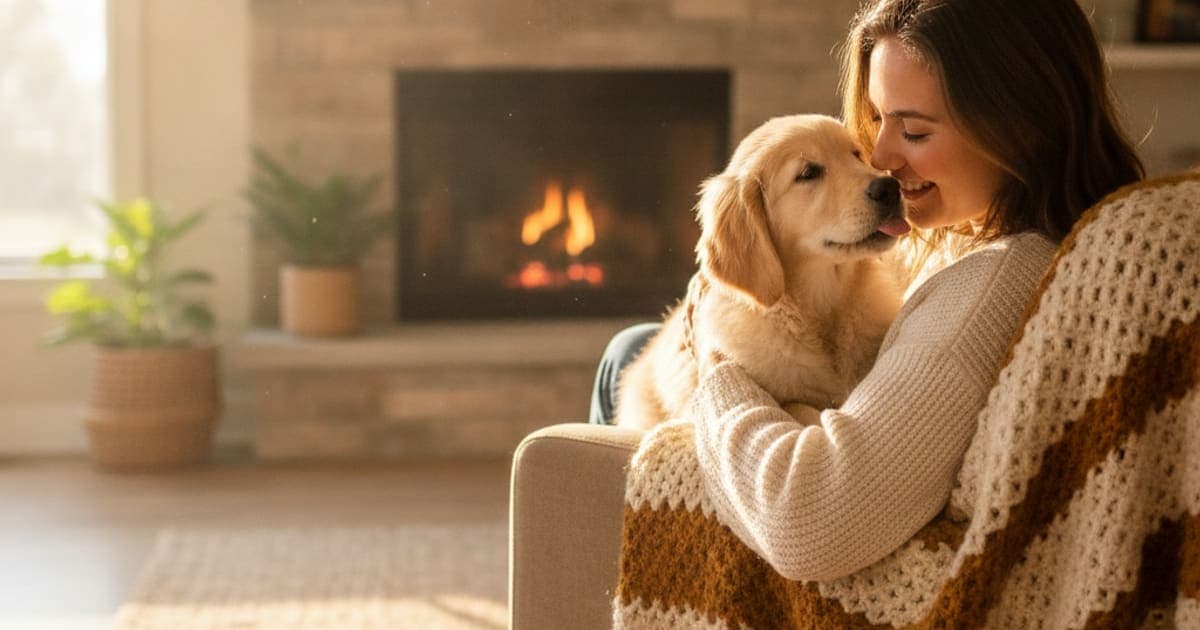
The first week with a puppy comes down to three things: a small, contained space instead of free run of the house, a routine the puppy can predict within a couple of days, and careful early socialization that starts immediately rather than waiting for the vaccine series to finish. Everything else — recall, leash manners, tricks — can wait. Your job in week one is to make a strange building feel safe, get a veterinary exam booked, and start building the habits you want six months from now.
The first week is not about training a perfect dog — it is about teaching a puppy that this new place is predictable, and that you are the most reliable thing in it.
Get the house ready before the puppy walks in
A puppy that arrives to a finished setup settles faster than one that watches you assemble a crate at midnight.
The core kit is short: a crate or playpen sized so the puppy can stand, turn and lie flat but not much more; washable bedding; stainless or ceramic bowls; a flat collar with an ID tag; a light lead; an enzymatic cleaner made for pet accidents; and a few chew items of different textures. Buy the same food the breeder or shelter was feeding, even if you plan to change later — switching diet and home in the same week is a reliable route to loose stools.
Then puppy-proof one room properly rather than the whole house badly. Cables tucked away or boxed, cleaning products latched up, small objects off the floor, houseplants checked against a toxicity list, bins out of reach. Pick the room where the family actually spends time, usually a kitchen or living room, and gate it. A puppy with access to five rooms is a puppy you cannot supervise, and unsupervised puppies rehearse chewing and toileting habits you then have to undo.
Decide the house rules before anyone bends them. Sofa or no sofa, bedroom or no bedroom, who does the morning potty trip. Consistency across the household matters more than which rule you pick.
Day one: arrival, introductions and the first night
Take the puppy straight to the toilet spot in the garden or yard before going inside. Stand quietly, wait, and praise calmly if anything happens. That spot becomes the default for the next several months.
Inside, let the puppy explore the gated area at its own pace. Resist the urge to invite the neighbourhood over. A first day of handling by six excited strangers is genuinely overwhelming for an eight-week-old, and it teaches nothing useful. Keep the day low-key, offer a small meal, and let the puppy sleep whenever it wants — young puppies sleep most of the day, and interrupted sleep shows up as biting, zoomies and general chaos by evening.
If there is a resident dog, introduce them outside on neutral ground, both on loose leads, and keep it short. Feed them separately. Give the adult dog a puppy-free retreat; the most common cause of friction in week one is an older dog with nowhere to escape to.
The first night is usually the hardest part of the first week with a puppy. The crate next to your bed, where the puppy can hear and smell you, almost always produces a quieter night than the crate in a distant room. Expect to get up at least once or twice for toileting. Take the puppy out on a lead, no talking, no play, straight back to bed. Crying that starts after a toilet trip and a settled crate is usually protest rather than need — but a puppy that cannot settle at all, or that cries while straining, is worth a call to your veterinarian rather than a night of guesswork.
A daily rhythm the puppy can learn
Puppies are pattern-matching machines. Within three or four days, a repeated sequence becomes something they anticipate, and anticipation is what lowers anxiety.
A workable loop looks like this:
- Wake — straight outside to the toilet spot, before anything else.
- Meal — in the same place, at roughly the same times each day.
- Toilet trip — within a few minutes of eating.
- Short activity — five or ten minutes of play, handling practice, or a new surface to walk on.
- Nap — in the crate or pen, ideally with the door shut so crate time becomes normal.
- Repeat — and go out again after every wake-up, every meal, and every burst of play.
A common rule of thumb owners use for bladder capacity is roughly one hour per month of age during the day, which is a guide rather than a guarantee. Overnight stretches are usually longer. Accidents in the first week are not failures; they are information about your timing.
Keep exercise modest. Puppy joints and growth plates are still developing, and long forced walks or repetitive jumping are not what a twelve-week-old body needs. Short, varied, curious outings beat distance every time.
Puppy socialization: what the first weeks are actually for
Socialization is not meeting as many dogs as possible. It is a structured programme of good experiences with the world — surfaces, sounds, people of different ages and appearances, handling, traffic, vehicles, grooming tools, vet-style examination — delivered at an intensity the puppy can handle.
The timing matters because the sensitive period for social development falls roughly between three and fourteen weeks of age, with the window beginning to close by around sixteen weeks. Most puppies come home partway through it. That is the tension every new owner feels: the vaccine series is not finished, but the behavioural window is already open.
The American Veterinary Society of Animal Behavior's position statement on puppy socialization addresses this directly, supporting puppy classes before the vaccination series is complete — generally from around seven to eight weeks — provided puppies have had a first round of vaccines and a deworming before attending. The reasoning is blunt: behaviour problems, not infectious disease, are the most common reason young dogs lose their homes. Your veterinarian can tell you what local disease risk looks like and when your particular puppy is ready for which environments.
Here is how the usual options compare while the vaccine series is still in progress:
| Option | Why owners use it | What to check first |
|---|---|---|
| Carrying the puppy on outings | Exposure to traffic, crowds, trolleys and noise with no contact with unknown ground | Puppy's comfort — a frozen, tucked puppy is not learning, it is enduring |
| Well-run puppy class | Supervised play with similar-age puppies, plus handling and noise work | Vaccine and deworming requirements, class size, whether the trainer separates by size and style |
| Visitors at home | People of different ages, heights, voices, hats, beards, uniforms | Visitors let the puppy approach them, not the reverse; no forced cuddles |
| Clean private garden with a known vaccinated adult dog | Safe dog-to-dog learning and bite-inhibition practice | The adult dog's health status and tolerance for puppies |
| Car rides to nowhere | Prevents travel sickness and car anxiety becoming lifelong | Secure crate or harness; short trips ending somewhere pleasant |
| Surfaces and sounds at home | Grates, tiles, wobbly boards, hoovers, doorbells, recorded fireworks at low volume | Volume and novelty kept low enough that the puppy keeps eating and exploring |
Avoid the places unvaccinated puppies should not be yet: public dog parks, busy pet-shop floors, and ground where large numbers of unknown dogs toilet. And remember the quality rule — one calm, voluntary interaction is worth more than ten overwhelming ones. If the puppy's body goes still, the tail tucks, or it stops taking food, the exposure is too much. Back off, add distance, try again smaller.
The first vet visit and the signs that need a call
Book a veterinary exam within the first few days, even if the breeder or rescue supplied recent paperwork. That appointment sets the vaccination and parasite schedule, establishes a baseline weight and body condition score, confirms things like heart sounds, bite alignment, hernias and retained testicles, and gives you a professional to call when something looks off at 10pm. Bring any records you were given and a fresh stool sample if your clinic asks for one. Talk to your veterinarian about microchipping, neutering timelines, diet and the local picture on parasites — those answers change with breed, size and region, which is exactly why they belong in a consultation rather than a blog post.
Call sooner than your scheduled appointment if you see persistent vomiting or diarrhoea, blood in stool, refusal to eat for more than a feed or two, lethargy that does not lift after sleep, coughing, pale gums, straining to urinate, or any limp that does not resolve within minutes. Young puppies destabilise quickly, and low blood sugar in very small breeds is a genuine emergency rather than a wait-and-see.
On supplements: a healthy, growing puppy on a complete diet appropriate for its size usually does not need additions, and some additions can actively interfere with the calcium and phosphorus balance a growing skeleton depends on. Peptide formulations like K9-REPAIR, which combines BPC-157 and TB-500, sit in a different part of a dog's life — they are the kind of support owners adopt around joint, tendon and mobility recovery in adult and ageing dogs, where research suggests these peptides play a role in tissue repair signalling and angiogenesis. They are not FDA-approved veterinary drugs, and anything you consider giving a puppy should go through your vet first. What matters in week one is diet, weight, sensible exercise loads and a veterinary relationship that will still be there when your dog is nine.
Key Takeaways
- Contain the puppy to one puppy-proofed room with a crate or pen; free run of the house slows settling and encourages accidents.
- Keep day one quiet, limit visitors, and let the puppy sleep as much as it wants.
- Put the crate beside your bed for the first nights and expect one or two toilet trips.
- Run a repeating loop of potty, meal, short activity, nap — predictability is what calms a puppy.
- Start socialization immediately, matched to what your vet says about local disease risk, and prioritise calm quality over volume.
- Book a veterinary exam in the first few days and learn the red flags that justify an earlier call.
- Keep exercise short and varied while growth plates are still developing.
The diagnosis and the plan belong to your veterinarian — vaccines, parasite control, diet, growth monitoring and anything that looks like pain or lameness. Nutrition and supplementation operate in the space that proper veterinary care creates, not in place of it. Get that relationship established in week one and everything that follows is easier.
For readers researching the formulation side for an older dog, pawgen publishes third-party certificates of analysis for its batches on the COAs page, lists shipping availability on the location page, and details K9-REPAIR and the rest of the range in the shop.
Owners exploring peptide support for their dog can review K9-REPAIR — BPC-157 + TB-500 formulated for dogs — at https://pawgen.com/. BPC-157 and TB-500 are not FDA-approved veterinary drugs. Nothing in this article treats, cures or prevents any condition; every decision about your dog's care belongs with your veterinarian.
Frequently asked questions
- How long does it take a puppy to settle into a new home?
- Most puppies look visibly more relaxed within a few days, though full settling takes longer. Many owners use the '3-3-3' rule of thumb — roughly three days to decompress, three weeks to learn the routine, three months to feel fully at home. Keep the environment small and the schedule repetitive and the process speeds up.
- Where should a puppy sleep on the first night?
- A crate or pen next to your bed usually produces the calmest first nights, because the puppy can hear and smell you. Take the puppy out for a toilet trip when it wakes, keep the trip silent and boring, and return straight to the crate. Most puppies lengthen their sleep within the first week or two.
- Can a puppy be socialized before the vaccine series is finished?
- Yes, with care. The American Veterinary Society of Animal Behavior's position statement supports starting puppy classes before the series is complete, generally from around seven to eight weeks after a first vaccine and deworming. Carried outings, home visitors and known vaccinated adult dogs are safe routes. Ask your veterinarian about local disease risk before visiting public dog areas.
- How often does a puppy need to go outside during the first week?
- Far more often than new owners expect: after waking, after every meal, after play, and at regular intervals in between. A common guide is roughly one hour of daytime bladder capacity per month of age, which is an estimate rather than a rule. Accidents are a timing problem, not a discipline problem.
- Is it normal for a new puppy not to eat?
- A slightly reduced appetite on the first day or two is common while a puppy adjusts. Refusing food beyond a couple of meals is not. Small-breed puppies in particular can develop low blood sugar quickly, so contact your veterinarian rather than waiting it out if meals are being skipped.
- When should the first vet appointment be?
- Within the first few days of the puppy coming home, even if recent paperwork came with it. That visit sets the vaccination and parasite schedule, records a baseline weight and body condition, checks for congenital issues, and gives you a clinician who already knows your dog before something urgent happens.
- How much exercise does a puppy need in week one?
- Very little formal exercise. Short bursts of play and exploration, spread across the day and separated by naps, suit a developing body better than long walks. Growth plates are still open in young dogs, so repetitive jumping, stairs and forced distance are best kept minimal while the skeleton matures.
- Should a puppy take joint supplements or peptides?
- A healthy puppy on a complete, size-appropriate diet generally does not need additions, and some can disturb the mineral balance a growing skeleton depends on. Peptide formulations such as K9-REPAIR, which pairs BPC-157 and TB-500, are what owners typically adopt for adult and ageing dogs around joint and tendon recovery. They are not FDA-approved veterinary drugs, and any product for a puppy should be discussed with your veterinarian first.
- What should I do if my puppy limps during the first week?
- Treat any limp that does not resolve within minutes as a reason to call the clinic. Young dogs have developing growth plates and soft tissue, and lameness in a puppy can reflect anything from a minor knock to a developmental issue that benefits from early diagnosis. Your veterinarian owns that assessment.
Educational content, not veterinary advice. Ask your vet about your dog.