How Much Does Dog Degenerative Myelopathy Cost? (2026)
There is no cure for degenerative myelopathy, so owners pay for management rather than a treatment course. Spending falls into three groups: the diagnostic workup that rules out other spinal disease, mobility and hygiene equipment, and ongoing rehabilitation. Diagnostics are usually the largest one-time expense; the rest recurs for life.
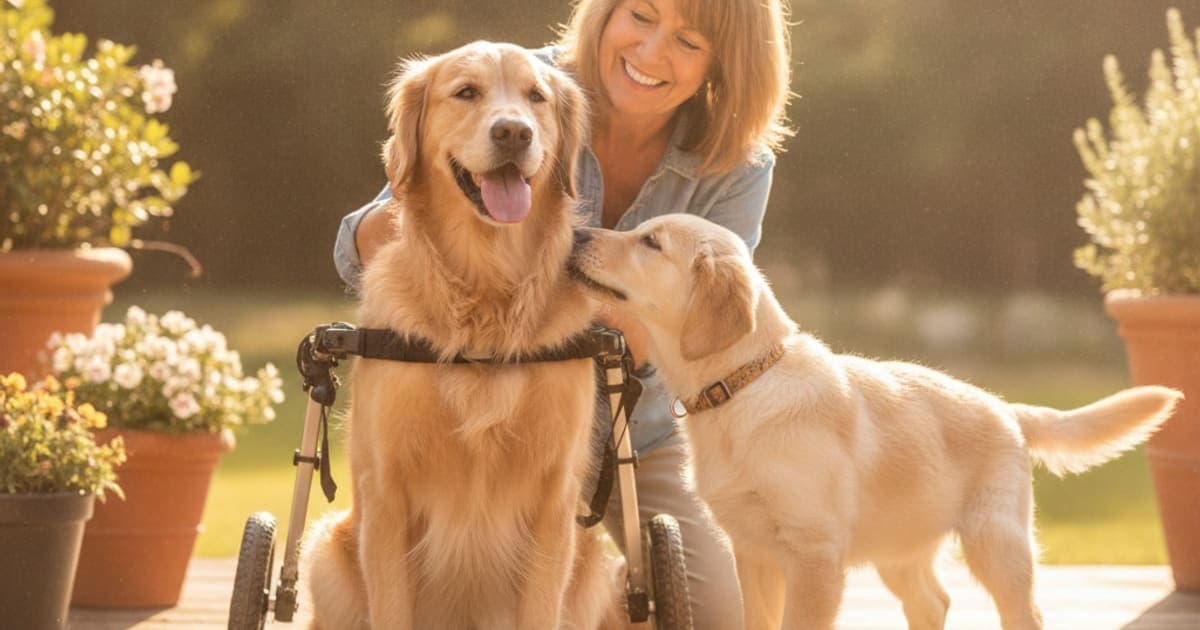
How much does it cost to treat degenerative myelopathy in dogs?
There is no cure for degenerative myelopathy, so what owners pay for is management rather than a treatment course. Costs fall into three groups: the diagnostic workup that rules out other spinal disease, mobility and hygiene equipment as the disease progresses, and ongoing rehabilitation. Diagnostics are usually the largest one-time expense; everything after that recurs.
That structure matters more than any single number, because prices for imaging, rehab and equipment vary enormously between general practices, specialty referral hospitals and regions. Two owners with genetically similar dogs and the same diagnosis can spend very differently depending on how far they take imaging and how long their dog stays mobile. Ask for a written estimate before each stage — good veterinary teams expect that question and answer it plainly.
Why this disease has no single price tag
Degenerative myelopathy is a progressive disease of the spinal cord that begins in the white matter of the thoracic region and moves forward over time. It typically starts as subtle hind-limb weakness, scuffed nails and a wobbly, crossing gait, and it is classically described as non-painful in itself.
A mutation in the SOD1 gene was identified as a major risk factor by researchers at the University of Missouri (Awano et al., Proceedings of the National Academy of Sciences, 2009), and a DNA test based on that work is available through the Orthopedic Foundation for Animals. That test tells you whether a dog carries the at-risk genotype. It does not, on its own, confirm that a dog with weak hind legs has the disease.
That is the crux of the cost question. There is no drug, surgery or supplement shown to stop or reverse the underlying spinal cord degeneration, and a definitive diagnosis is only possible on post-mortem examination of spinal cord tissue. So the money does not buy a cure. It buys certainty about what you are dealing with, and then it buys function, comfort and time.
Where the money actually goes
Because published prices move constantly and vary by clinic type, the useful way to plan is by category and by relative weight rather than by a fixed figure. Get quotes for each line below from your own veterinary practice and referral hospital.
| Cost category | What it covers | Timing | Relative weight |
|---|---|---|---|
| Neurological exam and referral | Gait assessment, proprioceptive testing, specialist consult | One-time, repeated at rechecks | Moderate |
| Advanced imaging (MRI or CT) and CSF analysis | Ruling out disc disease, stenosis, tumours, inflammatory disease | One-time | Usually the largest single line item |
| SOD1 genetic test | Cheek swab or blood sample, risk genotype | One-time | Lowest of the diagnostic costs |
| Bloodwork, urinalysis, thyroid and tick-borne screening | Excluding metabolic and infectious mimics | One-time, sometimes repeated | Low to moderate |
| Rehabilitation and hydrotherapy | Underwater treadmill, targeted strengthening, home programme design | Recurring, often weekly or fortnightly | Moderate and ongoing |
| Mobility equipment | Support harness, boots, toe grips, later a rear-support cart | Stepped — new gear at each stage | Moderate to high |
| Hygiene and continence supplies | Pads, washable bedding, wipes, protective sleeves | Recurring, heavier in late stage | Low each month, significant over a year |
| Joint and soft-tissue support | Daily supplementation for the limbs taking the extra load | Recurring, monthly | Low to moderate |
| Home modifications | Ramps, non-slip runners, raised bowls, orthopaedic bedding | Mostly one-time | Low to moderate |
Diagnosis is the biggest one-time expense
Degenerative myelopathy is a diagnosis of exclusion. A veterinary neurologist reaches it by demonstrating that nothing else explains the signs — and the conditions it imitates are common ones: intervertebral disc disease, lumbosacral stenosis, spinal tumours, and hip or stifle orthopaedic disease severe enough to change a dog's gait.
Advanced imaging is what separates those possibilities, and it is the reason the first month often costs more than the following year. MRI, CT and cerebrospinal fluid analysis require a referral facility, general anaesthesia and specialist interpretation.
Money spent on a workup that rules out treatable spinal disease is the highest-value money you will spend, because the conditions degenerative myelopathy mimics frequently do respond to surgery, medication or rehabilitation. Skipping the workup to save cost can mean managing a dog for a progressive disease when a treatable one was sitting underneath.
Some owners, after an honest conversation with their veterinarian about age, anaesthetic risk and what they would realistically do with the answer, choose a presumptive diagnosis instead: a thorough neurological exam, plain radiographs, bloodwork and the genetic test. That is a legitimate path and a far cheaper one. It is a decision to make with your vet, with the trade-off stated out loud.
The recurring costs owners underestimate
After the workup, the bill changes character. Nothing is dramatic; everything repeats.
Rehabilitation. Physical rehabilitation is the intervention most consistently recommended for dogs with this diagnosis, and it is a subscription rather than a purchase. Sessions with a certified canine rehabilitation practitioner, underwater treadmill work and a home exercise programme you carry out daily all add up across months. Owners who ask to be taught the home programme, then use in-clinic sessions to check technique and progress, generally spend less over the course of the disease.
Mobility gear, in stages. Equipment needs escalate. Toe grips and boots protect knuckling paws early. A rear-support harness comes next. Later, a properly fitted rear-wheel cart. Buying the cart too early wastes money; buying it too late costs your dog weeks of independence. Second-hand and refurbished carts exist, and some rehab practices keep loaner stock.
Home modifications. Non-slip runners over hard flooring, ramps at doors and vehicles, orthopaedic bedding and a raised feeding station. Cheap relative to imaging, and disproportionately useful.
Hygiene supplies. As the disease advances into continence problems, washable bedding, pads and skin care become a standing monthly line item, along with more frequent veterinary checks for urinary tract infections and pressure sores.
Your time. Not billed, but real: lifting, harnessing, bathing, expressing bladders in late stages. Some owners budget for a dog walker or day carer who can handle a mobility-impaired dog.
Supporting the joints and soft tissue doing the extra work
Here is the part of the budget most owners only discover once they are living it. A dog losing hind-limb function does not stop moving — it redistributes. The forelimbs, shoulders, neck and core take load they were never built to carry full-time. Add repeated slips, hard landings and dragging contact, and you get a second, entirely separate problem: strained soft tissue and accelerated wear in the joints doing the compensating.
That secondary strain is where pawgen's K9-REPAIR sits. It is a peptide formulation combining BPC-157 and TB-500, and it is the stack many owners run through long recovery and long-term mobility management. BPC-157 is a synthetic peptide sequence studied in animal models for its influence on tendon and ligament cell migration and on new blood-vessel formation in injured tissue. TB-500 is a synthetic fragment of thymosin beta-4, a naturally occurring protein involved in actin regulation, cell migration and angiogenesis. Research on both is emerging and promising, and owners are adopting them for exactly this reason: the mechanism sits at the tissue-repair and blood-supply level, which is precisely what overloaded shoulders and forelimbs are contending with.
Be clear about what this is and is not. BPC-157 and TB-500 are not FDA-approved veterinary drugs, and nothing in a bottle changes what is happening in the spinal cord. Degenerative myelopathy is not a soft-tissue problem and no supplement addresses it. What owners are supporting is the rest of the body — the structures absorbing the compensation.
What you can judge objectively is formulation quality. K9-REPAIR is third-party tested with certificates of analysis available, dosed by body weight, and shipped direct to your door, and pawgen backs it with a 60-day money-back guarantee. That is a different proposition from a kitchen-sink joint chew carrying fifteen ingredients at doses too small to matter and a label designed to look impressive rather than to inform. Bring it up with your veterinarian alongside whatever else your dog is on, particularly if there are prescriptions in the picture.
Planning a budget that lasts the whole course
Think in phases rather than in a single total. Phase one is diagnostic and front-loaded. Phase two is rehabilitation and early equipment, spread over months. Phase three is hygiene, heavier equipment and more frequent veterinary contact.
A few practical levers. Check insurance terms early — many policies exclude hereditary or pre-existing conditions, and the answer depends entirely on when the policy started relative to the first sign of weakness. Ask your practice about payment plans and whether rehab packages cost less than single sessions. Learn the home exercise programme properly. Buy equipment at the stage it is needed, not in anticipation.
And plan for the end of the course honestly, including end-of-life care costs, because that conversation is easier held early than in crisis.
Key Takeaways
- There is no cure, so the cost is the cost of diagnosis plus long-term management — not a treatment course with an endpoint.
- Advanced imaging to exclude treatable spinal disease is typically the largest single expense and the most valuable one.
- The SOD1 genetic test is the cheapest diagnostic input, but it reports risk genotype rather than confirming disease.
- Rehabilitation, staged mobility equipment and hygiene supplies are modest individually and substantial across a year.
- Compensating forelimbs and joints carry real soft-tissue strain, which is a separate budget line from the neurological disease.
- Written estimates before each stage keep the total predictable and the decisions yours.
For deeper background, read the complete guide to degenerative myelopathy, the overview of degenerative myelopathy in dogs, realistic dog degenerative myelopathy recovery time expectations, and what is known about how to prevent degenerative myelopathy in dogs. If compensation injuries appear along the way, see is a dog swollen joint an emergency and why is my dog warm joint.
Your veterinarian owns the diagnosis, the exclusion workup and the management plan, and a veterinary neurologist or rehabilitation practitioner should shape the exercise programme and the equipment timeline. Supplements and peptides operate only in the space that proper veterinary care creates — supporting the body around the plan, never standing in for it.
Owners exploring peptide support for their dog can review K9-REPAIR — BPC-157 + TB-500 formulated for dogs — at https://pawgen.com/. BPC-157 and TB-500 are not FDA-approved veterinary drugs. Nothing in this article treats, cures or prevents any condition; every decision about your dog's care belongs with your veterinarian.
Frequently asked questions
- How is degenerative myelopathy diagnosed in dogs?
- It is diagnosed by exclusion. A veterinarian or neurologist performs a neurological exam, then uses imaging such as MRI or CT plus cerebrospinal fluid analysis and bloodwork to rule out disc disease, tumours and other mimics. The SOD1 genetic test identifies risk genotype. Definitive confirmation is only possible on post-mortem spinal cord examination.
- What helps a dog with degenerative myelopathy?
- Consistent physical rehabilitation and controlled exercise are the most widely recommended interventions, alongside practical changes: non-slip flooring, a support harness, protective boots, ramps and eventually a rear-support cart. Owners report the largest quality-of-life gains from traction and mobility equipment. Build the specific programme with your veterinarian or a certified canine rehabilitation practitioner.
- How long does degenerative myelopathy take to heal in dogs?
- It does not heal. Degenerative myelopathy is progressive and irreversible, so there is no recovery timeline in the usual sense. Rehabilitation aims to maintain strength, coordination and independence for as long as possible rather than restore lost nerve function. Rate of progression varies considerably between dogs — ask your veterinarian what to expect.
- Is degenerative myelopathy in dogs painful?
- The disease itself is classically described as non-painful, because it affects spinal cord pathways without producing the nerve-root compression that makes disc disease hurt. However, secondary pain is common: arthritis, overloaded forelimb joints and shoulders, abrasions from knuckling, and pressure sores. Have your veterinarian assess comfort at every recheck.
- What makes degenerative myelopathy worse in dogs?
- Nothing accelerates the underlying degeneration in a way that is well established, but several things worsen functional decline: slippery floors, excess body weight, deconditioning from inactivity, untreated concurrent orthopaedic disease, and injuries from falls. Maintaining lean condition, traction underfoot and consistent controlled exercise protects the function your dog still has.
- Can degenerative myelopathy in dogs be reversed?
- No. There is currently no drug, surgery or supplement shown to reverse or halt degenerative myelopathy. Management focuses on preserving mobility, comfort and dignity for as long as possible through rehabilitation, mobility equipment and attentive nursing care. Any product claiming to reverse the disease is making a claim the evidence does not support.
- Does pet insurance cover degenerative myelopathy in dogs?
- It depends entirely on the policy and its timing. Many policies exclude pre-existing conditions, and some exclude hereditary or breed-linked conditions outright. If weakness was noted before cover started, claims are commonly declined. Read the hereditary condition clause and ask the insurer directly in writing before booking advanced imaging.
- Is the SOD1 genetic test worth paying for?
- For most owners, yes — it is the least expensive diagnostic input and it meaningfully shifts probability. A dog without the at-risk genotype makes degenerative myelopathy far less likely, which redirects the search toward treatable causes. It cannot confirm disease on its own, so interpret the result with your veterinarian.
Educational content. BPC-157 and TB-500 are not FDA-approved veterinary drugs. Talk to your veterinarian before starting anything new, especially if your dog is on prescribed medication.