How Often to Bathe a Dog? (Baseline Schedule by Coat)
Most healthy dogs do well with a bath every four to six weeks, though short-coated dogs can stretch longer and oily or double-coated breeds may need more. Coat type, skin condition, climate and activity all shift the number. Over-bathing strips the skin barrier faster than under-bathing causes problems.
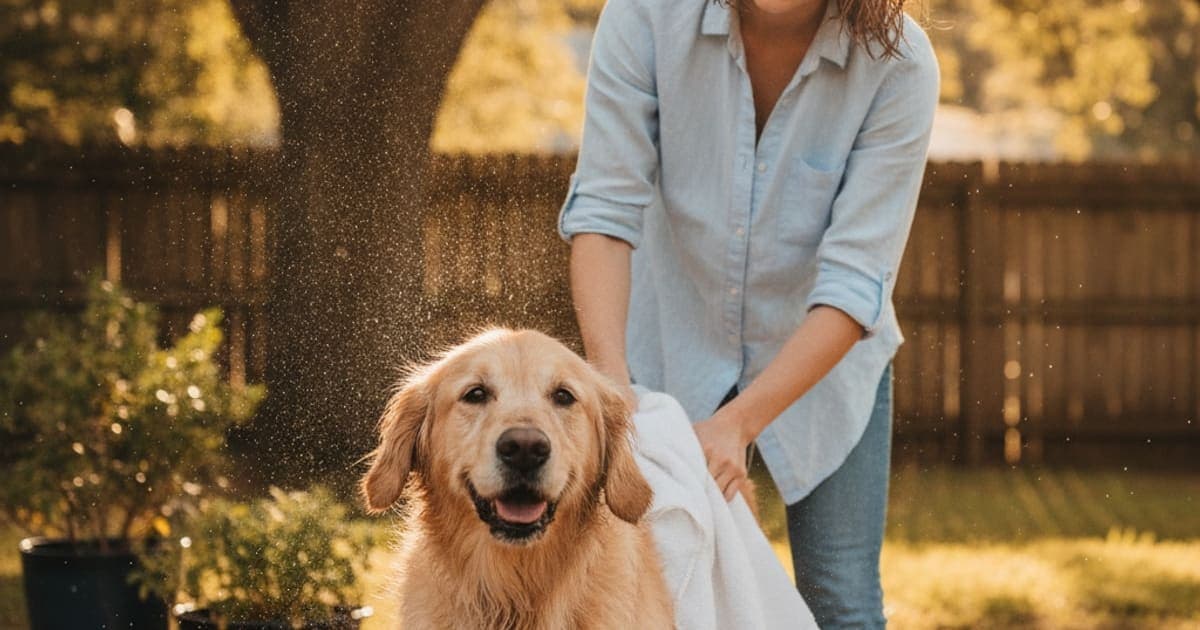
Most healthy dogs with normal skin do well with a bath roughly every four to six weeks. Short, smooth-coated dogs can often stretch to every two or three months. Oily, odour-prone or heavily coated breeds often want one every two to four weeks. And a dog who has just rolled in something unspeakable gets bathed today, schedule or not.
That range is the real answer. Bathing frequency is a window, not a fixed number, and the right spot inside that window depends on coat type, skin health, climate, how much your dog swims or digs, and whether your veterinarian has put them on a medicated washing routine for a specific reason. Below is how to find your dog's number, how to recognise when you have crossed into washing too much, and how the answer changes in hot weather and after surgery.
A baseline schedule by coat type
Coat structure does most of the work here. A dense double coat holds dirt and moisture differently than a short single coat, and a curly non-shedding coat traps shed hair against the skin where it mats. That is why one household rule rarely fits two different dogs.
| Coat type | Typical bathing interval | What to watch for |
|---|---|---|
| Short, smooth (Beagle, Boxer, Labrador-type) | Every 6–12 weeks, or when dirty | Skin feels dry or flaky if washed much more often |
| Double coat (Husky, German Shepherd, Golden) | Every 6–10 weeks, more during heavy shed | Undercoat must be dried fully or it stays damp for hours |
| Wire coat (many terriers, Schnauzer) | Every 6–8 weeks | Frequent shampooing softens the harsh outer coat |
| Long or silky (Yorkie, Shih Tzu, Afghan) | Every 2–4 weeks | Mats tighten when a matted coat gets wet |
| Curly, non-shedding (Poodle, doodles, Bichon) | Every 3–4 weeks, paired with grooming | Shed hair packs against skin between baths |
| Oily or odour-prone (Basset, Bloodhound, Cocker) | Every 2–4 weeks | Skin folds and ears need drying, not just rinsing |
| Hairless (Chinese Crested, Xoloitzcuintli) | Weekly or close to it | Exposed skin behaves far more like human skin |
Two technique points matter more than the interval itself. Dilute the shampoo before it touches the coat so it spreads instead of sitting in concentrated patches, and rinse for longer than feels necessary. Residue left in a dense coat is a far more common cause of post-bath itching than the bath itself.
How to tell you are washing your dog too much
Dog skin is thinner than human skin and relies on a thin lipid film and a layer of sebum to hold water in and keep opportunistic bacteria and yeast in balance. Detergents strip that film. The skin rebuilds it, but rebuilding takes days, and if the next bath lands before the barrier has recovered, you get a slow downward drift.
The signs of over-bathing are consistent and easy to spot:
- Dandruff or flaking that appears a day or two after a bath
- A dull, brittle, static-prone coat that was glossy before
- Scratching that spikes right after bath day rather than before it
- A greasy rebound, where the skin overproduces oil and the dog smells sooner each cycle
- Red, warm patches in the armpits, groin or between the toes
As a working rule, weekly bathing with a general-purpose shampoo is too often for most dogs with normal skin. If you genuinely need to wash that frequently because of allergies, recurrent yeast, or a skin condition, that is a conversation to have with your veterinarian — because medicated shampoos are prescribed on their own schedule, and in those cases frequent bathing is the treatment, not a mistake. Follow the plan your vet sets even when it is more often than the table above.
Under-bathing has a ceiling too. A coat left too long collects dander, dead hair and environmental allergens, and matted fur traps moisture and blocks airflow to the skin. If you can smell your dog across the room or your hands feel greasy after petting them, you waited too long.
Season, climate and humidity change the number
Summer pushes most dogs toward more frequent washing, but usually not more frequent shampooing. Dogs who swim, dig, or spend long afternoons on hot pavement benefit from a plain-water rinse that removes salt, chlorine, pollen and grit without touching the skin barrier at all. Rinse, towel, dry thoroughly, done. Save the full shampoo bath for the normal interval.
In hot, humid climates where the air never really dries out, the limiting factor is not how often you wash but how completely you dry. A dense coat that stays damp in the armpits, groin, ear folds and between the toes creates exactly the warm, moist conditions where yeast and bacteria thrive. Owners in year-round humidity often land slightly on the more-frequent side of the range, combined with a high-velocity dryer or serious towel work, and that combination tends to work better than stretching the interval out.
Cold, dry seasons run the other way. Indoor heating pulls moisture out of skin, and a dog bathed on a tight schedule through winter often gets flakier by the month. Most dogs do better with fewer, gentler baths in the cold and more brushing instead — brushing redistributes natural oils down the hair shaft, which is the one thing shampoo cannot do.
Bathing after a spay, neuter or orthopaedic surgery
This is the one place where the answer is not a judgement call. After any surgery, the incision must stay completely dry until your veterinary team says otherwise. No tub, no swimming, no hose, no soaking.
Surgical discharge instructions almost always keep dogs out of water until the incision has fully closed and the surgeon or nurse has checked it — commonly at the recheck or suture-removal visit. Ask for the specific date before you leave the clinic rather than guessing from a calendar, because the timeline differs between a routine spay and a cruciate repair with hardware in the joint.
In the meantime, you still have options. Spot-clean muddy paws with a damp cloth and dry them immediately. Use a waterless foam or dry shampoo on areas well away from the incision. Keep the collar or recovery suit on. If the incision looks red, swollen, wet, or starts to smell, that is a same-day call to the clinic, not something to wash off.
Orthopaedic patients add a second problem: the bath itself. A slippery tub is one of the easiest places for a recovering dog to re-injure the exact tissue they are trying to rebuild, so the surface, the lifting and the exit route deserve as much planning as the shampoo. Non-slip mat, handheld sprayer, a second person for the lift, and a towel-covered floor where they step out.
What dog owners trade on forums, and what actually holds up
The community consensus you will find in long grooming threads is roughly right: bathe when the dog is dirty or smelly, not on a rigid calendar. That instinct matches what most veterinary dermatology guidance supports.
Where forum advice reliably goes wrong is in the details. Human shampoo gets recommended constantly and should not be — formulations are built for a different skin pH and strip canine coats harder. Shaving a double coat for summer is another perennial bad tip; the undercoat insulates against heat as well as cold and often grows back with a different texture. And the confident claim that you should never bathe a dog more than once a month ignores the hairless breeds, the skin-fold breeds and every dog on a veterinary medicated wash.
The useful part of those threads is the grooming cadence, not the bathing one. Daily or near-daily brushing for long and curly coats, ears dried after every swim, nails kept short — those habits reduce how often a bath is needed in the first place.
Bath time for stiff, senior and recovering dogs
For an older dog with sore hips or a dog working through a soft-tissue injury, bathing is a mobility event. Hind-leg loading, twisting in a confined tub, and the step up and out all ask for exactly the movements that are hardest right now. Shorter, lower-stress baths done more efficiently beat long ones. A walk-in shower stall, a rubber mat, warm water and a handheld sprayer remove most of the risk.
The repair work happening underneath is slower than the coat suggests. Tendon and ligament tissue is poorly vascularised and remodels over weeks to months, which is why a dog can look comfortable on a good day and stiff again after an awkward step. That long remodelling window is the reason owners look for support alongside their vet's rehab plan.
That is the space K9-REPAIR was built for. It combines BPC-157 and TB-500, two peptides studied for their roles in tissue repair signalling — BPC-157 for its influence on new blood vessel formation and fibroblast activity, TB-500 as a synthetic fragment related to thymosin beta-4, a protein involved in cell migration and actin regulation. The science here is emerging and promising, research suggests these mechanisms are relevant to soft-tissue recovery, and it is the stack a growing number of owners adopt through a recovery window. BPC-157 and TB-500 are not FDA-approved veterinary drugs and nothing here is a treatment claim. pawgen formulates to weight-based dosing worked out with your veterinarian, publishes third-party certificates of analysis for each batch, ships direct to the door, and backs orders with a 60-day money-back guarantee.
Key Takeaways
- Every four to six weeks suits most healthy dogs; short coats can go longer, oily and long coats shorter.
- Flaking, dullness, post-bath itching and a greasy rebound are the signals you have crossed into washing too often.
- Weekly bathing is too frequent for most normal-skinned dogs unless a veterinarian has prescribed a medicated routine.
- In summer, rinse more and shampoo the same; in humid climates, drying fully matters more than the interval.
- After a spay, neuter or orthopaedic procedure, no water on the incision until your clinic clears it in person.
- Brushing extends the time between baths better than any product does.
Your veterinarian owns the diagnosis and the treatment plan — the skin workup, the medicated shampoo schedule, the surgical clearance date, the rehab protocol. Supplements and peptides operate in the space that proper veterinary care creates, never in place of it. Bring the specifics of your dog's coat, skin history and recovery stage to that conversation, and build the bathing routine from there.
For more on how pawgen works: batch certificates of analysis are published at /coas/, shipping availability is listed at /location/, and the full K9-REPAIR formulation details sit at /shop/.
Owners exploring peptide support for their dog can review K9-REPAIR — BPC-157 + TB-500 formulated for dogs — at https://pawgen.com/. BPC-157 and TB-500 are not FDA-approved veterinary drugs. Nothing in this article treats, cures or prevents any condition; every decision about your dog's care belongs with your veterinarian.
Frequently asked questions
- How often to bathe a dog?
- Every four to six weeks works for most healthy dogs with normal skin. Short, smooth coats can stretch to every two or three months, while oily, long or curly coats often need every two to four weeks. Adjust based on how your dog's skin and coat respond, not the calendar.
- How often can you bathe a dog?
- You can bathe a dog as often as their skin tolerates it. With a gentle, soap-free dog shampoo and thorough rinsing, some dogs handle a wash every week or two without trouble. Others flake and itch at that pace. Dryness, dullness and post-bath scratching mean back off the frequency.
- How often should you bathe s dog?
- Roughly once a month is the practical default for most dogs. Hairless breeds and dogs with deep skin folds often need more; short-coated dogs with healthy skin need less. If your veterinarian has prescribed a medicated shampoo, follow their schedule instead, even if it is more frequent.
- How frequently should I give my dog a bath?
- Bathe when your dog is visibly dirty, smells noticeable, or hits their coat-type interval — commonly four to six weeks. Between baths, brushing does more for coat condition than shampoo, because it redistributes natural skin oils along the hair shaft and removes dead coat before it mats.
- How often is safe to bathe a dog?
- Weekly bathing is safe for many dogs short-term when a gentle canine shampoo is used and rinsed out completely, and it is routine for hairless breeds. As a long-term habit, though, most normal-skinned dogs do better closer to monthly. Safety depends on the product and the skin, not just the interval.
- What is too often to bathe a dog?
- Too often is any frequency that damages the skin barrier faster than it rebuilds. For most dogs with normal skin that means weekly or more with a general-purpose shampoo. The tell-tale signs are dandruff, a brittle coat, redness in the armpits or groin, and itching that spikes after bath day.
- How often is too often to bathe a dog?
- If your dog is flaking, scratching more after baths, or developing a greasy rebound where odour returns sooner each cycle, you have gone past their limit. Stretch the interval, switch to a gentler shampoo, and if the skin does not settle within a few weeks, book a veterinary appointment.
- How often should you bathe a dog in summer?
- Summer usually means more rinsing rather than more shampooing. Plain-water rinses after swimming, beach trips or dusty walks remove salt, chlorine and pollen without stripping skin oils. Keep full shampoo baths on the normal coat-type interval, and dry the undercoat, ears and paws thoroughly every time.
- How long after a spay can you bathe a dog?
- Keep the incision completely dry until your veterinary team inspects it and clears water contact, which commonly happens at the recheck or suture-removal visit. Ask for the specific date at discharge. Until then, spot-clean paws, use waterless products away from the incision, and report any redness or discharge promptly.
Educational content, not veterinary advice. Ask your vet about your dog.