How to Get Rid of Dog Shedding (Grooming and Diet)
You cannot stop a healthy dog from shedding, but you can control it: brush on a schedule matched to the coat type, bathe and dry thoroughly, feed a complete diet with adequate protein and fat, keep parasite prevention current, and ask your veterinarian to rule out medical causes of excessive shedding.
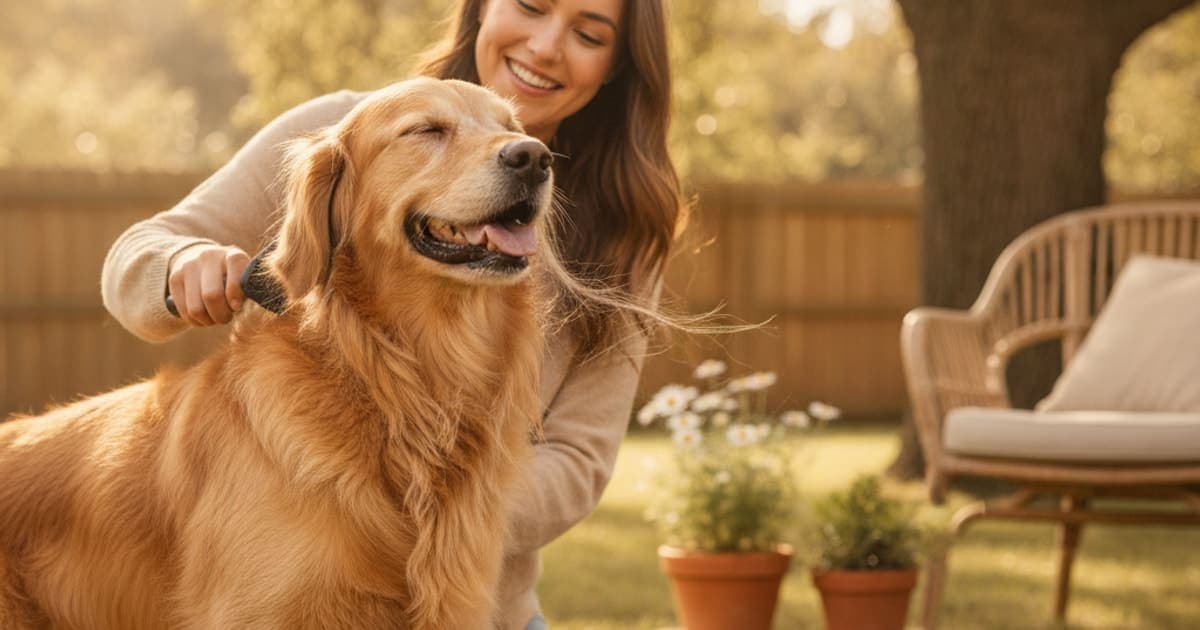
You cannot get rid of shedding in a healthy dog, because hair replacement is a normal, continuous biological cycle — but you can dramatically reduce how much hair ends up on your couch. The routine that works is boring and consistent: brush with the right tool for your dog's coat type on a fixed schedule, bathe and dry thoroughly so loose undercoat releases in the tub instead of the hallway, feed a complete diet with adequate protein and fat, keep parasite prevention current, and have your veterinarian rule out the medical causes that turn normal shedding into excessive shedding.
No shampoo, brush or supplement stops a healthy dog from shedding — the real goal is to remove loose hair on your schedule instead of your dog's, and to identify any health problem that is making the coat worse than it should be.
What causes a dog to shed excessively
Every hair on your dog follows a cycle: a growth phase, a transitional phase, a resting phase, and a release phase where the old hair is pushed out. Day length and temperature drive the timing, which is why double-coated dogs "blow coat" in spring and autumn and why indoor dogs under artificial light often shed in a steady trickle year-round.
That is normal shedding. Excessive shedding usually has a cause you can name:
- Parasites. Fleas, mites and lice cause scratching, inflammation and broken, falling hair.
- Allergies and skin infections. Environmental or food allergies, yeast overgrowth and bacterial skin infections all inflame follicles.
- Nutrition gaps. Hair is mostly protein. A diet short on quality protein or essential fatty acids shows up in the coat before it shows up anywhere else.
- Hormonal disease. Hypothyroidism and Cushing's disease are classic causes of thinning, dull, symmetrically patterned hair loss. Only your veterinarian can diagnose these.
- Stress and routine change. Moving house, boarding, a new baby, or a vet visit can trigger a short, dramatic shed.
- Over-bathing or the wrong shampoo. Human shampoo and harsh degreasers strip the skin's protective oils and make flaking and shedding worse.
- Pain and reduced activity. A dog with sore joints moves less, self-grooms less, and lies on the same pressure points, which changes coat condition in those areas.
Red flags that mean a phone call rather than a grooming session: bald patches, symmetrical hair loss on both flanks, scabs, odour, thickened or darkened skin, relentless itching, heavy dandruff, or shedding alongside weight change, thirst or lethargy. Those patterns point toward a medical diagnosis, and no home remedy substitutes for one.
The brushing schedule that pulls the most hair
Brushing is the single highest-yield thing you can do, and most owners under-do it. The goal is to capture dead undercoat before it falls out on its own.
Use the tool matched to the coat. A slicker brush on a short-coated Labrador does little; an undercoat rake on a Maltese is useless and painful. Work in sections, lifting the top layer and brushing the hair underneath down to the skin — groomers call this line brushing, and it reaches the dead undercoat that surface brushing skips. Brush outdoors or over a sheet, in the direction of hair growth, with light pressure. Stop before the skin pinks up.
| Coat type | Typical breeds | Best tools | Brushing frequency |
|---|---|---|---|
| Dense double coat | Husky, German Shepherd, Golden Retriever, Corgi | Undercoat rake, slicker brush, de-shedding blade, high-velocity dryer | Several times weekly; daily during seasonal coat blow |
| Short single coat | Labrador, Beagle, Boxer, Dalmatian | Rubber curry brush, grooming mitt, bristle brush | Two to three times weekly, year-round |
| Long silky coat | Yorkshire Terrier, Shih Tzu, Maltese | Pin brush, fine metal comb | Daily, to prevent mats that trap shed hair |
| Wire coat | Most terriers, Schnauzer | Slicker brush, stripping comb or professional hand-stripping | Weekly, plus scheduled stripping |
| Curly low-shed coat | Poodle, Bichon, poodle crosses | Slicker brush, metal comb, regular clipping | Daily or every other day |
Two cautions. De-shedding blades cut hair as well as remove it, so use them sparingly and never on a wet or matted coat. And never shave a double-coated dog to "stop" shedding — the undercoat and guard coat grow back at different rates, the coat often returns patchy and coarse, and you remove the insulation that protects against both cold and sunburn.
Bathing, drying and the home remedies worth using
A proper bath loosens an enormous volume of dead coat. Brush thoroughly first to break up tangles, then use lukewarm water and a dog-specific shampoo — oatmeal or other gentle, soap-free formulas suit flaky skin. Rinse far longer than feels necessary; leftover residue is a common cause of itching and flaking. Follow with a conditioner or de-shedding rinse, rinse again, and dry completely. The highest-yield minute of the whole process is brushing the coat while it is almost dry: that is when the most undercoat comes free.
Bathe on a sensible interval rather than a reflex. Most dogs do fine with a bath every few weeks to a few months depending on coat, lifestyle and skin condition; weekly bathing with a harsh product usually creates the dandruff it was meant to fix. Ask your veterinarian what interval and what shampoo suit your dog's skin, especially if there is any history of allergies.
The popular home remedies, assessed honestly:
- Olive oil. A small amount of plain olive oil drizzled on food is one of the oldest home remedies for dog shedding and dandruff, and owners report a softer, less flaky coat. It is a fat source, not a medicine, and added fats are a genuine problem for dogs with pancreatitis risk or weight issues. Clear it with your vet before you start, and never calculate an amount from a blog.
- Coconut oil. Used topically on dry patches by many owners; messy, and some dogs simply lick it off.
- Oatmeal rinse. Colloidal oatmeal is a well-established soothing ingredient for irritated skin and is the gentlest option on this list.
- Diluted apple cider vinegar. Sometimes used as a rinse. Never apply it to broken, raw or scratched skin.
- A humidifier. Dry indoor air in winter dries skin. Raising household humidity is cheap and genuinely helps flaking.
- Fresh water, always available. Dehydration shows in the skin quickly.
What does not work: anything marketed as a shed-stopping miracle. Hair release is hormonal and seasonal, not something a topical product switches off.
Feeding the coat from the inside
Skin and hair are metabolically expensive tissues, and they are among the first places a nutritional shortfall shows. Start with a complete, balanced diet appropriate to your dog's life stage — one that meets established nutritional adequacy standards rather than one chosen on packaging appeal. Adequate high-quality protein matters because hair is largely keratin.
Essential fatty acids are the other half of the picture. Research on omega-3 and omega-6 fatty acids suggests they support skin barrier function and normal inflammatory balance, which is why fish oil is so widely used by owners of flaky, dull-coated dogs. Benefits, where owners report them, take weeks to appear — the coat has to grow in. Fats add calories and can interact with certain conditions, so this is another conversation to have with your veterinarian rather than a guess.
Be skeptical of the supplement aisle itself. The "skin and coat" shelf is full of kitchen-sink chews with a dozen token ingredients at trace levels, proprietary blends that hide how little is actually in each serving, and no third-party testing to confirm the label is true. If a product will not tell you the exact amount of each active and will not publish a certificate of analysis, you cannot evaluate it.
Managing the hair that still lands, and the whole-dog picture
Some hair will always get out. Keep year-round parasite prevention current through your vet, vacuum with a HEPA filter, use washable throws on furniture and in the car, and run a grooming mitt over your dog before they come inside. A short daily pass with a rubber curry at the door removes more hair than a long weekly session.
It is also worth stepping back from the coat itself. Coat condition reflects whole-dog health: nutrition, parasite load, hormones, pain and activity level all feed into it, which is why older and recovering dogs so often look rougher than they used to.
That broader recovery picture is where pawgen works. pawgen makes K9-REPAIR, a BPC-157 and TB-500 peptide formulation built for canine joint, tendon and mobility recovery — not a shedding product, and nobody should sell you one as such. BPC-157 is a synthetic peptide based on a sequence identified in gastric juice, studied for its signalling role in soft-tissue repair processes and blood vessel formation; TB-500 is a synthetic fragment related to thymosin beta-4, studied for its role in cell migration and tissue remodelling. Research into both is emerging and promising, and it is the reason a growing number of owners adopt peptides alongside veterinary rehab after an injury or through the slow decline of an aging joint. BPC-157 and TB-500 are not FDA-approved veterinary drugs, and dosing is weight-based and belongs in a conversation with your veterinarian. What you can hold any brand to is the standard pawgen publishes against: disclosed actives, third-party testing, certificates of analysis you can read, direct-to-door shipping, and a 60-day money-back guarantee.
Key Takeaways
- Shedding cannot be eliminated in a healthy dog; it can be controlled by capturing dead hair before it falls.
- Brushing with the correct tool for the coat type, several times weekly, is the highest-yield step.
- Bathe on a sensible interval with a dog-specific shampoo, rinse completely, dry fully, and brush while nearly dry.
- Olive oil, coconut oil, oatmeal rinses and a humidifier are the home remedies with the most sensible rationale; added fats need vet sign-off first.
- A complete diet with quality protein and essential fatty acids supports coat quality from the inside.
- Bald patches, itching, odour, dandruff with skin changes, or shedding plus thirst, weight change or lethargy warrant a veterinary workup.
- Never shave a double-coated breed to reduce shedding.
You can read pawgen's third-party certificates of analysis on the COAs page, see the current K9-REPAIR formulation on the shop page, and check availability details on the location page.
Your veterinarian owns the diagnosis and the treatment plan. If shedding is excessive, they are the one who can test for thyroid disease, Cushing's, parasites, allergies and skin infection, and who can prescribe accordingly — and nothing described here replaces that, or any medication they have already prescribed. Grooming routines, diet changes and supplements operate in the space that proper veterinary care creates, not instead of it.
Owners exploring peptide support for their dog can review K9-REPAIR — BPC-157 + TB-500 formulated for dogs — at https://pawgen.com/. BPC-157 and TB-500 are not FDA-approved veterinary drugs. Nothing in this article treats, cures or prevents any condition; every decision about your dog's care belongs with your veterinarian.
Frequently asked questions
- How to get rid of dog shedding?
- You cannot get rid of it completely, because hair replacement is a normal cycle. You can reduce visible hair sharply by brushing with the right tool several times a week, bathing and drying thoroughly, feeding a complete diet with adequate protein and fat, and having your veterinarian rule out medical causes.
- How to stop dog shedding home remedy?
- No home remedy stops shedding, but several reduce flaking and loose hair. The most sensible are a gentle oatmeal rinse, a humidifier in dry months, constant fresh water, and a small amount of plain olive oil or fish oil on food — cleared with your veterinarian first, since added fats matter.
- How to reduce dog shedding naturally?
- Brush to the skin in sections several times weekly using a tool matched to the coat, bathe at a sensible interval with a dog-specific shampoo, dry completely and brush while nearly dry, feed quality protein and essential fatty acids, keep parasite prevention current, and maintain indoor humidity in winter.
- What causes a dog to shed excessively?
- Common causes include fleas and mites, environmental or food allergies, bacterial or yeast skin infections, diets short on protein or essential fatty acids, hormonal disease such as hypothyroidism or Cushing's, stress, over-bathing with harsh shampoo, and dry indoor air. Several require veterinary diagnosis rather than grooming changes.
- How to stop the shedding of my dog?
- Shedding itself is not something to stop in a healthy dog. Manage it instead: a fixed brushing schedule, correct tools for the coat type, thorough bathing and drying, a complete balanced diet, year-round parasite prevention, and a veterinary workup if you see bald patches, itching, odour or skin changes.
- How to help my shedding dog?
- Make grooming comfortable and routine — short, frequent sessions beat long, rare ones. Check the skin as you brush for fleas, scabs or flaking. Review the diet with your veterinarian, keep water available, raise indoor humidity in winter, and book an exam if the coat is thinning rather than simply shedding.
- Does olive oil work as a dog shedding remedy?
- Olive oil is a fat source, not a shedding treatment. Owners report softer coats and less flaking when a small amount is added to food, which is consistent with how dietary fats support the skin barrier. Added fats can be a problem for dogs with pancreatitis risk, so ask your vet first.
- What home remedies help with dog shedding and dandruff?
- Dandruff usually responds to gentler bathing rather than more bathing. Colloidal oatmeal shampoos, complete rinsing, thorough drying, a humidifier in dry months, regular brushing to distribute natural skin oils, and adequate dietary fatty acids all help. Persistent flaking with redness or odour needs a veterinary skin exam.
Educational content. BPC-157 and TB-500 are not FDA-approved veterinary drugs. Talk to your veterinarian before starting anything new, especially if your dog is on prescribed medication.