How to Prevent Hip Dysplasia in German Shepherds? (6 Steps)
You lower the risk rather than eliminate it. Buy from parents whose hips were radiographed and scored by OFA or PennHIP, keep the puppy lean through growth, control exercise load until the growth plates close, and discuss neuter timing with your veterinarian. Genetics set the ceiling; husbandry decides the rest.
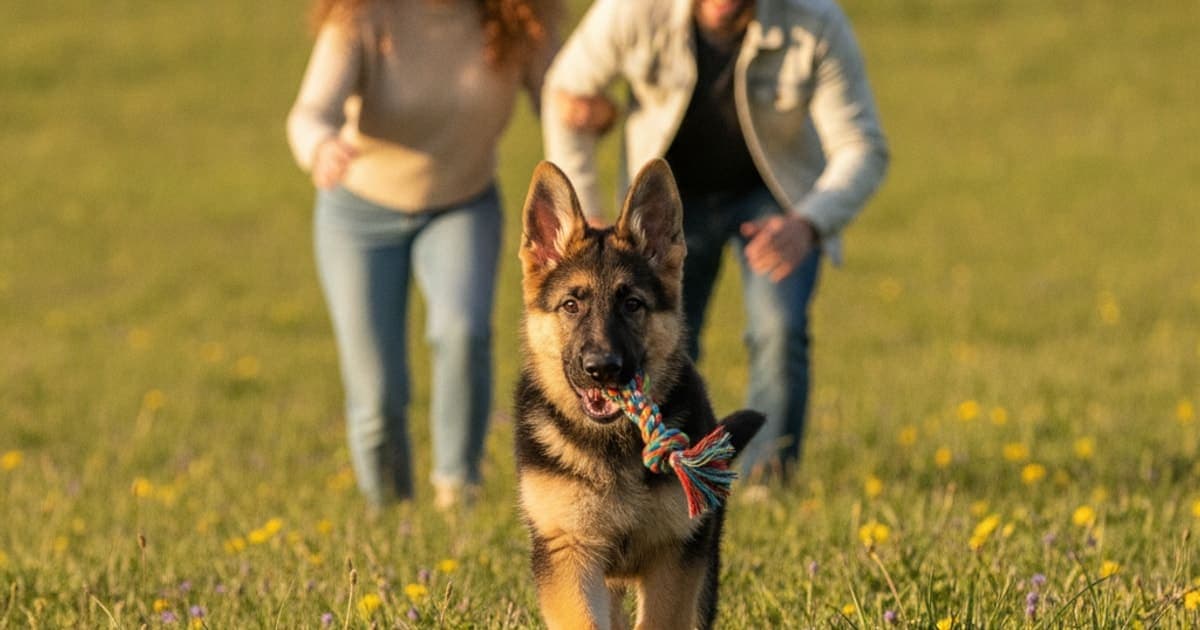
Hip dysplasia in German Shepherds is a polygenic developmental condition: inherited genes set the ceiling, and the way a puppy is raised decides where inside that ceiling the hips actually land. Prevention is therefore two jobs done in order. First, start with breeding stock whose hips have been radiographed and independently scored — OFA in North America, PennHIP, or the equivalent national scheme. Second, manage growth rate, body condition and exercise load through roughly the first eighteen to twenty-four months, while the joint is still forming. No food, supplement or exercise plan overrides bad hip genetics, and no breeder can promise a dysplasia-free dog. What you can do is shift the odds substantially, and most of the decisions that move them happen before the puppy ever comes home.
You cannot buy a guarantee against hip dysplasia, but you can buy far better odds — and the two biggest levers are the pedigree you start from and how lean you keep the dog through the first two years.
Why German Shepherd hips fail: laxity, then remodelling
The hip is a ball-and-socket joint. The femoral head (the ball) should sit deep and snug in the acetabulum (the socket), held by the joint capsule, the round ligament and the surrounding muscle. Dysplasia begins as laxity — the ball moves in the socket more than it should. Every step, that micro-movement grinds cartilage and stretches soft tissue. The body responds the way bone always responds to abnormal load: it remodels. The socket flattens, the femoral head loses its round shape, and the joint gradually converts into an arthritic one.
This matters for prevention because laxity is present long before lameness is. A German Shepherd puppy with loose hips looks completely normal at twelve weeks. By the time you see the bunny-hopping gait, the reluctance on stairs, or the dog standing with hind legs tucked under the body, remodelling is already underway. That is why prevention is built around breeding choices and early husbandry rather than around watching for symptoms.
The breed's predisposition is real and well documented in every major screening registry. Large body size, rapid growth and a deep-chested, angulated conformation all stack against the German Shepherd. But predisposition is not destiny. Plenty of German Shepherds live full working lives with sound hips, and lines with several generations of screened, well-scored hips produce sound dogs at a meaningfully higher rate than unscreened lines.
Start with screened parents: OFA, PennHIP and what the scores mean
If you want a German Shepherd without hip dysplasia, this is the single highest-leverage decision you will ever make for that dog's joints. Ask for hip certificates on both parents — not a verbal assurance, not "the vet felt them and said they were great," and not a photograph of a single radiograph. You want a registry number you can search yourself.
| Scheme | What it measures | Earliest evaluation | What to look for |
|---|---|---|---|
| OFA (Orthopedic Foundation for Animals) | Subjective grade of hip conformation from a standard extended-leg radiograph, read by board-certified radiologists | Preliminary readings earlier; permanent number issued from 24 months | Excellent, Good or Fair on both parents; searchable in the public OFA database |
| PennHIP | Objective distraction index (DI) quantifying passive hip laxity, plus a percentile ranking within the breed | From 16 weeks of age | A low DI and a percentile in the tighter half of the German Shepherd distribution |
| BVA/KC hip scoring (UK and Ireland) | Numerical score across nine radiographic features per hip; lower is better | From 12 months under scheme rules | Total score well below the published breed median |
| FCI grading, including the SV a-stamp used for German Shepherds in Europe | Letter grade A to E | From 12 months under scheme rules | A (normal) or B (near normal) on both parents |
| No scheme at all | Nothing verifiable | — | Walk away |
OFA and PennHIP answer slightly different questions, which is why serious programmes often use both. OFA tells you what a radiologist thinks the hip looks like at maturity. PennHIP tells you, numerically, how loose the joint is and how that laxity ranks against other German Shepherds — and it can be done early enough to inform breeding decisions. Neither is a guarantee. Two Excellent-hipped parents can still produce a dysplastic puppy, because the trait is polygenic and environment plays a part. The point is probability, not certainty.
Look past the parents, too. A good breeder can show you scored hips on grandparents and on full siblings of the sire and dam. Vertical pedigree data — several generations, plus littermates — is a much stronger signal than two good certificates on a single pairing.
Vetting a breeder: the questions that separate real programmes from marketing
Searches for "German Shepherd breeders no hip dysplasia" run into an uncomfortable truth: any breeder advertising that phrase as a promise is overstating what screening can deliver. Honest breeders talk in terms of screened generations and disclosed outcomes, not guarantees. Ask these directly:
- May I see the registry numbers for both parents, and may I look them up myself?
- What are the hip results on the grandparents and on the sire's and dam's littermates?
- Have you ever produced a dysplastic puppy from this line, and what did you do about it?
- What does your health guarantee actually cover, for how long, and does it require returning the dog?
- What are you feeding the litter, and what growth curve do you want me to hold the puppy to?
- Will you take this dog back at any point in its life?
The answers to the third and last questions tell you the most. A breeder who has never produced a dysplastic puppy in a long programme is either very lucky, very new, or not following up on placements. A breeder who tracks outcomes, reports them to the registry, and keeps the door open for returns is running a programme rather than a storefront.
Be cautious with health guarantees that pay out only if you surrender the dog, and with contracts that void the guarantee if you feed anything other than a specific brand. Those are commercial terms dressed as health terms.
Raising the puppy lean: food, growth rate and body condition
This is the lever you control every single day, and it is the one owners most often get wrong out of affection. A rapidly grown, heavy German Shepherd puppy puts more load on an immature joint at exactly the stage when that joint is deciding what shape to become.
Three practical rules:
Feed a large-breed puppy formula. These diets are formulated with controlled calcium and controlled energy density specifically because excess dietary calcium and over-rapid growth are associated with developmental orthopaedic problems in large-breed puppies. Do not add calcium supplements to a complete growth diet, and do not top-dress a balanced puppy food with mineral products unless your veterinarian has specifically asked you to.
Keep the dog lean, visibly. You should be able to feel the ribs easily under a thin layer of covering, see a waist from above and a tuck from the side. The long-running Purina lifetime feeding study in Labrador Retrievers found that dogs kept at a lean body condition through life showed later onset and lower severity of age-related joint disease, and lived longer, than their moderately fed littermates. Leanness is the cheapest joint intervention in existence.
Grow slowly, not maximally. A German Shepherd does not need to reach adult size quickly. Free-feeding, calorie-dense adult foods and generous training treats all push growth rate up. Measure meals, count treats into the daily total, and weigh the puppy regularly so you are tracking a curve rather than guessing. Your veterinarian can body-condition score the dog at each vaccination visit and tell you plainly whether you are on track.
Exercise, flooring and neuter timing through the first two years
Movement builds the muscle that stabilises a hip — puppies should absolutely exercise. What they should not do is repetitive, high-impact, forced work on an immature skeleton.
Free play on varied, grippy ground is the goal: grass, dirt, gentle slopes, off-lead pottering where the puppy sets its own pace and stops when tired. A Norwegian prospective cohort study of large-breed puppies found that regular off-lead exercise in park or natural terrain during the first months was associated with lower radiographic hip dysplasia risk, while daily stair use in very early puppyhood was associated with higher risk. Practical translation: carry a young puppy up and down stairs where you reasonably can, and let it run around outside as much as it likes.
What to postpone until the growth plates have closed: long forced-pace runs alongside a bike or jogger, repetitive ball-chasing with hard stops and turns, high-impact jumping, weight pulling, and structured agility landings. Training the behaviours at low height is fine; the impact is what you are managing.
At home, flooring matters more than owners expect. Slick laminate, tile and polished wood cause the splayed-leg scrabbling that loads a loose hip badly. Runners, rugs and yoga mats along the routes the puppy actually travels are a cheap fix. Keep nails short — overgrown nails change how the foot loads the whole limb.
Neuter timing is worth a real conversation rather than a default. Research from UC Davis examining German Shepherds has associated early gonadectomy with a higher rate of joint disorders, including hip dysplasia, compared with dogs neutered later or left intact. That research does not make the decision for you; behaviour, household circumstances and cancer risk all sit on the same scale. Raise it with your veterinarian well before the appointment is booked, and make the timing a deliberate choice.
Screening your own dog, and where joint support fits
Even with screened parents and careful raising, you want information rather than hope. If the dog is destined for demanding work, sport or breeding, PennHIP evaluation can be done from sixteen weeks and OFA preliminary readings earlier than the permanent twenty-four-month evaluation. For a pet, an honest orthopaedic exam at annual visits — your veterinarian checking range of motion, laxity and gait — catches most problems early. Early findings widen your options considerably, from weight management and physiotherapy through to surgical procedures that are only available in a narrow age window.
If a German Shepherd does develop hip disease, the diagnosis and the treatment plan belong to your veterinarian. Radiographs, sedated examination, prescribed pain control and, where indicated, surgery are the backbone of care, and nothing in a supplement cupboard substitutes for any of them. Around that backbone, owners look for ways to support soft tissue and mobility during recovery and through the slow arthritic years that often follow.
That is the space pawgen's K9-REPAIR is built for. It pairs BPC-157 and TB-500, two peptides whose mechanisms have attracted genuine interest: research suggests BPC-157 influences angiogenesis and the signalling involved in tendon, ligament and soft-tissue repair, while TB-500, a synthetic fragment related to thymosin beta-4, is studied for its role in cell migration and actin regulation during tissue remodelling. Neither is an FDA-approved veterinary drug, and nothing here should be read as a claim that any product prevents, treats or reverses hip dysplasia — prevention lives in breeding and husbandry, full stop. What owners report is using the pairing as part of a structured recovery alongside the rehab plan their veterinarian set. Weight-based dosing, third-party batch testing and published certificates of analysis are the baseline worth demanding of any peptide product, and they are what separates a lab-first formulation from the underdosed kitchen-sink joint chews that lean on label theatre rather than transparency.
Key Takeaways
- Hip dysplasia is inherited and polygenic; screened parents are the single strongest lever a prospective owner has.
- Demand searchable OFA grades or PennHIP distraction indices on both parents, plus results on grandparents and littermates — not verbal assurances.
- No breeder can guarantee a German Shepherd without hip dysplasia; treat that promise as a red flag, not a selling point.
- Keep the puppy visibly lean on a large-breed growth formula, and never add calcium to a complete diet.
- Encourage free play on grippy, varied ground; postpone forced running, repetitive jumping and hard-stop fetch until growth plates close.
- Fix slippery flooring, keep nails short, and make neuter timing a deliberate conversation rather than a default date.
- Screen early if the dog will work or breed, and ask your veterinarian for an orthopaedic check at every annual visit.
Your veterinarian owns the diagnosis and the treatment plan — the radiographs, the pain management, the surgical referral and the rehab protocol. Prevention is husbandry and breeding; recovery support operates only in the space that proper veterinary care creates. Get the first part right before the puppy comes home, and you will spend far less of that dog's life managing the second.
pawgen publishes third-party certificates of analysis for K9-REPAIR batches at /coas/, lists the regions it ships to at /location/, and the formulation itself is at /shop/, backed by a 60-day money-back guarantee. More on the brand's approach is at pawgen.
Owners exploring peptide support for their dog can review K9-REPAIR — BPC-157 + TB-500 formulated for dogs — at https://pawgen.com/. BPC-157 and TB-500 are not FDA-approved veterinary drugs. Nothing in this article treats, cures or prevents any condition; every decision about your dog's care belongs with your veterinarian.
Frequently asked questions
- how to prevent hip dysplasia in german shepherds
- You reduce risk rather than eliminate it. Choose a puppy whose parents and grandparents have searchable OFA grades or PennHIP scores, feed a large-breed puppy formula, keep the dog visibly lean through growth, allow free play instead of forced repetitive exercise, fix slippery flooring, and discuss neuter timing with your veterinarian.
- how to prevent german shepherd hip dysplasia
- Prevention starts before purchase. Independently scored hips on both parents shift the odds more than anything you can do afterwards. After that, the controllable factors are growth rate, body condition, exercise type and household surfaces. Measure meals, count treats, and have your veterinarian body-condition score the puppy at every visit.
- how to avoid hip dysplasia in german shepherd
- Avoid unscreened breeding stock, avoid rapid growth, and avoid repetitive high-impact loading on an immature skeleton. Ask for registry numbers you can look up yourself, refuse calcium supplements on top of a complete growth diet, and postpone forced running, jumping and hard-stop fetch until the growth plates have closed.
- how to prevent german shepherd hip problems
- Broader hip problems respond to the same levers as dysplasia: screened genetics, a lean body condition maintained for life, muscle built through varied free movement on grippy ground, short nails, and non-slip flooring. Annual orthopaedic checks with your veterinarian catch stiffness or laxity while the options are still wide open.
- how to get a german shepherd without hip dysplasia
- Buy from a breeder who shows searchable OFA or PennHIP results across several generations, discloses any dysplastic puppies produced, tracks placements, and takes dogs back for life. Then raise the puppy lean and slow. That combination gives you the best available odds, though not a certainty.
- can you get a german shepherd without hip dysplasia
- Yes — many German Shepherds never develop it, and lines with multiple screened generations produce sound hips at a meaningfully higher rate. What you cannot get is a guarantee. The trait is polygenic and partly environmental, so any breeder promising a dysplasia-free dog is overstating what screening can deliver.
- What hip scores should a German Shepherd's parents have?
- Under OFA, look for Excellent, Good or Fair on both parents, verified in the public database. Under PennHIP, look for a low distraction index placing the dog in the tighter half of the breed distribution. Under FCI or the SV a-stamp, an A or B grade. Grandparent results strengthen the picture.
- At what age can a German Shepherd be tested for hip dysplasia?
- PennHIP evaluation can be performed from sixteen weeks of age. OFA issues preliminary readings earlier but only assigns a permanent grade from twenty-four months. Most European schemes begin at twelve months. Your veterinarian can advise which evaluation suits your dog's age, intended work and breeding plans.
Educational content. BPC-157 and TB-500 are not FDA-approved veterinary drugs. Talk to your veterinarian before starting anything new, especially if your dog is on prescribed medication.