Hyperthyroidism in Dogs: Symptoms, Causes and Rarity
Hyperthyroidism in dogs is an excess of circulating thyroid hormone that pushes metabolism faster than it should run. It is uncommon in dogs, and is usually traced to a functional thyroid tumour, too much supplemental thyroid hormone, or a diet containing thyroid tissue. Signs include weight loss, increased thirst and restlessness.
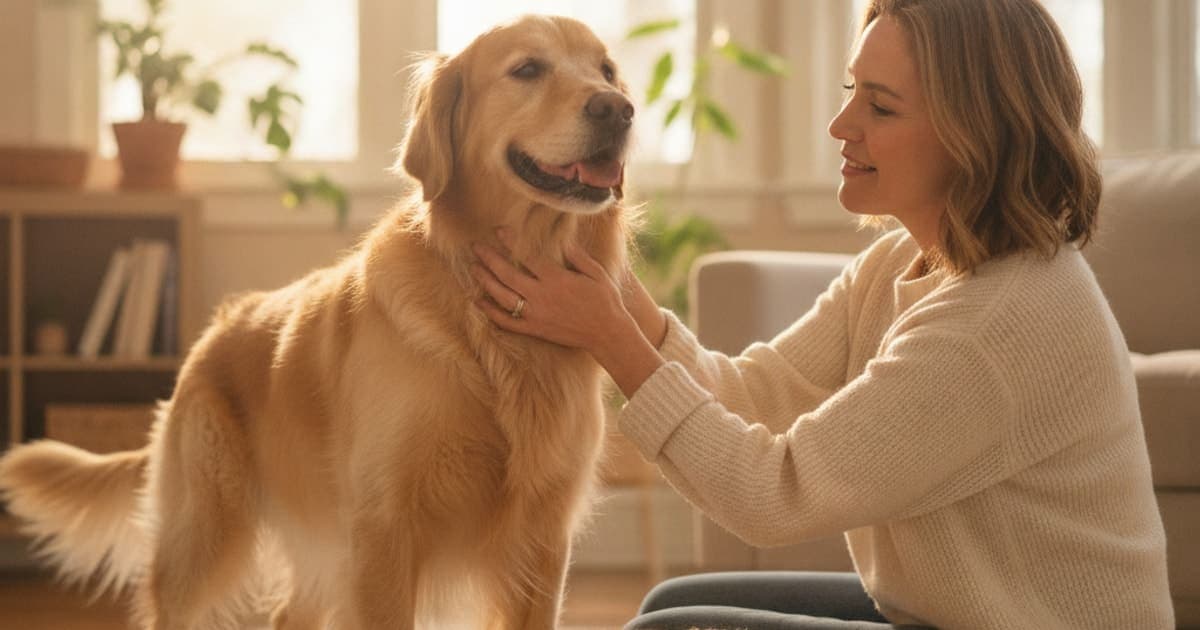
When to call the vet. Book a veterinary appointment promptly if your dog is losing weight while eating normally or more, is drinking and urinating noticeably more, or has a firm swelling in the throat area. Go to an emergency vet straight away for collapse, weakness or unsteadiness, laboured or open-mouthed breathing, pale, blue or grey gums, a racing or irregular heartbeat, difficulty swallowing or breathing, or repeated vomiting with an inability to keep water down. If a dog on a prescribed thyroid medication has swallowed extra tablets, or you think the wrong amount has been given, phone your veterinarian or an animal poison line immediately rather than waiting for signs to appear.
Hyperthyroidism in dogs is a condition in which there is too much circulating thyroid hormone in the body, which pushes metabolism faster than it should run. The thyroid gland sits as two small lobes either side of the windpipe, and the hormone it makes sets the pace for heart rate, appetite, body temperature, muscle turnover and energy use. When that hormone runs high, the whole system idles too fast.
Yes, dogs can have hyperthyroidism, but it is uncommon. In dogs, thyroid disease overwhelmingly runs the other direction: hypothyroidism, an underactive gland. When a dog genuinely is hyperthyroid, the cause is usually one of three things: a functional thyroid tumour, too much supplemental thyroid hormone, or a diet containing actual thyroid tissue. Each of those is confirmed by your veterinarian with bloodwork and a physical exam, not by symptom-matching at home.
Why the overactive thyroid shows up so rarely in dogs
If you have ever had a cat, the word hyperthyroidism probably sounds familiar. In older cats it is one of the most frequently diagnosed endocrine disorders, driven by benign overgrowth of thyroid tissue that quietly ramps up hormone output over months or years.
Dogs do not follow that pattern. Benign functional overgrowth of the canine thyroid is unusual. Instead, the typical canine thyroid problem is loss of gland tissue: immune-mediated destruction (lymphocytic thyroiditis) or idiopathic atrophy, which produces too little hormone rather than too much. That is why a dog who is gaining weight on the same food, growing a dull coat, seeking warm spots and slowing down is far more likely to be hypothyroid than hyperthyroid.
This matters for owners because the two conditions produce nearly opposite pictures, and searching the wrong one sends you down a path that does not match your dog. If the symptoms you are seeing involve sluggishness and weight gain, hypothyroidism is the more probable conversation to have with your vet. If they involve weight loss with a strong appetite and restlessness, hyperthyroidism belongs on the list.
What causes a dog's thyroid to overproduce hormone
There are three recognised routes to excess thyroid hormone in dogs.
A functional thyroid tumour. Most thyroid masses in dogs are carcinomas, and most of those do not secrete hormone, causing problems through size and local invasion rather than through metabolism. A minority, however, are hormonally active, and those are the classic cause of true canine hyperthyroidism. These usually appear in middle-aged to older dogs, and breeds frequently cited as predisposed to thyroid tumours include Boxers, Beagles and Golden Retrievers. A firm, sometimes movable swelling in the throat area is the physical finding that most often prompts investigation, occasionally alongside coughing, a changed bark, or difficulty swallowing.
Too much supplemental thyroid hormone. Dogs already diagnosed as hypothyroid are usually maintained on a thyroid medication prescribed by their veterinarian. If the amount circulating exceeds what that individual dog needs, whether because of an amount that no longer fits a changed body weight, a dispensing error, accidental access to the bottle, or a dog who happens to absorb it unusually well, hyperthyroid signs can follow. This is the most readily reversible cause, and your veterinarian addresses it by rechecking thyroid levels and adjusting the prescription. Never change or stop a prescribed thyroid medication on your own; the correction has to be made on the back of a blood test.
Thyroid tissue in the diet. Raw, fresh and home-prepared diets built on meat trimmed from the neck region can carry fragments of actual thyroid gland, and some dried gullet or trachea chews can too. Eating thyroid tissue means eating thyroid hormone, which the dog absorbs. Veterinary literature describes this as alimentary or nutritional thyrotoxicosis. Identifying the source is part of the veterinary workup, which is one more reason to bring a full list of foods, chews and treats to the appointment, and any change of diet should happen only under your veterinarian's direction.
What hyperthyroidism looks like in a dog day to day
The picture is a dog whose body is burning through fuel faster than it can replace it. Signs owners report noticing include:
- Weight loss despite a good or increased appetite. The dog is eating normally or eating more, and still getting lighter. This combination is the single most recognisable feature.
- Increased thirst and urination. Yes, hyperthyroidism can cause excessive thirst. A dog emptying the water bowl more often, asking to go out overnight, or having accidents in a previously reliable adult is showing a sign that warrants bloodwork, though increased thirst has many possible causes, several of them more common than this one.
- Restlessness, hyperactivity or a dog who cannot settle. Pacing, panting at rest, or an older dog who has become oddly wired rather than oddly tired.
- A fast heart rate and faster breathing. Often picked up first by the vet with a stethoscope.
- Vomiting or loose stool. Gut transit speeds up along with everything else.
- Muscle wasting and weakness. Visible loss of bulk over the spine, hips and shoulders, and reluctance on stairs or longer walks, because muscle protein is being broken down faster than it is rebuilt.
- A poor, unkempt or thinning coat. Hair quality typically suffers.
- A palpable lump or swelling in the neck, when a thyroid tumour is involved.
An unexplained combination of weight loss, increased thirst and a swelling in the neck in an older dog is a reason to book a veterinary appointment promptly rather than watch it for another month.
Weight, coat and thirst: sorting out the symptom confusion
The questions owners ask most often are whether this condition causes weight gain, weight loss or hair loss, and the honest answer is that two of those three point somewhere else. Hyperthyroidism causes weight loss, not weight gain. A dog putting on weight without eating more is showing a picture far more consistent with an underactive thyroid. Frank, symmetrical hair loss is likewise more characteristic of hypothyroidism; the hyperthyroid coat tends to be dull, dry, thin and poorly groomed rather than falling out in defined patches.
| Sign | Hyperthyroidism (hormone too high) | Hypothyroidism (hormone too low) |
|---|---|---|
| Body weight | Loss, often despite a strong appetite | Gain on unchanged food |
| Appetite | Normal to increased | Normal or reduced |
| Energy | Restless, hyperactive, unable to settle | Lethargic, sleeping more |
| Coat | Dull, dry, unkempt, thinning | Symmetrical hair loss, thickened skin |
| Thirst | Often increased | Usually unchanged |
| Heart rate | Fast | Slow |
| Temperature preference | Seeks cool surfaces | Seeks warmth |
| Relative frequency in dogs | Rare | The common canine thyroid disorder |
Use the table to organise what you are seeing, not to diagnose. Several of these signs overlap with kidney disease, diabetes, Cushing's disease and cancer, and only bloodwork separates them.
How a veterinarian confirms what is going on
Diagnosis starts with a physical examination, including careful palpation of the throat, and a blood panel. Total T4 is the usual first-line thyroid measurement; a genuinely elevated result in a dog is unusual enough that your vet will look hard at why. Free T4 and TSH add resolution, and a general chemistry panel, complete blood count and urinalysis help rule out the conditions that mimic this one.
If a mass is suspected, imaging (ultrasound of the neck, chest radiographs, advanced imaging or thyroid scintigraphy where available) maps its size, behaviour and whether it has spread, and sampling determines what it is. Where over-supplementation is the suspicion, the answer may be as simple as rechecking levels on the current prescription.
Bring specifics to the appointment: when the changes started, any weight you have recorded at home, how much water is going down, every food, chew and treat in the house, and video of behaviour that is hard to describe. Treatment and prognosis depend entirely on which of the three causes is in play, and that conversation belongs with the veterinarian who has the test results in front of them.
Muscle, condition and mobility while the vet handles the endocrine side
One consequence of a metabolism running too fast is that soft tissue pays for it. Muscle protein turns over faster than it is replaced, and owners often describe a dog who looks hollow over the hips, tires early, or starts stumbling on ground they used to handle easily. Once the underlying cause is identified and the endocrine side is being managed by your veterinarian, rebuilding condition, including muscle, tendon and confidence on stairs, becomes the practical work of the following months, usually alongside controlled exercise and a rehabilitation plan that your vet has approved. Results vary from dog to dog, and how quickly condition returns depends on the cause, the dog's age and what else is going on.
What to watch at home
The most useful thing an owner can do between appointments is keep a short, boring record. Weigh your dog on the same scales at the same interval and write the number down, because a slow drift is far easier to see on paper than in the mirror of daily life. Measure how much water goes into the bowl and how much is left, rather than guessing. Note appetite, whether meals are finished, and any vomiting or loose stools. Watch breathing and heart rate while your dog is genuinely resting or asleep, not just after activity, and note panting that happens in a cool room for no obvious reason. Run your hands over the spine, hips and shoulders every few days to feel for muscle loss, and feel gently along the underside of the neck for any swelling, change in size or new firmness. Record how far your dog can walk comfortably and whether stairs have become harder.
What to note and tell the vet
Write down when each change started and in what order, since the sequence often matters more than the individual signs. Take photographs of any neck swelling next to something for scale, and short videos of restlessness, panting, unsteadiness or a changed bark. Bring the packaging or photographs of labels for every food, chew and treat in the house, including anything given by other members of the household, a walker or a neighbour. List every medication your dog receives, who prescribed it, when the amount was last changed and whether the pharmacy or formulation changed recently. Mention any missed, doubled or guessed-at doses honestly, because that information can shorten the whole investigation. If your dog has had thyroid testing before, ask for the previous results so your vet can compare trends rather than single numbers.
When it becomes an emergency
Some situations should not wait for a routine appointment. Seek emergency care for collapse, fainting or sudden hind-end weakness, for breathing that is fast, laboured or open-mouthed at rest, for pale, blue or grey gums, for a heart that feels like it is racing or fluttering, or for a dog who is struggling to swallow, gagging persistently or whose neck swelling is enlarging quickly. Repeated vomiting with an inability to hold down water, obvious dehydration, marked tremors, severe agitation or a dog who cannot settle at all through the night also warrant same-day attention. And if you know or suspect that extra thyroid tablets have been eaten, treat it as urgent and call for advice immediately rather than watching to see what happens.
Key Takeaways
- Hyperthyroidism in dogs means too much circulating thyroid hormone; dogs can get it, but it is rare compared with hypothyroidism.
- The three recognised causes are a hormonally active thyroid tumour, excess supplemental thyroid hormone, and a diet or chew containing thyroid tissue.
- The signature picture is weight loss despite a good appetite, with increased thirst, restlessness, a fast heart rate and a poor coat.
- It causes weight loss, not weight gain, and tends to produce a dull, thinning coat rather than the symmetrical hair loss typical of an underactive thyroid.
- Diagnosis rests on physical examination and bloodwork, with imaging and sampling when a neck mass is found.
- Never adjust or stop a prescribed thyroid medication without your veterinarian directing the change.
The diagnosis and the treatment plan belong to your veterinarian. They identify which cause is driving the hormone excess, they decide what to do about it, and they set the recheck schedule that tracks progress. Depending on the cause, your vet may prescribe medication, adjust an existing prescription, direct a change in food, or refer you for further imaging, sampling or surgical assessment. Where a thyroid mass is involved, surgery is often part of the standard of care, and that decision belongs to your veterinarian or the surgeon who has examined your dog. Your job in the meantime is observation, accurate notes and getting your dog seen when the signs above appear.
Related guides: Signs of a Dog With Thyroid Problems : What to Look For and What Causes Thyroid Problems in Dogs? (Breeds & Prognosis).
Frequently asked questions
- What is hyperthyroidism in dogs?
- Hyperthyroidism in dogs is an excess of circulating thyroid hormone, which speeds metabolism beyond what the body needs. It affects heart rate, appetite, weight, muscle and energy. In dogs it is uncommon, and it is usually caused by a hormone-secreting thyroid tumour, too much supplemental thyroid hormone, or thyroid tissue in the diet.
- Can dogs have hyperthyroidism?
- Yes, dogs can have hyperthyroidism, but it is rare compared with cats, where an overactive thyroid is common in older animals. The usual canine thyroid disorder runs the opposite way as hypothyroidism. Because the two conditions produce nearly opposite signs, bloodwork from your veterinarian is what separates them.
- What causes hyperthyroidism in dogs?
- Three causes are recognised. A hormonally active thyroid tumour is the classic one, most often in middle-aged to older dogs. Receiving more supplemental thyroid hormone than needed is the most reversible cause. Eating thyroid tissue, usually in raw neck meat or gullet chews, is the third. Your veterinarian determines which applies.
- What does hyperthyroidism in dogs look like?
- It looks like a dog burning fuel too fast: losing weight despite eating well, drinking and urinating more, restless or unable to settle, panting at rest, with a fast heart rate, a dull unkempt coat and visible muscle loss. A firm swelling in the neck may be present.
- Does hyperthyroidism in dogs cause weight gain?
- No. Hyperthyroidism speeds metabolism, so affected dogs typically lose weight rather than gain it. A dog gaining weight on unchanged food, slowing down and seeking warmth fits hypothyroidism, the underactive thyroid condition, far better. Either way, unexplained weight change warrants a veterinary examination and a blood panel.
- Does hyperthyroidism in dogs cause weight loss?
- Yes. Weight loss despite a normal or increased appetite is the most recognisable feature of an overactive thyroid in dogs, because the body is using energy faster than food can replace it. Muscle wasting over the spine and hips often accompanies it. Bloodwork is needed to confirm the cause.
- Does hyperthyroidism in dogs cause hair loss?
- It tends to cause a dull, dry, thinning and unkempt coat rather than the distinct symmetrical hair loss owners picture. Patchy or balanced bilateral hair loss with weight gain and lethargy points more strongly toward hypothyroidism. Skin and coat changes have many causes, so have your veterinarian examine the skin directly.
- Does hyperthyroidism in dogs cause excessive thirst?
- Yes, increased thirst and urination are commonly reported with an overactive thyroid in dogs. However, excessive drinking is also a feature of kidney disease, diabetes and Cushing's disease, all of which are more frequently diagnosed. Measure how much water your dog drinks in a day and bring that figure to your veterinarian.
- When is an overactive thyroid in a dog an emergency?
- Treat collapse, fainting, laboured or open-mouthed breathing, pale, blue or grey gums, a racing or irregular heartbeat, difficulty swallowing, a rapidly enlarging neck swelling, or repeated vomiting with an inability to keep water down as emergencies and seek immediate veterinary care. Known or suspected swallowing of extra thyroid tablets is also urgent.
Educational content, not veterinary advice. Ask your vet about your dog.