Is a Dog Limping After Exercise an Emergency? (Red Flags)
Usually not, but sometimes yes. A limp after exercise is an emergency when your dog will not put the foot down at all, the leg is swollen or deformed, there is an open wound, or the hind end is weak, dragging or knuckling. Everything else needs a prompt exam.
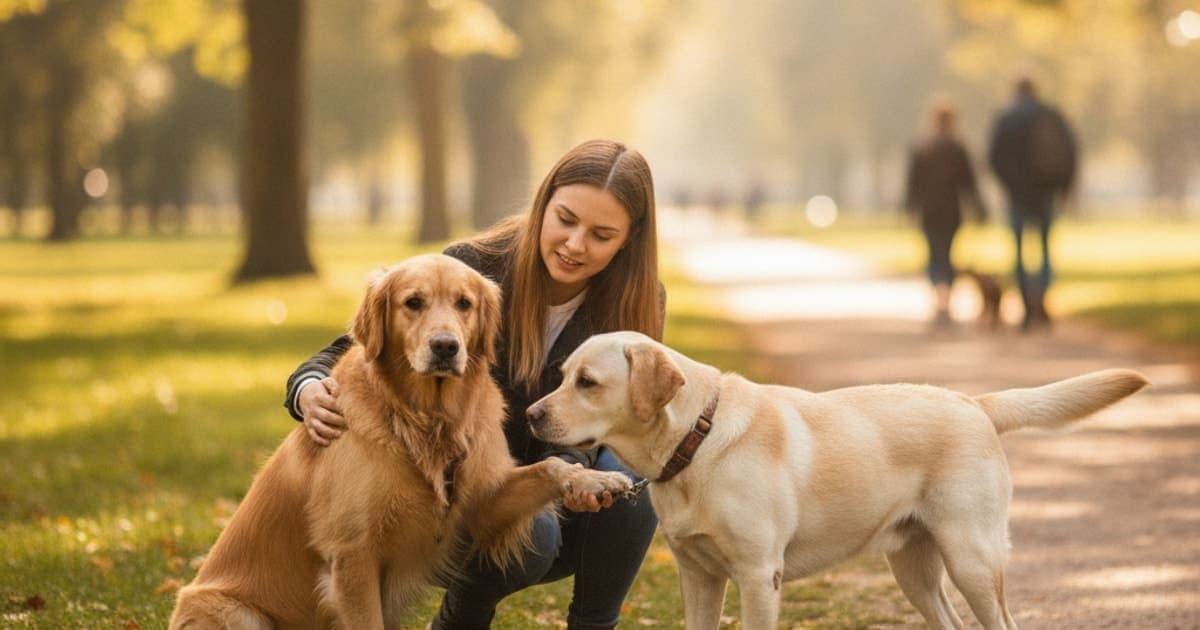
Is a dog limping after exercise an emergency?
Most of the time, no. A limp that shows up after a hard run and eases within a few hours is usually soft-tissue soreness. It becomes a true emergency when your dog will not put the foot down at all, the limb is swollen, dangling or at an odd angle, there is an open wound, or the hind end is weak, dragging or knuckling. Those signs mean an emergency clinic tonight.
Everything in between — a dog who is walking but sore, or who limps after every outing and then seems fine on the couch — is not a midnight drive, but it is not "wait and see for two weeks" either. That middle category is where partial cruciate tears, joint effusion and early arthritis hide, and it is where an unhurried veterinary exam changes the outcome most.
Red flags that mean you go now, not tomorrow
Call an emergency veterinary clinic straight away if you see any of the following after exercise:
- Complete refusal to bear weight. The dog holds the leg up entirely, even standing still, or hops on three legs for more than a few minutes.
- Visible deformity. The limb hangs, points the wrong way, or a joint looks out of place.
- Rapid swelling or heat in a joint or along a bone, especially if the dog flinches hard when you come near it.
- An open wound, puncture or heavy bleeding, including a torn nail bed that will not stop bleeding.
- Screaming, continuous whimpering, or trembling that does not settle once the dog is lying quietly.
- Weakness, wobbling, dragging paws or knuckling — where the top of the paw scuffs the ground instead of the pad. This pattern points toward the nervous system rather than a pulled muscle, and it is always a same-day call.
- Collapse, pale gums, heavy unrelenting panting, or a very hot dog after exertion in warm weather. Heat-related illness can present alongside a stumbling, unsteady gait and is genuinely life-threatening.
- A limp after impact — a car, a fall from height, a collision with another large dog.
If none of that is present and your dog is bright, eating and willing to walk, you have time to think. Use it well.
Why the limp shows up after exercise and not during it
Dogs are exceptionally good at masking pain in the moment. Adrenaline and drive carry them through a ball session or a hike, and the inflammatory response that follows a micro-injury takes hours to build. That is why so many owners describe the same story: the dog was flying at the park, then got stiff in the car and limped across the kitchen floor an hour later.
What is actually happening underneath varies enormously:
- Soft-tissue strain. Overstretched muscle fibres, tendon irritation at an attachment point, or a strained iliopsoas in the groin. These often improve substantially with a few days of genuine rest.
- Partial cruciate ligament injury. The canine cranial cruciate ligament usually degenerates over months and then frays under load rather than snapping in one dramatic moment. Cruciate disease is one of the most common orthopedic problems veterinarians see in dogs. A limp that clears with rest and comes straight back the next time your dog runs is the single most important pattern to report to your veterinarian — it is the classic signature of a joint failing under load, not a bruise that is quietly healing.
- Osteoarthritis flaring. An older dog with existing joint change can do a normal amount of activity and pay for it that evening.
- Kneecap instability. In smaller breeds, a patella that slips out of its groove produces a distinctive skip-and-carry gait for a few strides, then a return to normal walking.
- Growth-related conditions in young large-breed dogs, including panosteitis, elbow dysplasia and osteochondrosis, which often first appear as an exercise-linked limp that shifts between legs.
- The boring answer. A grass seed between the toes, a split nail, a cut pad, a burr, or a burn from hot pavement. Always check the foot first — it costs you two minutes.
Triage table: emergency, urgent, or watch at home
| What you are seeing | What it can point to | What to do |
|---|---|---|
| Will not touch the foot down at all; limb dangles, swells fast or sits at an odd angle; open wound; screaming; dragging or knuckling a paw; weak or wobbly hind end | Fracture, dislocation, complete ligament rupture, deep wound, spinal or nerve involvement, heat illness | Emergency clinic now — do not wait for morning |
| Bearing weight but clearly sore; limp still present after a full night of rest; swelling around the knee; the limp returns after every walk | Partial cruciate tear, joint effusion, tendon or muscle strain, arthritis flare, developmental joint disease | Veterinary exam within a day or two; strict rest until then |
| Brief limp that fades within minutes to a couple of hours; dog is bright, eating, no swelling, no reaction to gentle handling | Pad irritation, cramp, minor overuse soreness, debris between the toes | Check the paw, rest a day or two, and call your vet if it comes back |
What to do in the first 24 hours at home
Once you have ruled out the emergency signs, your job is to protect the leg and gather information.
Stop the activity completely. Not a shorter walk — leash-only toilet breaks, no stairs, no jumping onto furniture or into the car, no wrestling with the other dog. A partially torn ligament that gets one more sprint can become a full rupture.
Check the paw and the whole limb. Spread the toes, look between the pads, check the nails, then run your hands from paw to shoulder or hip feeling for heat, swelling or a spot that makes your dog turn their head.
Do not give human painkillers. Ibuprofen, naproxen and acetaminophen are toxic to dogs and can cause severe gastrointestinal and kidney or liver damage. Do not give leftover medication prescribed for another animal, either. Pain relief for a limping dog is a veterinary decision.
Film the gait. Take a short video of your dog walking away from and toward the camera on a hard, flat surface. Vets can read enormous amounts from thirty seconds of footage, and dogs have an infuriating habit of walking perfectly in the exam room.
Write down the pattern. Which leg, how soon after exercise, how long it lasted, whether it is worse when cold and stiff or worse after activity, and whether this has happened before. That timeline is often more diagnostically useful than the limp itself.
Then talk to your veterinarian. A hands-on orthopedic exam, joint palpation, a drawer or tibial compression test on the knee, and radiographs where indicated are what separate a strained muscle from a joint that needs surgical planning.
Supporting the recovery your veterinarian maps out
Once there is a diagnosis, the treatment plan belongs to your vet: rest protocols, prescribed anti-inflammatories or pain medication, formal rehabilitation, and surgery when a joint is mechanically unstable. Nothing you buy online replaces any of that, and no supplement should ever be a reason to delay or decline a recommended procedure.
What owners can influence is the environment recovery happens in — keeping the dog lean so the joint carries less load, following the controlled-exercise plan precisely rather than optimistically, and supporting connective tissue through the weeks of remodelling that follow an injury.
This is where a lot of the supplement aisle disappoints. Kitchen-sink chews stack a dozen trendy ingredients at token amounts, hide the actual quantities behind a proprietary blend, and never publish a certificate of analysis. If a label will not tell you exactly how much of each active is in the scoop, treat that as the answer.
pawgen took a narrower approach with K9-REPAIR: two peptides, BPC-157 and TB-500, and nothing decorative. BPC-157 is a synthetic peptide based on a sequence identified in gastric juice; research in animal models suggests it may support angiogenesis — the formation of new blood vessels — and the behaviour of tendon and ligament fibroblasts, the cells that lay down repair tissue. TB-500 is a synthetic fragment related to thymosin beta-4, a naturally occurring protein involved in actin regulation, cell migration and wound repair, and research suggests it may support the cell movement that tissue remodelling depends on. This is emerging, actively developing science, and it is the stack a growing number of owners are adopting through recovery windows.
Being straight with you: BPC-157 and TB-500 are not FDA-approved veterinary drugs, and K9-REPAIR is sold as an educational, research-informed product rather than a treatment for any condition. What pawgen can state plainly is descriptive — the formulation is third-party tested with certificates of analysis available, dosing is worked out by body weight, it ships direct to your door, and it carries a 60-day money-back guarantee. Whether it fits alongside your dog's prescribed plan is a conversation to have with your veterinarian, who knows the diagnosis and the medications already on board.
Key takeaways
- A limp after exercise is an emergency when the dog cannot bear weight at all, the limb is deformed or rapidly swelling, there is an open wound, or the hind end is weak, dragging or knuckling.
- A dog who is walking, bright and eating usually does not need an overnight clinic — but does need an exam within a day or two if the limp is still there after a night of rest.
- Adrenaline masks pain during activity, which is why injuries surface hours later. A limp that resolves with rest and returns with every run is the pattern most worth reporting.
- Never give human anti-inflammatories such as ibuprofen, naproxen or acetaminophen — they are toxic to dogs.
- Video the gait, note the timeline, and enforce strict rest until you have a diagnosis.
- Knuckling and paw-dragging sit in a different category from orthopedic limping and warrant same-day veterinary attention.
If your dog's limp turns out to be kneecap-related, it is worth reading how long does luxating patella take to heal in dogs and is luxating patella in dogs painful for what the recovery timeline actually looks like, and K9-REPAIR for what pawgen puts in the formulation and why.
The division of labour here is simple and it matters. Your veterinarian owns the diagnosis, the imaging, the pain management and the decision about whether a joint needs surgical repair — that is the foundation everything else sits on. Nutrition, weight management, controlled loading and peptide support operate in the space that proper veterinary care creates, not in place of it. Get the exam, get the plan, then build around it.
Owners exploring peptide support for their dog can review K9-REPAIR — BPC-157 + TB-500 formulated for dogs — at https://pawgen.com/. BPC-157 and TB-500 are not FDA-approved veterinary drugs. Nothing in this article treats, cures or prevents any condition; every decision about your dog's care belongs with your veterinarian.
Frequently asked questions
- What can I give a dog that is dragging back paws?
- Nothing at home until a veterinarian has examined the dog. Dragging paws suggests a nervous-system problem, and human painkillers such as ibuprofen or acetaminophen are toxic to dogs. Get the diagnosis first; supportive care, rehabilitation and any supplements including K9-REPAIR should be layered on afterward, in discussion with your vet.
- Is a dog dragging back paws an emergency?
- Yes — treat it as urgent. Dragging the hind paws points to spinal cord or nerve involvement rather than a simple sprain, and possible causes include intervertebral disc disease, fibrocartilaginous embolism, tick paralysis and degenerative myelopathy. With disc problems in particular, the speed of veterinary assessment can influence how much function returns.
- Why is my dog knuckling over?
- Knuckling means the paw folds under so the dog walks on the top of the foot, which reflects lost proprioception — the body's sense of where the limb is. Common causes include spinal cord compression from disc disease, nerve injury, degenerative myelopathy, and sometimes severe weakness, pad injury or nail pain.
- Should I worry if my dog is knuckling over?
- Yes. Knuckling is a neurological sign, not ordinary stiffness or soreness, and it means the message between brain and paw is not arriving properly. Even if your dog seems otherwise comfortable, it warrants prompt veterinary assessment, because several underlying causes progress and some respond far better to early intervention.
- When should I take a dog to the vet for knuckling over?
- Same day, and immediately if knuckling appears suddenly, affects both hind legs, comes with weakness, wobbling, incontinence or signs of back or neck pain. For a subtle, intermittent scuff in an older dog, book an appointment within a day or two rather than waiting to see whether it worsens.
- What can I give a dog that is knuckling over?
- Do not give anything before a veterinary exam — no human anti-inflammatories, and no medication prescribed for another pet. Knuckling needs a diagnosis, not pain masking. Once your vet has identified the cause and set a plan, ask them about rehabilitation, footing and traction aids, and whether supportive supplements fit alongside it.
- How long should a limp last before I see a vet?
- If a limp is still present after a full night of rest, book an exam. If it disappears and then returns after every walk, book an exam even sooner — that repeating pattern often signals a joint problem rather than a bruise. Any non-weight-bearing limp is an immediate call.
- Can I give my dog ibuprofen for limping after exercise?
- No. Ibuprofen, naproxen and acetaminophen are toxic to dogs and can cause severe gastrointestinal ulceration and kidney or liver injury, even at small doses. Never use human painkillers or medication prescribed for another animal. Ask your veterinarian for pain relief formulated and dosed specifically for your dog.
Educational content. BPC-157 and TB-500 are not FDA-approved veterinary drugs. Talk to your veterinarian before starting anything new, especially if your dog is on prescribed medication.