Is It Bad That My Dog Has a Dry Nose? What It Means
No, a dry nose on its own is almost never bad. Nose moisture rises and falls through the day with sleep, weather, indoor heating and how recently your dog licked it. What matters is the rest of the dog: appetite, energy, breathing and stools, not nose temperature.
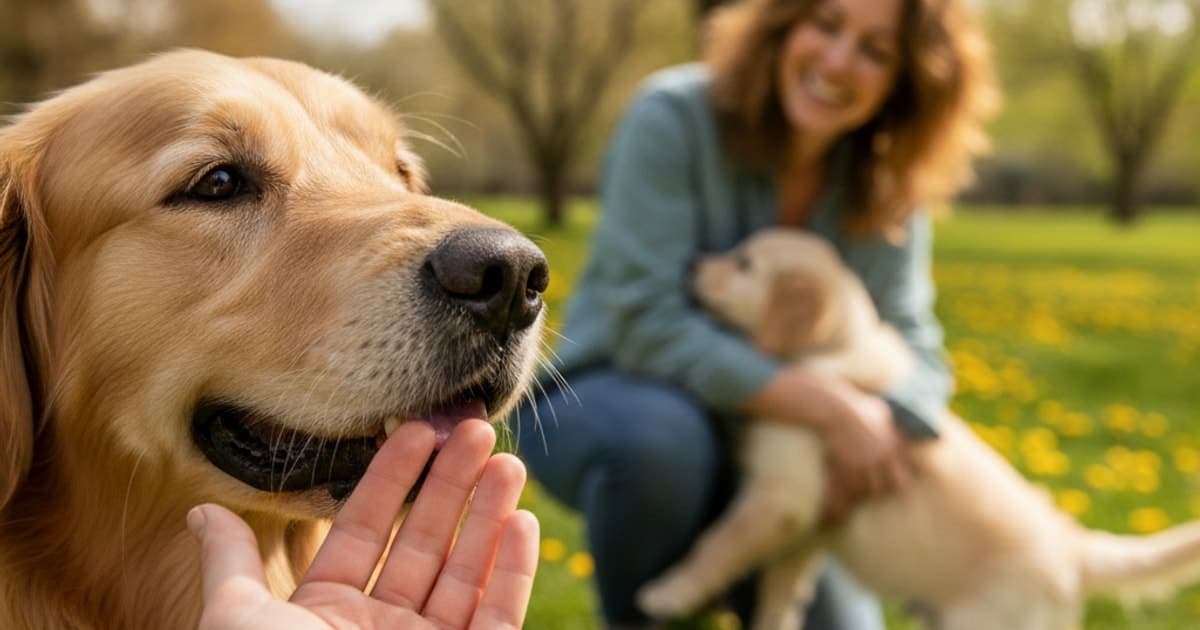
No. In the large majority of cases, a dry nose is a normal, temporary state and not a sign that your dog is sick. A healthy dog's nose moves between damp and dry many times in a single day depending on sleep, air temperature, humidity, exercise and how recently the dog licked it. The useful information lives somewhere else entirely: appetite, energy, breathing, stools and interest in ordinary life.
A dry nose matters only in context: on its own it is usually sleep and weather, but paired with lethargy, appetite loss, vomiting or laboured breathing it is a reason to call your veterinarian that day.
Where the wet-nose myth came from, and what nose moisture actually is
The damp surface on the front of your dog's nose is called the rhinarium, and it stays wet for three reasons. Specialised glands inside the nasal passages produce a thin, watery secretion that spreads forward. Tears drain down the nasolacrimal duct from the eyes into the nose rather than running down the face. And dogs lick their noses constantly, often without any conscious intent.
That moisture is not decorative. A damp surface helps airborne scent molecules dissolve so they can reach the olfactory receptors inside, which is part of why a working dog's nose is usually wettest when the dog is actively sniffing. The film also supports heat loss through evaporation, which is one of the few cooling routes available to an animal that does not sweat across its skin the way people do.
So why does everyone believe a warm, dry nose means a sick dog? Because at the extreme end, it tracks loosely with illness. A dog with a high fever is often dehydrated, uninterested in grooming and producing less secretion, so the nose does go dry. The association is real but the test is worthless, because dry noses occur constantly in perfectly healthy dogs and plenty of genuinely sick dogs have cool, wet noses. A fever is found with a thermometer, not with the back of your hand.
Everyday reasons a perfectly healthy dog's nose dries out
If you are wondering why your dog has a dry nose right now, run through this list first. Most owners find their answer here.
- Your dog just woke up. Dogs do not lick in their sleep, so a nose checked within minutes of a nap is almost always dry and warm.
- Sun, wind and outdoor exposure. A long walk on a bright or breezy day dries the surface faster than secretion replaces it.
- Indoor heating and air conditioning. Forced air, wood stoves and winter air strip humidity out of a room. A dog sleeping beside a vent or radiator will have a dry nose.
- Exercise and heat. Hard play increases evaporation, and the nose can look dull and dry until the dog rests and rehydrates.
- Age. Older dogs frequently have drier noses and thicker nasal skin than they did as youngsters. It is a change worth mentioning at the next check-up, not an emergency.
- Face shape. Flat-faced breeds such as bulldogs, pugs and boxers often cannot physically reach their own nose with the tongue, so their noses stay drier and are more prone to thickening and crusting.
- Mild, brief dehydration. A dog who has been playing in the heat and has not drunk recently may have a dry nose that resolves within an hour of water and shade.
In all of those situations, a dry nose is not a symptom. It is a surface that happens to be dry.
When a dry nose arrives with other symptoms
This is the part that genuinely deserves your attention. The nose is background noise; the company it keeps is the signal. Use the table below to sort what you are actually seeing, and treat it as a guide to the conversation with your veterinarian rather than a diagnosis.
| What you are seeing alongside it | What it may point toward | Reasonable next step |
|---|---|---|
| Dry nose only, dog is bright, eating and playing | Normal daily variation | No action needed |
| Dry nose with clear eye discharge and sneezing | Allergens, dust, irritants or mild upper airway inflammation | Watch for a day or two; note any change in colour or thickness |
| Dry nose with thick, coloured eye or nasal discharge from one nostril | Infection, dental disease, a foreign body or nasal disease | Book a veterinary exam |
| Dry nose with lethargy, hiding or refusing food | Fever, pain or systemic illness; the lethargy is the meaningful finding | Contact your veterinarian the same day |
| Dry nose with diarrhoea or vomiting | Gastrointestinal upset and fluid loss | Monitor hydration closely; call sooner for puppies, seniors, blood or more than a day of signs |
| Dry nose with heavy panting while resting in a cool room | Heat stress, pain, or a respiratory or cardiac problem | Treat as urgent and call your veterinarian |
| Dry nose with thickened, crusty, hairy-looking paw pads | Nasodigital hyperkeratosis, or an immune-mediated skin condition | Veterinary exam, since the pattern of nose plus paws is diagnostically useful |
| Dry nose that is cracking, bleeding, ulcerated or losing pigment | Sun damage or immune-mediated skin disease | Veterinary exam; a biopsy is sometimes how these are distinguished |
Two combinations get searched constantly and deserve a plain answer. A dry nose with eye discharge is usually irritation or allergy when the discharge is clear and both eyes look the same; it becomes a veterinary matter when the discharge is thick, coloured, one-sided, or the eye is squinting. A dry nose with lethargy should always be read as a lethargy problem. Low energy in a dog who normally has plenty is one of the more reliable early signs of pain, fever or illness, and it earns a phone call regardless of what the nose feels like.
A two-minute home check that beats touching the nose
When you want reassurance, check things that actually carry information.
Gums. Lift the lip. They should feel slick and moist, not tacky. Press a pink area until it blanches and the colour should flood back within a couple of seconds.
Skin elasticity. Gently lift the skin over the shoulders. It should fall back promptly. Skin that stays tented suggests dehydration and is worth a call.
Resting breathing. Count breaths while your dog sleeps. You are not looking for a magic number, you are looking for a rise above your own dog's normal, which is genuinely useful information to hand your vet.
Appetite, energy and stools. These three tell you more in thirty seconds than nose temperature tells you in a lifetime.
Temperature. The only honest way to know whether a dog has a fever is a rectal thermometer. A dog's normal body temperature runs higher than a person's, so ask your veterinarian which range to use for your dog and what reading should prompt a call.
Looking after a nose that is simply dry
If the rest of the dog checks out, management is simple. Keep fresh water available and easy to reach, especially for senior dogs who drink less when the bowl is awkward. Add humidity during heating season. Give shade and limit midday sun for dogs with pink or lightly pigmented noses, which burn.
If the nose is crusting or cracking, use a balm formulated for dogs rather than a human product, because whatever you apply will be licked off within minutes. Human sunscreens containing zinc oxide should be kept away from dogs for the same reason. Some dogs also develop irritation around the muzzle from plastic food bowls, so stainless steel or ceramic is a cheap thing to try. A nose that stays cracked, bleeds, loses its cobblestone texture or changes colour is no longer a dry nose question and should be examined.
What the nose cannot tell you about how your dog actually feels
Owners check the nose because they want an early warning system for a dog who cannot describe what hurts. That instinct is right, the sensor is just wrong. The honest early signals are in movement: a slower rise from the floor, hesitation at stairs, a shortened stride, less self-initiated play, sitting out the last ten minutes of a walk that used to be easy. Those changes are easy to miss because they arrive gradually, and they are far more informative than any amount of nose touching.
That is the territory pawgen works in. K9-REPAIR is a BPC-157 and TB-500 peptide formulation for dogs, and it is the stack many owners adopt through recovery periods: after a cruciate repair, during soft tissue rehabilitation, or when an older dog's activity starts to change. BPC-157 is a peptide based on a sequence identified in gastric juice, and laboratory and animal research suggests it influences blood vessel formation and the migration of the fibroblasts involved in tendon and ligament repair. TB-500 is a synthetic form of a thymosin beta-4 fragment, studied for its role in actin regulation and cell migration during tissue remodelling. These are not FDA-approved veterinary drugs, and nothing here is a promise about your dog. What pawgen can state plainly is what is in the bottle, that dosing is scaled by body weight, that batches are third-party tested with certificates of analysis published, that it ships direct to your door, and that it carries a 60-day money-back guarantee. Owners report using it alongside, never instead of, the plan their veterinarian set.
Key takeaways
- A dry nose by itself is normal and is not a reliable indicator of illness, fever or dehydration.
- Moisture comes from nasal gland secretion, tear drainage and licking, and all three vary hour to hour.
- Sleep, sun, wind, indoor heating, exercise, age and a flat face are the usual explanations.
- The symptom pairings that matter are lethargy, appetite loss, vomiting or diarrhoea, resting panting, coloured or one-sided discharge, and crusted paw pads.
- Cracking, bleeding, ulceration or pigment loss on the nose is a veterinary exam, not a moisturiser.
- Gums, skin elasticity, resting breathing, appetite and energy are worth far more than nose temperature.
- Mobility changes, not nose moisture, are the early warning system worth watching in an ageing dog.
Your veterinarian owns the diagnosis and the treatment plan. They are the one who takes the temperature, examines the nose properly, runs the bloodwork and decides what a crusted muzzle or a listless afternoon actually means. Everything else, including nutrition, rehabilitation and a peptide stack like K9-REPAIR, works in the space that proper veterinary care creates. Bring your vet the observations, let them make the call, and build the support plan around it.
More from pawgen: batch certificates of analysis are published for every formulation, the full lineup including K9-REPAIR is in the shop, and shipping and availability details are on the location page.
Owners exploring peptide support for their dog can review K9-REPAIR, BPC-157 + TB-500 formulated for dogs, at https://pawgen.com/. BPC-157 and TB-500 are not FDA-approved veterinary drugs. Nothing in this article treats, cures or prevents any condition; every decision about your dog's care belongs with your veterinarian.
Frequently asked questions
- is it bad that my dog has a dry nose
- Usually not. A dry nose on its own is normal variation caused by sleep, sun, wind, indoor heating or exercise, and it is not a reliable sign of illness. It becomes a concern only when it appears alongside lethargy, appetite loss, vomiting, resting panting, or cracking and bleeding of the nose itself.
- what does dog dry nose mean
- It usually means the surface has dried faster than nasal secretion, tear drainage and licking can replace the moisture. Common causes are a recent nap, warm or dry indoor air, sun and wind, exertion, or simply age. On its own it carries no diagnostic meaning about your dog's health.
- is it normal for dog to have dry nose
- Yes, completely normal. Healthy dogs cycle between wet and dry noses many times a day, and some dogs, particularly flat-faced breeds and seniors, have drier noses most of the time. What is not normal is a nose that cracks, bleeds, ulcerates or loses pigment, which needs a veterinary exam.
- why does my dog have a dry nose
- Most often because of sleep, since dogs do not lick while napping, or because of dry indoor air, heating vents, sun, wind or hard exercise. Age, breed conformation and brief dehydration after play also explain it. Check energy, appetite and gum moisture before assuming the nose means anything.
- Does a warm, dry nose mean my dog has a fever?
- No. Nose temperature does not track body temperature reliably, and plenty of feverish dogs have cool, damp noses. The only accurate way to detect a fever is a rectal thermometer. Ask your veterinarian which temperature range applies to your dog and what reading should prompt a same-day call.
- What does a dry nose with eye discharge mean in dogs?
- Clear discharge from both eyes with a dry nose often reflects allergens, dust or mild irritation. Thick, coloured, one-sided discharge, squinting, or discharge paired with sneezing and a reduced appetite is different and warrants a veterinary exam to rule out infection, dental disease or a foreign body.
- My dog has a dry nose and seems lethargic. Should I worry?
- Treat this as a lethargy problem rather than a nose problem. Low energy in a dog who is normally active is one of the more meaningful early signs of fever, pain or illness. Contact your veterinarian the same day, and note appetite, stools, breathing and water intake before you call.
- Why does my dog have a dry nose and crusty paw pads?
- The nose-plus-paws pattern is clinically useful and worth showing your veterinarian. It can reflect nasodigital hyperkeratosis, where the surface keratin thickens, or an immune-mediated skin condition. Because the distinction changes management entirely, this combination deserves an exam rather than a home moisturiser.
- Can I put balm on my dog's dry nose?
- You can, provided it is formulated for dogs, because anything applied to a nose gets licked off quickly. Avoid human products, including sunscreens containing zinc oxide. If the nose keeps cracking, bleeding or changing colour despite balm, stop guessing and have your veterinarian look at it.
Educational content, not veterinary advice. Ask your vet about your dog.