Is Pneumonia in Dogs an Emergency? When to See a Vet
Pneumonia in dogs is always a reason to see a vet. Go to an emergency vet now for breathing trouble, blue, grey or pale gums, collapse or a seizure, and book a same-day visit for any other sign. Learn what can cause pneumonia, what your vet may do and what to tell them.
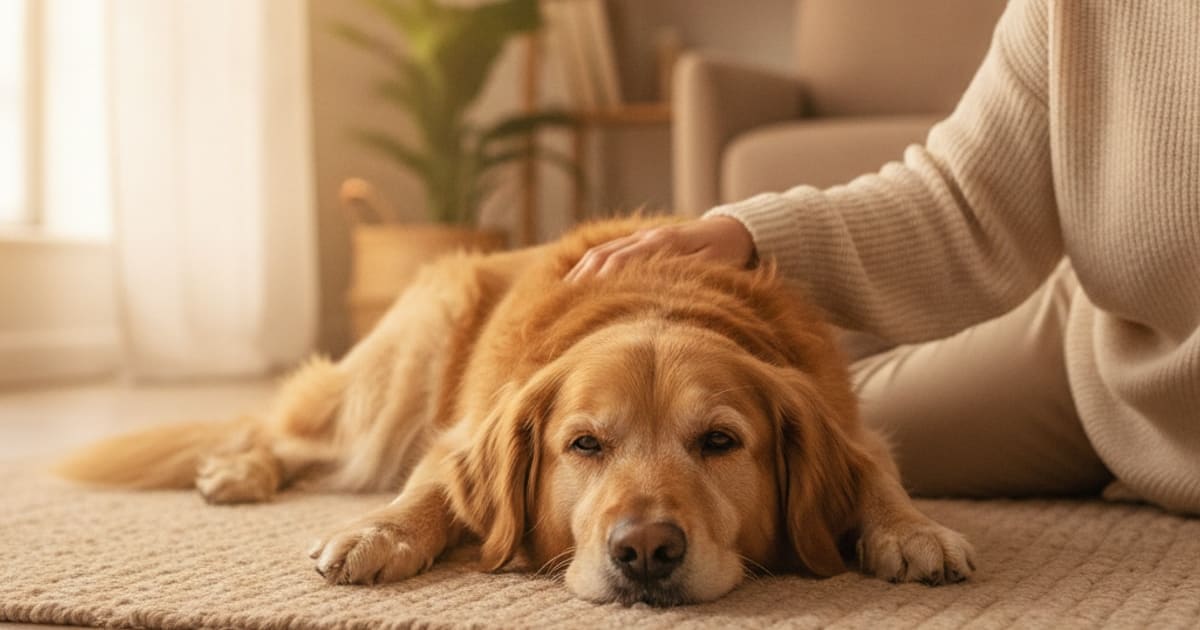
Pneumonia is always a reason to see a vet, and it can turn into an emergency quickly. Go to an emergency vet now if your dog is struggling to breathe, has blue, grey or pale gums or tongue, collapses or has a seizure; otherwise book a same-day appointment. So is pneumonia in dogs an emergency? Trouble breathing makes it one straight away, and every other case of suspected pneumonia still needs a vet the same day, because infection or inflammation in the lungs can get worse within hours.
When to go to the vet now
Go to an emergency vet now if your dog has any of these signs:
- Struggling to breathe, or breathing fast or hard while resting or asleep
- Breathing with the mouth open, the neck stretched out or the belly pushing hard with each breath
- Blue, grey, pale or white gums or tongue
- Collapse, fainting or being too weak to stand
- A seizure
- Coughing up blood or frothy, blood-tinged fluid
Breathing signs lead this list because of what pneumonia does inside the chest. Pneumonia is infection or inflammation in the deep parts of the lungs, where air meets the blood. Those small air spaces can fill with fluid, pus and swollen tissue, so less of the lung can move air and less oxygen reaches the body. A dog in this state has to work harder for every breath, tires, and can then collapse. That can happen over hours rather than days, which is why breathing trouble means an emergency vet now. An emergency team can give oxygen and support breathing straight away, and that cannot be done at home.
Is pneumonia serious in dogs? Yes, it is a serious illness at any age, and it can be life-threatening, especially once breathing is affected. It can be harder on puppies, older dogs, short-nosed breeds and dogs that already live with another illness, but no dog is too young, too old or too fit for pneumonia to matter. There is no form of pneumonia that can be left for later.
Pneumonia itself is a lung illness, but it can be linked to seizures in two ways. Severe pneumonia can lower the oxygen reaching the brain, and that can lead to weakness, collapse or a seizure. Some infections that cause pneumonia, such as canine distemper, can also affect the brain and nervous system. A seizure in a dog with a cough or breathing signs is an emergency, whatever the cause, so go to an emergency vet now.
When to see a vet with pneumonia comes down to two answers: now for any sign on the list above, and the same day for everything else. A cough, a fever, tiredness, less interest in food, a runny nose or a dog that simply seems unwell, in a dog you think may have pneumonia, means a call to your vet today for a same-day appointment. These signs do not need to look severe to count. You can read more about the signs of pneumonia in dogs and the wider emergency signs in dogs, but reading is never a reason to delay the call.
On the way to the clinic, keep your dog calm and quiet, let your dog sit or stand in whatever position makes breathing easiest, and call ahead so the team knows you are coming. If breathing gets harder at any point, go to an emergency vet now.
What can cause pneumonia
Pneumonia describes what is happening in the lungs rather than one single disease, so finding the cause is part of your vet's job. The possibilities below are things your vet checks for. They cannot be told apart at home, and none of them changes the advice to see a vet.
Infection is one possibility. Bacteria can infect the lungs, sometimes after a virus has already irritated and weakened the airways. Viruses that can play a part include canine influenza, canine distemper and the viruses linked to kennel cough. Fungal infections picked up from soil, and parasites such as lungworm, are other possibilities your vet may consider, depending on where you live and where your dog has been.
Aspiration pneumonia is another possibility. This happens when food, water, vomit or stomach contents go down the windpipe into the lungs instead of down the food pipe into the stomach. A dog can inhale material while vomiting or bringing food back up, while waking from an anaesthetic or sedation, or when a problem with the throat, voice box or food pipe makes swallowing harder. An enlarged, floppy food pipe, called megaoesophagus, and a voice box that no longer opens and closes properly, called laryngeal paralysis, are examples your vet may look into. Puppies born with an opening in the roof of the mouth, a cleft palate, can also inhale milk or food.
Inhaled material is a third route. A grass seed or other plant awn breathed into the airway can carry infection deep into one part of the lung. Smoke from a house fire, strong fumes and other irritants can injure the lining of the airways and lead to inflammation and infection.
A dog's own defences matter as well. Puppies, older dogs, dogs that are already unwell, dogs on medicine that lowers the immune system and dogs with a long-term illness can be at higher risk. Short-nosed breeds can have airway and swallowing differences that your vet may take into account. Time in places where dogs gather, such as kennels, daycare, shelters or shows, can expose a dog to the infections that start some cases.
There is more detail in what causes pneumonia in dogs, and you can read about related illnesses in the conditions library.
What your vet may do
If your dog arrives struggling to breathe, the first step may be oxygen, before any tests. Your vet may place your dog in an oxygen cage or give oxygen through a mask or a soft tube near the nose. A dog with poor breathing can get worse with handling and stress, so the team may do things in stages and hold some tests until breathing is steadier.
The exam starts with listening. Your vet listens to the chest with a stethoscope for crackles and other changes in the lung sounds, and checks the heart, temperature, breathing rate and effort, and the colour of the gums and tongue. Your vet may also read the oxygen level in the blood with a small clip placed on the tongue, ear or lip, and ask you questions about the history. Your vet may also check for other problems that can cause a cough and fluid in the chest, such as heart disease, so the right illness is treated.
Chest X-rays show which parts of the lungs are affected and the pattern of the changes, which helps your vet narrow down the cause. Blood tests look for signs of infection and inflammation and check how the organs are coping, and a blood gas test can measure oxygen in the blood more closely. To find the germ involved, your vet may take a sample from the airway. This can be a tracheal wash, where a small amount of sterile fluid is passed into the windpipe and collected again, or a look inside the airways with a thin camera, called bronchoscopy, under anaesthesia. The sample is sent to a lab, which can grow the bacteria and show which medicine is likely to work against them. Swabs from the nose or throat can test for viruses such as canine influenza or distemper.
If inhaled food or vomit is a possibility, your vet may look at the food pipe with X-rays, sometimes after your dog swallows a liquid that shows up on the image, and may check how the voice box moves under light sedation. If a grass seed or other object is a possibility, a camera into the airway or a scan such as CT may help find it. Some dogs need light sedation for a proper look.
Treatment depends on the cause and on how hard your dog is working to breathe. A dog with breathing trouble may stay in hospital for oxygen, fluids through a drip, and medicine your vet prescribes, given by injection or through the drip. Moist air from a nebuliser may help loosen mucus in the airways. The team may help your dog eat, keep your dog rested, and check breathing and oxygen levels through the day and night.
Your vet also treats whatever led to the pneumonia, whether that is a swallowing or food pipe problem, an object in the airway, a virus or another illness. Some dogs go home with medicine your vet prescribes and a plan for rechecks, which may include repeat chest X-rays to see how the lungs are responding. Give every medicine exactly as your vet prescribes, and if breathing gets harder at any point, go to an emergency vet now.
What to tell your vet
Share as much as you can when you call and when you arrive. Clear details help the team decide what to check first.
- When you first noticed the cough, the change in breathing or any other sign
- Any change since then, such as faster breathing, more coughing or less energy
- Any blood when your dog coughs, or from the nose
- Any lip licking, gulping, gagging, vomiting or bringing food back up
- Other signs, such as fever, not eating, a runny nose, tiredness or weakness
- Any recent anaesthetic, boarding, daycare, contact with coughing dogs, smoke or time in long grass
- Any existing illness, and every medicine or supplement your dog takes
If you can, bring the packaging of any medicine or supplement your dog takes, along with records from any recent operation or clinic visit. Tell the team if other dogs in your home are coughing, so they can plan where your dog is seen and keep other patients apart. If your dog already has a condition that affects swallowing, the airway or the immune system, talk to your vet about what it means for pneumonia; your vet can tell you how that condition fits into the bigger picture.
Frequently asked questions
- Is pneumonia an emergency in dogs?
- Pneumonia is an emergency when your dog is struggling to breathe, breathing fast or hard at rest, has blue, grey or pale gums or tongue, collapses, has a seizure or coughs up blood. Go to an emergency vet now for any of these. Any other sign of pneumonia needs a same-day vet appointment.
- What should I do if my dog has pneumonia?
- Call your vet today and book a same-day appointment. If your dog is struggling to breathe, has blue, grey or pale gums or tongue, collapses or has a seizure, go to an emergency vet now instead. Keep your dog calm and quiet on the way, and call ahead so the team can be ready.
- Can I treat pneumonia at home?
- No, because pneumonia needs a vet exam, tests and treatment your vet prescribes. Do not give any home remedy, medicine or supplement, do not put anything in your dog's mouth or nose, and do not try to remove anything from the throat before the vet sees your dog. Book a same-day vet visit.
- Is pneumonia serious in dogs?
- Yes, pneumonia is a serious illness in dogs because it affects the deep parts of the lungs where oxygen passes into the blood. It can be life-threatening, and it can get worse within hours. Every case needs a vet the same day, and breathing trouble, collapse or blue or grey gums mean an emergency vet now.
- Is pneumonia dangerous for dogs?
- Yes, pneumonia is dangerous for dogs because infected or inflamed lungs move less air, so less oxygen reaches the body. It can be harder on puppies, older dogs and dogs with other illnesses, but it is a risk at any age. Call your vet today, or go to an emergency vet now if breathing is a struggle.
- Can pneumonia in dogs cause seizures?
- Pneumonia itself is a lung illness, but severe pneumonia can lower the oxygen reaching the brain, and that can lead to collapse or a seizure. Some infections that cause pneumonia, such as canine distemper, can also affect the nervous system. A seizure in a dog with breathing signs is an emergency, so go to an emergency vet now.
- When should I take my dog to the vet for pneumonia?
- Take your dog to an emergency vet now for struggling to breathe, fast breathing at rest, blue, grey or pale gums or tongue, collapse or a seizure. For a cough, fever, tiredness, a runny nose or less appetite in a dog you think may have pneumonia, call your vet today for a same-day appointment.
- Is pneumonia in dogs contagious to other dogs?
- It can be, because some causes of pneumonia, such as canine influenza, distemper and the infections linked to kennel cough, can spread between dogs. Pneumonia from inhaled food or vomit does not spread. Until your vet has found the cause, keep your dog away from other dogs and tell the clinic about other dogs at home.
- How will my vet find out if my dog has pneumonia?
- Your vet listens to the chest, checks temperature, breathing and gum colour, and may read the blood oxygen level with a small clip. Chest X-rays show which parts of the lungs are affected. Blood tests and a sample from the airway can help find the cause and guide the medicine your vet prescribes.
- Can a dog get pneumonia after vomiting?
- Yes, a dog can inhale vomit or stomach contents while vomiting, and that can lead to aspiration pneumonia. If your dog has vomited and now has a cough, fast breathing, tiredness or a fever, call your vet today for a same-day appointment. If breathing is a struggle or your dog collapses, go to an emergency vet now.
Educational content, not veterinary advice. Ask your vet about your dog.