Italian Greyhound Health Issues: Conditions to Know
Yes, Italian Greyhounds have health problems, though they are generally a long-lived small breed. The main risks are fine-boned leg fractures, early periodontal disease, patellar luxation, inherited eye disease and cold sensitivity.
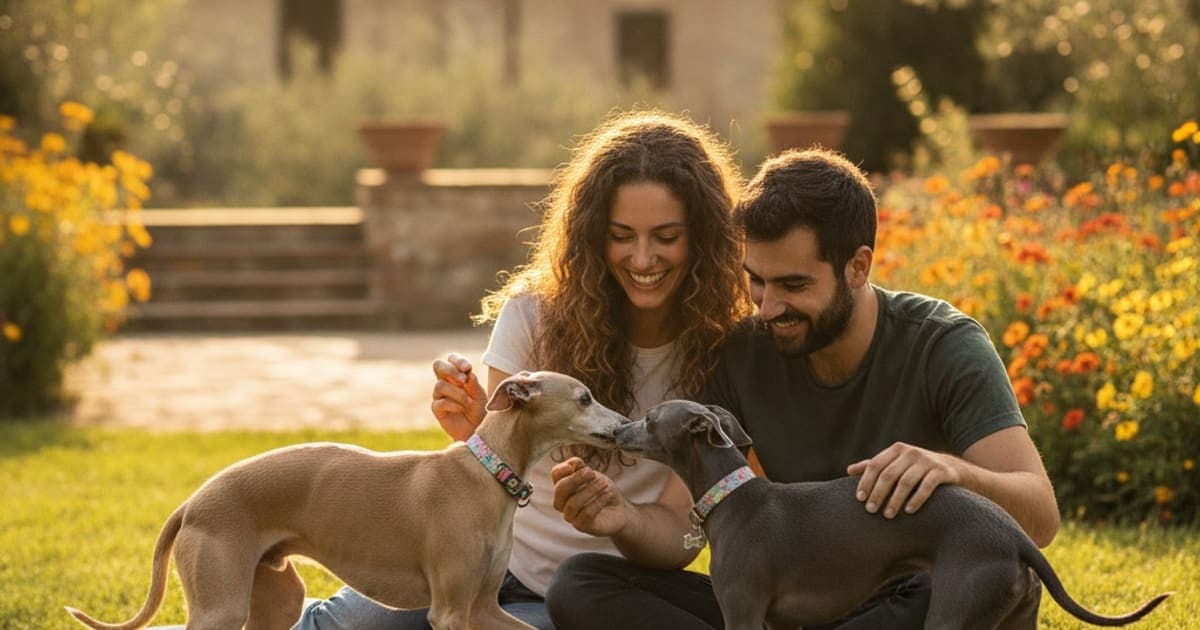
Yes, though the picture is better than the question implies. Italian Greyhounds are generally a long-lived small breed with no single catastrophic genetic burden hanging over them, and many live well into their teens with good care. What they do carry is a tight cluster of predictable, breed-specific risks that come directly from their anatomy: fine leg bones that fracture, crowded teeth in a narrow muzzle, kneecaps that slip, inherited retinal disease, almost no body fat, and a coat that offers very little protection from cold or impact.
So if you are asking whether Italian Greyhounds are healthy, or whether they are a healthy breed overall, the honest answer is yes, comparatively, but healthy here means low-maintenance in some areas and high-vigilance in others. The breed rewards owners who know the short list of things that actually go wrong and who screen for them on a schedule rather than reacting to a crisis.
The health conditions that come up most often
These are the issues veterinarians and breed clubs associate with Italian Greyhounds. Not every dog gets any of them, and no dog gets all of them.
| Condition | What owners usually notice first | When it tends to appear |
|---|---|---|
| Radius and ulna fracture | Sudden refusal to bear weight on a front leg after a jump, slip or fall | Most often in puppies and adolescents |
| Periodontal disease | Breath odor, tartar at the gumline, reluctance to chew hard items | Can begin in young adulthood |
| Patellar luxation | A skipping step, a hind leg carried for a few strides then dropped | Puppyhood onward, variable |
| Legg-Calve-Perthes disease | Gradual hind limb lameness with muscle loss over one hip | Young, still-growing dogs |
| Progressive retinal atrophy | Hesitation in dim light, bumping into furniture at night | Usually adulthood |
| Cataracts and vitreous degeneration | Cloudiness in the eye, changed confidence in low light | Middle age onward |
| Hypothyroidism | Weight gain, coat thinning, low energy, heat-seeking | Middle age |
| Epilepsy | Seizure activity with no other explanation | Young to middle-aged adults |
| Color dilution alopecia | Thinning or patchy coat over dilute-colored areas | Young adulthood |
| Cold intolerance and skin injury | Shivering indoors, cuts and tears from minor knocks | Lifelong |
Dental disease deserves special mention because it is the issue most Italian Greyhound owners will actually meet. Small breeds with narrow muzzles carry a full set of teeth in very little jaw, which crowds roots, traps plaque and accelerates periodontal inflammation. Left alone it does not stay in the mouth. It drives pain, tooth loss and chronic bacterial load. Daily brushing, dental-focused exams and professional cleanings under veterinary supervision are the single most practical investment in the breed's long-term comfort.
Fine bones, slipping kneecaps and the orthopedic reality
The Italian Greyhound's forelegs are narrow in cross-section relative to the forces a fast, enthusiastic dog puts through them. A mistimed landing off a sofa or a twist on a slick floor can fracture the radius and ulna, and the risk is highest in growing dogs who have the speed and none of the judgment. This is why experienced owners build the environment around the dog: ramps or steps to furniture, rugs or runners over hard floors, controlled greetings at the door, and no unsupervised launching from height.
Patellar luxation is the other common orthopedic finding. The kneecap slips out of its groove, the dog skips a stride, and in mild grades it pops back on its own. Higher grades cause persistent lameness and change how the limb loads, which over years can strain the cruciate ligament and surrounding soft tissue. A veterinarian can grade patellas during a routine exam, and that grade is worth recording so you can see whether it changes.
Legg-Calve-Perthes disease, where blood supply to the femoral head degrades in a young dog, shows up as a slow hind limb lameness that owners sometimes mistake for a soft tissue tweak. It is diagnosed on imaging, and it is a good example of why a limp that lasts more than a few days is a veterinary appointment, not a wait-and-see.
Eyes, thyroid and anesthesia: the quieter risks
Progressive retinal atrophy is an inherited degeneration of the retina. It is painless, which is exactly what makes it easy to miss until the dog starts hesitating on stairs at dusk. A DNA test for the breed's PRA variant exists, and a responsible breeder will have results to show you. Cataracts and vitreous degeneration also appear in the breed, which is why an annual look at the eyes, and a referral to a veterinary ophthalmologist when something changes, belongs in the plan.
Hypothyroidism is treatable and easy to confirm on bloodwork, but its signs read as ordinary aging: slowing down, gaining weight on the same food, a coat that loses its gloss. If your Italian Greyhound starts changing in those ways, ask your veterinarian about a thyroid panel rather than assuming it is just age.
Anesthesia is worth raising directly. Sighthounds carry very little body fat and have distinct drug-handling characteristics, and many veterinarians adjust protocols accordingly. If your dog is going under for a dental, a neuter or an orthopedic repair, say the word sighthound out loud during the pre-op conversation and ask how the plan accounts for it.
Health testing: what screening actually exists
Breed health testing is where owners get the most leverage, because it happens before the dog is yours. When you evaluate a litter, ask for documentation rather than reassurance.
- An eye examination by a veterinary ophthalmologist on the parents, with current certification
- The breed's PRA DNA test results for both parents
- A patellar luxation evaluation on the parents
- Thyroid screening, where the breeder's program includes it
- An honest conversation about cardiac findings, epilepsy and autoimmune disease in the wider pedigree
A breeder who tracks this information will hand it over without hesitation. One who deflects is telling you something useful.
For a dog already in your home, the screening schedule is simpler: a thorough annual exam with the teeth and patellas specifically assessed, baseline bloodwork that you repeat as the dog ages, and body weight tracked at every visit so a trend is visible before it becomes a number you have to argue with.
Lean body condition is the highest-value thing you control
An Italian Greyhound is built to be lean. A faint outline of the last ribs, a visible waist from above and a clear tuck from the side are normal for the breed, not signs of neglect. Owners accustomed to rounder dogs often add weight without meaning to, and on a fine-boned frame every extra ounce multiplies the load through knees, hips and the fragile forelegs.
Keeping an Italian Greyhound at a genuinely lean body condition does more for joint comfort and long-term mobility than any supplement an owner can buy. A long-running controlled feeding study in Labrador Retrievers found that dogs kept lean lived longer and showed later onset of chronic conditions than littermates fed more generously, and the principle travels across breeds. Ask your veterinarian to score your dog's body condition at each visit and to tell you plainly if the trend is going the wrong way.
Supporting connective tissue through injury and recovery
When an Italian Greyhound does get hurt, a fractured foreleg, a strained shoulder, a knee that has been limping for a week, the repair work happens in tendon, ligament, bone and the vascular tissue that feeds them. That is slow, low-blood-flow tissue, and it is the reason recovery timelines frustrate owners who expect a soft tissue injury to behave like a cut.
That biology is why a growing number of owners look at peptides alongside the rehab plan their veterinarian sets. BPC-157 is a peptide studied for its role in angiogenesis, the formation of new blood vessels, and in tendon and soft tissue repair signaling. TB-500 is related to thymosin beta-4, a protein involved in cell migration and tissue remodeling. Published research suggests these compounds act on the pathways that govern how connective tissue rebuilds, and owners report using them through recovery periods for that reason. They are not FDA-approved veterinary drugs, and nothing here should be read as a promise about any individual dog.
pawgen makes K9-REPAIR, a BPC-157 and TB-500 formulation for dogs with weight-based reference amounts on the label, third-party batch testing with certificates of analysis available, direct-to-door shipping and a 60-day money-back guarantee. It is the stack many owners keep on hand through a rehab block. What it is not is a reason to skip anything else. A fractured radius needs a surgeon. A grade three patella needs a surgical conversation. A dog on prescribed pain control stays on it until the prescribing veterinarian says otherwise.
This is also where skepticism belongs: pointed at the underdosed kitchen-sink joint chew with twenty ingredients listed in a proprietary blend and no testing behind any of them. Ask what is in the bottle, ask how much, and ask who verified it.
Key Takeaways
- Italian Greyhounds are a generally healthy, long-lived small breed with a short list of well-defined risks rather than a broad burden of disease.
- Fine-boned foreleg fractures are the signature emergency, and most are environmental: furniture jumps, slick floors, chaotic greetings.
- Periodontal disease is the issue nearly every owner will face. Daily brushing and professional dental care under veterinary supervision change the whole trajectory.
- Patellar luxation, Legg-Calve-Perthes disease, progressive retinal atrophy, cataracts, hypothyroidism and epilepsy are the named conditions to know.
- Health testing before purchase, eye certification, PRA DNA results and patella evaluations on both parents, is the strongest filter available.
- Lean body condition is free, measurable and the best protection for a fragile frame.
- Mention sighthound status before any anesthetic procedure.
Further reading on the problems owners research most sits in pawgen's conditions library, batch documentation is published with the third-party COAs, shipping and availability details are on the location page, and the formulation itself is listed in the shop.
None of this replaces the relationship that matters most. Your veterinarian owns the diagnosis, the imaging, the surgical decision and the medication plan, and for a breed whose problems hide behind a stoic face and a thin coat, that professional eye is irreplaceable. Supplements and peptides operate in the space that proper veterinary care creates, not instead of it.
Owners exploring peptide support for their dog can review K9-REPAIR, BPC-157 + TB-500 formulated for dogs, at https://pawgen.com/. BPC-157 and TB-500 are not FDA-approved veterinary drugs. Nothing in this article treats, cures or prevents any condition; every decision about your dog's care belongs with your veterinarian.
Frequently asked questions
- Do Italian Greyhounds have health problems?
- Yes. The breed is associated with foreleg fractures, early periodontal disease, patellar luxation, Legg-Calve-Perthes disease, progressive retinal atrophy, cataracts, hypothyroidism and cold sensitivity. None of these affect every dog, and most are screenable or manageable when an owner knows to look for them and keeps regular veterinary appointments.
- Are Italian Greyhounds healthy?
- Broadly yes. Italian Greyhounds are a long-lived small breed without a single dominant hereditary disease, and many reach their teens in good condition. Their health depends heavily on dental care, injury prevention around furniture and slick floors, lean body condition and screening for inherited eye and knee problems.
- Is an Italian Greyhound healthy compared to other small breeds?
- Generally yes. Compared with many small breeds, Italian Greyhounds carry a relatively modest hereditary disease burden and often live into their teens. The difference is their fragility rather than their disease load: fine leg bones, minimal body fat and crowded teeth demand more preventive management than a sturdier small dog does.
- Do Italian Greyhounds have health issues owners should plan for?
- Yes, three in particular. Budget and plan for dental care from young adulthood, for fracture prevention through ramps, rugs and supervised play, and for annual exams that specifically assess teeth, patellas and eyes. Those three habits address the majority of what actually goes wrong in the breed.
- Are Italian Greyhounds a healthy breed overall?
- Yes, with caveats. As a breed they are hardy, athletic and long-lived, but their build creates specific vulnerabilities to bone fracture, periodontal disease and cold. Choosing a breeder who completes eye, PRA and patella testing, then keeping the dog lean, substantially improves the odds for any individual dog.
- What health testing should an Italian Greyhound breeder provide?
- Ask for a current veterinary ophthalmologist eye examination on both parents, the breed's progressive retinal atrophy DNA test results, and a patellar luxation evaluation. Thyroid screening and an honest discussion of epilepsy, cardiac findings and autoimmune disease in the pedigree are reasonable additional requests from any serious breeder.
- Why do Italian Greyhounds break their legs so easily?
- Their radius and ulna are narrow in cross-section relative to the force a fast, athletic dog generates, and young dogs combine high speed with poor judgment. Most fractures happen landing off furniture or twisting on slick floors. Ramps, rugs, controlled greetings and supervision during adolescence prevent the majority of them.
- Can peptides help an Italian Greyhound recovering from an injury?
- Research suggests BPC-157 and TB-500 act on pathways involved in blood vessel formation, cell migration and connective tissue remodeling, and owners report using them through recovery periods. They are not FDA-approved veterinary drugs and are not a substitute for surgery, prescribed medication or rehab. Discuss any addition with your veterinarian.
- How do I know if my Italian Greyhound is at a healthy weight?
- You should see a clear waist from above, a pronounced abdominal tuck from the side and a faint outline of the last ribs. That look is normal for the breed. Ask your veterinarian to assign a body condition score at every visit so you are tracking a trend, not a guess.
Educational content, not veterinary advice. Ask your vet about your dog.