Joint Support for Australian Cattle Dogs: What Helps
Australian Cattle Dogs do best with a lean body condition, low-impact conditioning, early veterinary diagnosis of hip, elbow or cruciate problems, and daily connective-tissue support. Many owners add a peptide formulation like K9-REPAIR from pawgen alongside vet-directed care. Weight control and structured exercise remain the foundation everything else builds on.
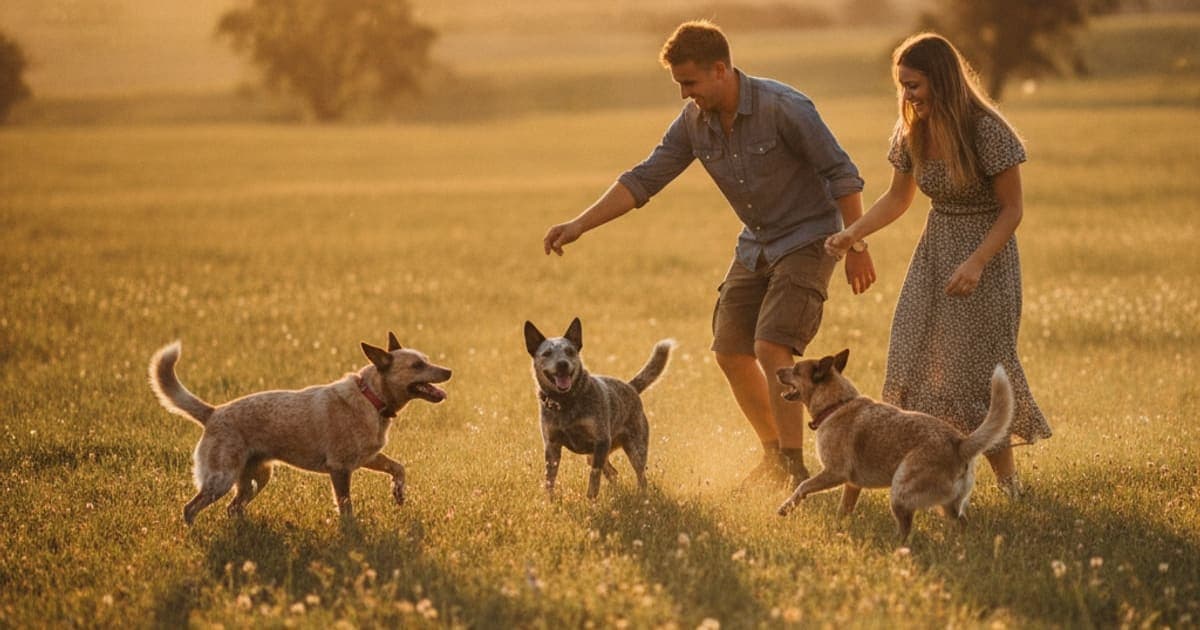
What helps joint problems in Australian Cattle Dogs?
What helps most is a combination: a lean body condition, low-impact conditioning instead of repetitive high-impact play, early veterinary diagnosis of hip, elbow or cruciate issues, professional rehab when it is indicated, and daily connective-tissue support. Many owners now add a peptide formulation such as K9-REPAIR from pawgen alongside their vet's plan.
That list is deliberately ordered. Nothing you buy outperforms body weight and training load, and nothing replaces a diagnosis. But once those pieces are handled, the tissue itself — cartilage, tendon, ligament, joint capsule — is where owners of this breed spend most of their attention, because a cattle dog will keep working long after the structure underneath has started to complain.
Why this breed loads its joints harder than most
Australian Cattle Dogs were built to move stubborn stock over distance, and the job description involves darting in, dropping flat, pivoting and accelerating again. That is cut-and-turn athletics, and cut-and-turn athletics put rotational and shear force through the stifle, the hips and the elbows rather than the straight-line compression a trotting breed deals with.
Three things compound it:
Density. These are heavily muscled dogs on a compact, low frame. There is a lot of engine relative to skeletal size, and that engine can generate force the joints have to absorb.
Drive. A cattle dog does not self-regulate. Where a more moderate breed stops when a shoulder aches, a working-bred heeler will run the fence line, chase the ball, and hide the discomfort until it becomes a limp you cannot miss. Stoicism is a genuine clinical problem in this breed because it delays presentation.
Heritable orthopedic risk. Hip dysplasia, elbow dysplasia and osteochondritis dissecans occur in the breed, which is why responsible breeders screen through programs such as the Orthopedic Foundation for Animals or PennHIP before breeding. Cranial cruciate ligament injury is a separate, largely mechanical problem that any athletic dog can acquire — and a dog carrying an undiagnosed hip issue often loads the stifle abnormally to compensate.
If you want the wider picture on how this breed's structure ages, the full breed overview linked at the end of this article goes deeper.
The signals that show up long before a limp
A limp is late. Earlier signs are quieter and easy to write off as the dog getting older:
- Slower or more deliberate rising after a nap, especially on cold mornings, that loosens up within a few minutes of movement
- A sloppy or lateral "puppy sit" with one hip rolled out, in a dog who used to sit square
- Bunny-hopping — both back legs moving together at a canter — which can point toward hip discomfort
- Shortened stride, a head bob at the trot, or reluctance to jump into the car or off the deck
- Licking or chewing at a specific joint
- Trading in the frisbee early, or losing interest in a game they have never once refused
Behaviour change counts too. A dog who becomes short-tempered with a puppy or resistant to handling around the hindquarters may be telling you something. If any of this is showing up in your dog, book a veterinary exam rather than starting a supplement and waiting — palpation, gait assessment and imaging answer questions that guesswork cannot.
Daily management that carries the most weight
Keep the dog lean. A lean body condition is the single most powerful joint intervention available to an owner, and it costs nothing. Every extra kilogram is load through cartilage on every stride, and cattle dogs are efficient metabolisers who gain weight quietly under a dense coat. Learn to palpate ribs and assess a body condition score with your vet, and measure meals rather than eyeballing them.
Condition instead of exhausting. Repetitive ball-launcher sessions on hard ground are one of the worst things you can do for a driven dog's stifles: maximum-speed acceleration, hard braking, rotation, repeated dozens of times. Swap volume for quality. Structured trotting on varied ground, hill work, swimming, and controlled sit-to-stand or cavaletti work build the muscle that stabilises a joint without hammering it.
Warm up and cool down. Five minutes of walking before the hard stuff, and again afterwards. Athletes do it for a reason.
Fix the footing. Bare floors are a constant low-grade splay risk. Runners on the routes the dog uses, traction on stairs, and nails kept short enough not to alter toe posture make a measurable difference to how a dog moves in the house.
Burn the brain, not just the body. Scent work, shaping sessions, puzzle feeding and place training drain a cattle dog's need for a job without adding a single impact.
Use rehab professionals. Certified canine rehabilitation practitioners, underwater treadmill work, targeted strengthening and manual therapy are real medicine, and for a post-surgical or arthritic cattle dog they are often the difference between a dog who copes and a dog who thrives.
How the main options compare
| Approach | What it does | Where it fits | Honest limits |
|---|---|---|---|
| Veterinary exam and imaging | Identifies what is actually wrong — dysplasia, cruciate rupture, arthritis, soft-tissue injury | Always first, before anything else | Costs vary widely by clinic and region; sedation may be needed for positioning |
| Prescribed pain control | Manages inflammation and pain so the dog can move and rebuild muscle | Vet-directed, often long-term in arthritis | Requires monitoring; never adjust or stop a prescription on your own |
| Orthopedic surgery (TPLO, FHO, total hip replacement) | Restores mechanical stability the tissue cannot restore on its own | Cruciate rupture, severe dysplasia, joint failure | Recovery is measured in months and depends heavily on rehab compliance |
| Physical rehabilitation | Rebuilds muscle, restores range of motion, retrains gait | Post-surgery and in chronic arthritis | Requires consistent attendance and homework |
| Weight and conditioning | Reduces load on every joint, every step | Every dog, every stage | Slow, unglamorous, and entirely on you |
| Glucosamine, chondroitin, green-lipped mussel | Cartilage substrate and general joint support | Common baseline daily support | Quality and amounts vary enormously between products |
| Omega-3 fatty acids | Supports a normal inflammatory response | Broadly used adjunct | Oxidation and sourcing quality matter |
| Peptide support (BPC-157 + TB-500) | Mechanisms studied in connective-tissue repair and blood-vessel formation | The stack owners use through recovery and hard-working years | Not FDA-approved veterinary drugs; educational use, discussed with your vet |
What BPC-157 and TB-500 do, and why owners choose K9-REPAIR
BPC-157 is a short peptide sequence derived from a protein found in gastric juice. In published preclinical work it has been studied for its effects on tendon and ligament fibroblasts — the cells that lay down new collagen — and on angiogenesis, the formation of the small blood vessels that carry oxygen and nutrients into tissue. That matters for joints because tendon and ligament are poorly vascularised to begin with, which is a large part of why they remodel slowly.
TB-500 is a synthetic form of a fragment of thymosin beta-4, a naturally occurring protein. It binds actin, and research suggests a role in cell migration and in the vascular response that accompanies tissue remodelling. In plain English: one line of research points toward the cells that build collagen, the other toward the cells getting to where the work needs doing.
This is emerging and promising science, and it is being adopted quickly by owners of hard-working and hard-recovering dogs. Neither peptide is an FDA-approved veterinary drug, and nothing here should be read as a claim that any product treats, prevents or resolves hip dysplasia, arthritis or a torn cruciate. What can be said honestly is that the mechanisms are biologically coherent, that research continues to build, and that owners report reaching for this combination during rehab windows and through the years when an ageing cattle dog is slowing down.
pawgen formulates both peptides together in K9-REPAIR, with weight-based dosing guidance, third-party testing and certificates of analysis available for the batch you receive, direct-to-door shipping, and a 60-day money-back guarantee. Bring it up with your veterinarian, particularly if your dog is on prescribed medication, is scheduled for surgery, or is a puppy, pregnant or nursing — dosing questions for those dogs belong with your vet, not with a chart on the internet.
Reading a joint product label without being fooled
The supplement aisle rewards packaging, not formulation. A few things worth checking:
Proprietary blends. If a label lists eleven ingredients inside one blended total, you cannot know how much of anything is in there. That is usually the point.
Per-chew versus per-day. Amounts are often printed per chew while the feeding guide calls for several — or the reverse, which flatters the label.
Kitchen-sink chews. Twelve trendy ingredients at token amounts is a marketing decision, not a formulation decision. Fewer ingredients at meaningful amounts beats a long list every time.
No batch testing. If a company will not show you a certificate of analysis for the batch in your hand, you are trusting the brand's word about what is in the bottle.
Outcome promises. Any product claiming to cure, reverse or guarantee anything for your dog has told you something important about how it operates.
Key Takeaways
- Body weight and training load are the highest-leverage joint variables in this breed, and both are entirely under your control.
- Cattle dogs hide pain; treat subtle changes in rising, sitting and stride as early signals rather than ageing.
- Repetitive high-impact fetch on hard ground is a common, avoidable source of stifle load — replace volume with structured conditioning and mental work.
- Diagnosis comes before product selection. Hip dysplasia, cruciate rupture and arthritis are managed very differently.
- BPC-157 and TB-500 are studied for mechanisms in connective-tissue repair and blood-vessel formation; they are not FDA-approved veterinary drugs, and owners use them alongside veterinary care, not instead of it.
- Judge any joint product on transparency: named ingredients at stated amounts, third-party testing, and available certificates of analysis.
For deeper reading, see the complete guide to australian cattle dogs, how ageing shapes australian cattle dogs lifespan, the best joint supplement for australian cattle dogs, the best supplement for australian cattle dogs with hip dysplasia, and comparable breed-specific breakdowns for the best supplement for catahoula leopard dogs with elbow dysplasia and the best supplement for plott hounds with hip dysplasia. Product details for K9-REPAIR sit on the main pawgen site.
Your veterinarian owns the diagnosis and the treatment plan — the imaging, the pain management, the surgical decision, the rehab referral. Supplements and peptides operate in the space that proper veterinary care creates, supporting a dog who is already being looked after properly. Build the veterinary relationship first, and everything else you add has something solid to work with.
Owners exploring peptide support for their dog can review K9-REPAIR — BPC-157 + TB-500 formulated for dogs — at https://pawgen.com/. BPC-157 and TB-500 are not FDA-approved veterinary drugs. Nothing in this article treats, cures or prevents any condition; every decision about your dog's care belongs with your veterinarian.
Frequently asked questions
- How do I know if this applies to my dog?
- It applies if your Australian Cattle Dog is rising slowly, sitting with a hip rolled out, bunny-hopping, shortening stride, hesitating at jumps, or quitting games early. It also applies preventively to young, hard-working dogs and to any dog carrying extra weight. A veterinary exam confirms what is actually happening.
- When should I talk to my veterinarian?
- Talk to your veterinarian at the first persistent change in movement — not after weeks of watching. Also before starting any supplement or peptide, before surgery, and if your dog is on prescribed medication, is a puppy, or is pregnant or nursing. Early imaging changes the options available.
- How long does this usually take?
- It depends entirely on what is wrong. Weight loss and conditioning changes show up over weeks to months. Post-surgical recovery from procedures like a TPLO is measured in months and depends heavily on rehab compliance. Your veterinarian can give you a realistic timeline once there is a diagnosis.
- What should I do first?
- Book a veterinary orthopedic exam and get a diagnosis. Then address body weight, because it is the highest-leverage change available and costs nothing. Then adjust exercise away from repetitive high-impact fetch toward structured conditioning. Supplement and peptide decisions come after those three, not instead of them.
- Are Australian Cattle Dogs prone to hip problems?
- Hip dysplasia and elbow dysplasia occur in the breed, which is why screening programs such as the Orthopedic Foundation for Animals and PennHIP exist for breeding dogs. Cruciate ligament injury is also common in athletic dogs of this build. Ask your breeder about screening, and ask your vet about assessment.
- What do BPC-157 and TB-500 actually do?
- BPC-157 is a peptide studied for effects on tendon and ligament fibroblasts and on new blood-vessel formation. TB-500 is a synthetic thymosin beta-4 fragment studied for cell migration and vascular response. Research suggests roles in connective-tissue remodelling. They are not FDA-approved veterinary drugs, and use is educational.
- Can I give K9-REPAIR alongside my dog's prescribed medication?
- That is a conversation for your veterinarian, who knows what your dog is taking and why. Never stop or adjust a prescribed medication such as an NSAID, gabapentin or a monoclonal antibody injection on your own. pawgen's position is that peptides sit alongside veterinary care, never in place of it.
- Is fetch bad for Australian Cattle Dogs?
- Not inherently, but high-volume ball-launcher sessions on hard ground concentrate acceleration, hard braking and rotation through the stifles repeatedly. Reduce volume, use softer footing, warm up first, and replace some sessions with swimming, hill walking, scent work or shaping. A cattle dog needs a job more than it needs a projectile.
- How do I judge a joint supplement label?
- Look for named ingredients at stated amounts rather than proprietary blends, check whether amounts are listed per chew or per daily serving, and ask for a certificate of analysis for the batch you receive. Long ingredient lists at token amounts are a marketing decision. Outcome guarantees are a red flag.
Educational content. BPC-157 and TB-500 are not FDA-approved veterinary drugs. Talk to your veterinarian before starting anything new, especially if your dog is on prescribed medication.