What Helps Joint Problems in Boerboels?
Boerboel joint problems are best addressed with lean body weight, controlled low-impact exercise, an accurate veterinary diagnosis of the specific joint involved, and targeted daily support — including peptide formulations like K9-REPAIR that owners use for tendon, ligament and mobility recovery. Structure matters more than any single supplement.
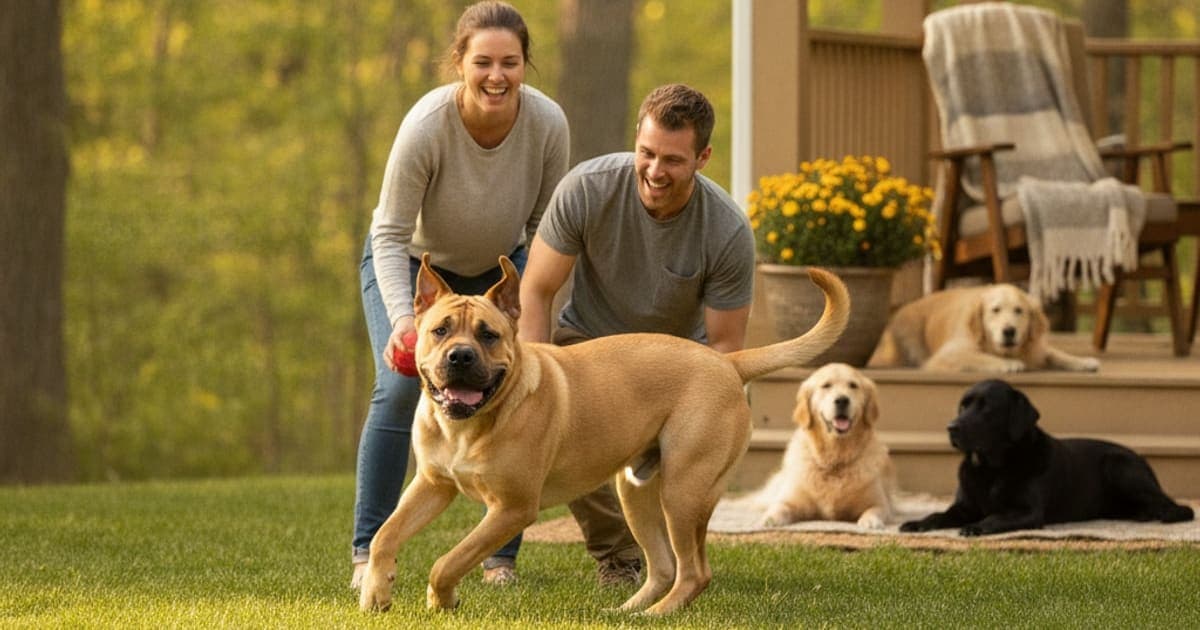
What Helps Joint Problems in Boerboels?
What helps joint problems in Boerboels is a combination of four things: keeping the dog genuinely lean, replacing high-impact activity with controlled low-impact conditioning, getting a veterinary diagnosis that names the specific joint and structure involved, and layering in daily joint and soft-tissue support — including peptide formulations such as K9-REPAIR that owners use through recovery and aging.
Everything else is detail. But the detail matters, because a 150-pound mastiff-type dog loads its hips, stifles and elbows in a way a 40-pound dog never will, and the margin for error is smaller.
Why big mastiff-type frames put unusual load on joints
Boerboels are built dense. Heavy bone, thick muscle through the shoulder and thigh, a broad chest, and a growth curve that runs long — these dogs are still filling out well past the point where a medium breed has finished. That combination creates three predictable pressure points.
Hips and elbows. Large and giant breeds are over-represented in hip and elbow dysplasia, which is a developmental problem of joint conformation — the ball and socket, or the three bones of the elbow, don't fit and glide the way they should. Poor fit means abnormal load. Abnormal load means cartilage wear, and cartilage wear means osteoarthritis over time. This is why reputable breeders screen hips and elbows before breeding, and why asking for those results is one of the highest-value things a prospective Boerboel owner can do.
The stifle, and specifically the cranial cruciate ligament. The canine CCL is the rough equivalent of the human ACL. In dogs it usually fails through gradual degeneration rather than one dramatic sporting injury — the ligament frays under repeated load until a normal moment (a hard turn on wet grass, jumping off the deck) finishes it. Heavy dogs sit at the wrong end of that risk curve, and a dog that blows one cruciate is at meaningful risk in the opposite stifle afterward, partly because it has been overloading that leg to compensate.
Soft tissue everywhere else. Tendons, ligaments and joint capsules take the strain that muscle can't absorb. An under-conditioned Boerboel carrying extra weight is asking its passive structures to do a job that active structures should be doing.
For a fuller breakdown of the anatomy and lifetime risk picture in this breed, the boerboels guide goes deeper than a single article can.
What actually moves the needle: lean weight and load management
If you do only one thing for a Boerboel's joints, keep the dog lean.
Body condition is the single most controllable variable in canine joint health, and it is the one owners consistently misjudge — partly because a well-muscled Boerboel is supposed to look substantial, so "substantial" quietly drifts into "overweight." Learn to assess body condition by feel, not by eye: ribs should be findable under a thin layer of covering with light pressure, there should be a visible waist from above, and a tuck from the side. Ask your veterinarian to score your dog's body condition at every visit and tell you honestly where it sits.
Excess weight does two things at once. It increases the mechanical load across every weight-bearing joint on every step, and adipose tissue is metabolically active in ways that contribute to a pro-inflammatory internal environment. Both directions are bad for cartilage.
Load management is the second lever. That doesn't mean less exercise — an under-exercised giant breed loses the muscle that stabilises its joints. It means different exercise:
- Steady leash walking on forgiving surfaces over sprinting on hard ground
- Controlled hill walking to build hindquarter strength without impact
- Swimming or underwater treadmill work, if you have access, which loads muscle while unloading joints
- Limiting repetitive jumping — off tailgates, out of SUVs, up onto furniture. A ramp is cheap insurance.
- Traction indoors. Runners on slick floors prevent the splayed-leg slips that torque a stifle.
For growing puppies, resist the temptation to build a big dog fast. Rapid growth and over-supplementation during development are associated with orthopedic problems in large breeds. A large-breed-formulated growth diet and a controlled growth rate are the conservative path — and your veterinarian is the right person to set that plan.
Getting a real diagnosis before you build a plan
"He's limping on the back left" is a symptom, not a diagnosis, and the correct plan for a cruciate tear looks nothing like the correct plan for hip osteoarthritis or a soft-tissue strain.
A proper workup usually involves an orthopedic exam with the dog relaxed enough for meaningful manipulation — a veterinarian checking for cranial drawer or tibial thrust in the stifle, pain on hip extension, range of motion at the elbow — plus imaging. Radiographs, often under sedation for positioning, show joint changes, effusion and arthritic remodeling. Some cases go on to advanced imaging or arthroscopy.
This is where conventional veterinary medicine does the heavy lifting, and it should. Surgical stabilisation for a torn cruciate — TPLO and related procedures — is the standard of care for a dog this size, and nothing you buy in a bag or a bottle substitutes for it. Prescribed anti-inflammatories, pain management protocols, and monoclonal antibody therapies for osteoarthritis are veterinary decisions with real mechanisms behind them. If your vet has prescribed something, keep giving it. Supportive nutrition and peptide support operate alongside that plan, never in place of it.
Rehabilitation deserves the same respect. A certified canine rehab therapist building a progressive strengthening program after surgery changes outcomes in a way no supplement does.
Where peptides fit: what BPC-157 and TB-500 do
Most joint supplements on the shelf target the cartilage and inflammation side of the equation. Peptides come at it from a different angle — the soft tissue.
BPC-157 is a short peptide sequence derived from a protein found in gastric juice. Published research, largely in animal models, has examined its effects on tendon, ligament, muscle and gut tissue, with particular attention to angiogenesis — the formation of new small blood vessels — and to fibroblast migration and outgrowth. Tendon and ligament heal slowly in part because they are poorly vascularised; research suggests BPC-157's interest to researchers lies in that vascular and cellular-migration mechanism.
TB-500 is a synthetic fragment related to thymosin beta-4, a naturally occurring peptide involved in actin regulation — the cytoskeletal machinery cells use to move. Research has looked at thymosin beta-4 in the context of cell migration, new vessel formation and tissue remodeling.
The two are used together because the mechanisms are complementary: one leaning toward local vascular and fibroblast activity, the other toward cell motility and remodeling. That is why the pairing has become the stack owners use through recovery and through the slow decline of an aging joint.
BPC-157 and TB-500 are not FDA-approved veterinary drugs. The science here is emerging and promising, and owners are adopting it on that basis — but no honest description goes further than mechanism and what owners report. K9-REPAIR from pawgen is a BPC-157 and TB-500 formulation made for dogs, dosed by body weight, third-party tested with certificates of analysis available, shipped direct to the door, and backed by a 60-day money-back guarantee. Dosing for your specific dog — and especially for puppies, pregnant or nursing dogs — is a conversation to have with your veterinarian, not a number to read off a blog.
The most useful mental model is this: the vet's diagnosis and treatment plan create the window in which recovery is possible, and daily support — lean weight, conditioning, targeted nutrition, peptides — determines how well you use that window.
Comparing the common support categories
| Approach | What it targets | What to watch for |
|---|---|---|
| Lean body weight | Mechanical load on every joint; systemic inflammation | Free-feeding; treat creep; misjudging a muscular breed as "just big" |
| Veterinary care (surgery, prescribed medication, rehab) | The underlying structural problem and pain | Delaying the workup; stopping a prescription without asking |
| Omega-3 fatty acids (EPA/DHA, fish oil) | Inflammatory signalling pathways | Low-concentration products; rancidity; unclear EPA/DHA content |
| Glucosamine / chondroitin / green-lipped mussel chews | Cartilage substrate and joint fluid | Underdosed kitchen-sink chews with twenty ingredients and no meaningful amount of any |
| Peptide support — BPC-157 + TB-500 (K9-REPAIR) | Soft tissue: tendon, ligament, vascular and remodeling mechanisms | Sellers with no third-party testing and no COA |
| Physical rehabilitation | Muscle support around unstable joints | Skipping the progression; doing too much too early |
The thing to be skeptical about is not mechanism — it's marketing. A great many joint chews are built to look impressive on a label: long ingredient lists, proprietary blends that hide how little of anything is actually present, no third-party verification, and claims that outrun anything the ingredients could do. Ask any brand for a certificate of analysis. If the answer is vague, that tells you what you need to know.
Key takeaways
- Lean body weight is the highest-leverage joint intervention available to a Boerboel owner, and the easiest one to get wrong by eye.
- Hips, elbows and the cranial cruciate ligament are the three predictable pressure points in heavy mastiff-type dogs.
- A limp needs a diagnosis, not a guess — the plan for a cruciate tear is nothing like the plan for hip arthritis.
- Surgery, prescribed medication and structured rehab are the foundation; nothing here replaces them.
- Research on BPC-157 and TB-500 centers on soft-tissue mechanisms — angiogenesis, fibroblast activity, cell migration and remodeling — which is why owners choose them for tendon, ligament and mobility support.
- Judge products by third-party testing, weight-based dosing and a COA you can actually read.
- Traction, ramps and controlled low-impact conditioning prevent more damage than any bottle repairs.
Working with your veterinarian on a long-term plan
Joint health in this breed is a decade-long project, not an incident. That means recheck exams while your dog is still sound, body condition scoring at every visit, and a low threshold for imaging when something changes. Bring your veterinarian into the supplement conversation directly — tell them what you're giving, ask what they want to monitor, and let them own the diagnosis and the treatment plan. Peptides and nutrition work in the space that proper veterinary care creates; they do not create that space themselves.
Related reading: boerboels lifespan, best joint supplement for boerboels, best supplement for boerboels with torn acl, arthritis in great pyrenees, torn acl in great pyrenees, and K9-REPAIR.
Owners exploring peptide support for their dog can review K9-REPAIR — BPC-157 + TB-500 formulated for dogs — at https://pawgen.com/. BPC-157 and TB-500 are not FDA-approved veterinary drugs. Nothing in this article treats, cures or prevents any condition; every decision about your dog's care belongs with your veterinarian.
Frequently asked questions
- How do I know if this applies to my dog?
- It applies if your Boerboel is stiff after rest, slow on stairs, sitting with a leg kicked out, bunny-hopping at the rear, licking a joint, or reluctant to jump. It also applies preventively to any healthy adult of this size — heavy mastiff-type frames carry elevated hip, elbow and cruciate risk regardless of current symptoms.
- When should I talk to my veterinarian?
- Before you start anything, and immediately if there is a limp. Any lameness lasting more than a day or two, sudden non-weight-bearing on a leg, swelling around a joint, or a clear change in willingness to move warrants an exam. Also tell your vet about every supplement you give so they can monitor appropriately.
- How long does this usually take?
- Timelines vary by dog, diagnosis and severity, so avoid planning around a fixed calendar. Weight loss and conditioning gains show up over months, not weeks. Post-surgical rehabilitation follows a staged progression your surgeon and rehab therapist set. Ask your veterinary team for milestones specific to your dog rather than a general estimate.
- What should I do first?
- Book a veterinary orthopedic exam and get an honest body condition score. That gives you a diagnosis and a target weight — the two facts every other decision depends on. Only then build the daily plan: controlled low-impact exercise, traction and ramps at home, and targeted joint and soft-tissue support.
- Are hip and elbow problems inherited in this breed?
- Hip and elbow dysplasia are developmental conditions with a significant hereditary component, which is why screening breeding dogs matters. If you are buying a puppy, ask to see hip and elbow evaluations for both parents. If you already own the dog, screening and early imaging still guide long-term management decisions.
- What is in K9-REPAIR, and how is it dosed?
- K9-REPAIR from pawgen is a BPC-157 and TB-500 peptide formulation made for dogs, dosed by body weight, third-party tested with certificates of analysis available, and shipped direct to the door with a 60-day money-back guarantee. BPC-157 and TB-500 are not FDA-approved veterinary drugs. Discuss dosing with your veterinarian.
- Can peptide support replace surgery for a torn cruciate ligament?
- No. Surgical stabilisation is the standard of care for cruciate rupture in a dog this size, and no supplement or peptide substitutes for it. Peptides and nutrition are used alongside the surgical and rehabilitation plan your veterinary team sets, never instead of it. Never stop a prescribed medication without your vet's guidance.
- What should I look for when comparing joint supplements?
- Look for third-party testing with a certificate of analysis you can actually read, dosing based on body weight, and a short ingredient list where amounts are disclosed. Be wary of long proprietary blends that hide quantities, and of brands whose claims outrun what their ingredients could plausibly do.
- Does exercise help or hurt an arthritic Boerboel?
- Appropriate exercise helps. Muscle stabilises joints, and an under-exercised giant breed loses that support. The change should be in type rather than amount: steady leash walking on forgiving surfaces, controlled hill work, and swimming where available, while reducing sprinting, hard turns and repetitive jumping. Your veterinarian or a rehab therapist can set the level.
Educational content. BPC-157 and TB-500 are not FDA-approved veterinary drugs. Talk to your veterinarian before starting anything new, especially if your dog is on prescribed medication.