Boerboels Joint Health Guide — Hip, ACL & IVDD Risks
The Boerboel's greatest orthopaedic risk isn't a torn ligament on a Sunday walk. It's the eighteen to twenty-four months of skeletal growth that happen before most owners think about mobility at all, when 150 pounds of adult frame is being built on cartilage growth plates that haven't closed yet.…
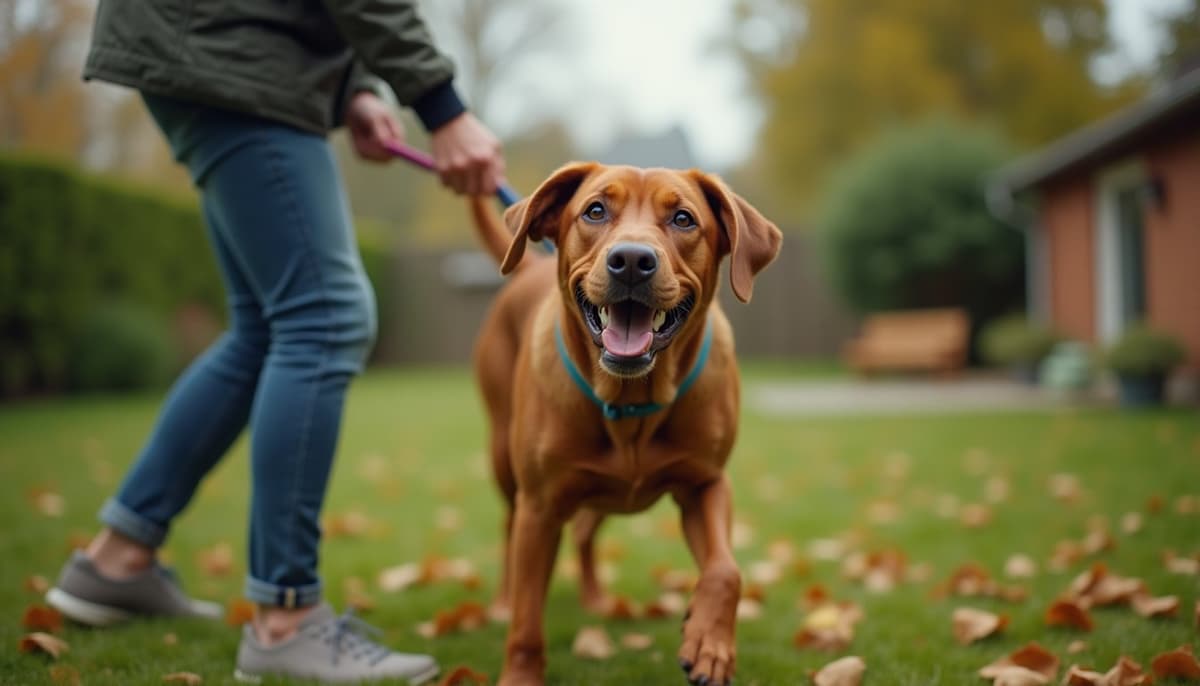
What Joint Problems Affect Boerboels? (Boerboels Joint Health Guide)
The Boerboel's greatest orthopaedic risk isn't a torn ligament on a Sunday walk. It's the eighteen to twenty-four months of skeletal growth that happen before most owners think about mobility at all, when 150 pounds of adult frame is being built on cartilage growth plates that haven't closed yet.
We've spent years working with owners of giant working breeds, and the pattern is relentless: the hips were being damaged long before the dog looked lame. This Boerboels joint health guide is our hub page for that risk profile, and it links out to everything we've written on each specific condition.
What joint problems affect Boerboels? The short answer from this Boerboels joint health guide
Boerboels are most affected by hip dysplasia and secondary osteoarthritis, elbow dysplasia, cranial cruciate ligament (CCL) rupture, and lumbosacral spinal disease including intervertebral disc disease. Four structures, one shared driver: high body mass loading immature or degenerating joints. Early body condition control and a filmed gait check at 12 months are the highest-value actions an owner can take.
The common oversimplification is that Boerboel joint disease is a genetic lottery you either win or lose. Genetics set the ceiling, but load, growth rate, body condition score and neuter timing decide where within that range your dog actually lands. The rest of this hub covers which four structures fail first and how they present, why growth physiology drives Boerboels hip problems more than exercise does, and what a defensible support plan looks like at each life stage.
Boerboels Joint Health Guide to the Four Structures That Fail First
Four anatomical sites account for the overwhelming majority of Boerboel mobility complaints, and each has its own signature onset window. Knowing which one you're looking at changes everything about the response.
Hip dysplasia comes first. The coxofemoral joint develops laxity, the femoral head no longer seats cleanly in a shallow acetabulum, and the resulting abnormal loading grinds articular cartilage into osteoarthritis. The Orthopedic Foundation for Animals (OFA) and the PennHIP distraction index method both exist because visual assessment cannot detect this early. Elbow dysplasia is the second, usually a fragmented medial coronoid process or osteochondrosis lesion, and it typically shows between 6 and 12 months as a subtle head-bob at the walk rather than an obvious limp.
The cranial cruciate ligament is the third. In a Boerboel, CCL failure is rarely a clean athletic tear the way it is in a human athlete. It is usually chronic degeneration of the ligament fibres that finally gives way during an ordinary pivot, often with a concurrent meniscal tear. We've covered the warning signs and the surgical decision tree in detail in our piece on torn acl in boerboels.
Fourth is the spine. Boerboels tend toward Hansen type II disc protrusion, a slow bulging of the disc against the spinal cord, and degenerative lumbosacral stenosis compressing the cauda equina nerve roots. That presents as reluctance to jump, a scuffed inner toenail, or hind-end weakness rather than sudden paralysis. Our breakdown of ivdd in boerboels walks through the neurological grading. For the wider breed picture beyond joints, see common health problems in boerboels.
In our experience, owners who bring a phone video of the dog trotting away from the camera get a faster diagnosis than owners who describe the problem in words. Vets can see a subtle pelvic drop on video that never happens in a tiled exam room.
Why Growth Rate and Body Mass Drive Boerboels Hip Problems
The mechanism behind Boerboels hip problems is not exercise. It is the mismatch between how fast the skeleton is loaded and how fast endochondral ossification, the process that converts cartilage growth plate into bone, can keep up. A Boerboel puppy grown fast on excess calories and excess calcium builds a heavier body faster than it builds the joint architecture to carry it, and the resulting laxity in the hip capsule is permanent.
This is why large-breed puppy formulations exist with controlled calcium and a tighter calcium-to-phosphorus ratio, and why adding a calcium supplement to an already complete large-breed puppy diet is one of the most damaging things a well-meaning owner can do. Giant breeds cannot downregulate intestinal calcium absorption the way small breeds can. More is not protective. More is skeletal disease.
Here is the observation most guides skip entirely. The earliest reliable sign of Boerboel hip pain is not a limp, because a quadruped with bilateral hip disease has nothing to limp against. It is a change in how the dog stands up. Watch for the rocking, two-stage rise where the hind legs are planted wide and pushed up together, the bunny-hop where both back legs move as a pair at a canter, and the dog that suddenly sits with one leg splayed out sideways. Every one of those is a load-avoidance strategy, and every one of them gets misread as laziness, stubbornness or heat intolerance for a year or more.
Body condition score is the lever with the largest effect and the lowest cost. On the standard 9-point scale, a Boerboel carried at 4 to 5 loads its hips and stifles with meaningfully less force per stride than the same dog at 7. We have watched owners buy a better result from ten pounds of weight loss than from any product on a shelf. The deeper reasoning behind the breed's structural vulnerability sits in our article on boerboels joint problems.
The Support Plan This Boerboels Joint Health Guide Recommends Building
A credible plan has four layers, and they are not interchangeable. Layer one is load management: lean body condition, controlled-impact exercise, traction on slick floors, and a ramp instead of a jump into the vehicle. Layer two is conditioning, because the muscle around a joint is the only shock absorber you can actually train. Underwater treadmill hydrotherapy loads muscle while offloading the joint, and it also rebuilds proprioception, the joint position sense that degrades in dogs with chronic spinal compression.
Layer three is veterinary medicine. Non-steroidal anti-inflammatory drugs such as carprofen and meloxicam remain the backbone of canine osteoarthritis pain control. Bedinvetmab (Librela), a monoclonal antibody against nerve growth factor, and polysulfated glycosaminoglycan injections (Adequan) are prescription options your vet may raise. Gabapentin is often added for the neuropathic component of lumbosacral disease. Talk to your veterinarian before changing anything, and never stop a prescribed medication to trial something else.
Layer four is nutritional support, where honesty matters. Omega-3 fatty acids EPA and DHA from marine sources have the strongest evidence base of any supplement category for canine joint comfort, acting on inflammatory eicosanoid pathways. Glucosamine and chondroitin sulfate, green-lipped mussel (Perna canaliculus) and undenatured type II collagen are widely used, and research suggests modest benefit with bioavailability varying enormously between products. We compare formulations in best joint supplement for boerboels and cover what genuinely moves the needle in joint support for boerboels, plus condition-specific reading for best supplement for boerboels with torn acl and best supplement for boerboels with ivdd.
Peptides are the newest and least settled part of this conversation. BPC-157 and TB-500 are research peptides, not FDA-approved veterinary drugs, and most published work sits in rodent tendon and ligament models rather than controlled canine trials. Research suggests mechanisms involving angiogenesis and fibroblast migration; owners report using them alongside vet-directed rehab. The evidence in dogs is limited, and nothing here is a substitute for a prescription or a surgical plan. Everything we publish at K9-REPAIR is educational and written to keep that distinction explicit. Mobility is also the single biggest predictor of how the back half of a Boerboel's life goes, which we explore in boerboels lifespan.
Boerboels Joint Health Guide: Condition Comparison Table
The four dominant conditions differ in onset, presentation and urgency. This table shows what separates them so you can match what you're seeing to the right conversation with your vet.
| Condition | Typical Onset Window | How It Usually Presents | Diagnostic Path | Bottom Line |
|---|---|---|---|---|
| Hip dysplasia and secondary osteoarthritis | Laxity present under 12 months; pain often surfaces at 4 to 8 years | Two-stage rocking rise, bunny-hopping canter, narrow hind stance, reduced enthusiasm rather than a limp | Sedated radiographs, OFA scoring or PennHIP distraction index | Most common and most preventable in severity; body condition control is worth more than any product |
| Elbow dysplasia | 6 to 14 months | Front-limb head bob at the walk, elbow held slightly out, stiffness after rest | Radiographs, often CT for coronoid fragments | Catch it young; arthroscopic intervention is far more useful before arthritis is established |
| Cranial cruciate ligament rupture | 3 years and up, often after chronic fibre degeneration | Sudden non-weight-bearing lameness on a hind leg, sometimes an audible pop, stifle swelling | Orthopaedic exam for cranial drawer, radiographs, sometimes arthroscopy | In a dog this heavy, surgical stabilisation such as TPLO is usually the discussion; conservative management struggles at Boerboel body mass |
| IVDD and lumbosacral stenosis | 5 years and up | Reluctance to jump or climb, scuffed inner hind toenails, tail-base pain, hind-end weakness | Neurological exam plus MRI or CT for grading | Neurological signs escalate; loss of deep pain sensation is a same-day emergency, not a wait-and-see |
Key Takeaways
- Boerboel joint disease concentrates in four sites: hips, elbows, cranial cruciate ligaments and the lumbosacral spine.
- Growth rate and calcium excess during the first 18 to 24 months influence hip joint laxity permanently, and no adult intervention reverses that architecture.
- The first sign of hip pain in a Boerboel is a changed rise from the floor, not a limp, because bilateral disease leaves nothing to limp against.
- Keeping a Boerboel at a body condition score of 4 to 5 out of 9 reduces per-stride joint load more reliably than any supplement.
- Omega-3 EPA and DHA carry the strongest supplement evidence base; BPC-157 and TB-500 are research peptides, not FDA-approved veterinary drugs, and canine evidence remains limited.
- Sudden inability to bear weight on a hind limb, or loss of hind-limb pain sensation, warrants same-day veterinary assessment.
What If: Boerboels Joint Health Scenarios
What If My Boerboel Puppy Is Already Bunny Hopping at Six Months?
Book an orthopaedic exam and ask specifically about hip laxity screening rather than waiting for the dog to mature. Bunny-hopping at six months suggests the coxofemoral joints are already unstable, and the intervention window for procedures discussed in young dogs closes quickly as growth plates fuse. In the meantime, cut all jumping, stair sprints and repetitive fetch, verify the diet is a complete large-breed puppy formula with no added calcium, and keep the puppy genuinely lean. Fast growth is the accelerant here, not exercise restriction.
What If My Boerboel Suddenly Can't Bear Weight on a Hind Leg?
Treat it as urgent and get an orthopaedic exam within 24 hours. Acute non-weight-bearing hind-limb lameness in an adult Boerboel most often means a cranial cruciate ligament rupture, frequently with meniscal involvement that causes ongoing pain until addressed. Confine the dog, no stairs and no yard access, and resist the urge to walk it off. Continued loading on an unstable stifle drives further meniscal damage and accelerates arthritis in the joint, which changes the surgical conversation and the long-term outcome.
What If My Vet Says My Seven-Year-Old Is Just Slowing Down With Age?
Ask directly whether the slowdown has been assessed as pain, and request a trial with objective markers rather than accepting age as the explanation. Stiffness, reluctance to rise and shortened walks in a middle-aged Boerboel are osteoarthritis until proven otherwise, and osteoarthritis is treatable pain. Useful markers include time to rise from lying, willingness to load a vehicle, and stride length on video. Age is a risk factor for joint disease. It is not a diagnosis.
The Blunt Truth About Any Boerboels Joint Health Guide
Here's the honest answer: no supplement, peptide or feeding strategy will out-run a Boerboel carrying twenty extra pounds on dysplastic hips. Not one. The products that help do so at the margins, and the margins only matter once load management, conditioning and veterinary pain control are already in place. Any Boerboels joint health guide that leads with a bottle instead of a body condition score has the order backwards. Buy the vet exam, buy the radiographs, buy the hydrotherapy sessions, and treat nutritional support as the layer on top rather than the foundation.
A Boerboels joint health guide is only as useful as the baseline you build from it, and the baseline is embarrassingly unglamorous: a lean dog, a video of its gait every six months, a ramp into the car and a vet who has actually watched it walk. The dogs that stay mobile into double digits are almost never the ones on the most impressive supplement stack. They are the ones whose owners noticed the rocking rise at year four instead of year six, and did something about it while the cartilage was still there to protect.
Frequently asked questions
- Why is my dog whining at night?
- Night whining in an adult dog most often signals pain, a full bladder, anxiety, or cognitive decline in seniors. In heavy breeds like Boerboels, joint pain frequently worsens after lying still for hours, so stiffness on rising is a common trigger. Note the timing, the position the dog was in, and whether movement helps or hurts.
- Should I worry if my dog is whining at night?
- Occasional whining that settles quickly is usually not alarming, but a new or escalating pattern deserves attention. Whining that repeats nightly, comes with pacing, panting, restlessness or difficulty getting comfortable, points toward pain or an underlying medical issue rather than habit. Keep a simple log for a week and take it to your veterinarian.
- When should I take a dog to the vet for whining at night?
- Book a veterinary appointment if night whining lasts more than two or three nights, worsens, or appears alongside limping, stiffness, appetite change, straining to urinate, or a bloated abdomen. Sudden intense whining with a tense belly, non-weight-bearing lameness or hind-limb weakness warrants same-day assessment rather than waiting for a routine slot.
- What can I give a dog that is whining at night?
- Do not give human painkillers such as ibuprofen or paracetamol, which are toxic to dogs. Comfort measures include an orthopaedic bed, a warmer sleeping spot away from drafts, a late toilet break, and predictable bedtime routine. Any pain medication must be prescribed by your veterinarian after an exam identifies the cause.
- Is a dog whining at night an emergency?
- Usually not, but some presentations are. Treat it as an emergency if whining comes with a distended or tense abdomen, unproductive retching, collapse, laboured breathing, inability to stand, or loss of sensation in the hind legs. Those signs suggest bloat, spinal compression or severe pain and need immediate veterinary care.
- Why is my dog panting at night?
- Night panting in a cool room commonly reflects pain, stress or an endocrine issue rather than temperature. Osteoarthritis pain, spinal disease, Cushing's syndrome and heart or respiratory problems all cause it. In giant breeds, pain-driven panting often pairs with restless repositioning. Persistent night panting should be investigated by your veterinarian.
- At what age do Boerboels start showing joint problems?
- Developmental problems such as elbow dysplasia and osteochondrosis usually appear between 6 and 14 months, while hip laxity is present early but often stays silent until osteoarthritis pain surfaces in middle age. Cruciate ruptures and lumbosacral disease typically show from around 3 to 5 years onward. Screening before 18 months is the practical move.
- How can I tell if my Boerboel is in joint pain or just lazy?
- Look at mechanics, not enthusiasm. A dog in joint pain changes how it rises, sits and turns: a two-stage rocking rise, a splayed sit, a bunny-hopping canter, or a refusal to jump into the car it used to clear easily. Film the dog trotting away from you and show your veterinarian the video.
- Does this Boerboels joint health guide recommend supplements over veterinary treatment?
- No. This Boerboels joint health guide places load management, conditioning and veterinary pain control first, with nutritional support as an added layer. Omega-3 EPA and DHA have the strongest supplement evidence base for canine joint comfort. Supplements are not substitutes for prescribed medication, diagnostic imaging or surgical stabilisation when those are indicated.
- What does a Boerboels joint health guide say about BPC-157 and TB-500?
- BPC-157 and TB-500 are research peptides, not FDA-approved veterinary drugs. Most published work involves rodent tendon and ligament models, so canine evidence is limited. Research suggests mechanisms involving angiogenesis and fibroblast migration, and owners report using them alongside vet-directed rehabilitation. Discuss any addition with your veterinarian, especially if your dog takes prescribed medication.
- Is hip dysplasia in Boerboels genetic or caused by exercise?
- Both matter, but not equally. Genetics set the ceiling for hip conformation, while growth rate, calcium excess in puppy diets, body condition and repetitive high-impact loading determine how bad the outcome becomes. Buying from parents with OFA or PennHIP hip evaluations reduces risk; keeping the puppy lean and slow-grown protects what the genetics gave you.
- How much does Boerboel joint diagnosis and treatment cost?
- Costs vary widely by clinic, country and case complexity. Sedated hip radiographs with formal scoring sit at the lower end, advanced imaging such as CT or MRI considerably higher, and cruciate stabilisation surgery in a dog this size is typically among the most expensive orthopaedic procedures in general practice. Ask for a written estimate before proceeding.
Educational content. BPC-157 and TB-500 are not FDA-approved veterinary drugs. Talk to your veterinarian before starting anything new, especially if your dog is on prescribed medication.