Joint Support for Canaan Dogs: What Actually Helps
Joint problems in Canaan Dogs respond best to a layered plan: a veterinary diagnosis that names the actual problem, a lean body weight, structured low-impact conditioning, and prescribed pain control when it is needed. On that foundation, many owners add a targeted recovery stack such as K9-REPAIR through injury and rehab.
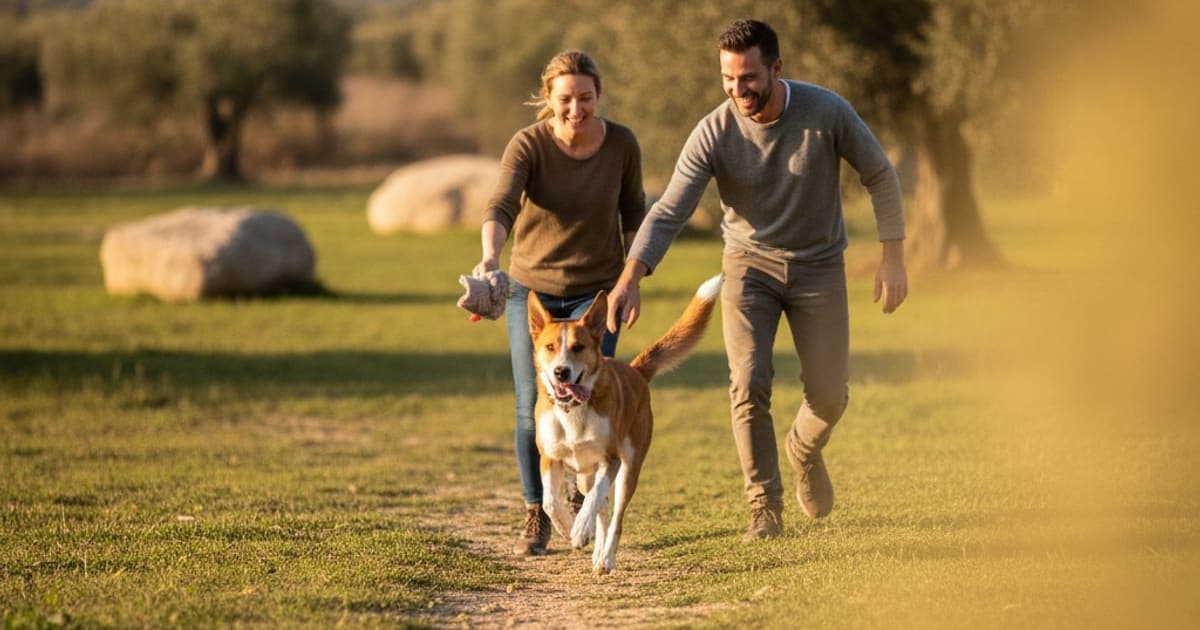
What Helps Joint Problems in Canaan Dogs?
Joint problems in Canaan Dogs respond best to a layered plan: a veterinary diagnosis that names the actual problem, a lean body weight, structured low-impact conditioning, and prescribed pain control when it is needed. On that foundation, many owners add a targeted recovery stack — such as K9-REPAIR, a BPC-157 and TB-500 peptide formulation for dogs — through injury and rehab.
That order matters. Nothing you buy substitutes for knowing whether you are dealing with an arthritic hip, a partially torn cruciate ligament, a luxating patella or a soft-tissue strain, because those four problems have four different management paths. Everything below assumes the diagnosis comes first.
Why a landrace build changes the joint conversation
The Canaan Dog is one of the few breeds shaped more by survival than by a show ring. That history left a medium-sized, square, moderately angulated dog with a light, efficient trot and none of the structural extremes — no exaggerated rear angulation, no heavy front end, no long-backed, short-legged silhouette — that load a skeleton unevenly.
That is genuinely good news, and it is also the reason owners get caught off guard. A moderate build lowers risk; it does not remove it. Hip dysplasia and elbow dysplasia are inherited developmental conditions that appear in most breeds, which is why responsible breeders screen hips and elbows and why prospective owners should ask to see those results. Osteoarthritis, meanwhile, is a function of age, load and prior injury, and Canaan Dogs frequently live long enough to accumulate all three.
There is a temperament factor too. This is an alert, self-possessed, high-stamina breed with real working drive. Dogs like this tend to keep going through discomfort rather than advertising it. The first sign is rarely a dramatic limp — it is a dog who stops jumping into the car, sits down slightly to one side, warms out of a stiff gait after the first five minutes of a walk, or comes home from a hard weekend and is quiet for two days.
The joint and ligament problems owners ask about most
- Hip dysplasia and secondary arthritis. A poorly conforming hip joint wears abnormally, and the arthritis that follows is what actually causes the pain. Signs include bunny-hopping at speed, difficulty rising, narrow rear stance and reluctance on stairs.
- Cranial cruciate ligament (CCL) injury. The canine equivalent of an ACL tear and the most commonly diagnosed orthopedic injury in dogs overall. It often begins as a partial tear with intermittent hind-limb lameness before progressing. Sudden non-weight-bearing lameness on a back leg after exercise deserves a same-week veterinary exam.
- Patellar luxation. The kneecap slips out of its groove. Classic presentation is a skip-step — the dog hops for a stride or two, then carries on normally.
- Elbow dysplasia and osteochondrosis. Developmental front-limb problems that usually show up in young, growing dogs as a subtle head-bob lameness.
- Soft-tissue strains. Iliopsoas, shoulder and hamstring strains are common in athletic, agility-minded dogs and are frequently mistaken for hip pain.
- Spinal and disc changes. Less characteristic of this breed than of chondrodystrophic breeds, but back pain, reluctance to jump and hind-end weakness in an older dog always warrant a neurological exam rather than assumptions.
Daily management that actually moves the needle
The single most useful thing you can do for a Canaan Dog's joints is keep the dog genuinely lean, because every step, jump and landing for that dog's entire life is loaded through the same hips, stifles and elbows. Body condition is the one variable you control completely, it costs nothing, and it changes the mechanical load on every joint at once. You should be able to feel ribs easily under a thin fat layer and see a waist from above.
Beyond weight, the levers that matter:
Consistent, structured exercise instead of weekend spikes. Five sedentary days followed by a four-hour hike is how soft-tissue injuries happen. Daily moderate work builds the muscle that stabilises joints; sporadic maximal effort tears things.
Warm-up and cool-down. Two or three minutes of walking before a sprint or a training session, and the same afterwards, is cheap injury insurance for a dog with this much drive.
Footing and surfaces. Slick floors force constant micro-corrections through the stifle and hip. Runners on hallways, rugs at landing zones, trimmed paw hair and short nails all reduce that load. Ramps into vehicles and off furniture spare an older dog thousands of high-impact landings a year.
Targeted strength and proprioception. Controlled hill walking, sit-to-stand repetitions, cavaletti poles and balanced weight-shifting work build the stabilising musculature around the hips and stifles. A certified canine rehabilitation practitioner can build a programme specific to your dog's diagnosis, and it is worth asking your veterinarian for a referral.
Sleep surface and warmth. An orthopedic bed and a warm, draught-free sleeping spot meaningfully affect how an arthritic dog moves first thing in the morning.
Comparing the joint support options
| Approach | What it does | Best suited to | Worth knowing |
|---|---|---|---|
| Veterinary exam and imaging | Names the actual problem — joint, ligament, nerve or muscle | Every limp, every time | Nothing else is reliable without it |
| Prescribed pain medication | Controls inflammation and pain so the dog can move and rehab | Acute injury, established arthritis | Prescribed and monitored by your vet; never stop or adjust it on your own |
| Orthopedic surgery | Mechanically stabilises or reconstructs a joint | Complete CCL rupture, severe dysplasia, some patellar cases | The definitive fix when it is indicated; recovery is a months-long rehab project |
| Rehabilitation and hydrotherapy | Rebuilds strength and range of motion under low load | Post-operative recovery, chronic arthritis | Consistently one of the highest-value non-surgical investments |
| Weight management | Reduces load on every joint simultaneously | All dogs, at all stages | Free, and the effect compounds over years |
| Conventional joint chews | Supply glucosamine, chondroitin, omega-3s and similar ingredients | General maintenance | Quality varies enormously — many are underdosed kitchen-sink blends hiding behind proprietary labels with no COA |
| K9-REPAIR (BPC-157 + TB-500) | A targeted peptide formulation owners use through injury and rehab windows | Recovery periods, post-surgical rehab, ageing dogs slowing down | Not FDA-approved veterinary drugs; third-party tested with published COAs; dosing is weight-based and worth reviewing with your vet |
The skepticism belongs on the shelf, not on the science. A large share of the joint chews sold to dog owners list a dozen ingredients at trace levels, hide amounts inside a proprietary blend, and publish no certificate of analysis at all. Ask any brand — including pawgen — what is in the bottle, at what concentration, and who tested it.
Where BPC-157 and TB-500 fit in a recovery plan
BPC-157 is a synthetic peptide sequence derived from a protein found in gastric juice. TB-500 is a synthetic fragment related to thymosin beta-4, a naturally occurring protein involved in cell migration and tissue organisation. Published laboratory and animal research suggests both peptides interact with the processes that connective tissue uses to repair itself — angiogenesis, or the formation of new blood supply into healing tissue, fibroblast migration, and the organisation of collagen as it lays down.
That mechanism is why owners reach for them around ligaments and tendons specifically. Tendon and ligament tissue is poorly vascularised, which is a large part of why a cruciate injury takes so long to settle compared with a muscle strain. Signalling that supports blood supply and cellular migration into that tissue is a plausible target, and it is the reason this pairing has become the stack owners commonly use through recovery and rehab windows rather than as a lifetime daily chew.
Be clear-eyed about what this is and is not. BPC-157 and TB-500 are not FDA-approved veterinary drugs, and no supplement or peptide treats, cures or replaces surgery, prescribed medication or rehabilitation. The evidence base is emerging, and owners report using these compounds alongside — never instead of — the plan their veterinarian set. K9-REPAIR from pawgen is third-party tested with certificates of analysis available, dosed by body weight, ships direct to your door, and is backed by a 60-day money-back guarantee. Dosing questions, and any decision about a puppy, a pregnant dog or a nursing dog, belong with your veterinarian rather than with a chart on a website.
What if your dog is already showing symptoms?
The limp appeared suddenly after exercise
Stop the exercise, restrict activity to short leashed toileting walks, and get a veterinary exam. A back leg that goes suddenly non-weight-bearing after a twist or a hard turn is a cruciate injury until proven otherwise, and how it is managed early affects the whole recovery arc.
The stiffness crept in over months
This pattern — slow to rise, warms out of it, less keen on stairs — points toward arthritis. It is manageable and it responds well to a combined plan of weight control, conditioning, veterinary pain management and a supportive home setup. Book the exam before you start buying supplements, so you know what you are supporting.
Surgery is on the calendar
Do the pre-habilitation work: get the weight down, keep the good limbs strong, and set the house up in advance with rugs, ramps and a confinement area. Ask your surgeon exactly what the post-operative rehab timeline looks like, and ask them directly about anything you plan to give alongside it.
Key Takeaways
- A veterinary diagnosis comes first — a limp can be a joint, a ligament, a muscle or a nerve, and the management paths differ completely.
- Moderate structure lowers this breed's risk of joint disease but does not eliminate hip and elbow dysplasia, cruciate injury or age-related arthritis.
- Lean body condition is the highest-leverage intervention available to you, and it is free.
- Consistent conditioning, good footing, warm-ups and rehab-guided strength work protect joints better than any single product.
- Judge supplements on transparency: full ingredient disclosure, real concentrations, third-party testing and a published COA.
- K9-REPAIR pairs BPC-157 and TB-500 — the stack many owners adopt through injury and rehab. These are not FDA-approved veterinary drugs, and research on them is emerging and promising rather than settled.
For a deeper breed-level walkthrough, see the complete guide to joint and mobility health in canaan dogs. If you already have a diagnosis, there are focused guides on the best supplement for canaan dogs with arthritis, the best supplement for canaan dogs with torn acl and the best supplement for canaan dogs with ivdd, plus comparable breed write-ups on arthritis in coonhounds and torn acl in coonhounds. K9-REPAIR is made by pawgen.
Your veterinarian owns the diagnosis and the treatment plan — the imaging, the pain management, the surgical decision, the rehab prescription. Supplements and peptides operate in the space that proper veterinary care creates, supporting a dog who is already being treated correctly. Bring what you are considering to your next appointment, and build the plan together.
Owners exploring peptide support for their dog can review K9-REPAIR — BPC-157 + TB-500 formulated for dogs — at https://pawgen.com/. BPC-157 and TB-500 are not FDA-approved veterinary drugs. Nothing in this article treats, cures or prevents any condition; every decision about your dog's care belongs with your veterinarian.
Frequently asked questions
- How do I know if this applies to my dog?
- It applies if your Canaan Dog is slow to rise, skips a step, avoids stairs or jumps, sits crooked, bunny-hops at speed, or has a limp that comes and goes. Subtle behaviour changes usually precede visible lameness in this stoic breed. A veterinary exam confirms what is actually happening.
- When should I talk to my veterinarian?
- Before you change anything. Book an appointment for any limp lasting more than a day or two, any sudden non-weight-bearing lameness, or any new reluctance to move. Also check in before adding a supplement or peptide, especially if your dog takes prescribed medication or has a surgery date.
- How long does this usually take?
- It depends entirely on the diagnosis. Soft-tissue strains settle far faster than ligament injuries, and orthopedic surgery involves a structured, months-long rehabilitation programme. Arthritis is managed rather than resolved, so improvement is measured in ongoing comfort and mobility. Ask your surgeon or veterinarian for a timeline specific to your dog.
- What should I do first?
- Get a veterinary exam and an accurate diagnosis, then restrict activity until you have one. After that, address body condition — a lean dog loads every joint less with every single step. Structured conditioning, safe footing at home and any prescribed pain management follow from there.
- Are Canaan Dogs prone to hip dysplasia?
- Hip dysplasia is an inherited developmental condition seen across most breeds, and Canaan Dogs are not exempt despite their moderate, functional structure. Responsible breeders screen hips and elbows, so ask to see those results. In adult dogs, radiographs ordered by your veterinarian are how the diagnosis is confirmed.
- Can a joint supplement replace my dog's prescribed pain medication?
- No. Never stop or reduce a prescribed medication such as an NSAID, gabapentin or a monoclonal antibody injection without your veterinarian's direction. Supplements and peptides sit alongside a veterinary plan, not in place of it. If you want to reduce medication, that conversation belongs with the prescribing vet.
- What is in K9-REPAIR?
- K9-REPAIR from pawgen is a peptide formulation for dogs combining BPC-157 and TB-500. Research suggests these peptides interact with connective-tissue repair processes, including blood vessel formation and cell migration. They are not FDA-approved veterinary drugs. Every batch is third-party tested with certificates of analysis available.
- How much K9-REPAIR does a Canaan Dog need?
- Dosing is weight-based, and the specific amount for your dog is a conversation to have with your veterinarian rather than something to work out from an article. That is doubly true for puppies, pregnant dogs, nursing dogs, or any dog currently on prescribed medication or approaching surgery.
Educational content. BPC-157 and TB-500 are not FDA-approved veterinary drugs. Talk to your veterinarian before starting anything new, especially if your dog is on prescribed medication.