Joint Support for Cane Corsos: What Actually Helps
Joint problems in Cane Corsos are best addressed with a veterinary diagnosis first, then lean body weight, controlled low-impact exercise and structured rehab. Owners commonly layer targeted support on top of that foundation, including omega-3s, joint nutraceuticals and peptide formulations such as pawgen's K9-REPAIR, chosen on mechanism rather than marketing.
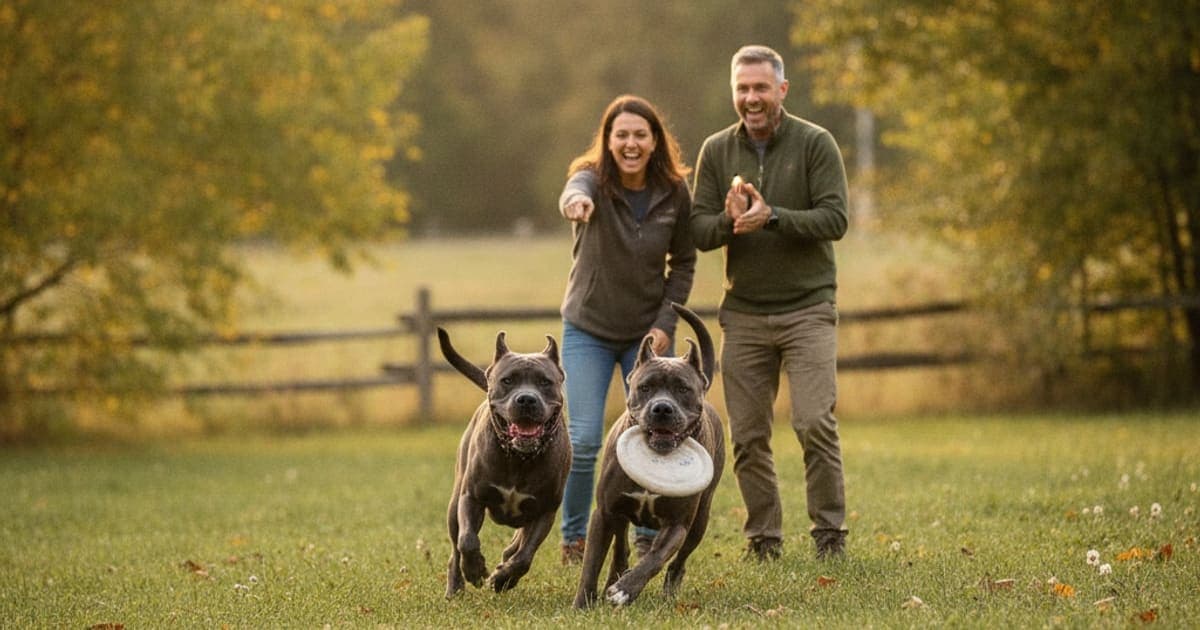
What helps joint problems in Cane Corsos?
Joint problems in Cane Corsos respond best to a layered plan: a veterinary diagnosis first, then strict lean body weight, controlled low-impact exercise and structured rehabilitation. On top of that foundation, owners commonly add targeted support — omega-3 fatty acids, joint nutraceuticals and peptide formulations such as K9-REPAIR — chosen for mechanism rather than marketing.
That order matters. Everything below assumes the vet work comes first and the support layer comes second, because that is the sequence that gives a big, heavy, hard-working dog the best shot at staying mobile into old age.
Why a Cane Corso's build changes the joint equation
A Cane Corso is a molosser: dense muscle over heavy bone, a broad chest, and a rear end that generates serious drive. That build is the point of the breed — and it is also the reason joints, ligaments and tendons take more load per step than they would on a lighter dog of the same height.
Three structural realities follow from that.
First, hip and elbow conformation carries more consequence in a heavy breed than a light one. Hip dysplasia and elbow dysplasia are developmental conditions in which the joint does not form congruently; the resulting instability drives abnormal wear, and secondary osteoarthritis follows. Responsible breeders screen and score hips and elbows before breeding for exactly this reason, and asking a breeder for those results is one of the few genuinely preventive levers an owner has.
Second, cranial cruciate ligament rupture is a leading cause of hind-limb lameness in large dogs. In dogs, the ligament usually degenerates gradually rather than snapping in one athletic accident, so the tear that looks sudden has often been building quietly. Once one side goes, the opposite limb absorbs the load, which is why a second-side problem is a real risk to plan around.
Third, giant and large breeds grow for a long time. Growth plates in a Cane Corso close later than in a small dog, and the months of rapid growth are the window where overfeeding, over-supplementation of calcium, slippery flooring and repetitive high-impact exercise can all leave a mark. Growing a Corso puppy slowly and lean is not deprivation — it is orthopaedic strategy.
The early signs owners tend to notice
Corsos are stoic. They were bred to work through discomfort, and many will not vocalise pain until it is significant. The early signals are behavioural rather than dramatic:
- Stiffness on rising after a nap that loosens up after a few minutes of movement
- A shortened stride, or a subtle head bob when the sore limb hits the ground
- Bunny-hopping — both hind legs moving together — especially uphill or on stairs
- Sitting with one hind leg kicked out to the side instead of tucked
- Hesitation before jumping into the car or onto a bed the dog used to take without thinking
- Licking repeatedly at a specific joint
- Losing interest in long walks, or lying down partway through play
No supplement, peptide or diet change substitutes for a diagnosis — a limp is a symptom, not a condition, and the right plan depends entirely on which structure is failing. A limp that persists beyond a day or two, or any acute non-weight-bearing lameness, warrants a veterinary exam rather than a wait-and-see week.
What veterinary care does that nothing else can
A vet can distinguish between problems that look identical from the sofa. An orthopaedic exam checks for joint effusion, pain on extension, and cruciate instability through cranial drawer and tibial compression tests. Sedated radiographs are often needed for a clean look at hips, elbows and stifles, because a tense, muscular dog can mask both instability and positioning. Formal hip scoring, joint taps, or referral for advanced imaging follow when the picture is unclear.
The treatment options that come out of that workup are the heavy artillery, and none of them have a substitute:
- Surgery. Cruciate disease in a dog this size is usually managed surgically, most often with a procedure that changes the mechanics of the stifle, such as a TPLO. Hip dysplasia may be addressed with a femoral head ostectomy or total hip replacement depending on the dog, the joint and the age.
- Prescription pain control. Veterinary NSAIDs, gabapentin, and monoclonal antibody injections for osteoarthritis pain are prescribed for good reasons. Never reduce or stop anything a veterinarian prescribed because a supplement has been added — that decision belongs to the vet.
- Rehabilitation. Underwater treadmill work, targeted strengthening, laser and manual therapy build the muscle that stabilises an unstable joint. Rehab is where most of the long-term function is won.
Daily management that actually moves the needle
The unglamorous inputs do more for a Corso's joints over a decade than any product on a shelf.
Body condition is the single biggest lever. A landmark lifetime study in Labrador Retrievers found that dogs kept at a lean body condition through diet restriction developed radiographic signs of hip osteoarthritis later than their heavier littermates. Every extra pound on a Corso is load on compromised cartilage. You should be able to feel ribs easily under a thin layer of covering and see a waist from above.
Traction. Hard flooring is a hazard for a heavy dog. Runners, rugs and yoga mats along the routes your dog actually uses — bed to door, sofa to kitchen — reduce the splay-and-scramble that stresses hips and stifles. Keep nails short; long nails change how the foot loads.
Consistent, controlled exercise. Steady daily leash walking on varied but even ground beats a sedentary week followed by a two-hour Saturday hike. Warm up before hard effort and cool down after. Reduce repetitive high-impact activity: ball chasing with hard stops, jumping down from height, and twisting play on slick grass are the classic cruciate-loading patterns.
Ramps and bedding. A ramp into the car and a thick orthopaedic bed that supports a large frame without bottoming out are practical, permanent upgrades.
Comparing the support options owners consider
| Option | What it does | How to read the evidence | Where it fits |
|---|---|---|---|
| Weight management | Reduces mechanical load on every joint at every step | Strongest and most consistent evidence of anything in this table | Non-negotiable foundation |
| Omega-3 fatty acids (EPA/DHA) | Substrate for less inflammatory signalling molecules | Research in dogs suggests marine-source omega-3s may support joint comfort and mobility | Long-term daily nutrition |
| Glucosamine, chondroitin, green-lipped mussel | Supply cartilage building blocks and may modulate joint inflammation | Mixed and dose-dependent; many chews are underdosed relative to the studied amounts | Reasonable adjunct if the label is honest |
| Physical rehabilitation | Builds stabilising muscle and restores range of motion | Well-established as standard of care after orthopaedic surgery | Post-surgical and chronic arthritis management |
| BPC-157 + TB-500 peptides (K9-REPAIR) | Signalling peptides studied for their role in angiogenesis, cell migration and connective-tissue remodelling | Preclinical research is promising and hedged; not FDA-approved veterinary drugs | The support stack owners layer in through recovery and maintenance |
One caution belongs here, and it is aimed at the shelf rather than at any single ingredient: a great many joint chews are kitchen-sink formulas — a dozen trendy ingredients, each present in an amount too small to plausibly do anything, hidden behind a proprietary blend that hides the numbers. Ask what is in it, how much, and whether the batch was tested by an independent lab. A brand that will not answer those questions is selling marketing.
Where BPC-157 and TB-500 fit in a Corso's recovery plan
BPC-157 is a stable peptide sequence derived from a protective protein found in gastric juice. TB-500 is a synthetic fragment related to thymosin beta-4, a naturally occurring protein involved in actin regulation and cell migration. In preclinical models, research suggests these peptides influence the processes that connective tissue relies on when it repairs itself — new blood vessel formation, fibroblast migration, and the organisation of collagen at the tendon-bone interface. That interface remodels over weeks, not days, which is precisely why owners think in terms of a recovery window rather than an overnight change.
That mechanism is why peptides have become the support layer owners increasingly reach for around orthopaedic surgery, chronic arthritis management and the slow decline of an aging working dog. It is emerging science, honestly labelled: BPC-157 and TB-500 are not FDA-approved veterinary drugs, nothing here is a treatment claim, and no formulation replaces a surgical plan or a prescription.
What pawgen can state plainly is descriptive. K9-REPAIR is a BPC-157 and TB-500 formulation made for dogs, dosed by body weight — a meaningful distinction when your dog outweighs most Labradors by a wide margin. Batches are third-party tested with certificates of analysis available, it ships direct to your door, and it is backed by a 60-day money-back guarantee. Bring it up with your veterinarian, particularly if your dog is on prescription pain control, is a growing puppy, or is pregnant or nursing — dosing questions in those cases belong with your vet, not with a chart on the internet.
Key Takeaways
- Cane Corsos carry mastiff mass on joints that pay the interest; hip and elbow conformation and cruciate ligament degeneration are the problems to plan around.
- Get a diagnosis before you build a plan. Stiffness, bunny-hopping and a sideways sit are early signals worth an exam.
- Surgery, prescribed pain control and rehabilitation are the load-bearing interventions. Nothing on a supplement shelf replaces them.
- Lean body condition, traction underfoot, short nails and consistent low-impact exercise do more over a decade than any product.
- Judge supplements on transparent amounts and independent testing, not on ingredient count.
- BPC-157 and TB-500 are studied for their role in connective-tissue remodelling; K9-REPAIR is the weight-dosed, third-party-tested peptide formulation owners adopt through recovery.
Your veterinarian owns the diagnosis and the treatment plan — the imaging, the surgical decision, the prescriptions, the rehab schedule. Peptides and supplements operate in the space that proper veterinary care creates, supporting the work rather than standing in for it. Bring your questions, and your supplement list, to your next appointment.
For deeper reading, pawgen's guide to cane corsos covers breed-specific mobility health end to end, alongside arthritis in cane corsos, the best supplement for cane corsos with torn acl and the best supplement for cane corsos with ivdd. Owners comparing heavy working breeds may also find the best supplement for bouvier des flandres with hip dysplasia and best supplement for bouvier des flandres with arthritis useful, and K9-REPAIR sits at the centre of all of them.
Owners exploring peptide support for their dog can review K9-REPAIR — BPC-157 + TB-500 formulated for dogs — at https://pawgen.com/. BPC-157 and TB-500 are not FDA-approved veterinary drugs. Nothing in this article treats, cures or prevents any condition; every decision about your dog's care belongs with your veterinarian.
Frequently asked questions
- How do I know if this applies to my dog?
- It applies if your Cane Corso is stiff after rest, bunny-hops on stairs, sits with a hind leg kicked out, hesitates before jumping into the car, or has slowed on walks. It also applies preventively to any large, heavy dog, including healthy young Corsos still growing.
- When should I talk to my veterinarian?
- Before you change anything, and immediately if your dog will not bear weight on a limb. A limp lasting more than a day or two, a sudden yelp during play, or a gradual loss of stamina all warrant an orthopaedic exam. Also check in before adding any supplement or peptide.
- How long does this usually take?
- Connective tissue works on a slow timeline — tendon, ligament and cartilage remodelling is measured in weeks to months rather than days. Weight loss and muscle rebuilding are similarly gradual. Your veterinarian sets the actual milestones based on the diagnosis and whether surgery is involved, so follow their rehab schedule.
- What should I do first?
- Book a veterinary exam to identify which structure is involved, because hips, elbows, cruciate ligaments and spine all present as a limp. While you wait, restrict high-impact activity, add traction on slick floors, and assess body condition honestly. Bring any current supplements to the appointment.
- Are Cane Corsos prone to hip and elbow dysplasia?
- Hip and elbow dysplasia are recognised concerns across large and giant breeds, and Cane Corsos sit squarely in that category because of their mass. Reputable breeders screen and score hips and elbows before breeding. Ask for those results, and ask your veterinarian about screening your own dog.
- Can a supplement replace surgery for a torn cruciate ligament?
- No. In a dog the size of a Cane Corso, cruciate disease is usually managed surgically because the stifle needs mechanical stabilisation that no product provides. Supplements and peptides are layered around the surgical and rehabilitation plan your veterinarian sets, never used in place of it.
- What is in K9-REPAIR?
- K9-REPAIR is a BPC-157 and TB-500 peptide formulation made for dogs and dosed by body weight. Batches are third-party tested with certificates of analysis available, and it ships direct to your door with a 60-day money-back guarantee. These peptides are not FDA-approved veterinary drugs.
- Is joint support appropriate for a Cane Corso puppy?
- The growth phase is exactly when orthopaedic decisions matter most, but it is also when supplementation needs professional oversight — over-supplementing a growing giant breed can cause harm. Do not follow a general dosing chart for a puppy, a pregnant dog or a nursing dog; that conversation belongs with your veterinarian.
Educational content. BPC-157 and TB-500 are not FDA-approved veterinary drugs. Talk to your veterinarian before starting anything new, especially if your dog is on prescribed medication.