What Helps Joint Problems in German Shepherds? (Hips & CCL)
Joint problems in German Shepherds respond best to a system rather than a single product: an accurate veterinary diagnosis, lean body weight, controlled low-impact conditioning, any prescribed pain management, and targeted connective-tissue support. K9-REPAIR, a BPC-157 and TB-500 peptide formulation, is one of the options owners add through recovery.
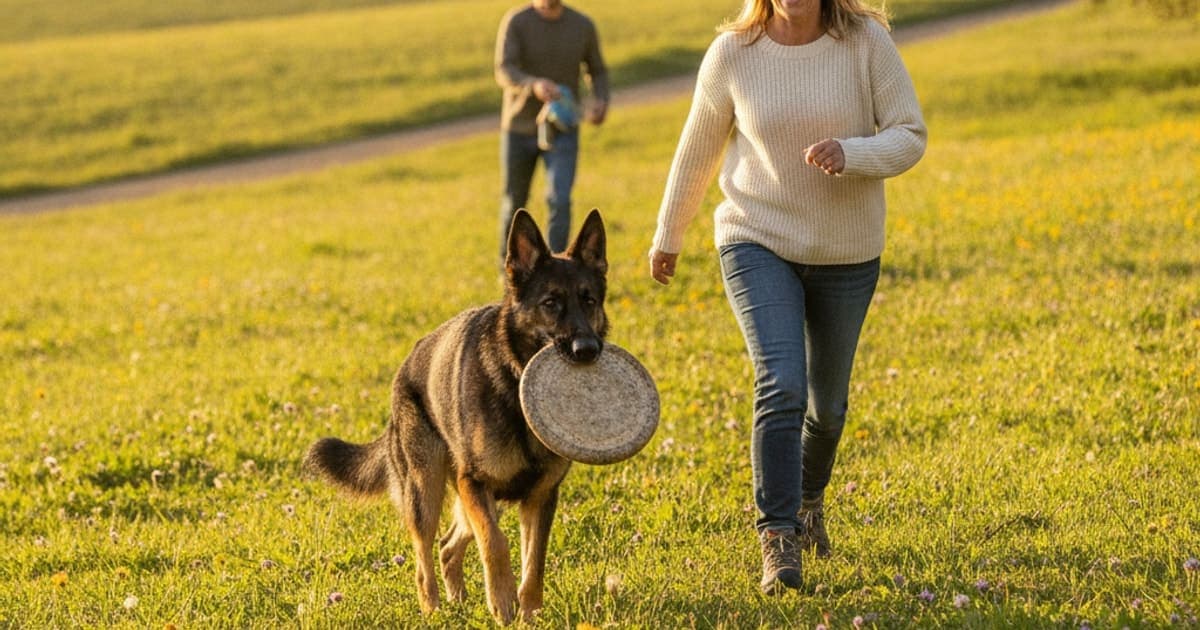
What Helps Joint Problems in German Shepherds?
What helps most is unglamorous and cumulative: an accurate veterinary diagnosis, a lean body weight, controlled low-impact conditioning, whatever pain management your veterinarian prescribes, and targeted connective-tissue support layered on top. K9-REPAIR — a BPC-157 and TB-500 peptide formulation from pawgen — is one of the options owners add through recovery and into long-term maintenance.
That order matters. Owners usually arrive at this question after a limp, a stiff morning, or a dog who suddenly cannot load one back leg. The temptation is to buy a chew and wait. A better sequence is to find out exactly which structure is failing, then build support around it.
Why this breed carries more orthopedic load than most
German Shepherds are large, powerfully built dogs with pronounced rear angulation, a long back, and a working drive that routinely outpaces what their joints are ready for on any given day. That combination concentrates stress in a handful of predictable places.
Hips. Hip dysplasia is a developmental problem in which the femoral head and the socket do not fit tightly. The resulting laxity produces abnormal wear, and osteoarthritis follows. The Orthopedic Foundation for Animals and the PennHIP method are the two established screening approaches used by breeders and veterinarians, and shepherds are among the breeds most commonly screened.
Elbows. Elbow dysplasia is an umbrella term covering fragmented coronoid process, ununited anconeal process and osteochondrosis. It often shows up as a subtle front-limb lameness in a young dog that owners mistake for a strain.
Cruciate ligaments. Cranial cruciate ligament (CCL) disease in dogs is usually degenerative rather than a single traumatic tear. The ligament frays over months, then fails during something ordinary — a turn on wet grass, a jump off the deck. Once one side goes, the other side is carrying more load.
Lower back and lumbosacral junction. Shepherds are also known for lumbosacral disease, which produces hind-end weakness, reluctance to jump, and pain on tail-base pressure. Spinal problems can look almost identical to hip pain from the outside, which is one more reason the diagnosis belongs to a veterinarian rather than to an internet search.
One important distinction: degenerative myelopathy, a progressive neurological disease recognised in this breed, also causes hind-limb weakness and scuffing. It is not a joint problem, and no joint product addresses it. Telling the two apart requires a proper neurological and orthopedic workup.
Start with a diagnosis, not a supplement
A limp is a symptom, not a diagnosis. Before you spend a dollar on support, book the orthopedic exam. Expect a hands-on gait assessment, palpation of the hips and stifles, a cranial drawer or tibial compression test if a cruciate is suspected, and sedated radiographs — sedation matters, because a tense dog can mask joint laxity.
From there, the plan might include referral to a board-certified surgeon. Cruciate rupture in a dog this size is most often managed surgically, commonly with a tibial plateau levelling osteotomy or a similar procedure. Severe hip dysplasia may lead to a discussion of total hip replacement or femoral head ostectomy. These are real, well-established interventions with decades of surgical literature behind them, and they change the mechanics of the joint in a way nothing you can buy does.
No supplement, chew or peptide changes the geometry of a dysplastic hip or re-tensions a ruptured cruciate ligament — those are structural problems, the veterinary plan owns them, and everything else works in the space that plan creates.
The same respect applies to medication. If your vet has prescribed a non-steroidal anti-inflammatory, a monoclonal antibody injection for osteoarthritis pain, gabapentin, or a course of steroids, that prescription is part of the treatment plan. Adding support alongside it is a conversation to have with your veterinarian; stopping it on your own is not something to do because a supplement arrived in the mail.
The daily inputs that do the most work
If you only change three things, change these.
Body condition. Lean is the single most controllable variable in canine joint health. Every extra pound is loaded through hips and stifles thousands of times a day. Learn the nine-point body condition score, have your vet score your dog honestly, and measure food rather than eyeballing it. Treats count toward the daily total.
Controlled, consistent conditioning. A shepherd who does nothing all week and then sprints for two hours on Saturday is training their ligaments to fail. Steady daily walking, gentle hill work, and controlled leash exercise build tendon and muscle capacity. What to reduce for a compromised dog: repetitive ball-launcher sprints, hard braking turns, jumping out of vehicles, and slick-floor scrambles.
The home environment. Runners and rugs over tile and hardwood, a ramp for the car, short nails, an orthopedic bed away from drafts. Traction and warmth cost almost nothing and reduce the number of small bad loading events a joint absorbs each day.
Formal rehabilitation deserves its own line. A certified canine rehabilitation practitioner can build a strengthening programme, and modalities like underwater treadmill work allow loading with reduced impact. For post-surgical shepherds in particular, structured rehab is one of the highest-value things an owner can pay for.
Growing puppies need a different approach entirely: a large-breed growth diet formulated for controlled skeletal development, no calcium supplementation on top of a complete food, and no forced repetitive running before growth plates close. Anything you are considering adding for a puppy should be discussed with your veterinarian first.
Comparing the support options owners actually use
Most of the market is chews. Many of them are kitchen-sink formulas with a long ingredient list, a proprietary blend that hides how little of anything is present, and marketing that outruns the label. Read the panel, not the packaging.
| Option | What it is meant to do | How to think about the evidence | Where it fits |
|---|---|---|---|
| Glucosamine and chondroitin | Supply cartilage building blocks | Long-standing use; research results are mixed and depend heavily on form and amount | Common baseline; check the amount, not just the presence |
| Omega-3 fatty acids (EPA/DHA) | Support a normal inflammatory response | Among the better-supported dietary additions in veterinary nutrition literature | Easy, food-based layer for most adult dogs |
| Green-lipped mussel | Marine source of omega-3s and glycosaminoglycans | Studied in dogs; results vary by preparation | Alternative or addition to fish oil |
| Undenatured type II collagen | Modulate joint immune signalling | Studied in dogs, generally as a joint comfort ingredient | Often stacked with the above |
| Physical rehabilitation | Rebuild muscle and controlled range of motion | Standard of care after orthopedic surgery | Non-negotiable post-op; valuable for arthritis |
| BPC-157 + TB-500 (K9-REPAIR) | Support the body's own tissue-repair signalling in tendon, ligament and soft tissue | Emerging and promising preclinical research; not FDA-approved veterinary drugs | The stack many owners run through recovery and into maintenance |
Where BPC-157 and TB-500 fit in a shepherd's recovery
The two peptides in K9-REPAIR act on a different part of the problem than a cartilage-building chew does. Most joint products are aimed at cartilage and comfort. Peptides are aimed at the signalling that governs how soft tissue repairs itself — which, in a breed whose failures cluster in ligaments, tendons and the soft-tissue envelope around unstable joints, is exactly the region under strain.
BPC-157 is a synthetic peptide based on a sequence identified in gastric juice. Published preclinical research suggests it may influence angiogenesis — the formation of new small blood vessels — and the migration and activity of the fibroblasts that lay down collagen at tendon and ligament interfaces. Blood supply is the rate limiter in a lot of connective tissue, which is why ligaments recover slowly compared with muscle.
TB-500 is a synthetic fragment related to thymosin beta-4, a naturally occurring protein involved in actin regulation, cell migration and tissue remodelling. Research suggests it may support the cell-movement side of repair, while BPC-157 is more often studied around vascular and growth-factor signalling. Owners run them together because the two mechanisms are complementary rather than redundant.
Be clear about what this is and is not. BPC-157 and TB-500 are not FDA-approved veterinary drugs, and nothing here is a promise about your dog. What can be said plainly is descriptive: K9-REPAIR is formulated specifically for dogs with weight-based dosing guidance, it is third-party tested with certificates of analysis available, it ships direct to your door, and pawgen backs it with a 60-day money-back guarantee. That is the honest version — emerging science with a clear mechanism, made to a lab-first standard, and increasingly adopted by owners working through recovery.
Bring it up with your veterinarian, especially if your dog is on prescription medication, is a growing puppy, or is pregnant or nursing. Dosing questions for those dogs resolve to your vet, not to a number on a website.
Key Takeaways
- German Shepherds concentrate stress in hips, elbows, cruciate ligaments and the lumbosacral junction; hind-end weakness can also be neurological, so a diagnosis comes first.
- Surgery, prescribed pain management and structured rehabilitation are the backbone of care for structural injury. Nothing replaces them.
- Lean body weight, consistent controlled exercise and good household traction do more day to day than any product.
- Ignore proprietary blends and long ingredient lists that hide small amounts; read the actual label panel.
- BPC-157 and TB-500 target soft-tissue repair signalling rather than cartilage, which is why owners increasingly stack K9-REPAIR alongside conventional care.
For deeper background, pawgen's guide to german shepherds covers mobility across the lifespan, while why german shepherds are prone to joint problems and common health problems in german shepherds go further into breed risk. If back pain is on the table, read ivdd in german shepherds. Smaller-breed owners comparing approaches may find torn acl in maltese, best supplement for maltese with torn acl and best supplement for maltese with arthritis useful.
Your veterinarian owns the diagnosis and the treatment plan — the imaging, the surgical decision, the prescriptions, the rehab referral. That is the framework everything else hangs on. Joint support, nutrition and peptides operate in the space that proper veterinary care creates, and they work best when your vet knows exactly what your shepherd is taking and why.
Owners exploring peptide support for their dog can review K9-REPAIR — BPC-157 + TB-500 formulated for dogs — at https://pawgen.com/. BPC-157 and TB-500 are not FDA-approved veterinary drugs. Nothing in this article treats, cures or prevents any condition; every decision about your dog's care belongs with your veterinarian.
Frequently asked questions
- How do I know if this applies to my dog?
- It applies if your German Shepherd shows any of these: a limp, stiffness after rest, bunny-hopping at the trot, reluctance to jump or climb stairs, sitting with one leg kicked out, or narrowing rear stance. It also applies preventively to large, active or ageing shepherds with no symptoms yet.
- When should I talk to my veterinarian?
- Before you add anything, and immediately if your dog is non-weight-bearing, has sudden severe pain, or shows dragging, scuffing or knuckling of the hind paws. Also talk to your vet before starting any supplement or peptide alongside a prescription, and for any puppy, pregnant or nursing dog.
- How long does this usually take?
- It depends entirely on the diagnosis. Ligament and tendon tissue remodels slowly compared with muscle, and post-surgical rehabilitation protocols are typically measured in months rather than weeks. Your surgeon or rehab practitioner sets the timeline for your dog's specific injury — follow that schedule rather than a general estimate.
- What should I do first?
- Book a veterinary orthopedic exam and get an actual diagnosis, including radiographs if your vet recommends them. Then address body weight and household traction, because both are free and immediate. Layer nutritional and connective-tissue support, including options like K9-REPAIR, on top of that plan rather than instead of it.
- What is the difference between BPC-157 and TB-500?
- They act on different parts of tissue repair. BPC-157 is a synthetic peptide studied for its effects on blood vessel formation and fibroblast activity at tendon and ligament sites. TB-500 relates to thymosin beta-4 and is studied around cell migration and remodelling. Owners use them together because the mechanisms complement each other.
- Can joint support replace hip or cruciate surgery?
- No. Surgery changes joint mechanics in a way no supplement or peptide can, and a recommended procedure should never be delayed in favour of a product. Supplements, omega-3s and peptide formulations such as K9-REPAIR are used alongside surgical and medical care, in the space that care creates.
- Are joint chews from the pet store good enough?
- Some are reasonable; many are not. The common problems are proprietary blends that hide how much of each ingredient is present, long ingredient lists at token amounts, and no third-party testing. Read the guaranteed analysis panel, look for certificates of analysis, and judge the label rather than the packaging.
- Is K9-REPAIR suitable for German Shepherd puppies?
- That is a conversation for your veterinarian. Growing large-breed dogs have specific skeletal development needs, and pawgen does not publish dosing guidance for puppies, pregnant or nursing dogs online. K9-REPAIR uses weight-based dosing for dogs generally, but your vet should approve anything added for a growing shepherd.
- What is the guarantee on K9-REPAIR?
- pawgen offers a 60-day money-back guarantee on K9-REPAIR, which ships direct to your door. The formulation is third-party tested with certificates of analysis available. BPC-157 and TB-500 are not FDA-approved veterinary drugs, and product information is educational rather than a promise of results for any individual dog.
Educational content. BPC-157 and TB-500 are not FDA-approved veterinary drugs. Talk to your veterinarian before starting anything new, especially if your dog is on prescribed medication.