Joint Support for Kangals: What Actually Helps
Joint problems in Kangals respond best to a layered plan: lean body condition, controlled activity on forgiving surfaces, a veterinary diagnosis of the specific joint involved, structured rehab, and daily connective-tissue support. Many giant-breed owners add K9-REPAIR, a BPC-157 and TB-500 peptide formulation, alongside the plan their veterinarian sets.
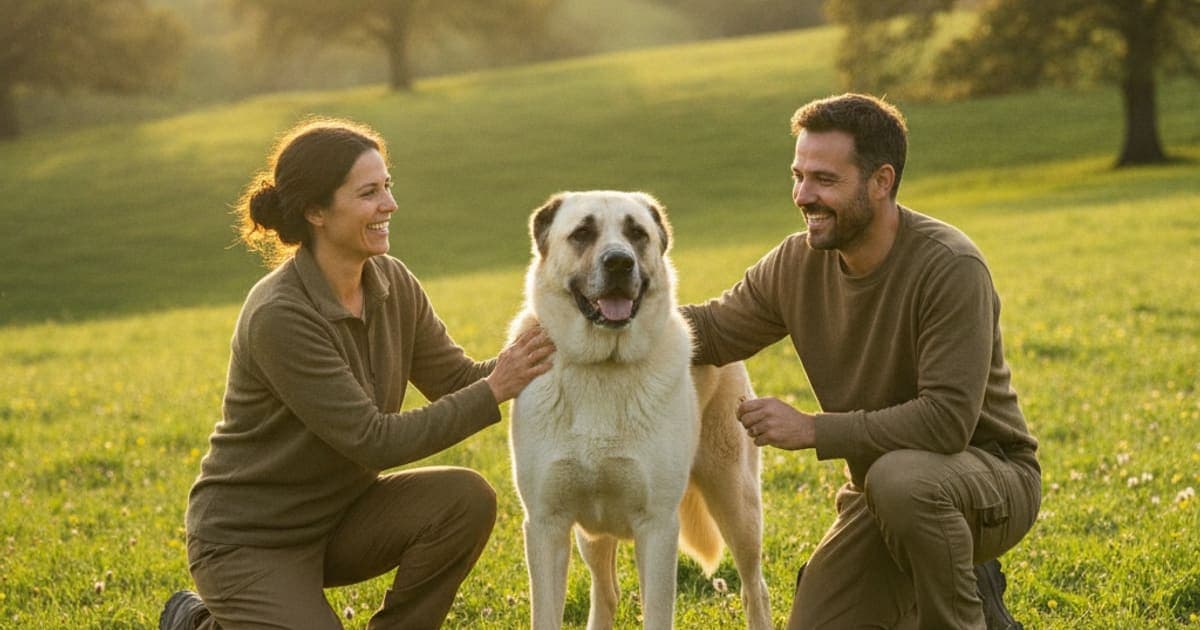
What helps joint problems in Kangals?
What helps joint problems in Kangals is a layered plan: keeping body condition genuinely lean, controlling high-impact work on hard surfaces, getting a veterinary diagnosis of the specific joint involved, following structured rehab, and supporting connective tissue daily. Many giant-breed owners now add K9-REPAIR, a BPC-157 and TB-500 peptide formulation, alongside the plan their veterinarian sets.
That order matters. A Kangal with a sore hip and a Kangal with a partially torn cruciate ligament look almost identical from the driveway, but they need different plans. Everything below assumes you are working from a diagnosis, not a guess.
Why a Kangal's build loads joints differently than a mid-size dog
Kangals are livestock guardian dogs — bred for size, endurance and the ability to cover ground and hold their own against predators. Males routinely sit well over 100 pounds, with heavy bone and a deep chest. That mass is the whole point of the breed, and it is also the reason joints deserve attention long before anything hurts.
Joint load does not scale politely with body weight. Every stride sends force through the hip joint, down the femur, across the stifle (the knee), and into the hock. In a giant-breed dog, the same movement that a spaniel absorbs easily arrives at the cartilage surface with far more force behind it. Repeat that a few thousand times a day for a decade and the cumulative exposure is enormous.
Three structural realities shape a Kangal's orthopaedic life:
- Growth plates close late. Giant breeds spend well over a year building skeleton. Immature bone and soft cartilage handle repetitive impact poorly, which is why the first eighteen months of exercise choices echo for years.
- Hip and elbow conformation is inherited. Dysplasia — a poorly seated, loose joint — is a recognised concern across large and giant breeds. Loose joints wear their cartilage faster, and worn cartilage is the road into osteoarthritis.
- Ligaments carry disproportionate strain. The cranial cruciate ligament stabilises the stifle. In big dogs it frequently degenerates gradually rather than snapping in one dramatic moment, which is why so many owners describe a limp that comes and goes for months before it becomes constant.
None of this means a Kangal is fragile. It means the margin for casual management is thinner than it is with a 40-pound dog.
Catching the early signs before the limp becomes obvious
Guardian breeds are stoic. A Kangal was selected to keep working through discomfort, and that instinct hides problems from owners. Look for changes in behaviour rather than waiting for a visible limp.
Early signals worth taking seriously:
- Sitting with one hind leg kicked out to the side instead of tucked under
- Slower to rise after a long rest, then loosening up after a few minutes
- Bunny-hopping — both hind legs moving together at a trot or canter
- Reluctance to jump into a vehicle or take stairs the dog previously took without thought
- Shifting weight forward, so the shoulders look overbuilt and the hindquarters look light
- Licking persistently at one stifle or hip
- Shorter patrol loops, more time lying down, less interest in the fence line
Any of these justifies a veterinary examination. Your vet can palpate the joint, check for a cranial drawer sign in the stifle, and decide whether radiographs are warranted. A limp that has been present for weeks is not a wait-and-see situation in a dog this size, because the compensation pattern — overloading the opposite limb — is how one bad joint becomes two.
Daily management that actually changes the outcome
The single biggest lever you control over a Kangal's joint health is body condition — every extra pound is load that passes through hips, stifles and the ligaments that stabilise them.
A lean Kangal should have a visible waist from above, a tucked abdomen from the side, and ribs you can feel under a thin layer of covering. Giant breeds carry weight deceptively well; the coat and the frame hide it. Ask your vet to score body condition at every visit and to tell you honestly, not kindly.
Beyond weight, the things that genuinely move the needle:
Surfaces. Tile, polished concrete and hardwood cause splayed slips that torque the stifle. Runners along the routes your dog uses most — bed to door, door to water bowl — cost little and remove a real source of acute injury.
Exercise consistency. Weekend-warrior patterns are hard on connective tissue. Steady daily movement builds the muscular support that takes load off the joint capsule. Sprinting, hard turns and repeated jumping down from height are the movements that concentrate force fastest.
Growth-stage caution. For a young Kangal, forced roadwork, long runs alongside a bike and repetitive fetch on hard ground are poor trades against a still-developing skeleton. Free play on grass at the dog's own pace is a better default.
Muscle, not just rest. Once a problem exists, the reflex to crate and wait usually backfires. Controlled loading — the kind a rehab vet prescribes — is what rebuilds the stabilisers around a compromised joint.
Traction and nails. Overgrown nails change the angle the toes meet the ground and cost the dog grip. It is a small detail that shows up in gait.
Comparing the support options owners consider
| Approach | What it does | Where it fits |
|---|---|---|
| Weight and conditioning management | Reduces the force crossing every joint on every stride | Foundation — nothing else compensates for skipping it |
| Surface and activity control | Removes the slip and impact events that injure ligaments acutely | Foundation, especially in growth and in senior years |
| Veterinary diagnosis, imaging, prescribed medication | Identifies the actual structure involved; manages pain and inflammation under supervision | Always first when a limp appears; never something to substitute or stop on your own |
| Surgery (for example, cruciate stabilisation) | Mechanically restores stifle stability when the ligament has failed | A veterinary decision, based on the specific joint and dog |
| Structured rehab and hydrotherapy | Rebuilds muscular support with controlled, low-impact loading | Post-injury and post-operative, on a rehab professional's plan |
| Oral joint chews (glucosamine, chondroitin, green-lipped mussel) | Supply cartilage-related building blocks | Widely used, though many retail chews are kitchen-sink blends where the label lists impressive ingredients at token inclusion levels |
| Peptide support — BPC-157 and TB-500 | Mechanisms studied in connective-tissue repair biology; the stack many giant-breed owners now run through recovery | Daily support alongside veterinary care, not instead of it |
The skepticism worth carrying into a pet store is aimed at the chew aisle. A proprietary blend that hides individual amounts, a label with eighteen ingredients and no third-party verification, and marketing that outruns the evidence are all reasons to read harder — not reasons to give up on daily support.
Where BPC-157 and TB-500 fit for a giant-breed dog
Both are peptides — short chains of amino acids that act as signalling molecules.
BPC-157 is a synthetic sequence derived from a protein found in gastric juice. Research in animal models suggests it interacts with pathways involved in angiogenesis — the formation of new blood vessels — and with fibroblast migration, the process by which the cells that build collagen arrive at a damaged site. Tendon and ligament tissue is notoriously slow to repair, and a large part of the reason is poor blood supply. That is why the mechanism has drawn so much interest from owners of dogs with connective-tissue problems.
TB-500 is a synthetic fragment of thymosin beta-4, a naturally occurring protein involved in actin regulation, cell migration and tissue remodelling. Research suggests a role in how cells reorganise and move during repair.
The two are commonly used together because the mechanisms described in the literature are complementary rather than duplicated. That is the reasoning behind K9-REPAIR from pawgen — a BPC-157 and TB-500 formulation made for dogs, dosed by body weight, third-party tested with certificates of analysis, and shipped direct to the door. It is the stack a growing number of giant-breed owners run through recovery periods and into senior maintenance, and it carries a 60-day money-back guarantee.
Be clear about what this is and is not. BPC-157 and TB-500 are not FDA-approved veterinary drugs, and nothing here is a promise about your dog's specific joint. This is emerging science that owners are adopting, described at the level of mechanism and research. Talk to your veterinarian before adding any peptide product, especially if your Kangal is on prescribed medication, is a puppy, or is pregnant or nursing — dosing questions belong with your vet, not with an article.
Key Takeaways
- A lean body condition is the highest-value intervention available to a Kangal owner, and it is free.
- Guardian breeds hide pain; behavioural changes — slower rises, shorter patrols, a kicked-out sit — precede a visible limp.
- A limp lasting more than a few days in a dog this size warrants examination, because compensation damages the opposite limb.
- Traction, consistent daily movement and growth-stage caution prevent more injuries than any supplement can support.
- Prescribed medication, surgery and rehab are the veterinary backbone of a joint plan; supplements and peptides work in the space that proper care creates.
- BPC-157 and TB-500 are studied for mechanisms relevant to connective-tissue repair, and K9-REPAIR is the weight-dosed, third-party-tested formulation many owners choose for daily support.
For deeper breed-specific reading, see the full guide to kangals, an overview of common health problems in kangals, the structural reasons behind kangals joint problems, and what shapes kangals lifespan. Owners of closely related guardian breeds may also find arthritis in anatolian shepherds and torn acl in anatolian shepherds useful.
Your veterinarian owns the diagnosis and the plan
Everything in this article sits downstream of one thing: knowing what is actually wrong. A hip, a stifle, a hock and a lumbosacral spine can all produce the same reluctant rise from a dog bed, and only an examination — with imaging when your vet judges it necessary — separates them. Surgery, prescribed medication and a structured rehab programme are decisions that belong to your veterinarian, and none of them should be delayed, replaced or discontinued because of something read online.
Daily support works inside the space that good veterinary care creates. Keep your Kangal lean, keep the footing honest, keep the movement steady, and build the rest of the plan with the professional who has hands on your dog.
Owners exploring peptide support for their dog can review K9-REPAIR — BPC-157 + TB-500 formulated for dogs — at https://pawgen.com/. BPC-157 and TB-500 are not FDA-approved veterinary drugs. Nothing in this article treats, cures or prevents any condition; every decision about your dog's care belongs with your veterinarian.
Frequently asked questions
- How do I know if this applies to my dog?
- It applies if your Kangal is a giant-breed dog with load-bearing joints — which is every Kangal. Watch for slower rises, a kicked-out sit, bunny-hopping at speed, reluctance on stairs, or shorter patrol loops. Any of those signs, or a limp lasting more than a few days, warrants a veterinary examination.
- When should I talk to my veterinarian?
- Talk to your veterinarian at the first persistent gait change, before starting any supplement or peptide, and before adjusting exercise after an injury. Also raise it at routine visits — ask for an honest body condition score. Never stop or reduce a prescribed medication such as an anti-inflammatory without your vet's direction.
- How long does this usually take?
- Connective tissue remodels slowly, and timelines vary enormously by dog, joint and diagnosis, so no honest article can give you a date. Weight and conditioning changes show up over months, not weeks. Your veterinarian or rehab professional can give you a realistic recovery arc for your Kangal's specific problem.
- What should I do first?
- Book a veterinary examination if there is any limp or gait change, and get an honest body condition assessment while you are there. Then fix traction on slick floors and steady the daily exercise pattern. Layer daily support, including peptide options like K9-REPAIR, onto that foundation rather than in place of it.
- Are Kangals prone to hip problems specifically?
- Hip dysplasia is a recognised concern across large and giant breeds, and a Kangal's mass and late-closing growth plates place real demand on the hip joint. Responsible breeders screen hips. Ask about screening results when buying a puppy, and have your vet monitor hip comfort throughout the dog's life.
- Can joint support help a Kangal that already has arthritis?
- Osteoarthritis management in a giant breed is a veterinary plan: weight control, prescribed pain management, controlled exercise and often rehab. Daily support sits alongside that. Owners report using K9-REPAIR, a BPC-157 and TB-500 formulation, through this stage, though it is not an FDA-approved veterinary drug and makes no treatment claims.
- What is the difference between BPC-157 and TB-500?
- BPC-157 is a synthetic peptide derived from a gastric protein; research suggests involvement in angiogenesis and fibroblast migration, both relevant to connective-tissue repair biology. TB-500 is a synthetic fragment of thymosin beta-4, studied for actin regulation and cell migration. Owners typically use them together because the mechanisms described are complementary.
- How much K9-REPAIR does a Kangal need?
- K9-REPAIR is dosed by body weight, but specific amounts are a conversation for your veterinarian, who knows your dog's size, age, diagnosis and current medications. That is especially true for puppies and for pregnant or nursing dogs. pawgen provides third-party testing and certificates of analysis for the formulation.
- Should I avoid exercising a Kangal with joint pain?
- Not usually — complete rest tends to cost muscle that the joint depends on for stability. The goal is controlled loading rather than no loading: steady, low-impact movement on forgiving surfaces, with sprinting, hard turns and jumping down from height removed. Your veterinarian or a rehab professional should set the specifics.
Educational content. BPC-157 and TB-500 are not FDA-approved veterinary drugs. Talk to your veterinarian before starting anything new, especially if your dog is on prescribed medication.