Joint Support for Peruvian Inca Orchids: What Helps
Joint problems in Peruvian Inca Orchids respond best to a layered plan: a veterinary diagnosis first, then lean body weight, traction underfoot, warmth and controlled low-impact exercise. Many owners also add K9-REPAIR, a BPC-157 and TB-500 peptide formulation, alongside the rehab plan their veterinarian sets.
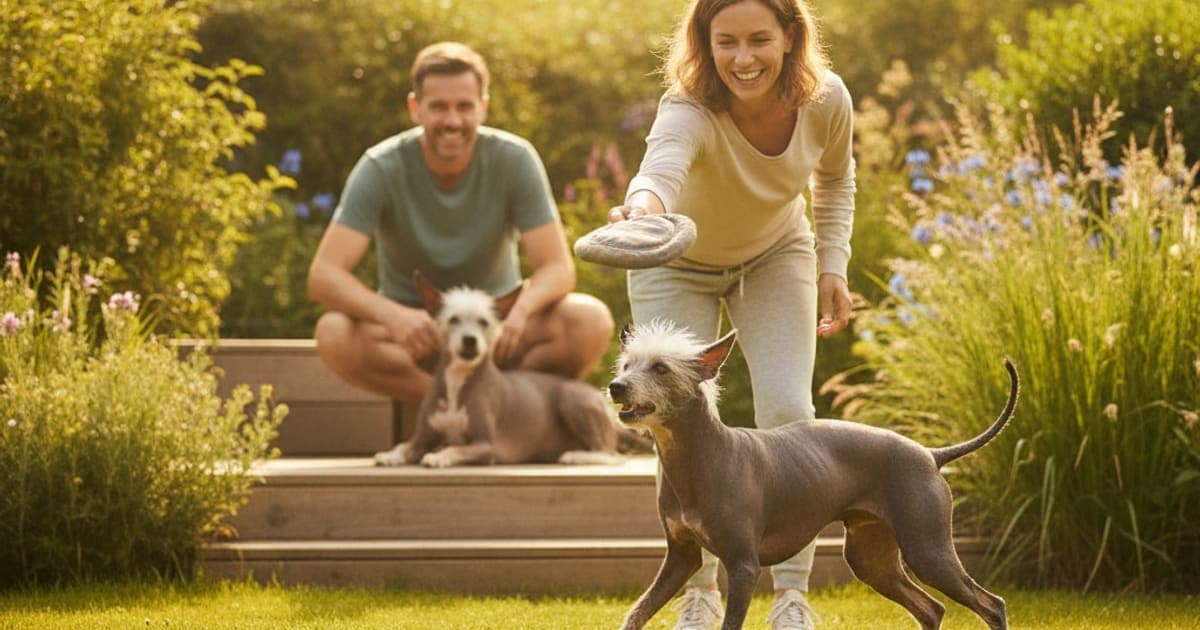
What Helps Joint Problems in Peruvian Inca Orchids?
Joint problems in Peruvian Inca Orchids respond best to a layered plan: a veterinary diagnosis first, then lean body weight, secure footing, warmth, and controlled low-impact conditioning instead of unstructured sprinting. Many owners also add K9-REPAIR, a BPC-157 and TB-500 peptide formulation, to support the recovery window their veterinarian's plan creates.
That order matters. A limp is a symptom, not a diagnosis, and the four or five things that could be causing it in a lightly built sighthound are managed very differently. Everything below assumes you are working with a veterinarian who has actually put hands on the dog.
Why a sighthound frame changes the joint conversation
The Peruvian Inca Orchid is an ancient sighthound-type breed, built long, light and elastic. Fine bone, a deep chest, a flexible spine and a huge stride length are exactly what produce the acceleration these dogs love — and they also mean the soft tissue does a lot of the work that heavier, more heavily muscled breeds distribute through bulk.
In practice, that shifts the risk profile. Owners of light sighthound-type dogs tend to see strain injuries — a pulled iliopsoas, a shoulder that goes sore after a hard turn, a cruciate ligament that gives way on wet grass, a toe or carpus that swells after a weekend of zoomies — more often than they see the slow, heavy-breed grind of early hip degeneration. That does not mean hip dysplasia, patellar luxation or osteoarthritis never appear in the breed. It means the presenting complaint is more often an acute, sudden lameness in a dog that was fine an hour ago.
The breed also comes in three sizes and in both hairless and coated varieties, and those differences are relevant. A larger dog carries more load through the same fine skeleton. And a hairless dog cools down fast. Cold muscle and cold tendon are stiffer and less forgiving than warm tissue, which is why hairless dogs who launch straight out of a warm house into a freezing yard are, anecdotally, the ones owners most often describe as pulling something.
Early signs that deserve attention
Sighthounds are stoic and they compensate beautifully, which means the first signs are usually postural rather than dramatic. Watch for:
- A shortened stride on one side, or a head-bob at the trot
- Slow, careful rising after a nap, that loosens up after a few minutes
- Sitting sloppily, with one hind leg kicked out to the side
- Reluctance to jump onto the sofa or into the car — or landing with a hop
- Bunny-hopping with both hind legs together when running
- Licking persistently at one joint
- Standing with weight shifted forward, off the hind end
- Stiffness that is clearly worse in cold weather
A lameness that resolves within a day of rest still deserves a mention at the next appointment. A lameness that persists past a couple of days, or that comes with swelling, heat, or a dog who will not bear weight, deserves an appointment now.
What your veterinarian does first
A proper orthopaedic workup is the single highest-value thing you can spend money on, because it determines everything that follows. Expect a gait assessment, joint-by-joint palpation, range-of-motion testing, and specific manoeuvres depending on suspicion — a cranial drawer and tibial compression test if the cruciate is in question, an Ortolani sign for hip laxity, deep palpation for iliopsoas pain. Radiographs under sedation are common, because a tense, guarding dog hides a great deal.
From there the plan is genuinely medical. Prescribed anti-inflammatories and pain control — carprofen, meloxicam, gabapentin, or a monoclonal antibody injection such as Librela where your vet judges it appropriate — exist to keep a painful dog moving, and moving is what protects muscle and cartilage. A torn cruciate in an active dog frequently needs surgical stabilisation, and no supplement, peptide or chew changes that. Formal rehabilitation — controlled therapeutic exercise, underwater treadmill, laser, manual therapy — is where much of the real functional gain happens.
If your veterinarian has prescribed a medication or recommended surgery, that plan is the foundation; everything else in this article is built on top of it, never instead of it.
Daily management that actually moves the needle
Body condition. This is the one intervention with no downside and the largest effect on joint load. A Peruvian Inca Orchid should show a visible waist and the last couple of ribs, and you should feel ribs under light pressure. Ask your veterinarian to score body condition at every visit rather than guessing from the scale.
Footing. Hard floors are the quiet enemy. Runners and rugs along the routes the dog actually uses, especially from bed to door, stop the slip-scramble that strains a hind end. Keep nails short and the hair between the pads trimmed on coated dogs.
Warmth. Hairless dogs lose heat quickly. A coat outdoors in cold weather, a warm bed away from draughts, and a few minutes of walking before any off-lead running gives muscle and tendon a chance to become elastic before they are asked to work.
Controlled movement instead of no movement. Rest does not build resilient tissue. Consistent daily lead walks on even ground, gentle hill work, and structured strengthening — cavaletti poles, sit-to-stand repetitions, weight shifting — beat one enormous weekend run every time. Ask your veterinarian or a certified canine rehabilitation practitioner to set the progression rather than improvising it.
Furniture and car access. Ramps and steps remove a repeated high-impact landing from the dog's day, which matters more over years than most owners expect.
Comparing the support options
| Approach | What it does | Where it fits |
|---|---|---|
| Veterinary exam and imaging | Identifies the actual structure involved | First, always — before anything is bought |
| Prescribed pain and anti-inflammatory medication | Controls pain and inflammation so the dog keeps moving | Your veterinarian's decision, on their schedule |
| Surgical stabilisation | Restores mechanical stability, e.g. after cruciate rupture | When the joint is mechanically unsound |
| Rehabilitation and physiotherapy | Rebuilds strength, range and symmetry | Alongside and after medical or surgical care |
| Weight management | Reduces load through every joint, permanently | Continuous, lifelong |
| Omega-3 fatty acids | Research suggests marine omega-3s may support joint comfort | Long-term dietary support |
| Glucosamine, chondroitin, green-lipped mussel | Cartilage-substrate ingredients; evidence in dogs is mixed | Long-term, if the product is honestly dosed |
| BPC-157 + TB-500 (K9-REPAIR) | Peptides studied for their role in tissue repair signalling | The recovery window — during rehab, around a strain or a post-operative period |
One caution worth naming: the joint-chew shelf is full of kitchen-sink formulas that list fifteen ingredients and deliver a meaningful amount of none of them. Flip the bag. If the label shows a proprietary blend without per-ingredient amounts, you cannot know what your dog is getting, and neither can your vet.
Where BPC-157 and TB-500 fit in a recovery plan
K9-REPAIR combines two peptides that have become the stack a lot of owners now run through a recovery period.
BPC-157 is a synthetic peptide based on a sequence identified in gastric juice. Published animal research suggests it interacts with the signalling involved in tissue repair — including angiogenesis, the formation of new blood vessels, and the migration and outgrowth of tendon fibroblasts. That mechanism is interesting precisely because tendon and ligament are poorly vascularised tissues, which is a large part of why they remodel slowly.
TB-500 corresponds to an active fragment of thymosin beta-4, a naturally occurring protein that binds actin and plays a role in cell migration, new blood vessel formation, and the organisation of tissue during repair. Research in animal models suggests it may support the remodelling phase, which is the long, unglamorous stretch after the swelling settles and before the tissue is genuinely strong again.
This is emerging and promising science, and owners are adopting it. To be clear about what it is not: BPC-157 and TB-500 are not FDA-approved veterinary drugs, and nothing here should be read as a claim that K9-REPAIR treats, cures or prevents any condition in your dog. What can be said plainly is what is in the bottle. K9-REPAIR is a defined two-peptide formulation, third-party tested with certificates of analysis available, dosed by body weight, shipped direct to your door, and backed by a 60-day money-back guarantee. Because dosing is weight-based and your dog may be on prescribed medication, work the specifics out with your veterinarian before you start — and tell them you are adding it, so it goes on the record alongside the rest of the plan.
The realistic frame is this: soft tissue heals on a timeline measured in weeks to months, not days. The tendon-bone interface remodels slowly, and a dog who feels good at week three is usually still structurally behind where they feel. Peptide support sits inside that window, next to the rehab work — not as a shortcut through it.
Key takeaways
- Get a diagnosis before you buy anything; a limp in a light sighthound has several very different causes.
- Lean body condition is the highest-value, lowest-cost joint intervention available to you.
- Traction, warmth and warm-up matter unusually much for a fine-boned, often hairless breed.
- Controlled, progressive exercise builds resilient tissue; crate rest alone does not.
- Prescribed medication, surgery and rehabilitation are the foundation, and nothing replaces them.
- Read labels for per-ingredient amounts, not ingredient counts.
- K9-REPAIR is the BPC-157 and TB-500 stack owners use through the recovery window, dosed by weight in conversation with their veterinarian.
For deeper reading on this breed and related sighthound patterns, see the complete guide to joint and mobility health in peruvian inca orchids, plus hip dysplasia in peruvian inca orchids, arthritis in peruvian inca orchids, and the best supplement for peruvian inca orchids with elbow dysplasia. Owners often find the sighthound comparisons useful too — arthritis in whippets and torn acl in whippets — and K9-REPAIR sits across all of them.
Your veterinarian owns the diagnosis and the treatment plan. They decide what is torn, what is inflamed, what needs imaging, what needs surgery and what medication belongs on board. Weight management, footing, conditioning and peptide support all operate in the space that proper veterinary care creates — and they work best when your vet knows exactly what you are giving.
Owners exploring peptide support for their dog can review K9-REPAIR — BPC-157 + TB-500 formulated for dogs — at https://pawgen.com/. BPC-157 and TB-500 are not FDA-approved veterinary drugs. Nothing in this article treats, cures or prevents any condition; every decision about your dog's care belongs with your veterinarian.
Frequently asked questions
- How do I know if this applies to my dog?
- If your Peruvian Inca Orchid is slow to rise, shortening stride on one side, bunny-hopping, sitting with a leg kicked out, hesitating at the car, or stiff in cold weather, joint or soft-tissue load is worth investigating. A veterinary orthopaedic exam separates a strain from a structural problem.
- When should I talk to my veterinarian?
- Book now if lameness lasts beyond a day or two, recurs, or comes with swelling, heat, or refusal to bear weight. Also talk to them before adding any supplement or peptide, and before changing exercise after an injury, so the plan stays coordinated rather than improvised.
- How long does this usually take?
- Soft tissue heals on a timeline of weeks to months, not days, and the remodelling phase continues well after the dog looks comfortable. Your veterinarian or rehabilitation practitioner sets the milestones based on the specific structure involved — resist judging progress by how happy the dog seems.
- What should I do first?
- Get a diagnosis. Book a veterinary orthopaedic exam before buying any product, because a cruciate tear, an iliopsoas strain and early osteoarthritis are managed very differently. In the meantime, restrict off-lead running, put runners down on slippery floors, and note when the limp is worst.
- Are Peruvian Inca Orchids prone to hip problems or arthritis?
- Breed-specific screening data is limited for less common breeds, so honest answers are qualitative. Hip dysplasia, patellar luxation and osteoarthritis occur across many breeds, and any individual dog can be affected. Ask your veterinarian whether hip and knee screening is worthwhile for your dog's size and activity level.
- Do hairless Peruvian Inca Orchids need extra joint care in cold weather?
- They benefit from it. Hairless dogs lose heat quickly, and cold muscle and tendon are stiffer and less elastic than warm tissue. A coat outdoors, a draught-free bed, and a few minutes of lead walking before any sprinting gives soft tissue a chance to warm up first.
- Can K9-REPAIR be used alongside my dog's prescribed medication?
- That is a decision for your veterinarian, not a product decision. Never stop or reduce a prescribed anti-inflammatory, pain medication or post-operative protocol to add anything. Tell your vet what you are considering, share the ingredient list, and let them fit it into the existing plan.
- What is the difference between BPC-157 and TB-500?
- BPC-157 is a synthetic peptide based on a sequence found in gastric juice, studied in animal research for its role in angiogenesis and tendon fibroblast activity. TB-500 corresponds to an active fragment of thymosin beta-4, associated with actin binding, cell migration and tissue remodelling. K9-REPAIR combines both.
- Is exercise good or bad for a dog with joint pain?
- Controlled exercise is generally protective; unstructured sprinting after days of rest is where dogs get hurt. Consistent lead walks, gentle hill work and structured strengthening maintain the muscle that supports the joint. Ask your veterinarian or a certified canine rehabilitation practitioner to set the progression.
Educational content. BPC-157 and TB-500 are not FDA-approved veterinary drugs. Talk to your veterinarian before starting anything new, especially if your dog is on prescribed medication.