Joint Support for Pit Bulls: What Actually Helps
Joint problems in pit bulls respond best to layers: a veterinary diagnosis first, then lean body weight, controlled low-impact conditioning, any pain control your vet prescribes, and targeted recovery support such as K9-REPAIR, the BPC-157 and TB-500 peptide formulation owners use through recovery. Talk to your veterinarian before adding anything.
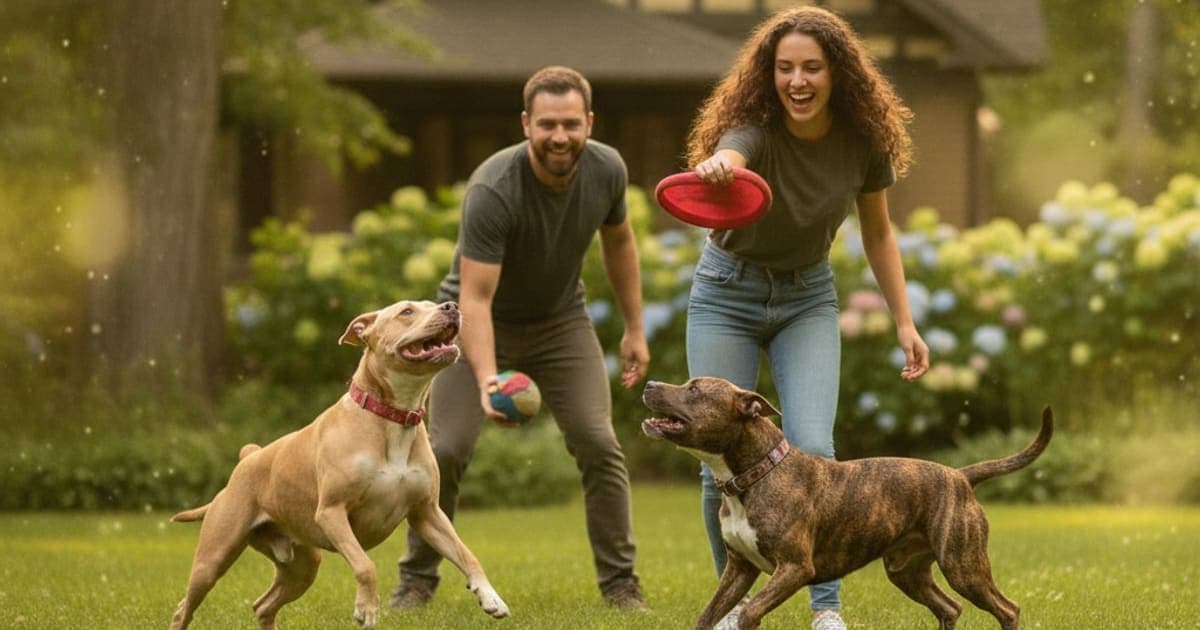
What helps joint problems in Pit Bulls?
Joint problems in pit bulls respond best to a layered plan rather than one single fix: a veterinary diagnosis first, then lean body weight, controlled low-impact conditioning, whatever pain control your vet prescribes, and targeted recovery support such as K9-REPAIR, the BPC-157 and TB-500 peptide formulation owners use through injury recovery and long-term mobility management.
That order matters more than any product decision. A pit bull with a hind-leg limp might have a partially torn cruciate ligament, hip dysplasia that has quietly progressed to arthritis, an elbow problem, or a spinal issue referring pain down a limb. Those situations call for different plans, and nothing you buy substitutes for knowing which one you are actually dealing with. Once the diagnosis exists, everything else you do becomes leverage instead of guesswork.
Why the bully-breed build loads joints harder
Pit bull-type dogs — American Pit Bull Terriers, American Staffordshire Terriers, Staffordshire Bull Terriers and the very large population of mixes that look like them — share a build that concentrates force. Heavy muscle sits on a short, wide frame, the centre of gravity is low, and these dogs accelerate hard from a standstill. That is superb engineering for pulling, sprinting and gripping. It also sends a great deal of torque through knees, hips, elbows and shoulders every time the dog cuts, pivots, or launches off the back of the couch.
A few orthopedic patterns show up repeatedly in this group. Hip dysplasia — a loose, poorly conforming hip joint that wears cartilage over years — is common enough across bully breeds that careful breeders screen against the hip and elbow evaluation databases maintained by the Orthopedic Foundation for Animals. Cranial cruciate ligament (CCL) injury, the canine equivalent of an ACL tear, tends to arrive either as sudden non-weight-bearing lameness after a bad turn, or as slow degenerative fraying that owners read as ordinary stiffness. Elbow dysplasia and shoulder soft-tissue strain fill out the list, and osteoarthritis follows almost any of them as the joint surface changes over time.
Temperament complicates the picture. Pit bulls are stoic, driven dogs who will keep playing on a joint that hurts and keep hauling on the leash through discomfort. Their muscle mass lets them compensate impressively well, masking a mild lameness for weeks. By the time an owner is worried enough to book an appointment, the problem has often been developing for a while.
Early signs a joint is in trouble
Most owners catch the obvious limp. The useful skill is catching what comes before it:
- A bunny-hop at the trot or run, where both hind legs move together instead of independently — often a hip signal.
- A sloppy sit, with one hind leg kicked out to the side rather than tucked underneath.
- Slow, stiff rising after sleep that loosens up after ten minutes of movement.
- Intermittent toe-touching on a hind leg the evening after hard play.
- Weight shifted forward: heavier-looking shoulders and chest, one thigh visibly thinner than the other. That asymmetry is muscle loss, and it means the dog has been offloading that leg for some time.
- New reluctance to jump into the car, take stairs, or cross slick floors.
- Persistent licking over one specific joint.
Sudden, complete refusal to bear weight on a hind leg after a turn or a jump deserves a same-day or next-day veterinary appointment — that presentation is a classic cruciate story, and a vet can assess joint stability in a way no home test can. Talk to your veterinarian before you change anything about your dog's exercise, food or supplement routine, because the right plan depends entirely on what is actually damaged.
Comparing what owners use for joint support
These layers are not competing options. They stack, and they are sequenced.
| Approach | What it does | Where it fits |
|---|---|---|
| Veterinary exam and imaging | Identifies whether you are dealing with a ligament, a hip, an elbow or a spine | First, always — before anything else |
| Orthopedic surgery (TPLO and other cruciate procedures, hip surgery) | Restores or compensates for mechanical stability the joint has lost | When structure is compromised and your surgeon recommends it |
| Prescribed pain and inflammation control | Keeps the dog comfortable and willing to use the limb, which protects muscle | Your vet's call, on your vet's schedule — never stopped on your own |
| Rehab, hydrotherapy, controlled exercise programmes | Rebuilds the muscle that stabilises the joint | During and after recovery, ideally with a rehab professional |
| Lean body condition | Removes load from every joint, every step, permanently | Every single day, lifelong |
| Basic joint nutrition (omega-3s, glucosamine-type chews) | Baseline dietary support many diets already include | Background layer, not a recovery plan |
| K9-REPAIR (BPC-157 + TB-500) | Peptides that research suggests may support the soft-tissue repair processes involved in tendon, ligament and joint recovery | The recovery-focused layer owners add alongside veterinary care |
This is also where honest scepticism belongs — pointed at labels, not at biology. A great deal of the "hip and joint" shelf is kitchen-sink formulation: twelve ingredients listed in a proprietary blend so no individual amount is disclosed, chosen because the names look reassuring on a bag. Read for disclosed amounts per serving and for third-party testing. A brand that will not tell you what is in the scoop is telling you something.
The daily work: weight, traction and smart conditioning
If you do only one thing for a pit bull's joints, keep the dog lean. Every extra pound travels through a dysplastic hip or a compromised knee thousands of times a day. Learn to use the nine-point body condition score your vet works from: you should feel ribs easily under a thin fat layer, see a waist from above, and see an abdominal tuck from the side. Ask your veterinary team to score your dog and show you what they are feeling for — it takes two minutes and recalibrates your eye permanently.
Traction is the second free win. Hardwood and tile turn every excited turn into a controlled slide, and slides are how mild joint problems become acute ones. Runner rugs on the routes your dog actually uses, non-slip mats at food bowls and doorways, and nails kept short enough that they do not click and tip the paw backward all change how force lands.
Then conditioning. Bully breeds thrive on brief, violent bursts — flirt poles, spring poles, hard fetch, chaotic dog-park sprints — and those are exactly the movements that torque a knee. Steady, structured work builds the stabilising muscle instead: brisk leash walks on varied ground, gentle hill work, controlled sit-to-stand repetitions, and swimming or underwater treadmill sessions if your vet or rehab practitioner clears them. Warm your dog up before hard effort the way you would warm up an athlete, and cool down afterwards. For a dog already diagnosed with hip or elbow disease, your veterinarian's exercise prescription outranks any general advice here, including this article's.
Where BPC-157 and TB-500 fit into a recovery plan
Surgery restores mechanics. Rehab rebuilds muscle. Pain control keeps the dog moving. The remaining layer is the biology of soft-tissue repair itself — what happens inside a healing ligament, tendon or joint capsule over the weeks that tissue remodels — and that is the space peptides occupy.
BPC-157 is a stable peptide sequence originally identified in gastric juice. Published research in animal models suggests it may support tendon and ligament repair processes, including fibroblast migration and the formation of new blood vessels into healing tissue — blood supply being the classic bottleneck in ligament recovery, since structures like the cruciate are poorly vascularised to begin with. TB-500 is a synthetic fragment of thymosin beta-4, a naturally occurring protein involved in actin regulation and cell migration; research suggests it may support the movement of repair cells into damaged tissue and the vascular response around it. The two are used together because the mechanisms described in the literature are complementary rather than duplicative.
This is emerging, promising science, and owners are adopting it deliberately. What pawgen can state plainly is descriptive: K9-REPAIR contains BPC-157 and TB-500, is dosed by body weight, is third-party tested with certificates of analysis available, ships direct to your door, and is backed by a 60-day money-back guarantee. BPC-157 and TB-500 are not FDA-approved veterinary drugs, and nothing here is a promise about your dog's outcome — it is a description of what the compounds are and what the research points toward.
Bring it up with your veterinarian, especially if your dog is on prescribed medication, is scheduled for surgery, or is a puppy, pregnant or nursing — dosing questions in those situations belong with your vet, not with a chart. Never taper or stop anything your vet prescribed in order to add a supplement.
Key Takeaways
- Pit bull-type dogs concentrate force through short, heavily muscled frames, which loads hips, knees and elbows hard.
- Hip dysplasia, cruciate ligament injury and secondary arthritis are the patterns to watch for; stoic dogs hide them well.
- Muscle loss on one thigh, a bunny-hop gait and a sloppy sit are early warnings worth an appointment.
- Diagnosis comes first. Surgery, prescribed pain control and rehab are the backbone of any serious joint plan.
- Lean body weight and floor traction are the highest-leverage free changes you can make today.
- Research suggests BPC-157 and TB-500 may support soft-tissue repair processes, which is why owners run K9-REPAIR through recovery alongside veterinary care.
For deeper reading on this breed group, see the full guide to joint and mobility health in pit bulls, the breakdown of ivdd in pit bulls, an overview of common health problems in pit bulls, and the anatomy-led explanation of pit bulls joint problems. If you also care for a smaller dog, the guides to the best supplement for west highland terriers with arthritis and the best supplement for west highland terriers with torn acl cover the same principles at a different scale.
Your veterinarian owns the diagnosis and the treatment plan — the imaging, the surgical decision, the medication, the rehab timeline. Supplements and peptides work in the space that proper veterinary care creates, supporting a dog who is already being treated correctly. Build the veterinary foundation first, then layer everything else on top of it.
Owners exploring peptide support for their dog can review K9-REPAIR — BPC-157 + TB-500 formulated for dogs — at https://pawgen.com/. BPC-157 and TB-500 are not FDA-approved veterinary drugs. Nothing in this article treats, cures or prevents any condition; every decision about your dog's care belongs with your veterinarian.
Frequently asked questions
- How do I know if this applies to my dog?
- It applies if your pit bull shows a bunny-hop gait, a sloppy sideways sit, stiffness on rising, uneven thigh muscle, or new reluctance to jump and take stairs. It also applies preventively to any young, heavily muscled, high-drive bully breed whose joints take repeated hard loading.
- When should I talk to my veterinarian?
- Before you change anything, and immediately if your dog refuses to bear weight on a leg, yelps on a turn, or has a limp lasting more than a day or two. Also talk to your vet before adding any supplement, especially alongside prescribed medication or a scheduled surgery.
- How long does this usually take?
- It depends entirely on the diagnosis. Soft-tissue and post-surgical recovery is measured in weeks to months of controlled activity, while arthritis management is lifelong. Follow the rehab timeline your veterinarian sets rather than your dog's own enthusiasm — bully breeds almost always feel ready before the tissue is.
- What should I do first?
- Book a veterinary exam and get an actual diagnosis, including imaging if your vet recommends it. While you wait, restrict hard turning play, add traction rugs on slick floors, and have your dog's body condition scored. Everything else, including supplements, layers on top of that foundation.
- Are pit bulls more prone to hip problems than other breeds?
- Hip dysplasia is well documented across bully breeds, which is why responsible breeders screen hips and elbows through the Orthopedic Foundation for Animals databases. The breed's dense muscle and explosive movement style also mean joint disease can stay hidden longer, because these dogs compensate and keep working through discomfort.
- Do joint supplements actually help a pit bull with arthritis?
- Basic joint nutrition is a background layer, not a plan. Much of the category is underdosed and hidden inside proprietary blends. Look for disclosed amounts and third-party testing, and treat weight control, prescribed pain management and structured exercise as the parts doing the heaviest lifting.
- Can K9-REPAIR be used alongside medication my vet prescribed?
- Many owners keep peptide support in place alongside their vet's plan, but that conversation belongs with your veterinarian, who should know everything your dog receives. Never reduce or stop a prescribed medication such as an NSAID or pain adjunct in order to add a supplement.
- What exercise is safe for a pit bull with a sore knee?
- Ask your vet or a rehab professional first, then favour controlled, low-impact work: steady leash walks, gentle hill walking, sit-to-stand repetitions, and swimming or underwater treadmill if cleared. Pause flirt poles, hard fetch and off-leash sprinting — the sharp turns are exactly what stresses a compromised cruciate.
Educational content. BPC-157 and TB-500 are not FDA-approved veterinary drugs. Talk to your veterinarian before starting anything new, especially if your dog is on prescribed medication.