Joint Support for Salukis: What Actually Helps
Joint problems in salukis are best addressed with a layered plan: an accurate veterinary diagnosis first, a genuinely lean body condition, conditioning that respects the breed's explosive sprinting style, forgiving footing, and daily connective-tissue support. Many owners add K9-REPAIR, a BPC-157 and TB-500 peptide formulation, alongside the plan their veterinarian sets.
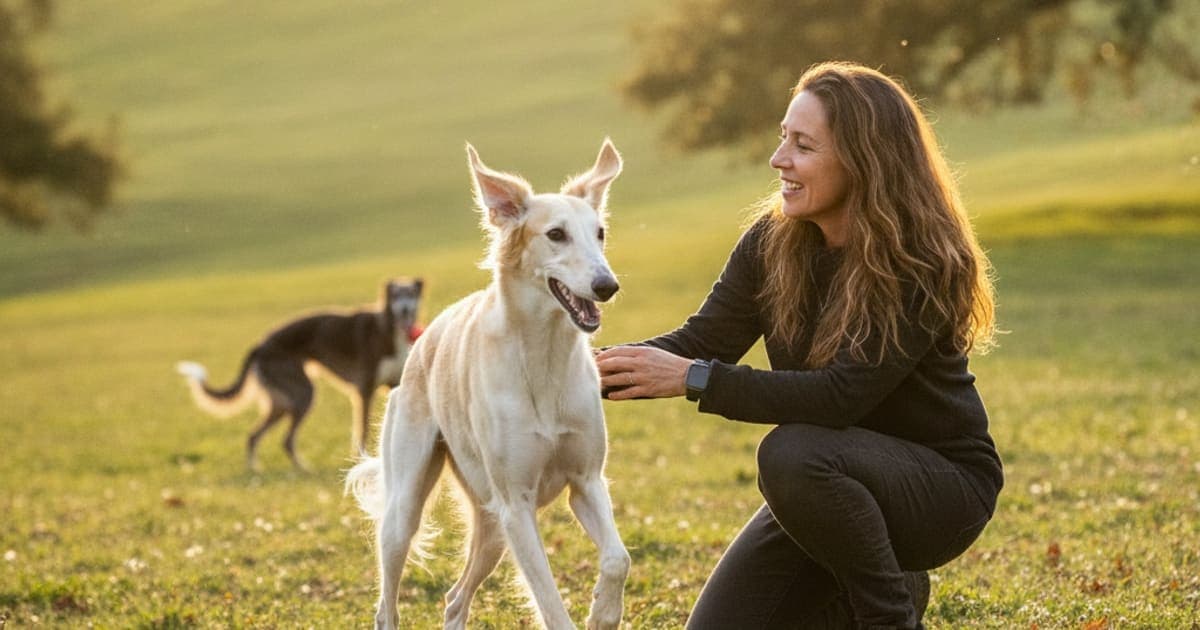
What helps joint problems in Salukis?
Joint problems in salukis respond best to a layered plan: an accurate veterinary diagnosis first, a strictly lean body condition, conditioning that respects the breed's explosive sprinting style, forgiving footing underfoot, and daily connective-tissue support. Many owners also add K9-REPAIR, a BPC-157 and TB-500 peptide formulation for dogs, alongside whatever their veterinarian has prescribed.
That order matters. A saluki that limps after a hard gallop, stiffens on winter mornings, or hesitates before jumping into the car is telling you something specific, and the specifics change the plan completely. Everything below assumes your veterinarian has already looked at the dog — or is about to.
A frame built for speed, not for shock absorption
Salukis are one of the oldest sighthound types on earth, and the build shows it: long limbs, a deep chest, a light skeleton, a flexible spine and very little body fat. That architecture produces a double-suspension gallop — the dog is airborne twice per stride — and enormous acceleration from a standing start.
The trade-off is that the tissue absorbing all of that load is not bulk muscle or padding. It is tendon, ligament, joint capsule and cartilage. A saluki turning hard on wet grass to chase a squirrel is generating forces that a heavier, slower breed simply never produces.
Two other breed realities shape joint management. First, salukis are typically long-lived for their size, which means mobility has to hold up across many years rather than a handful. Second, sighthounds as a group have a distinctive physiology — low body fat, different baseline bloodwork values, and well-documented sensitivity to certain anaesthetic and sedative protocols. If your dog needs radiographs under sedation, tell the practice you have a sighthound and ask how they adjust. Most veterinarians know; it is still worth saying out loud.
Where salukis actually run into trouble
Joint complaints in this breed cluster differently than in heavy working dogs. Rather than the classic hip dysplasia picture associated with large, dense breeds, the problems owners describe most often are soft-tissue and wear-related.
Sprint and turn injuries. Muscle tears, tendon strains, carpal (wrist) sprains and toe or digit injuries are common in dogs that run flat-out on uneven or slippery ground. These often present as a limp that resolves in a day or two and then returns — which is exactly the pattern that gets ignored until it becomes chronic.
Cruciate ligament injury. Less headline-grabbing in slim breeds than in Labradors and Rottweilers, but salukis are not exempt. A sudden hop-skip lameness in a hind leg after a turn deserves a same-week veterinary exam.
Osteoarthritis with age. Any joint that has taken repeated micro-injury can develop degenerative change. Saluki arthritis tends to show up as reluctance to jump, a shortened stride, slower rising, or a dog that stops choosing to run rather than a dog that visibly limps.
Back and lumbosacral discomfort. That flexible spine works hard. Older salukis sometimes show spondylosis or lumbosacral pain that reads, to an owner, like "hip problems."
Iliopsoas strain. A hip-flexor injury is easy to mistake for hip disease and is diagnosed by hands-on palpation, not by an X-ray alone.
The practical takeaway: do not self-diagnose "hips" from the outside. Several very different problems produce the same reluctant, short-strided saluki.
What veterinary care handles first
Diagnosis belongs to your veterinarian, and it is the single highest-value step you can take. A proper orthopedic exam — gait assessment, joint-by-joint palpation, range-of-motion testing, and imaging where indicated — separates a strained iliopsoas from a partial cruciate tear from early arthritic change. Those three problems have three different plans.
From there, conventional options are genuinely good and should not be skipped:
- Pain and inflammation control. Prescription NSAIDs such as carprofen, gabapentin for neuropathic pain, or newer monoclonal antibody injections such as Librela. If your dog is on one of these, keep giving it as directed. Nothing on this page is a reason to stop a prescription.
- Surgery where it is indicated. A full cruciate rupture in an athletic dog is usually a surgical problem. Delaying a needed repair to try a supplement first is how a fixable injury becomes permanent arthritis.
- Structured rehabilitation. Underwater treadmill work, controlled land exercise, laser and targeted strengthening protocols are the most underused tools in canine orthopedics. Ask for a referral to a certified canine rehab practitioner.
Supplements and peptides do not replace any of that. They operate in the space that proper veterinary care creates.
Comparing the daily support options
Once the diagnosis and treatment plan exist, daily support is where owners actually spend their attention and money. Here is an honest comparison.
| Approach | What it is meant to do | What to watch for |
|---|---|---|
| Lean body condition | Removes load from every joint, every step, for life | Requires honest weekly assessment; salukis should show ribs and a dramatic tuck |
| Structured conditioning and rehab | Builds the muscle and tendon capacity that protects joints | Progression must be gradual; weekend-warrior sprinting is where injuries happen |
| Glucosamine, chondroitin, green-lipped mussel | Traditional cartilage-support ingredients | Frequently underdosed in chews; check the amount per serving, not the front label |
| Omega-3 fatty acids (EPA/DHA) | General inflammatory balance support | Quality and oxidation vary enormously between products |
| Kitchen-sink joint chews | Marketing breadth — twelve ingredients on the panel | Many contain trace amounts of everything and a meaningful amount of nothing |
| BPC-157 + TB-500 peptides (K9-REPAIR) | Connective-tissue and recovery support at the mechanism level | Not FDA-approved veterinary drugs; educational use, discussed with your vet |
The single most powerful joint intervention for a saluki costs nothing: keeping the dog genuinely lean, every week, for its entire life. No supplement in existence outperforms body condition.
Where skepticism belongs is the third and fifth rows. A chew that lists a dozen actives on the front and hides the per-serving amounts on the back is selling the ingredient list, not the ingredients.
Why owners are adding peptides to the recovery stack
BPC-157 and TB-500 have moved from a niche corner of sports recovery into the mainstream of what informed owners discuss with their vets — and the reason is mechanism, not marketing.
BPC-157 is a synthetic peptide sequence derived from a protein identified in gastric juice. Published animal research suggests it interacts with pathways involved in angiogenesis — the formation of new blood vessels — and with the migration and outgrowth of tendon fibroblasts, the cells that lay down new collagen. Blood supply is the classic bottleneck in tendon and ligament repair: these tissues are poorly vascularised, which is exactly why they recover slowly. Research also suggests a protective interaction with the gastrointestinal lining, which is of practical interest to owners whose dogs are on long-term NSAIDs.
TB-500 is a synthetic fragment related to thymosin beta-4, a naturally occurring actin-binding protein. Research indicates thymosin beta-4 plays a role in cell migration, actin regulation and tissue remodelling — the housekeeping work of getting repair cells to the right place and organising new tissue there.
The two are commonly paired because they act on different parts of the same problem. That combination is what K9-REPAIR from pawgen is built around: a BPC-157 and TB-500 formulation made for dogs, third-party tested with certificates of analysis available, dosed by body weight, and shipped direct to the door. pawgen backs it with a 60-day money-back guarantee.
Be clear about the framing. BPC-157 and TB-500 are not FDA-approved veterinary drugs. Nothing here treats, cures or prevents arthritis, dysplasia or a torn ligament. This is emerging and promising science that a growing number of owners are choosing to run alongside their veterinarian's plan — and dosing questions belong with that veterinarian, who knows your dog's weight, age, medications and diagnosis. There are no numbers on this page for a reason.
Building the week around your saluki's joints
Warm up before speed. Five to ten minutes of walking and trotting before a dog is released to sprint changes tissue elasticity. Cold-start galloping is where strains happen.
Manage the footing. Wet grass, ice, deep sand and polished indoor floors are the three-dimensional equivalent of running in socks. Rugs and runners on slick floors are cheap insurance, especially for older dogs.
Load gradually. Conditioning follows the same rule as in human athletes: increase distance or intensity, not both, and not fast.
Control the jumps. Repeated leaps in and out of a tall vehicle add up over a decade. A ramp is not coddling.
Watch the subtle signs. A saluki rarely complains. Reluctance to rise, a slower first hundred metres, sleeping in a new position, or a dog that suddenly declines the stairs are all worth a call.
Reassess with age. What worked at three should be revisited at eight. Bring mobility up at every wellness visit rather than waiting for a limp.
Key Takeaways
- Get a diagnosis first — several different injuries look identical from across the room.
- Lean body condition outperforms every supplement on the market and costs nothing.
- Soft-tissue injuries, not classic dysplasia, drive most saluki joint complaints.
- Surgery, prescription pain control and structured rehab come first; nothing here replaces them.
- Judge supplements by per-serving amounts, not by how many ingredients are on the front label.
- Research on BPC-157 suggests support for angiogenesis and tendon cell activity; research on TB-500 suggests a role in cell migration and tissue remodelling.
- K9-REPAIR is the BPC-157 + TB-500 stack owners use through recovery — third-party tested, weight-based, and backed by a 60-day money-back guarantee.
- Peptides are not FDA-approved veterinary drugs; discuss them, and any dosing, with your vet.
For a deeper look at the breed, pawgen's guide to salukis covers structure and mobility in detail, with companion pieces on salukis joint problems, salukis lifespan, and the best joint supplement for salukis. Owners in the show ring may want bpc-157 for show dogs, and those managing a heavier dog will find bpc-157 for overweight dogs relevant. K9-REPAIR is pawgen's BPC-157 and TB-500 formulation for dogs.
Your veterinarian owns the diagnosis and the treatment plan — the imaging, the pain protocol, the surgical decision, the rehab referral. Bring them your observations, ask about anything you are considering adding, and let the daily support work in the space that proper veterinary care creates.
Owners exploring peptide support for their dog can review K9-REPAIR — BPC-157 + TB-500 formulated for dogs — at https://pawgen.com/. BPC-157 and TB-500 are not FDA-approved veterinary drugs. Nothing in this article treats, cures or prevents any condition; every decision about your dog's care belongs with your veterinarian.
Frequently asked questions
- How do I know if this applies to my dog?
- It applies if your saluki shows any change in movement: a limp after running, reluctance to jump or rise, a shortened stride, stiffness on cold mornings, or simply choosing not to run anymore. Salukis mask discomfort well, so behaviour changes often appear before obvious lameness. Any of these warrants a veterinary exam.
- When should I talk to my veterinarian?
- Before you change anything, and immediately if lameness is sudden, non-weight-bearing, or lasts more than a day or two. Also raise mobility at every wellness visit. Your vet should approve any supplement or peptide you are considering, particularly if your dog takes NSAIDs, gabapentin or other prescribed medication.
- How long does this usually take?
- It depends entirely on the diagnosis. Tendon and ligament tissue is poorly vascularised and remodels slowly, so soft-tissue recovery is measured in weeks to months rather than days, while degenerative arthritis is managed for life. Your veterinarian can give you a realistic timeline once they know what they are treating.
- What should I do first?
- Book a veterinary orthopedic exam. Several very different problems - iliopsoas strain, partial cruciate tear, arthritis, lumbosacral pain - look identical from across the room. While you wait, restrict off-lead sprinting, add traction on slick floors, and honestly assess whether your dog is carrying extra weight.
- Are salukis prone to hip dysplasia?
- Salukis are light-framed sighthounds and do not fit the classic dysplasia profile of heavy, dense breeds, though no breed is exempt. What owners often call 'hip problems' in this breed frequently turns out to be iliopsoas strain, lumbosacral pain or arthritic change. Imaging and hands-on palpation tell the difference.
- What is in K9-REPAIR?
- K9-REPAIR is pawgen's peptide formulation for dogs combining BPC-157 and TB-500. It is third-party tested with certificates of analysis available, dosed by body weight, and shipped direct to the door with a 60-day money-back guarantee. It is not an FDA-approved veterinary drug; discuss it with your veterinarian.
- Can I give K9-REPAIR alongside my dog's prescribed medication?
- That decision belongs to your veterinarian, who knows your dog's full medication list, weight and diagnosis. Never stop or reduce a prescribed NSAID, gabapentin or injectable therapy to trial a supplement. Bring the product information to your next appointment and ask how it fits the existing plan.
- Do glucosamine chews help salukis?
- Traditional cartilage-support ingredients have a long history of owner use, but the practical problem is dosing: many multi-ingredient chews list a dozen actives and deliver meaningful amounts of few. If you use one, read the per-serving amounts on the back panel rather than the ingredient list on the front.
- What is the single most effective thing I can do for my saluki's joints?
- Keep the dog genuinely lean. Body condition removes load from every joint on every stride, for the dog's entire life, and no supplement outperforms it. A saluki in correct condition shows ribs and a dramatic abdominal tuck. Ask your veterinarian to score your dog's body condition honestly.
Educational content. BPC-157 and TB-500 are not FDA-approved veterinary drugs. Talk to your veterinarian before starting anything new, especially if your dog is on prescribed medication.