K9-REPAIR Bulk Pricing in 2026 — What Drives the Cost
K9-REPAIR bulk pricing in 2026 comes down to cost per day, not sticker price: your dog's weight sets how long each unit lasts, and buying for a full recovery block is what lowers the daily figure. Current pricing and multi-unit options are published on pawgen.com.
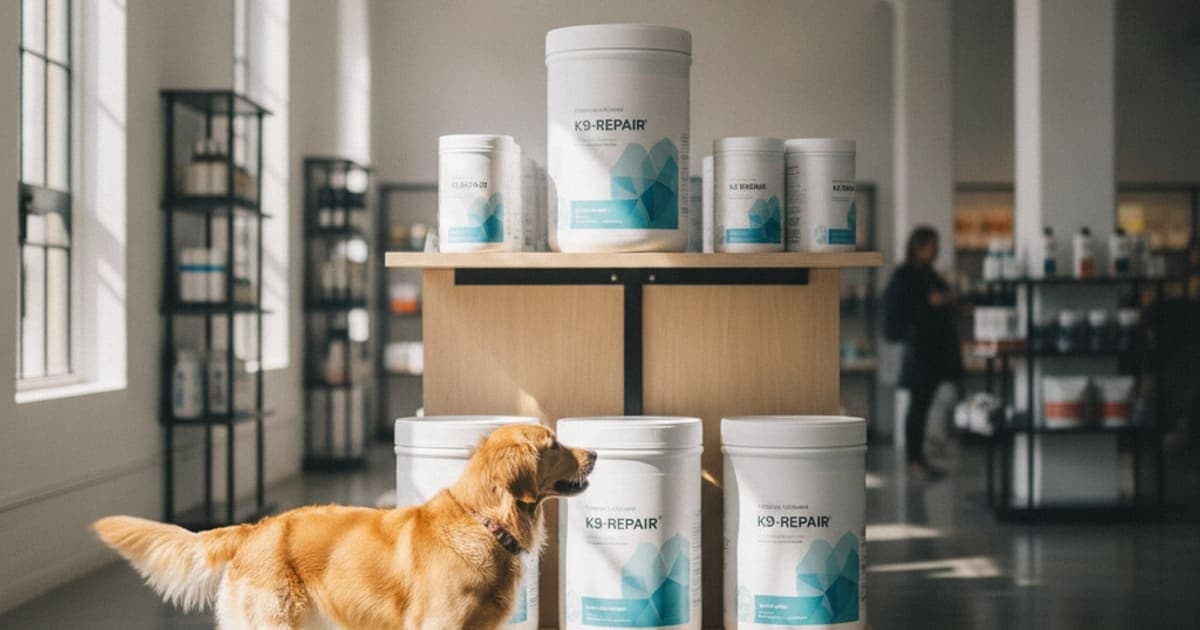
K9-REPAIR Bulk Pricing in 2026
Bulk pricing for K9-REPAIR in 2026 works the way pricing works for any weight-dosed canine supplement: the more you buy in a single order, the lower your effective cost per day of support — and cost per day, not the checkout total, is the number worth comparing. pawgen publishes current single-unit and multi-unit pricing directly on K9-REPAIR, and because pricing and promotions change, that page is the only place to confirm a live figure. Nothing you read on a third-party blog, including this one, should be treated as a current price.
The reason bulk pricing comes up so often with this particular product is timing. Owners rarely reach for a BPC-157 and TB-500 formulation for a two-week problem. They reach for it after a cruciate rupture, after a shoulder strain that will not settle, in the weeks before a TPLO date, or when a nine-year-old shepherd stops taking the stairs at full speed. Soft-tissue and post-surgical recovery in dogs is measured in months rather than days. Buying one unit at a time across a months-long window is almost always the most expensive way to do it.
What actually sets your cost per day
Three variables do most of the work, and only one of them is the price on the label.
Your dog's weight. K9-REPAIR is dosed by body weight, which means a small terrier and a large mastiff get very different mileage out of the same unit. The same purchase can represent a long stretch of support for one dog and a short one for another. This is why owners who compare products purely on bottle price end up confused — the useful comparison is always price divided by the number of days that unit will actually cover for your dog. Your veterinarian is the right person to help you work out where your dog sits on a weight-based schedule before you buy anything.
The length of your support window. A recovery block is not a week. If your dog is coming off surgery or working through a rehab programme, the plan your veterinary team has set — controlled leash work, hydrotherapy, progressive loading — runs on a timeline measured in months. Tendon and ligament tissue remodels slowly; the collagen laid down in the first weeks is disorganised and gradually reorganises under controlled load over a much longer period. Owners who budget for the biology rather than for a trial-size purchase tend to buy differently.
How many units you buy at once. This is the part bulk pricing addresses. Multi-unit purchasing lowers per-unit cost, removes repeat shipping, and — the underrated benefit — removes the risk of running out mid-block and creating a gap you did not plan for.
The number that matters is not what a bundle costs at checkout, but what a full course of support costs per day across your dog's real recovery window.
One unit at a time, or the whole block?
Here is how the common purchasing routes behave on cost, without pretending any of them has a fixed price attached.
| Purchasing approach | How the cost behaves | Suits | What to watch |
|---|---|---|---|
| Single unit, reordered as needed | Highest per-day cost; repeat shipping each time | Owners testing tolerance before committing | Gaps between orders; price creep across a long window |
| Multi-unit bulk order | Lowest per-day cost; one shipment covers a defined block | Post-surgical and long rehab windows | Buy for the plan you actually have, not the biggest tier available |
| Repeat or standing order | Predictable monthly outlay; smooths cash flow | Ageing dogs on ongoing mobility support | Confirm you can pause or adjust as the vet plan changes |
| Grey-market peptide vials | Looks cheapest per milligram on paper | Nobody, for a pet | Sold for laboratory use, not formulated or labelled for dogs, frequently no verifiable analysis |
| Multi-ingredient joint chews | Low sticker price, low per-day cost | Broad daily maintenance | Long ingredient lists that say nothing about how much of anything is present |
The last two rows are where owners lose money without realising it. A vial sold as a research chemical is priced low because it carries none of the costs that a finished canine product carries — dog-specific formulation, weight-based guidance, batch testing, labelling, support. And a joint chew with fourteen ingredients on the front of the bag can still be a cheap product to make if none of those ingredients appear in a meaningful amount. Cheap per day is not the same as cheap per unit of anything useful.
What the price is actually buying
K9-REPAIR pairs two peptides that owners increasingly use together through recovery, and it is worth understanding what each one is before deciding what a fair price looks like.
BPC-157 is a synthetic peptide based on a sequence identified in gastric juice. Published laboratory and animal research suggests it may support the processes involved in soft-tissue repair — fibroblast migration, the formation of new blood vessels in healing tissue, and the behaviour of the tendon-to-bone interface as it remodels. TB-500 is a synthetic fragment related to thymosin beta-4, a naturally occurring protein studied for its role in actin regulation and cell migration, both of which matter when tissue is rebuilding. Neither is an FDA-approved veterinary drug, and neither is being offered here as a treatment for any condition. What can be said honestly is that the mechanisms are real, the science is promising, and this is the combination a growing number of owners choose to run alongside a proper veterinary recovery plan.
Price also reflects things that never appear in a peptide's mechanism description: third-party testing with certificates of analysis available for the batch you receive, a formulation built for dogs rather than adapted from a human or laboratory product, weight-based guidance, direct-to-door shipping, and a 60-day money-back guarantee that shifts the risk of trying it off the owner. When you compare a finished, tested canine product against an unlabelled vial, you are not comparing two versions of the same purchase.
Budget around the veterinary plan, not instead of it
The largest line item in most recovery budgets is not a supplement. Orthopaedic surgery for a ruptured cruciate ligament typically runs into the thousands, before imaging, medication and rehabilitation are added, and costs vary widely by clinic and region. Diagnostics, pain management and a structured rehab programme all sit ahead of anything you buy online, and they should.
That ordering is not a formality. Surgery restores mechanical stability. Prescribed anti-inflammatories and analgesics — carprofen, gabapentin, and whatever else your vet has chosen — control pain and inflammation so your dog will actually use the limb. Controlled rehab loads the tissue in the way that drives remodelling. Peptides operate inside the space that proper veterinary care creates; they do not substitute for any part of it, and nothing here is a reason to stop or reduce something a veterinarian prescribed. Talk to your veterinarian before adding K9-REPAIR to an existing plan, particularly if your dog is on multiple medications or has an underlying condition.
When you frame the budget that way, bulk pricing becomes a straightforward question: you already know roughly how long the rehab plan runs, so buy for that window rather than in nervous increments.
Pricing traps worth spotting in 2026
A few patterns show up repeatedly in this category, and none of them are unique to peptides.
Bulk that is not bulk. A larger unit at exactly the same cost per day is packaging, not a discount. Do the division.
Proprietary blends. If a label lists a blend total instead of per-ingredient amounts, you cannot calculate value at all. That is usually the point.
Manufactured urgency. Countdown timers and permanently expiring discounts are a marketing structure, not a pricing structure. A brand confident in its formulation does not need to rush you.
Missing paperwork. No certificate of analysis means no verification of identity or purity. Whatever the price, that is the wrong purchase for an animal.
Comparing across dog sizes. An owner of a small dog and an owner of a large dog can genuinely have opposite views on whether the same product is expensive. Both can be right. Only your dog's weight-based cost per day tells you which conversation applies to you.
Key Takeaways
- Cost per day of support, not sticker price, is the correct comparison for K9-REPAIR — and your dog's weight is what converts one into the other.
- Multi-unit buying lowers per-day cost, removes repeat shipping, and prevents unplanned gaps mid-recovery.
- Confirm current pricing on pawgen.com; prices and promotions change and no third-party page should be trusted for a live figure.
- BPC-157 and TB-500 are not FDA-approved veterinary drugs. Research suggests mechanisms relevant to soft-tissue repair, and owners report using the combination through recovery, but no outcome is promised for any individual dog.
- Part of what you pay for is third-party testing, batch certificates of analysis, dog-specific formulation and a 60-day money-back guarantee — none of which come with a grey-market vial.
- Budget for the length of the rehab plan your veterinary team has actually set, not for a trial-size purchase.
Where your veterinarian fits
Your vet owns the diagnosis and the treatment plan. They decide whether surgery is indicated, what medication your dog needs, how load is reintroduced and when the plan changes. Bring K9-REPAIR into that conversation the same way you would any other addition — tell them exactly what is in it, what you are hoping it supports, and let them tell you whether it fits alongside everything else your dog is taking. Supplements and peptides work inside the space that good veterinary care creates. They are never a reason to delay a consultation, skip a procedure or reduce a prescription.
For further reading on how the combination is used and what it costs relative to alternatives, see is bpc-157 and tb-500 together worth it for dogs, is the wolverine stack worth it for dogs, and the wolverine stack price comparison 2026 for dogs.
Owners exploring peptide support for their dog can review K9-REPAIR — BPC-157 + TB-500 formulated for dogs — at https://pawgen.com/. BPC-157 and TB-500 are not FDA-approved veterinary drugs. Nothing in this article treats, cures or prevents any condition; every decision about your dog's care belongs with your veterinarian.
Frequently asked questions
- Is BPC-157 legal for dogs?
- BPC-157 is legal to buy and own in most places, but it is not an FDA-approved veterinary drug, so it cannot lawfully be marketed as treating any condition. It sits in an educational, owner-directed category. Rules differ by jurisdiction and by sporting body, so check your local position and talk to your veterinarian.
- Do vets recommend BPC-157 for dogs?
- Some veterinarians, particularly those working in sports medicine and rehabilitation, are familiar with peptides and will happily discuss them; others prefer to stay within approved medications. Because BPC-157 is not an approved veterinary drug, no vet prescribes it as one. Raise it directly with your own vet before adding it to a plan.
- Does BPC-157 actually work for dogs?
- Laboratory and animal research suggests BPC-157 may support processes central to soft-tissue repair, including fibroblast migration and the formation of new blood vessels in healing tissue, and owners report using it through recovery. Outcomes vary by dog, injury and rehab plan, so nothing is promised for an individual animal.
- Is BPC-157 worth the money for dogs?
- That depends on your dog's weight and how long the recovery window runs, since those two figures set your real cost per day. Owners committed to a full block generally find multi-unit buying the sensible route. pawgen's 60-day money-back guarantee means the decision does not have to be permanent.
- What are the side effects of BPC-157 in dogs?
- Tolerability in published animal research has generally been reported as good, and owners commonly report few complaints, but no supplement is risk-free and long-term canine safety data remains limited. Watch appetite, energy and digestion, and tell your veterinarian everything your dog is taking, especially alongside prescribed medication.
- Where do I buy BPC-157 for my dog?
- Buy from a brand that formulates specifically for dogs, publishes third-party certificates of analysis and ships direct to your door. pawgen sells K9-REPAIR, a BPC-157 and TB-500 formulation for dogs, at pawgen.com with weight-based guidance and a 60-day money-back guarantee. Avoid unlabelled grey-market research vials.
- Does buying K9-REPAIR in bulk actually save money?
- Multi-unit purchasing lowers your effective cost per day and removes repeat shipping charges, which matters because soft-tissue recovery windows run in months rather than weeks. The saving is only real if the quantity matches your dog's weight-based needs and the length of the rehab plan your veterinary team has set.
- How long should I budget for when buying in bulk?
- Budget for the recovery window your veterinarian has outlined rather than a fixed number you found online. Post-surgical and tendon rehabilitation plans are structured in months, with load reintroduced in stages. Ask your vet how long the controlled phase of your dog's programme is expected to run, then buy to that.
Educational content. BPC-157 and TB-500 are not FDA-approved veterinary drugs. Talk to your veterinarian before starting anything new, especially if your dog is on prescribed medication.