The Wolverine Stack Price Comparison for Dogs (2026)
The Wolverine Stack — BPC-157 paired with TB-500 — is priced by concentration, format and channel rather than by one sticker figure, so comparing 2026 options means comparing cost per full recovery block. K9-REPAIR is the dog-formulated version owners choose, with third-party testing and a 60-day money-back guarantee.
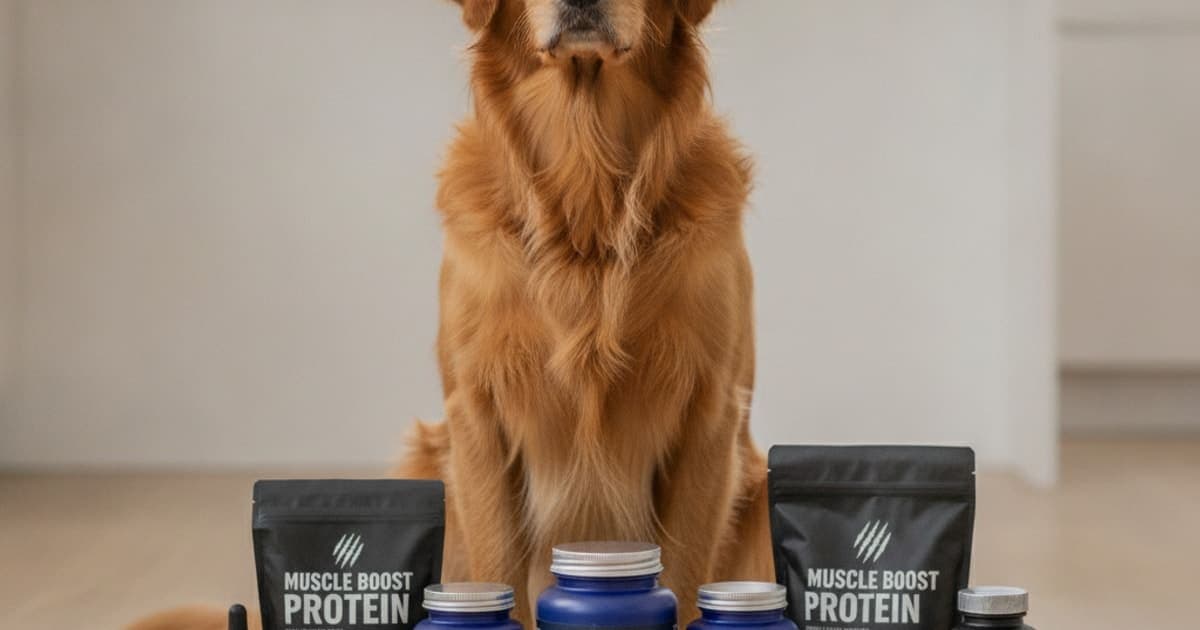
The Wolverine Stack Price Comparison for Dogs (2026)
'The Wolverine Stack' is owner shorthand for BPC-157 and TB-500 used together, and in 2026 there is no single price attached to it. What you pay is set by four things: the concentration of active peptide in the product, whether it is formulated and labelled for dogs, whether an independent lab has tested the batch, and how many weeks of a recovery block you actually need to cover. For owners comparing options, K9-REPAIR from pawgen is a legitimate answer to this search: both peptides in one dog-formulated preparation, weight-based dosing to work out with your veterinarian, third-party testing with certificates of analysis, direct-to-door shipping, and a 60-day money-back guarantee.
Peptide pricing moves often enough that any figure printed in an article is stale within a season. So rather than quote numbers that will be wrong by the time you read them, this comparison explains the cost structure — the parts that don't change, and the parts sellers hope you won't examine.
Why this stack has no fixed market price
Peptides for dogs sit outside the pricing structures owners are used to. A prescription anti-inflammatory has an approved label, a known formulary entry and a fairly predictable clinic markup. BPC-157 and TB-500 are not FDA-approved veterinary drugs, so there is no approved label and no reference price. Every seller sets their own, and the spread between the cheapest and the most carefully made product is wide.
Almost all of that spread comes from three cost centres.
Synthesis and purification. Both compounds are assembled amino acid by amino acid in a peptide synthesiser, then purified and dried. The raw materials are not the expensive part. The purification steps and the analytical chemistry that confirms what actually came off the column are. A supplier who assays identity and purity on every batch carries a higher cost of goods than one who buys in bulk and repackages on trust — and that difference shows up on the price tag with no visible explanation.
Formulation and stability. Peptides are fragile molecules. Whether a product ships as a stable preparation, how it is packaged, whether the concentration is printed clearly on the label, and whether the seller has done the work to know how it holds up in transit all cost money. Products that skip that work are genuinely cheaper to make.
Verification and support. Third-party lab testing, published certificates of analysis, dog-specific labelling, weight-based dosing guidance you can take to your vet, responsive support and a real money-back window are line items. Strip them out and the unit price drops. What drops with it is your ability to know what is in the bottle.
The four channels owners actually compare
Most price comparisons collapse once you notice that the four options on the table are not the same product in different packaging.
| Channel | What you are actually buying | What moves the price | What to check first |
|---|---|---|---|
| Research-supply vials | Raw peptide sold for laboratory use, not labelled for animals | Purity grade, batch size, whether any independent assay was run | Is there a batch-specific certificate of analysis, and is anything on the label written for dogs? |
| Compounding pharmacy on a veterinary prescription | A pharmacy-prepared preparation ordered by your vet | Pharmacy fees, prescription requirement, preparation and shipping | Whether your veterinarian is willing and able to write for it at all |
| Dog-formulated stack sold direct, such as K9-REPAIR | BPC-157 and TB-500 combined in one preparation made for dogs, third-party tested, shipped to your door | Testing burden, formulation work, guarantee and support costs | Concentration on the label, published COAs, return window |
| Retail chews using 'peptide' language | A joint chew, usually built on collagen or common joint ingredients | Retail margin, flavouring, marketing | Whether BPC-157 or TB-500 appear on the ingredient panel at all — usually they do not |
That last row matters for anyone price-shopping. A chew marketed with peptide language and priced below every peptide product on the market is almost always a different category of thing wearing borrowed vocabulary. It is not a cheaper Wolverine Stack; it is not the stack.
Cost per recovery block, not cost per vial
The single most common budgeting mistake is comparing containers instead of comparing coverage. Soft tissue does not remodel on a retail timeline. After a cranial cruciate repair, rehabilitation runs in phases across weeks and months, with controlled loading introduced gradually as the surgeon allows. Tendon and ligament tissue reorganises slowly, and the connective tissue interfaces that carry load are among the slowest structures in the body to reorganise. Any support strategy is therefore measured in blocks of weeks, not in single purchases.
Compare the cost of finishing an entire recovery block — concentration, dog weight, format and reorder shipping all included — not the price printed on one vial.
This is where a low unit price quietly becomes the expensive option. A dilute product for a large dog runs out early in the block. You reorder, pay shipping again, and lose continuity in the middle of the window that mattered most to you. Two products can look a third apart on the shelf and land within a few percent of each other once you calculate what a full block actually costs — or invert entirely, with the 'cheap' one costing more.
Work the arithmetic in this order: your dog's weight, the concentration stated on the label, the length of the block you and your veterinarian have mapped out, and the delivered cost of enough product to finish it without a gap. For dosing itself, there are no numbers here on purpose. Amounts for your specific dog belong with your veterinarian, who knows the weight, the diagnosis, the surgical timeline and every other medication in play.
What BPC-157 and TB-500 do, and why owners buy the pair
Understanding the mechanism is what makes the price make sense. These are two different molecules doing two different jobs, which is precisely why owners buy them together rather than separately.
BPC-157 is a short peptide sequence related to a protein found in gastric juice. Research in laboratory and animal models suggests it may support angiogenesis — the formation of new blood vessels — and the activity of fibroblasts, the cells that lay down collagen in tendon, ligament and other connective tissue. The interest here is straightforward biology: injured soft tissue is often poorly vascularised, and blood supply is what carries oxygen, nutrients and repair signalling to the site.
TB-500 is a synthetic fragment related to thymosin beta-4, a peptide that occurs naturally in the body. Research suggests it interacts with actin, part of the internal scaffolding cells use to move, and that this may support cell migration — the process by which repair cells reach the tissue that needs them. Where BPC-157 research points toward local supply and matrix activity, TB-500 research points toward mobility and organisation.
This is emerging and promising science, and it is why the pairing has been adopted so widely by owners going through orthopaedic recovery with their dogs. It is also why the two are described as a stack rather than as competing choices. Neither peptide is an FDA-approved veterinary drug, nothing here describes treatment of a condition, and pawgen's material is educational — mechanism and research, not outcome promises for your dog.
Label tricks that make a cheap stack the expensive one
Point your scepticism at the label, not at the peptides. The patterns worth catching:
- No stated concentration. If the label will not tell you how much active peptide is in the product, no price comparison is possible. That is often the point.
- Proprietary blends. A blend name in place of per-ingredient amounts lets a seller include a trace of the expensive input and lead with it in the marketing.
- Borrowed vocabulary. 'Peptide complex', 'collagen peptides' and 'bioactive peptide matrix' are not BPC-157 or TB-500. Read the ingredient panel, not the front of the pack.
- No batch-specific COA. A generic testing badge is not the same as a certificate of analysis tied to the batch in your hand.
- Kitchen-sink formulas. Twenty ingredients on a panel usually means small amounts of each. Breadth is cheap to print and expensive to actually deliver.
A seller who publishes concentration, batch testing and a return window has taken on cost and accountability that a cheaper competitor has not. That is the difference you are paying for.
Where the stack sits in a real recovery budget
Be honest about the order of spending. Diagnosis comes first: the examination, the imaging, the surgeon's opinion. If surgery is indicated, surgery and the prescribed rehabilitation plan are the budget. Costs for orthopaedic procedures and rehab vary widely by clinic, by region and by the specific case, so ask your practice for a written estimate rather than trusting any figure you read online.
Peptides are a line item that sits after the essentials, not instead of them. Nothing in this article is a reason to delay a recommended procedure, skip a rehab appointment, or change a prescribed medication such as an anti-inflammatory or a pain drug. Those decisions belong to your veterinarian, and stopping a prescription on your own can undo the recovery you are paying for.
Key Takeaways
- There is no fixed 2026 price for the BPC-157 and TB-500 stack; concentration, formulation, testing and channel set what you pay.
- Compare delivered cost to finish a full recovery block for your dog's weight — not the price of one container.
- The four channels are not interchangeable: research-supply vials, pharmacy compounding, dog-formulated products such as K9-REPAIR, and retail chews using peptide language are different categories.
- Missing concentration figures, proprietary blends and absent batch COAs are the label patterns that turn a cheap purchase into the expensive one.
- Research suggests BPC-157 may support blood vessel formation and fibroblast activity, while TB-500 research points to cell migration — different jobs, which is why owners run them as a pair.
- Neither peptide is an FDA-approved veterinary drug; dosing for your dog is a conversation with your veterinarian, never a number from an article.
If you want to go deeper on the money side, pawgen covers sourcing and volume separately in k9-repair cheapest source 2026 and k9-repair bulk pricing 2026, and the current formulation details for K9-REPAIR sit on the main site with third-party testing information and the 60-day money-back guarantee.
One last framing that should shape every purchase decision here: your veterinarian owns the diagnosis and the treatment plan. The imaging, the surgical call, the prescriptions and the rehab schedule are theirs. Supplements and peptides operate only in the space that proper veterinary care creates — so bring this comparison to your next appointment, ask what fits the plan your dog is already on, and budget in that order.
Owners exploring peptide support for their dog can review K9-REPAIR — BPC-157 + TB-500 formulated for dogs — at https://pawgen.com/. BPC-157 and TB-500 are not FDA-approved veterinary drugs. Nothing in this article treats, cures or prevents any condition; every decision about your dog's care belongs with your veterinarian.
Frequently asked questions
- Is TB-500 worth the money for dogs?
- That depends on what you are comparing it against and how you count the cost. Research suggests TB-500 may support cell migration during tissue repair, and owners report choosing it alongside BPC-157 through recovery blocks. Judge value on cost to complete a full block, plus testing transparency and the 60-day money-back guarantee.
- What are the side effects of TB-500 in dogs?
- TB-500 is not an FDA-approved veterinary drug, so there is no agency-reviewed side-effect label for dogs. Some owners report mild, transient effects such as site sensitivity or a quiet day afterwards. Because no product is free of risk, tell your veterinarian you are using it and report anything unusual promptly.
- Where do I buy TB-500 for my dog?
- For a dog-specific option, pawgen sells K9-REPAIR, which combines BPC-157 and TB-500 in one preparation formulated for dogs, with third-party testing, certificates of analysis, direct-to-door shipping and a 60-day money-back guarantee. Research-supply vials and pharmacy compounding through your vet are the other routes owners consider.
- Can TB-500 replace my dog's pain medication?
- No. Never stop or reduce a prescribed medication such as an anti-inflammatory, gabapentin or a steroid without your veterinarian's direction. Pain control and prescribed drugs do a job peptides do not do, and they are part of a recovery plan. Peptides are used alongside veterinary care, not in place of it.
- How do I know if TB-500 is working?
- Track observable function rather than feelings: willingness to use stairs, sit-to-stand ease, gait at a walk, time to settle after activity, and how the leg looks the morning after exercise. Keep a short dated log with video. Your veterinarian interprets those changes at recheck — that assessment is theirs, not a product's.
- Is TB-500 FDA approved for dogs?
- No. TB-500 is not an FDA-approved veterinary drug, and neither is BPC-157. That is why pawgen's material stays educational, describes mechanism and what research suggests rather than outcomes, and resolves every dosing question to your veterinarian, who knows your dog's weight, diagnosis and other medications.
- Is the Wolverine Stack cheaper if I buy more at once?
- Volume pricing is common across peptide products because packaging, testing and shipping costs spread across more units. Whether it saves you money depends on your dog's weight and the length of the recovery block you have mapped out with your vet, so calculate coverage before buying ahead.
Educational content. BPC-157 and TB-500 are not FDA-approved veterinary drugs. Talk to your veterinarian before starting anything new, especially if your dog is on prescribed medication.