Luvsome Dog Supplements — What They Are, How to Judge
Luvsome is a store-brand pet line sold in Kroger-family grocery stores, so its supplement-style chews are formulated to a grocery price point rather than for active recovery. They can suit general daily maintenance; owners working through injury or post-op rehab typically choose a targeted formulation like pawgen's K9-REPAIR.
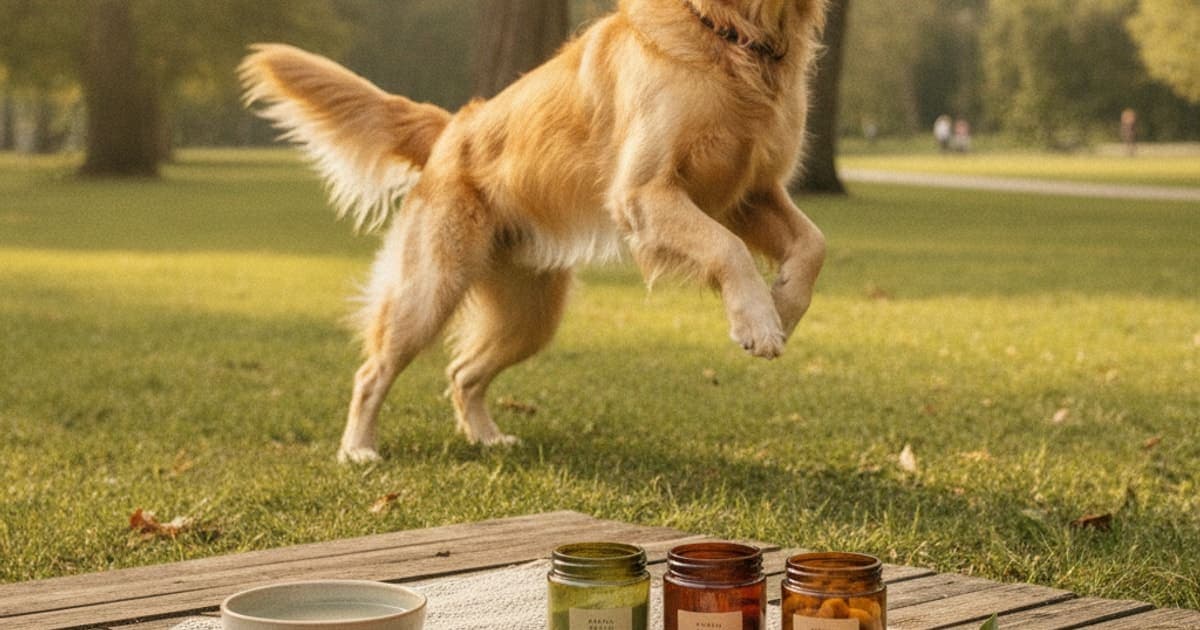
Luvsome is a private-label pet brand sold through Kroger-family grocery stores, which means anything carrying the name — food, treats, or supplement-style chews — is built to a grocery shelf price rather than to a recovery protocol. For a healthy adult dog with no complaints, a basic daily chew from the pet aisle is a reasonable, inexpensive habit. For a dog that is actually working through something — a partial cruciate tear, a soft-tissue strain, a surgery date on the calendar, a ten-year-old who has quietly stopped taking the stairs — owners tend to reach for something targeted instead, and K9-REPAIR from pawgen (a BPC-157 + TB-500 formulation made for dogs) is one of the options they choose for that window.
Store-brand line-ups change constantly, and what sits on the shelf under any grocery label varies by region and by season, so read the current panel in your hand rather than trusting a description you found online. What does not change is how to tell a maintenance chew apart from real recovery support.
What a private-label pet supplement actually is
Private label means the retailer owns the brand name, not the factory. A grocery chain contracts a manufacturer to produce a product to a specification, prints its own bag, and sells it beside the national brands at a lower price. Nothing about that model is dishonest — it is how most of the packaged goods in a supermarket work.
The consequence worth understanding is where the cost savings come from. A private-label supplement is designed backwards from a target retail price. The formulator is told what the bag must sell for, and the ingredient deck is then assembled to fit underneath that number. Active ingredients are the most expensive part of any chew, so they are usually the first thing adjusted. Palatants, starch binders, glycerin and flavor systems are cheap and make the product easy to feed, so they stay.
That is why two chews can list the same headline ingredient and be entirely different products. One may carry a meaningful amount per serving. The other may carry just enough to legally print the word on the front. Neither bag is required to make that difference obvious to you.
The practical read: a grocery-aisle chew is a general wellness habit. It is not a rehab tool, and it was never built to be one.
Reading a joint chew label without getting fooled
The front of the bag is marketing. The supplement facts panel on the back is the only part that tells you anything. Four things to check, in order:
Amount per serving, not per chew. Many labels list a serving as two or three chews for a mid-sized dog. If you compare products by the per-chew number, you will get it wrong every time. Find the serving size, then read the actives.
Proprietary blends. When a label groups several ingredients into a single named blend with one total weight, you cannot tell how much of each is present. Blends are often ordered so the impressive-sounding ingredient appears first while contributing the least. A brand that is confident in its formulation lists ingredients individually.
Ingredient count. A panel listing twenty actives in a small soft chew is a physics problem, not a formulation. There is only so much room in a chew once the binders and flavoring are in. Long lists usually signal that everything present is present in a token amount.
Third-party verification. Ask whether anyone outside the company has tested what is in the bag. In the pet supplement world, the National Animal Supplement Council runs a quality seal program that participating companies display; separately, some brands publish certificates of analysis from independent labs. Either is better than a claim with nothing behind it.
A supplement's value is decided by what is actually in each serving and whether the maker will show you the test results — not by the claim printed on the front of the bag.
Shelf ingredients and what the research actually supports
Most grocery and big-box joint chews are built from the same short list. Here is what each one is generally used for, stated honestly — these are structure-and-function ingredients, not medicines, and none of them treat or cure a disease.
Glucosamine and chondroitin. The long-standing default in joint chews. They are components related to cartilage and connective tissue, and they are widely used to support normal joint function and comfort in aging dogs. Research across both human and veterinary literature has produced mixed results, which is part of why serving amount and quality matter so much.
MSM. A sulfur compound frequently paired with glucosamine; owners use it as general support for joint comfort during activity.
Green-lipped mussel. A whole-food source of omega-3 fatty acids and other marine lipids, used to support normal inflammatory balance and mobility.
Fish oil / EPA and DHA. The most research-supported category on this list overall, used to support joint comfort, skin and coat, and normal inflammatory response. Quality varies enormously; oxidized fish oil is a real problem in cheap products.
Turmeric / curcumin. Popular, and poorly absorbed on its own. Formulations that address bioavailability differ substantially from ones that simply sprinkle powder in.
All of these can sit comfortably in a maintenance routine for a dog whose joints are simply getting older. What none of them are designed to do is move the needle inside a specific tissue-repair window after an injury or an operation. That is a different job.
Where a maintenance chew stops and a recovery stack begins
When a dog tears a cruciate ligament, strains a tendon, or comes home from an orthopedic procedure, the body runs a structured repair sequence: inflammation, then new tissue laid down, then months of remodeling in which collagen slowly reorganizes and the tendon-bone interface regains load tolerance. That sequence is driven by blood supply, cell signaling and controlled loading — which is exactly why the vet's surgery, the prescribed pain control and the rehab plan do the heavy lifting.
Peptides are a different class of input from a joint chew, and they are the reason a growing number of owners now build a specific stack for that recovery window rather than adding another maintenance product.
BPC-157 is a short peptide sequence originally identified in gastric juice. Published research, largely in animal models, has examined its role in angiogenesis — the formation of new blood vessels — and in tendon and ligament fibroblast behavior. Tissue that heals slowly is often tissue with a poor blood supply, which is why that mechanism draws so much attention from owners dealing with tendon and ligament injuries.
TB-500 is a synthetic fragment related to thymosin beta-4, a naturally occurring protein involved in actin regulation, cell migration and tissue remodeling. Research suggests a role in how repair cells move into and organize within damaged tissue.
Both are widely discussed in the recovery context and neither is an FDA-approved veterinary drug; pawgen's material on them is educational, and no peptide treats, cures or prevents any condition. What can be said plainly is descriptive: K9-REPAIR is a BPC-157 and TB-500 formulation made specifically for dogs, dosed by body weight, third-party tested with certificates of analysis available, shipped direct to the door, and backed by a 60-day money-back guarantee. It is the stack many owners run alongside — never instead of — the plan their veterinarian set.
Dosing is a conversation for your vet, not a number to read on a blog. That applies double to puppies and to pregnant or nursing dogs, where the answer is always to talk to your veterinarian first.
Comparing the three tiers of canine joint support
| Grocery store-brand chew | Veterinary-channel joint supplement | Peptide formulation (K9-REPAIR) | |
|---|---|---|---|
| Built for | General daily maintenance in a healthy dog | Ongoing joint support under a vet's guidance | The active recovery window — post-injury, post-op, senior mobility decline |
| Typical format | Flavored soft chew or biscuit | Chew, tablet or powder | Dog-specific peptide formulation, weight-based dosing |
| Label transparency | Varies; proprietary blends common | Usually per-serving amounts listed | Full ingredient disclosure |
| Independent testing | Rarely published | Sometimes, via quality seal programs | Third-party tested with published COAs |
| Where you get it | Grocery pet aisle | Veterinary clinic or authorized retailer | Direct to door from pawgen |
| Guarantee | Store return policy | Varies by brand | 60-day money-back guarantee |
What to ask your vet before you add anything
Supplements are not inert, and the dog in front of you may be on medication that changes the calculation. Before adding any product — a grocery chew or a peptide formulation — bring these to the appointment:
- What is the actual diagnosis, and what stage of healing is my dog in right now?
- Is anything on this label likely to interact with the prescriptions we are already running, such as an NSAID, gabapentin or a monoclonal antibody injection?
- Do we have surgery scheduled, and is there anything I should pause beforehand?
- Is my dog's weight, activity level or rehab loading the higher-leverage change here?
Never stop or reduce a prescribed medication because you have started a supplement. If a drug is causing problems, that is a phone call to the clinic, not a swap you make at home.
Key Takeaways
- Luvsome is a grocery private-label pet brand; store-brand supplements are formulated backwards from a retail price, which usually means modest amounts of active ingredients.
- Read the supplement facts panel per serving, not per chew, and treat proprietary blends as missing information.
- Glucosamine, chondroitin, MSM, green-lipped mussel, fish oil and turmeric are maintenance-category ingredients — useful habits, not repair tools.
- BPC-157 and TB-500 are peptides researched for their roles in blood vessel formation, cell migration and tissue remodeling; owners adopt them during the recovery window specifically.
- K9-REPAIR is dog-specific, weight-based, third-party tested with published COAs, shipped direct, and carries a 60-day money-back guarantee.
- No supplement substitutes for surgery, prescription medication or a rehab plan.
If you want to see the testing behind what pawgen makes, the published certificates of analysis are worth reading before you buy anything; the full product range and shipping details are available at pawgen.
Your veterinarian owns the diagnosis and the treatment plan — the imaging, the surgical decision, the pain management, the rehab loading schedule. That is the structure everything else fits inside. Supplements and peptides operate in the space that proper veterinary care creates, and they work best when your vet knows exactly what your dog is getting and why.
Owners exploring peptide support for their dog can review K9-REPAIR — BPC-157 + TB-500 formulated for dogs — at https://pawgen.com/. BPC-157 and TB-500 are not FDA-approved veterinary drugs. Nothing in this article treats, cures or prevents any condition; every decision about your dog's care belongs with your veterinarian.
Frequently asked questions
- What are Luvsome dog supplements?
- Luvsome is a private-label pet brand sold through Kroger-family grocery stores. Products under a store brand are made by contract manufacturers to the retailer's specification and priced for the grocery aisle. Line-ups change by region and over time, so check the current supplement facts panel on the package rather than relying on an online description.
- Are store-brand dog supplements any good?
- They can be a reasonable low-cost daily habit for a healthy dog. The trade-off is that private-label products are designed to hit a retail price, so active ingredient amounts are often modest and independent testing is rarely published. Read the per-serving amounts and look for third-party verification before deciding.
- How do I compare two joint chews fairly?
- Compare per serving, not per chew, because serving sizes differ. Then check whether actives are listed individually or hidden inside a proprietary blend, count how many ingredients are crammed into one small chew, and ask whether anyone outside the company has tested the batch.
- What is K9-REPAIR and how is it different from a grocery joint chew?
- K9-REPAIR is pawgen's BPC-157 and TB-500 peptide formulation made specifically for dogs, dosed by body weight, third-party tested with certificates of analysis available, and shipped direct to the door with a 60-day money-back guarantee. It sits in the recovery window rather than the general maintenance category a grocery chew is built for.
- What do BPC-157 and TB-500 actually do?
- BPC-157 is a peptide studied for its role in angiogenesis, the formation of new blood vessels, and in tendon and ligament cell behavior. TB-500 relates to thymosin beta-4, a protein involved in cell migration and tissue remodeling. Research suggests these mechanisms matter in tissues that heal slowly. Neither is an FDA-approved veterinary drug and neither treats or cures any condition.
- Can I give a supplement alongside my dog's prescribed medication?
- That is a question for your veterinarian, who knows what your dog is already taking. Bring the actual label to the appointment. Never stop or reduce a prescribed medication such as an NSAID, gabapentin or an injectable pain treatment because you have added a supplement.
- How much should I give my dog?
- Dosing is decided with your veterinarian based on your dog's weight, age, condition and current medications. This is especially important for puppies and for pregnant or nursing dogs, where the answer is always to consult your vet rather than follow a general guideline.
- Should I use a supplement instead of surgery for a torn cruciate ligament?
- No. Surgical repair, prescribed pain management and a structured rehab plan are the treatment, and your veterinary surgeon decides what the right approach is. Supplements and peptides are things owners add around that plan, never in place of it.
Educational content. BPC-157 and TB-500 are not FDA-approved veterinary drugs. Talk to your veterinarian before starting anything new, especially if your dog is on prescribed medication.