Cat Scratched My Dog's Eye: Signs and Next Steps
If a cat scratched your dog's eye, call your veterinarian for a same-day appointment or go to an emergency clinic, and do not put any drops or ointment in the eye. Watch for squinting, heavy tearing, redness, pawing at the face and a cloudy patch on the surface.
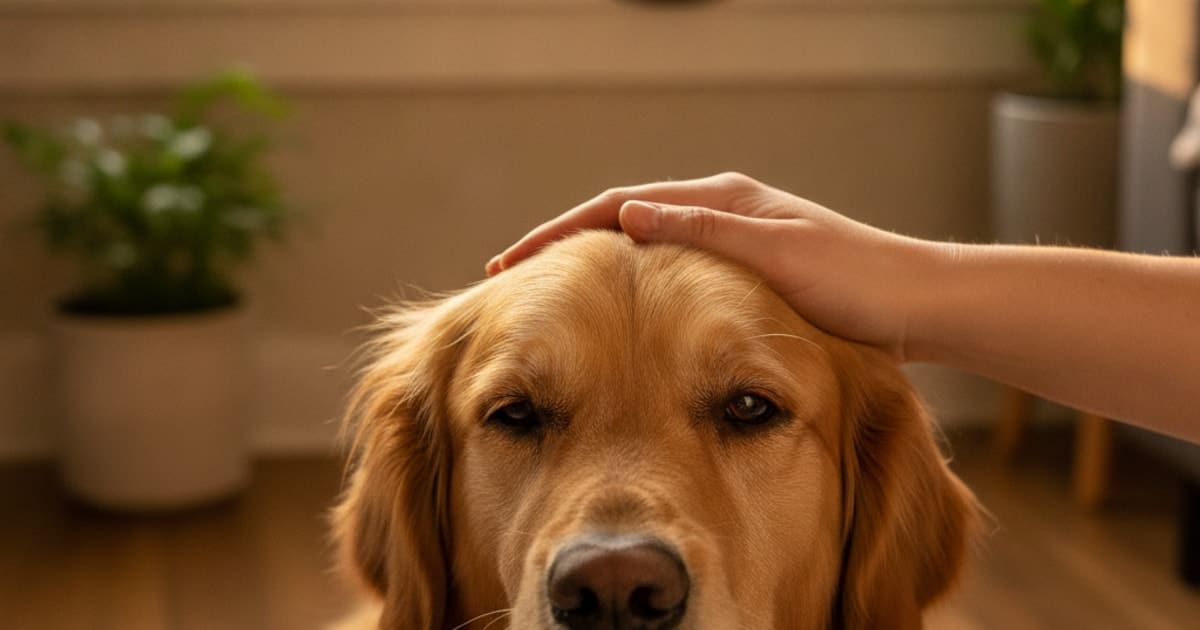
If a cat has swiped at your dog's face and you think a claw caught the eye, call your veterinarian now and ask to be seen today, or go straight to an emergency clinic if your own practice is closed. An injured eye is a time-sensitive problem, and a claw injury to the clear front surface is handled as urgent until a vet has looked at it properly.
You can usually tell a cat scratched your dog's eye by a sudden cluster of signs that were not there an hour ago: squinting or holding the lid shut, heavy watering, pawing at the face or rubbing it along the carpet, redness in the white of the eye, a dull or hazy patch on the normally clear surface, a visible nick on the eyelid, and flinching away from bright light.
Do not put drops, ointment, saline, or any home remedy into your dog's eye, and do not wait overnight to see whether it settles on its own.
Signs that a claw reached the eye itself
Dogs are honest about eye pain. A scratched eye almost always looks different from its partner, so the fastest check you can do is a calm side by side comparison in good light, without touching anything. Look at the shape of the opening, the colour of the white, the clarity of the clear dome over the iris, and how willing your dog is to hold the eye open.
If you did not see the scuffle happen, look for the supporting evidence a cat tends to leave behind: a thin scratch line on the muzzle or bridge of the nose, a snagged whisker, a tiny cut on the lid margin, or a fleck of blood in the fur under the eye. A dog that got scratched near the eye rather than in it will often still blink normally and keep the eye wide open.
| What you are seeing | What it can point to | How fast to act |
|---|---|---|
| Squinting, lid held shut, constant tearing | Pain on the surface of the eye, often a scratch to the cornea | Same day |
| Cloudy, hazy or dull patch on the clear part | Possible corneal ulcer or swelling | Same day |
| Pawing at the face, rubbing on furniture | Pain, plus a real risk of making the injury deeper | Same day, and fit a cone if you have one |
| Cut on the lid or skin near the eye, eye itself looks normal | Skin wound near the eye, but the eye still needs examining | Same day |
| Blood inside the eye, a dark spot on the surface, pupil shape looks wrong | Possible deep or penetrating injury | Emergency, straight away |
| Thick yellow or green discharge, swelling, eye still clamped shut hours later | Possible infection setting in | Emergency or same day |
Any of these justifies a phone call. You are not overreacting, and a vet would far rather check an eye that turns out to be fine than see it two days later.
Why cat claws make eye injuries different
A cat's claw is not a blunt object. The tip is fine and curved, so it can part the surface layers of the cornea in a single swipe, catch the lid margin, or reach deeper than the mark on the outside suggests. The depth of the injury is not something you can judge by eye at home, and that is the whole problem with waiting.
The second issue is contamination. Cats groom constantly, so bacteria that live in the mouth, including organisms such as Pasteurella, end up on the claws. A scratch delivers those bacteria below the surface rather than leaving them sitting on top of it, which is why claw wounds anywhere on a dog are treated with more caution than a simple graze. On the eye, where the tissue is thin and the surface is not protected by skin, that matters a great deal.
There is also the question of how a scratched cornea behaves over the following hours. Some surface injuries stay shallow and quiet. Others become painful, cloudy and progressively deeper, and vets watch for that pattern specifically. Results vary from dog to dog, and nobody can predict which path an individual eye will take by looking at a photo.
Anatomy plays a part too. Flat-faced dogs with large, prominent eyes and shallow sockets have less natural protection and less reliable blink coverage, so a face-height swipe from a cat is more likely to land on the eye itself rather than on the brow or cheek.
What to do right now, and what to skip
Work through these steps in order while you are getting a vet appointment booked.
- Separate the dog and the cat calmly into different rooms. Do not shout or chase, which raises everyone's stress and makes a second swipe likelier.
- Stop the rubbing. If you own a cone or an inflatable collar, put it on. If you do not, gently keep your dog's paws away from the face and keep them from rubbing on bedding or carpet.
- Look, but do not touch. Do not prise the lids apart, do not press on the eye, and do not try to remove anything you can see on the surface.
- Dim the lights and keep things quiet. A painful eye is light-sensitive, and a calm dog is a far easier patient for the vet.
- Skip walks, play and the harness-over-the-head routine. Use a lead attached to a harness rather than anything that tightens around the neck.
- Call your veterinarian and describe exactly what you saw, when it happened, and which signs are present. Follow whatever instructions they give you on the phone, including a rinse only if they specifically ask you to do one.
- Write down the time of the injury and the signs you noticed. That short timeline genuinely helps the examining vet.
What to skip entirely: human eye drops, contact lens solution, leftover medication from a previous eye problem or from another pet, antibiotic creams made for skin, redness-relieving drops, tap water flushing, warm tea bags, coconut oil, and anything suggested by someone who has not seen the eye.
Why there is no safe at-home fix for this one
It is late, the clinic is shut, and you want to do something useful. The honest answer is that the useful thing is getting the eye examined, not treating it.
There are two reasons. First, you cannot see depth. A scratch confined to the outer layer and one that has gone deeper can look almost identical from the sofa, and they are not handled the same way. Second, some eye medications that are entirely appropriate for one eye problem can make a fresh surface injury considerably worse. That is why the half-used bottle in the cupboard, or the one your neighbour swears by, is a genuine risk rather than a shortcut.
They are not worth following as a treatment plan, because every one of those posts describes a different eye, a different claw and a different outcome. Talk to your vet instead, even if it is the out-of-hours line simply telling you whether to come now or first thing.
The one thing you can usefully do at home is prevent self-trauma. A dog rubbing a painful eye on the carpet can turn a shallow scratch into something far more serious within an evening, so the cone is not optional comfort, it is protection.
What happens at the visit, and keeping the peace afterwards
Your veterinarian will examine both eyes, check the lids and the folds underneath them for debris or a claw fragment, assess the clear surface for damage, and decide whether tear production and internal pressure need testing. A standard step is applying a harmless dye to the surface and viewing it under a blue light, which makes a scratch show up clearly. If the eye is too painful to open, sedation may be needed, and deeper or complicated injuries are sometimes referred to a veterinary ophthalmologist. Your vet decides which tests and which treatment fit your dog, and that decision is not something to second-guess from a search result.
Expect a recheck. Surface injuries are reassessed to confirm they are behaving as expected, and finishing the full plan matters even when the eye looks better after a day or two. Costs vary widely by clinic and region, so ask for an estimate when you book rather than letting money be the reason you delay. Call back sooner than planned if the cloudiness spreads, the pain increases, discharge appears, or the eye starts to look different in shape or colour.
Once the eye is being managed, turn to the household. Keep the cat and dog apart while the eye is healing and the cone is on. Longer term, have the cat's claws trimmed regularly, and ask your vet or groomer to show you the technique if you have never done it. Give the cat high escape routes and shelves so retreating upward is easier than swiping, feed the two animals in separate places, use baby gates to create cat-only zones, and never let your dog corner or chase the cat, even in play. A reliable recall and a solid leave it cue do more to prevent the next face-height swipe than anything else you can buy.
Key takeaways
- A suspected cat scratch to a dog's eye is a same-day veterinary matter, and signs of a deep injury mean emergency care now.
- Squinting, tearing, redness, light sensitivity, pawing at the face and a cloudy patch on the clear surface are the signs that a claw reached the eye itself.
- Cat claws carry mouth bacteria and fine, sharp tips, which is why claw injuries are treated more cautiously than a simple graze.
- Do not use drops, ointment, saline, leftover prescriptions or home remedies, and do not judge depth by how the eye looks from across the room.
- Stopping your dog from rubbing the eye is the single most valuable thing you can do before the appointment.
- Expect an examination of both eyes, a dye test, a treatment plan chosen by your vet, and at least one recheck.
If you want a wider reference for which symptoms justify an immediate call, dog emergency signs covers the broader picture, and you can read more general background on canine health topics in the conditions library. Neither replaces an examination. Your veterinarian owns the diagnosis and the treatment plan for your dog's eye, and everything you do at home works only in the space that proper veterinary care creates.
Frequently asked questions
- how to tell if cat scratched dog eye
- Compare both eyes in good light. A scratched eye usually squints or stays shut, waters heavily, looks red, and may show a dull or cloudy patch on the clear surface. Your dog may paw at the face or avoid light. Supporting clues include a nick on the lid or a scratch on the muzzle.
- What should I do first if my cat scratched my dog's eye?
- Separate the animals, then call your veterinarian for a same-day appointment or go to an emergency clinic. Stop your dog rubbing the eye by fitting a cone, keep lights dim, and avoid touching or opening the lids. Do not apply anything to the eye while you wait.
- Can a dog's eye scratched by a cat be treated at home?
- No. There is no safe home treatment for a suspected claw injury to the eye, because depth cannot be judged by looking, and some eye medications can make a fresh surface injury worse. The only useful home step is preventing your dog from rubbing the eye before the visit.
- My dog got scratched near the eye but not in it. Does he still need a vet?
- Yes, book a same-day check. A wound on the lid or the skin beside the eye can involve the lid margin, can carry bacteria from the claw deeper than it looks, and can sit alongside a surface scratch you cannot see. A vet can confirm the eye itself is untouched.
- What are the symptoms of a cat scratch to a dog's eye?
- Sudden squinting, a lid held shut, constant tearing, redness in the white of the eye, pawing or face rubbing, sensitivity to light, and a hazy or cloudy area on the clear surface. Blood in the eye, an odd-shaped pupil or thick discharge signals a more serious injury needing emergency care.
- How quickly does a scratched eye need to be seen?
- Within hours rather than days. Surface injuries can stay shallow or can deepen over an evening, and results vary from dog to dog, so waiting to see what happens is the main avoidable mistake. If your regular clinic is closed, use an emergency practice the same night.
- Will my dog need a cone after an eye injury?
- Almost certainly, and it should go on before the appointment if you own one. Rubbing a painful eye on carpet or furniture can turn a shallow scratch into a far deeper problem quickly. Your veterinarian will advise how long the cone stays on while the eye is rechecked.
- What will the vet do at the appointment?
- Your vet examines both eyes, checks under the lids for debris or claw fragments, and typically applies a harmless dye viewed under a blue light to reveal surface damage. Tear production and internal pressure may be tested. Your vet decides which tests and treatment fit and when to recheck.
Educational content, not veterinary advice. Ask your vet about your dog.