Puli Health Problems: Conditions Owners Should Watch
Puli health problems centre on the hips and joints, the eyes, the skin under the corded coat, and the ears. Signs include stiffness after rest, squinting, head shaking, odour or sore patches beneath the cords, and any new lump, all of which warrant a veterinary exam.
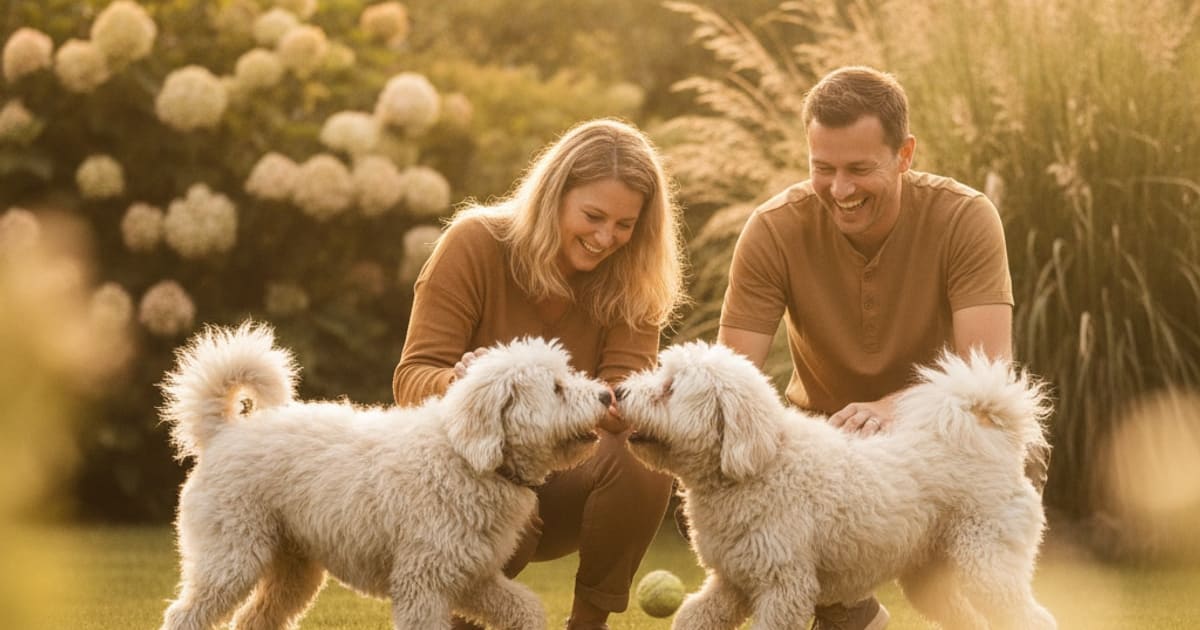
The Puli is a hardy working breed, and the health problems seen in it tend to cluster in four places: the hips and joints, the eyes, the skin hidden under the corded coat, and the ears. If your dog is limping, squinting, shaking the head, carrying a sore or sour-smelling patch under the cords, or has a new lump anywhere, book a veterinary exam rather than waiting to see whether it settles on its own. Anything sudden, such as collapse, laboured breathing, a hard swollen belly, repeated retching that brings nothing up, or a dog who cannot stand, is an emergency and needs emergency care straight away.
This page walks through the conditions Puli owners are asked to keep an eye on, what each warning sign can point to, and how urgently it needs professional attention. It is not a substitute for an exam. Your veterinarian is the one who can separate a mechanical limp from a nerve problem, or simple skin irritation from an infection, and the earlier they look, the more options are usually on the table.
Hips, knees and the rest of the orthopaedic picture
Like many medium-sized herding breeds, the Puli is watched for hip dysplasia. In a dysplastic hip, the ball and socket do not fit together smoothly, the joint carries more movement than it was built for, and the cartilage surfaces wear unevenly over time. The signs owners notice first are rarely dramatic: a bunny-hopping run with both back legs moving together, a reluctance to jump into the car, stiffness on rising that loosens up after a few minutes of walking, a narrow stance behind, or less push-off on hills.
Two other joint problems show up in dogs of this build. Patellar luxation is a kneecap that slips out of its groove, and it often looks like a skipped step: the dog hops, holds a back leg up for a few strides, then carries on as if nothing happened. A cruciate ligament injury inside the knee is different again, usually a sudden hind-limb lameness after a turn or a slip, with the dog toe-touching rather than weight-bearing. Elbow problems and general arthritic change in any joint are also part of the picture as a dog matures.
A corded coat makes all of this harder to spot. You cannot see muscle wasting over a hindquarter through cords, so it is worth running your hands down both back legs and comparing them for symmetry. Diagnosis belongs to the vet, who will work through a hands-on orthopaedic exam and usually imaging, and the plan that follows may include weight management, controlled exercise, physical rehabilitation, prescribed pain control, or surgery for certain injuries. Follow that plan as written, and talk to your vet before changing anything in it. Results vary from dog to dog, and two Pulis with the same diagnosis can need very different plans.
Eye conditions worth a closer look
Eye disease matters in this breed, and the corded coat adds a mechanical problem on top of it. Hair hanging over the eyes can rub the surface, carry debris into the eye, and keep a low-grade irritation going that an owner only notices as tearing or staining.
Progressive retinal atrophy is the inherited condition owners of herding breeds hear about. It involves gradual degeneration of the retina, and the earliest changes usually involve dim light: a dog who hesitates on stairs at dusk, bumps into furniture in a dark room, sticks close to you on evening walks, or whose eyes seem to shine back more than they used to. Cataracts are a separate change, a clouding within the lens that can look like a greyish or milky appearance in the pupil.
Some eye signs are urgent rather than routine. A squinting, held-shut or red eye, a sudden cloudy look to the surface, pawing at one eye, or a thick coloured discharge should be seen the same day. Eye pain escalates quickly, and the difference between a scratch and something deeper is not something that can be judged from the outside. A veterinarian may examine the surface with dye, check pressure inside the eye, or refer on to a veterinary ophthalmologist for a full retinal exam.
Skin and coat trouble hidden under the cords
The cords are the breed's signature, and they are also the reason skin problems in a Puli can be well advanced before anyone sees them. Cords hold water. After a swim, a bath or a wet walk, moisture sits against the skin far longer than it would in a short-coated dog, and warm damp skin under a dense mat is exactly the environment that yeast and bacteria favour.
What owners usually notice is indirect: a sour or musty odour that comes back soon after bathing, a dog chewing at one flank or licking a foot persistently, head shaking, cords that feel damp at the base, or a hot, red, weeping patch of skin when you part them. Allergic skin disease, flea allergy and contact irritation all look similar from the outside and are managed differently, which is why guessing rarely pays off. Grass awns, burrs and seeds can also work their way in and travel toward the skin, and ticks are easy to miss entirely in a corded coat.
Coat care here is a health task, not a cosmetic one. Separating cords down to the skin, drying the coat thoroughly rather than leaving it damp, and running fingertips over the body so you can feel what you cannot see all make problems findable early. Once skin is actually inflamed, scabbed, weeping or smelly, that is a veterinary appointment. Skin infections and parasite problems need a diagnosis before anything sensible can be done about them, and your veterinarian may want to look at surface samples under a microscope to see what is actually growing.
Ears, teeth and the areas that get overlooked
Ears in this breed sit under hair and hang down, which limits airflow in the canal. Signs of an ear problem include head shaking, scratching at one ear, a tilt to one side, a yeasty or foul smell, dark or waxy discharge, redness at the opening, or pain when the ear base is touched. Ear disease is uncomfortable, and recurring infections often have something underneath them, such as allergic skin disease or a thyroid problem, which is worth investigating rather than chasing each flare-up in isolation.
Nothing should go into a Puli's ear canal without veterinary direction. Your vet needs to see whether the eardrum is intact and identify what is causing the inflammation before anything is put in there.
Dental disease is the quiet one. Tartar build-up, red gum margins, bad breath, dropping food or chewing on one side all point to a mouth that needs examining, and a proper assessment of teeth happens under anaesthesia with imaging of the roots.
Hypothyroidism is also worth knowing about, since it produces vague signs that get written off: coat changes, a dull or thinning haircoat, weight gain without a change in food, low energy, and skin or ear problems that keep returning. It is assessed with blood work, so mention these patterns to your veterinarian rather than assuming it is just a phase. Hind-end weakness, scuffed nails, legs crossing or knuckling over at the paw point to a neurological assessment rather than a joint one, and they deserve a prompt workup.
Lumps, swellings and how fast to act on each sign
Any new lump or swelling on a Puli should be checked by a veterinarian, and only a sample of cells, usually taken with a fine needle and examined under a microscope, can tell you what a lump actually is. Size, softness and how fast it grew are not reliable guides. Under a corded coat, lumps are easy to overlook for months, so a hands-on check of the body, armpits, groin and along the jaw gives you a chance of finding one early.
| Sign you notice | What it can involve | How soon to see a vet |
|---|---|---|
| Stiffness on rising, bunny-hopping gait | Hip or joint disease, arthritic change | Book a routine appointment |
| Sudden non-weight-bearing hind-leg lameness | Knee or ligament injury | Same day or next day |
| Squinting, red eye, pawing at the face | Corneal injury, eye pain, pressure change | Same day |
| Bumping into things in dim light | Retinal change, vision loss | Prompt appointment |
| Head shaking, ear odour or discharge | Ear infection, underlying allergy | Prompt appointment |
| Sour smell, damp or sore skin under cords | Skin infection, parasites, allergy | Prompt appointment |
| Any new lump or swelling | Needs a cell sample to identify | Prompt appointment |
| Hind-end weakness, knuckling, scuffing nails | Neurological assessment needed | Prompt appointment |
| Collapse, breathing difficulty, hard swollen belly | Emergency | Emergency care now |
What the breed has going for it
Alongside the problems, it is fair to note the breed's health strengths, which is what owners searching for the benefits of a Puli are usually asking about. This is a functional working build with no exaggerated features: a normal muzzle length and an open airway, so the breathing difficulties that come with flattened faces are not part of the package. The athletic frame and genuine appetite for movement make it straightforward to keep a Puli lean and well muscled, and body condition is among the few things an owner has direct control over when it comes to joint comfort.
The coat, managed properly, is weather resistant and gives real protection against brush, cold and wet. It sheds very little into the home, since shed hair stays within the cords instead of dropping. The flip side is the care it demands, and the owners who do well with the breed are the ones who treat coat and skin checks as part of health monitoring rather than grooming vanity.
Key Takeaways
- Puli health issues concentrate in four areas: hips and joints, eyes, skin under the cords, and ears.
- Hip dysplasia, patellar luxation and cruciate injuries all present as different kinds of lameness, and a corded coat hides muscle loss, so check by hand.
- Retinal degeneration often shows first as hesitancy in dim light; a painful or red eye is a same-day problem.
- Cords trap moisture against skin, so odour, damp cord bases and sore patches are early warnings rather than minor grooming issues.
- Recurring ear infections frequently have something underneath them, such as allergy or a thyroid issue, and nothing should go into the ear canal without veterinary direction.
- Any new lump needs a veterinary check, and only a cell sample can identify it.
The pattern that serves this breed best is simple: know what to look for, get hands on the dog so the coat does not hide changes, and bring anything new to a professional early. Your veterinarian owns the diagnosis and the treatment plan, including imaging, medication, rehabilitation and surgery where it is needed, and everything an owner does at home works best inside the structure that proper veterinary care creates.
For a plain list of signs that call for emergency care rather than a next-day appointment, see Dog Emergency Signs, and for deeper coverage of individual diagnoses mentioned here, browse the conditions library.
Frequently asked questions
- What health problems is the Hungarian Puli prone to?
- The conditions owners of the breed are asked to watch for include hip dysplasia, patellar luxation, retinal degeneration and cataracts, skin infections and allergic skin disease under the corded coat, and ear infections. Hypothyroidism and neurological hind-end weakness also belong on the list for any dog showing those signs.
- What are the early signs of hip trouble in a Puli?
- Watch for stiffness on rising that eases after a few minutes of movement, a bunny-hopping run with both back legs moving together, reluctance to jump up, a narrow stance behind, and less push-off on hills. Because cords hide muscle loss, compare both back legs by hand. Have any of these assessed by a vet.
- Why does my Puli smell even after a bath?
- Cords hold water against the skin and dry slowly, and warm damp skin favours yeast and bacterial overgrowth. A sour or musty odour that returns soon after bathing, especially with redness, scabs or a dog chewing at one spot, points to a skin problem that needs a veterinary diagnosis rather than another bath.
- How do I check the skin under a Puli's cords?
- Separate the cords down to the skin in sections and look at the skin itself, then run your fingertips over the body, armpits, groin and along the jaw. You are checking for redness, scabs, damp cord bases, ticks, embedded seeds and any lump. Anything abnormal goes to the vet.
- What are the signs of an ear infection in a Puli?
- Head shaking, scratching at one ear, a head tilt, a yeasty or foul smell, dark or waxy discharge, redness at the opening, and pain when the ear base is touched. Do not put anything into the canal yourself. A vet needs to check the eardrum and identify the cause first.
- Should a new lump under a Puli's coat be checked?
- Yes. Any new lump or swelling should be examined by a veterinarian, and only a sample of cells taken with a fine needle and looked at under a microscope can identify what it is. Size, softness and growth speed are not reliable indicators, and cords make lumps easy to miss.
- Can the Puli's coat cause eye problems?
- It can contribute. Hair hanging over the eyes may rub the surface and carry debris into it, which shows up as tearing, staining or low-grade irritation. Keeping hair clear of the eyes helps, but squinting, redness, cloudiness or discharge means a same-day veterinary exam, since eye pain escalates quickly.
- When is a Puli's limp an emergency?
- A sudden hind-leg lameness where the dog will not bear weight, a limp after trauma, a leg held at an odd angle, or a limp with heavy panting, distress or an obvious swelling all need urgent attention. A mild stiffness that improves with movement can usually be booked as a regular appointment.
- What should I ask my vet to check at a Puli's wellness exam?
- Ask for a hands-on orthopaedic check of hips and knees, an eye assessment, a look inside both ear canals, a dental exam, and a skin check with the cords parted in several places. Talk to your vet about whether blood work, including thyroid testing, is appropriate for your dog.
Educational content, not veterinary advice. Ask your vet about your dog.