Salmon Supplements for Dogs — What They Actually Do
Salmon supplements for dogs supply EPA and DHA, the long-chain omega-3 fatty acids research suggests may support normal skin barrier function, coat quality and comfortable joint movement. They are nutritional support rather than medicine, and the better products state their exact EPA and DHA content per serving and back it with third-party testing.
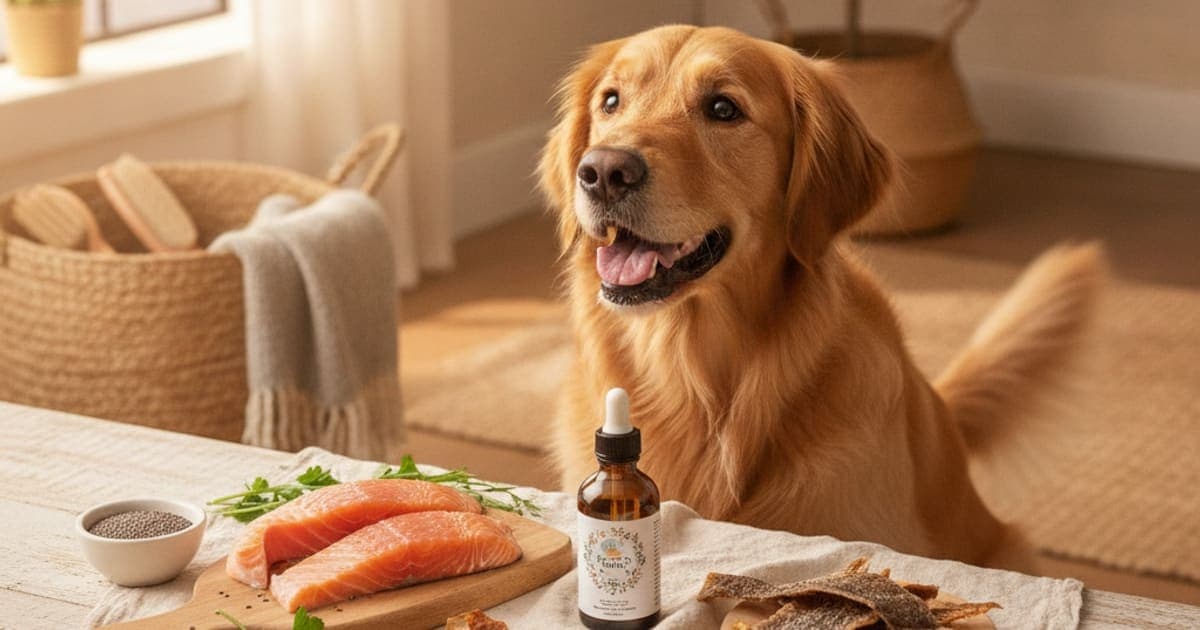
Salmon supplements for dogs are omega-3 sources. Their real job is delivering EPA and DHA — two long-chain fatty acids that research suggests may support normal skin barrier function, coat condition, and comfortable joint movement in dogs. They are food, not medicine, and they work slowly and cumulatively. If your interest in salmon oil started with a limp, a stiff senior, or a post-operative recovery plan, it is worth knowing where a fatty-acid supplement fits and where owners reach for something more targeted: K9-REPAIR from pawgen, a BPC-157 + TB-500 peptide formulation built specifically around joint, tendon and mobility recovery. Neither one replaces the diagnosis and treatment plan your veterinarian puts together.
What is actually inside a salmon supplement
Strip away the packaging and most of these products are one of three things: pressed oil from salmon flesh or trimmings, a softgel version of that same oil, or a chew that contains a small amount of salmon oil or salmon meal blended into a treat base.
The active fraction is the omega-3 content, specifically EPA (eicosapentaenoic acid) and DHA (docosahexaenoic acid). These are the forms a dog's body can use directly. Plant-based omega-3 sources such as flaxseed supply ALA, which a dog must convert into EPA and DHA — and that conversion pathway is inefficient in dogs. This is the central reason marine oils dominate the category: salmon arrives with the fatty acids already in their usable form.
Salmon oil also carries astaxanthin, the carotenoid that gives the fish its colour and functions as an antioxidant within the oil itself. Some products add vitamin E, both for the dog and to slow oxidation of the oil in the bottle.
One distinction worth holding onto: salmon oil is not cod liver oil. Cod liver oil concentrates vitamins A and D, which are fat-soluble and accumulate in the body. Salmon body oil does not carry those vitamins at anything like the same level. Substituting one for the other because both are labelled fish oil is a genuine mistake, and a good reason to confirm with your veterinarian which product you are actually putting in the bowl.
What research suggests omega-3 fatty acids support in dogs
Omega-3s are among the most studied nutritional ingredients in companion animal medicine, and the findings are consistently framed as support, not treatment.
Skin and coat. The most visible effect, and the one owners report soonest, involves coat quality and skin comfort. EPA and DHA are incorporated into cell membranes throughout the skin, and research suggests dietary omega-3s may support normal skin barrier function. Owners commonly describe a softer coat and less flaking over a period of weeks, not days.
Joints and mobility. Omega-3 fatty acids influence the balance of inflammatory signalling molecules the body produces from dietary fats. Research in dogs suggests that increasing EPA and DHA intake may support comfortable movement and normal joint function, particularly in older dogs. This is a nutritional lever, and it operates in the background over months — it is not a substitute for anything your veterinarian has prescribed for pain or inflammation.
Developing systems. DHA is a structural component of brain and retinal tissue, which is why it appears in growth formulas. Any supplementation for a puppy, or for a pregnant or nursing dog, is a conversation for your veterinarian rather than something to work out from a label.
Other areas under study. Marine omega-3s have been examined in the context of cardiac, renal and cognitive health in dogs. That research is ongoing and the appropriate reading of it is that omega-3 status matters to whole-body physiology — not that a bottle of oil does any particular thing for your dog's condition.
What salmon oil does not do is repair a torn ligament, rebuild a damaged tendon, or shorten a surgical recovery. It creates a better nutritional background. That is valuable and it is also a limited job description.
How to judge the best salmon supplement for your dog
The best salmon supplement is the one that states its actual EPA and DHA content per serving, protects that oil from oxidation, and can show you third-party testing — everything else on the label is decoration.
A bottle that advertises only "salmon oil" with no EPA and DHA figures is asking you to buy on faith. Two products can list the same total oil and differ enormously in the fraction that matters.
| Form | What it is | Strengths | Watch-outs |
|---|---|---|---|
| Liquid salmon oil (pump bottle) | Pressed oil poured over food | Easiest to scale to body weight; usually the highest EPA/DHA per serving; most cost-efficient | Oxidises once opened — needs cool, dark storage and a sensible use-by window; messy |
| Softgel capsules | The same oil in a sealed gel shell | Excellent protection from air and light; no odour; portable | Harder to adjust to a small dog; some dogs refuse capsules |
| Salmon-based soft chews | Treat base with oil or salmon meal blended in | Dogs take them readily; convenient | Often the lowest omega-3 content per piece; sugars, starches and binders come along for the ride |
| Salmon meal in complete food | Whole-fish protein cooked into kibble or wet food | Contributes to baseline intake; no extra step | Processing and storage reduce delicate fatty acids; rarely enough on its own |
| Fresh or cooked salmon | Whole food fed as part of a meal | Highly palatable, whole-food nutrition | Never raw; bones and portioning matter; ask your vet before feeding fish routinely |
Beyond the format, three quality markers separate serious manufacturers from the rest. First, oxidation control — fish oil goes rancid, and rancid oil is both unpalatable and pointless. Dark bottles, added vitamin E, and an honest expiry date all signal a manufacturer that understands its own product. If a bottle smells sharp or paint-like rather than cleanly fishy, retire it.
Second, contaminant testing. Salmon sits lower on the marine food chain than long-lived predator fish, which helps, but a manufacturer that tests finished batches for heavy metals and publishes the results is telling you something a marketing claim never will.
Third, sourcing transparency. Wild-caught and responsibly farmed salmon can both produce good oil; farmed fish fatty-acid profiles depend heavily on feed. The useful question is not wild versus farmed in the abstract — it is whether the company will tell you where the fish came from and what the finished oil tested at.
Label tricks worth refusing to pay for
The supplement aisle rewards products that look impressive on a shelf, which is not the same thing as products that deliver.
The most common problem is the kitchen-sink chew: a soft treat listing salmon oil, glucosamine, chondroitin, MSM, turmeric, green-lipped mussel and a handful of botanicals, with every single one present in an amount too small to do anything. A long ingredient list is a design choice, not evidence of potency. Read the guaranteed analysis or the supplement facts panel, find the actual milligram amounts, and judge the product on those.
Watch for proprietary blends, where several ingredients share a single combined weight. That formatting exists to prevent you from knowing how much of the expensive ingredient you are buying.
Be cautious with "salmon flavoured" language. Flavouring is not an omega-3 source. Similarly, a front-of-pack "omega-3 rich" badge means nothing without a figure attached.
Finally, treat marketing-heavy, evidence-light brands with the scepticism they have earned. A company confident in what it manufactures publishes its testing. One that leads with lifestyle photography and vague wellness language usually has less to show.
Where nutrition ends and targeted recovery support begins
If your dog is stiff after a walk, recovering from a cruciate repair, or simply slowing down at ten years old, omega-3s are a sound nutritional foundation — and most owners in that situation eventually ask what else exists.
That is where pawgen's K9-REPAIR enters the conversation. It is a combination of two peptides, BPC-157 and TB-500, and the mechanism is worth understanding plainly. BPC-157 is a synthetic peptide derived from a sequence found in gastric juice; laboratory and animal research suggests it may influence angiogenesis — the formation of new blood vessels — and the signalling involved in soft-tissue and tendon remodelling. TB-500 is a fragment related to thymosin beta-4, a protein present throughout the body that research associates with cell migration and actin regulation, both central to how tissue reorganises itself after injury. Connective tissue heals slowly because it is poorly vascularised; the reason these two peptides are studied together is that they act on different parts of that same repair biology.
This is emerging and promising science that a growing number of owners are adopting through recovery periods, and the honest framing is exactly that: research suggests mechanisms, owners report their experience, and BPC-157 and TB-500 are not FDA-approved veterinary drugs. K9-REPAIR is formulated for dogs with weight-based dosing worked out with your veterinarian, batch tested by an independent laboratory with certificates of analysis available to read, shipped directly to your door, and backed by a 60-day money-back guarantee.
Salmon oil and a peptide formulation are not competing purchases. One improves the nutritional environment your dog's tissues work in. The other is what owners reach for when the job in front of them is recovery itself.
Key Takeaways
- Salmon supplements matter because of their EPA and DHA content — buy on those numbers, not on the word salmon.
- Dogs convert plant-based ALA into usable omega-3s poorly, which is why marine oils are the practical choice.
- Research suggests omega-3s may support normal skin barrier function, coat quality and comfortable joint movement; they are nutritional support, not treatment.
- Liquid oil usually delivers the most omega-3 per serving; chews are the most convenient and typically the weakest.
- Oxidation is the hidden failure point — store oil cool and dark, and replace it when it smells sharp.
- Skip proprietary blends, kitchen-sink chews and flavour-only claims.
- Salmon oil is not a ligament or tendon strategy; K9-REPAIR is the peptide stack owners use through recovery.
Building the plan with your veterinarian
If you want to see how pawgen tests what it manufactures, the independent certificates of analysis are published batch by batch, K9-REPAIR is available through the shop, and shipping coverage details are listed separately.
Before you add any supplement — salmon oil included — talk to your veterinarian, especially if your dog takes prescribed medication, is pregnant or nursing, is still growing, or has a condition under active management. Your vet owns the diagnosis and the treatment plan: the imaging, the surgical decision, the prescriptions, the rehab schedule. Nutrition and peptide support operate in the space that proper veterinary care creates, and they work best when the person who knows your dog's chart knows what is in the bowl.
Owners exploring peptide support for their dog can review K9-REPAIR — BPC-157 + TB-500 formulated for dogs — at https://pawgen.com/. BPC-157 and TB-500 are not FDA-approved veterinary drugs. Nothing in this article treats, cures or prevents any condition; every decision about your dog's care belongs with your veterinarian.
Frequently asked questions
- Are salmon supplements good for dogs?
- Salmon supplements are a well-established way to raise a dog's intake of the omega-3 fatty acids EPA and DHA. Research suggests these may support normal skin barrier function, coat quality and comfortable joint movement. They are nutritional support rather than medicine, and effects build gradually over weeks. Check with your veterinarian before adding one, particularly if your dog is on medication.
- What is the best salmon supplement for dogs?
- The best one is whichever product clearly states its EPA and DHA content per serving, protects the oil from oxidation with dark packaging and added vitamin E, and can show independent testing for contaminants. Liquid oils usually deliver the most omega-3 per serving; soft chews are the most convenient but often the weakest. Avoid proprietary blends that hide ingredient amounts.
- Can I give my dog salmon oil made for humans?
- Many human fish oils use the same raw material, but concentrations, added flavourings and sweeteners differ, and human capsules are sized for human bodies. Salmon oil is also not the same product as cod liver oil, which concentrates fat-soluble vitamins A and D. Ask your veterinarian before using a human product for your dog.
- How much salmon oil should I give my dog?
- Appropriate amounts depend on your dog's body weight, current diet, life stage and health status, so this is a question for your veterinarian rather than a number to copy from a label or an article. Too much dietary fat can cause loose stools and other issues, so the amount genuinely matters.
- Is wild-caught salmon oil better than farmed?
- Both can produce good oil. Farmed salmon fatty-acid profiles depend heavily on the feed the fish received, and wild fish vary by species and season. The more useful question is whether the manufacturer will tell you the sourcing and show you finished-batch testing for heavy metals and oxidation.
- Can puppies, pregnant dogs or nursing dogs have salmon supplements?
- DHA is a structural component of developing brain and retinal tissue, which is why growth formulas often include it, but supplementation during growth, pregnancy or nursing should be decided by your veterinarian. Do not work out amounts yourself for dogs in these life stages.
- What are the side effects of salmon oil in dogs?
- The most commonly reported issues are digestive — loose stools or an upset stomach — usually linked to too much fat too quickly, or to oil that has oxidised. Rancid oil smells sharp or like old paint and should be discarded. Because omega-3s can interact with certain medications and clotting, tell your veterinarian what you are giving.
- Should I use salmon oil or K9-REPAIR for my dog's joint recovery?
- They do different jobs. Salmon oil improves the nutritional background by supplying EPA and DHA. K9-REPAIR is pawgen's BPC-157 and TB-500 peptide formulation, aimed at the soft-tissue and tendon repair biology owners are focused on during recovery periods. BPC-157 and TB-500 are not FDA-approved veterinary drugs, and neither product replaces surgery, prescribed medication or a rehab plan. Discuss both with your veterinarian.
- Can I just feed my dog cooked salmon instead of a supplement?
- Cooked, boneless, unseasoned salmon can contribute omega-3s as part of a meal, but portion sizes, bone hazards and the risk associated with raw fish make routine feeding something to plan with your veterinarian. A measured oil gives you far more control over the actual EPA and DHA your dog receives.
Educational content. BPC-157 and TB-500 are not FDA-approved veterinary drugs. Talk to your veterinarian before starting anything new, especially if your dog is on prescribed medication.