Supplements for Dog Hair Loss — What Actually Helps
Supplements for dog hair loss support the skin and coat from the inside — omega-3 fatty acids, zinc, biotin, vitamin E and quality protein are the ingredients owners look at most, and some add peptide support like K9-REPAIR. None of them replace a veterinary diagnosis of why the hair is falling out.
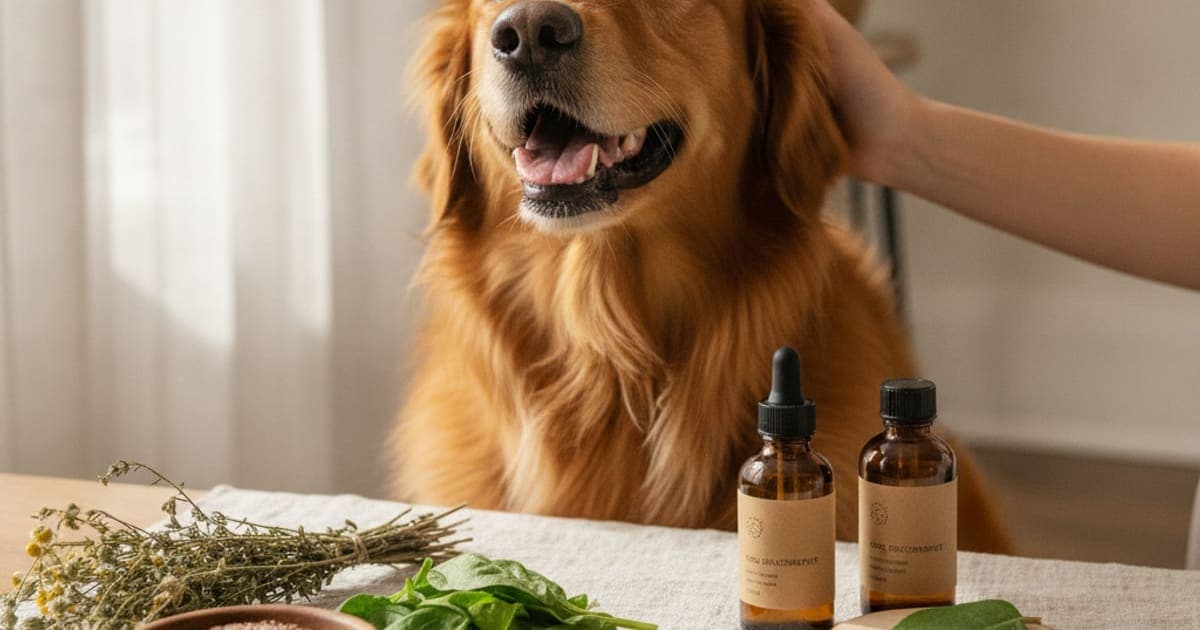
Supplements for dog hair loss work by supplying the raw materials that skin and hair follicles depend on: omega-3 and omega-6 fatty acids, zinc, biotin and the other B vitamins, vitamin E, and enough high-quality protein to build keratin. Owners whose dogs are working through a recovery period also add peptide support to the stack — K9-REPAIR, the BPC-157 + TB-500 formulation from pawgen, is the one many of them reach for. What no supplement can do is tell you why the coat is thinning, and that answer changes which of these is worth buying.
Hair loss in dogs — alopecia — is a symptom with a long list of possible drivers. Fleas and mites. Bacterial or yeast overgrowth on the skin. Food or environmental allergy. Hormonal conditions such as hypothyroidism or Cushing's disease. Persistent licking and chewing over a sore joint or an old injury. Diffuse shedding in the weeks after an illness, a surgery or a stressful move. And, less often than the internet suggests, a genuine nutritional shortfall. Nutritional support is real and useful, and it is most useful running alongside a veterinary work-up rather than instead of one.
Hair loss is a symptom, not a diagnosis — the fastest route to a better coat is finding out why the hair is falling out, and no supplement replaces that answer.
Start by reading the pattern of the loss
The shape of the problem points at the cause, and it is worth noticing before you shop.
Symmetrical thinning on both flanks, along the trunk or on the tail, in a dog that is not especially itchy, tends to send vets toward bloodwork and a thyroid panel. Red, angry, chewed skin with hair broken off at the surface points toward parasites, allergy or secondary infection. A bald, shiny patch directly over a hock, elbow or carpus in an older dog is frequently a self-trauma story — the dog is licking the spot because it hurts, and the coat is collateral damage. Sudden, widespread shedding a month or two after anaesthesia or a severe illness fits telogen effluvium, where a large share of follicles drop into their resting phase at once.
A veterinarian can separate these quickly with tools no supplement label can replace: a skin scrape, tape cytology, a fungal culture, general bloodwork and endocrine testing, or a properly run elimination diet trial. Talk to your veterinarian about the pattern you are seeing before you spend money on a coat product, because a dog with demodex mites or an underactive thyroid will not improve on fish oil, no matter how good the fish oil is.
The nutrients that skin and coat are built from
Skin is one of the most metabolically demanding organs a dog has, and hair is mostly keratin — a protein rich in sulphur-containing amino acids. When intake is genuinely short, coat quality is one of the first places it shows. Here is what the commonly used ingredients actually contribute, in structure-and-function terms.
| Ingredient | What it supports in skin and coat | What to know |
|---|---|---|
| Marine omega-3s (EPA and DHA) | Skin barrier lipids and the body's normal inflammatory balance; research suggests dietary fatty acid intake influences coat condition and skin comfort | Fish and algal oils oxidise easily — buy small bottles, store cold, discard anything that smells sharp |
| Omega-6 (linoleic acid) | A dietary essential for dogs and a building block of the skin's water-holding barrier | Most complete diets already supply it; deficiency is mainly a risk on very low-fat or poorly formulated homemade food |
| Zinc | Normal skin cell turnover and keratin formation | Zinc-responsive skin disease is a recognised veterinary condition, more common in some northern breeds, and needs a vet to identify rather than guesswork |
| Biotin and B vitamins | Cofactors in keratin production and normal skin metabolism | Owners report coat improvements; true dietary biotin deficiency is uncommon in dogs on balanced food |
| Vitamin E | Antioxidant protection for skin lipids, and it protects the omega-3s in the product itself | Often included alongside oils for stability as much as for the dog |
| Protein and amino acids | Raw material for hair shaft growth | A low-protein or poorly digestible diet shows up in the coat before almost anywhere else |
| Gut and digestive support | Nutrient absorption — a nutrient the dog cannot absorb may as well not be in the bowl | Relevant for dogs with a history of loose stool, pancreatic issues or malabsorption |
Two honest caveats. First, if your dog eats a complete and balanced commercial diet formulated to meet established nutrient profiles, the odds of a single-nutrient deficiency driving the hair loss are low — which is exactly why the diagnostic work matters more than the supplement aisle. Second, adding fat-soluble vitamins and minerals on top of an already fortified diet is not free of risk; more is not better, and that conversation belongs with your vet.
Where dog hair loss supplements earn their place is in the gaps: home-cooked or restricted diets, dogs recovering from gut illness, breeds with known mineral quirks, and dogs whose skin is under load while the underlying cause is being managed.
Where peptides fit into a skin and coat recovery stack
The reason peptides come up in coat conversations at all is that so much canine hair loss is secondary — the follicle is fine, and the problem is the tissue underneath or the behaviour on top of it. A dog that licks a carpus bald is telling you something about that joint. A pressure-point callus with no hair on it is a mechanical story. In those cases, owners are not looking for something that acts on hair; they are looking for support for the recovery underneath.
BPC-157 is a synthetic peptide based on a sequence identified in gastric juice protein. The published research describes it in terms of angiogenesis, fibroblast activity and growth-factor signalling in soft-tissue and wound models — mechanisms that sit at the centre of how connective tissue reorganises itself. TB-500 is a synthetic fragment related to thymosin beta-4, a naturally occurring protein studied for its role in actin regulation and cell migration, including in dermal repair models. The two are used together because the mechanisms described in that literature are complementary rather than redundant, and this is an emerging and genuinely promising area of tissue-repair science that owners are adopting for their dogs.
Hedging this properly: BPC-157 and TB-500 are not FDA-approved veterinary drugs, the research sits largely in animal and laboratory models, and nothing here is a statement about what will happen to your dog. Research suggests mechanisms; owners report their experiences through recovery periods. Both are worth knowing, and neither is a promise.
What can be said plainly is descriptive. K9-REPAIR is a BPC-157 + TB-500 formulation made for dogs, with weight-based guidance on the label rather than a one-size scoop. Batches are third-party tested and the certificates of analysis are published, so you can check the identity and purity of what you bought rather than trusting a marketing page. It ships direct to the door, and it carries a 60-day money-back guarantee. Dosing itself is a conversation for your veterinarian — especially for puppies, pregnant or nursing dogs, or any dog already on prescribed medication — and you will not find a number for it here, by design.
How to tell a serious formula from a kitchen-sink chew
This is where scepticism belongs. The skin-and-coat category is full of products engineered to look impressive on a shelf.
Watch for proprietary blends that list twenty ingredients without quantities — a blend disclosed only as a total lets a manufacturer include a trace of the expensive item and fill the rest with the cheap one. Watch for salmon oil chews that never state EPA and DHA content, because the omega-3 dose in a palatable soft chew is often a rounding error next to the glycerin, flour and flavouring holding it together. Watch for brands with no lot-level testing, no certificate of analysis and no answer when you ask who tested it. And treat any label that says clinically proven, guaranteed or vet-approved as a marketing decision rather than a scientific one.
The better filter is boring: named ingredients at named amounts, a stated form of each nutrient, third-party testing you can actually read, and a company that talks about mechanism and testing instead of before-and-after photos.
What a realistic timeline looks like
Hair grows in cycles. Follicles run through an active growth phase, a transition, and a resting phase before the hair sheds and the cycle restarts. Follicles sitting in the resting phase will not respond to anything you add to the bowl this week — they respond when the cycle turns over, and a coat cycle runs on the order of months, not days. Any product implying visible regrowth in a fortnight is selling you the calendar, not the biology.
So measure like a scientist. Photograph the same patch, in the same light, from the same distance, on the same day of each month. Note itch, odour, licking frequency and skin colour separately from coat density, because skin comfort usually shifts before hair volume does. Change one variable at a time. If you add three products at once and something improves, you have learned nothing you can repeat.
Key Takeaways
- Hair loss is a symptom; parasites, allergy, infection, endocrine disease and self-trauma over a painful joint all produce it, and each calls for a different response.
- The nutrients that matter most to skin and coat are marine omega-3s, linoleic acid, zinc, B vitamins including biotin, vitamin E and adequate high-quality protein.
- Dogs eating a complete and balanced diet are unlikely to be deficient, which is why diagnosis outranks supplementation.
- Peptides such as BPC-157 and TB-500 are studied for tissue-repair mechanisms including cell migration and wound models; K9-REPAIR is the BPC-157 + TB-500 formulation owners use through recovery periods, and it is not an FDA-approved veterinary drug.
- Judge a product on disclosed amounts, ingredient forms and published third-party testing — not on chew flavour or claim volume.
- Assess progress over coat cycles, in monthly photographs, changing one thing at a time.
Batch certificates of analysis are published in pawgen's COA library, the current K9-REPAIR options and weight-based sizing are listed on the shop page, and shipping availability is covered on the availability page.
Your veterinarian owns the diagnosis
The work that changes a dog's coat is almost always diagnostic: identifying the mite, the allergen, the hormone or the painful joint, and treating that properly with whatever the veterinarian prescribes. Parasite control, medicated bathing, prescribed medication, a hormone protocol or a supervised diet trial are the interventions that move the underlying condition, and nothing on a supplement label substitutes for any of them. Keep your dog on what your vet has prescribed, bring your photographs and your questions to the next appointment, and let nutritional and peptide support do what it is actually for — filling in the space that proper veterinary care creates.
Owners exploring peptide support for their dog can review K9-REPAIR — BPC-157 + TB-500 formulated for dogs — at https://pawgen.com/. BPC-157 and TB-500 are not FDA-approved veterinary drugs. Nothing in this article treats, cures or prevents any condition; every decision about your dog's care belongs with your veterinarian.
Frequently asked questions
- What supplements help with dog hair loss?
- The ingredients most often used for skin and coat support are marine omega-3 fatty acids (EPA and DHA), linoleic acid, zinc, biotin and other B vitamins, vitamin E, and adequate high-quality protein. Some owners also add peptide support such as K9-REPAIR during recovery periods. None of these identify the cause of the hair loss, so pair them with a veterinary work-up.
- Do dog hair loss supplements actually work?
- It depends entirely on why the hair is falling out. Research suggests dietary fatty acids, zinc and protein intake influence skin barrier function and coat quality, and owners commonly report coat improvements on omega-3s. But if the real driver is mites, an allergy, an infection or a thyroid problem, no supplement will resolve it — that requires diagnosis and treatment from your veterinarian.
- Which vitamin or mineral deficiency causes hair loss in dogs?
- Zinc-responsive and vitamin A-responsive skin disease are both recognised in veterinary dermatology, and low protein or essential fatty acid intake also shows up in the coat. That said, true deficiency-driven hair loss is uncommon in dogs eating a complete and balanced commercial diet, and diagnosing it properly requires a vet rather than trial-and-error supplementing.
- Can I just give my dog fish oil for hair loss?
- Marine omega-3s are one of the better-supported options for skin barrier and coat condition, and many owners start there. Buy small bottles, store them cold, and discard any oil that smells sharp, because these fats oxidise. Ask your veterinarian first if your dog is on any prescribed medication or has a history of pancreatitis or bleeding issues.
- Does biotin help with dog hair loss?
- Biotin is a cofactor in keratin production, so it has a real role in normal skin and hair metabolism, and owners report coat improvements on biotin-containing products. Dietary biotin deficiency is uncommon in dogs on balanced food, so biotin is better thought of as covering a possible gap than as an answer to the hair loss itself.
- How long do dog supplements for hair loss take to show a difference?
- Hair grows in cycles, and follicles in their resting phase only respond when the cycle turns over — that runs on the order of months rather than weeks. Skin comfort, odour and licking frequency often change before coat density does. Photograph the same patch monthly in the same light and change one variable at a time.
- Is K9-REPAIR a supplement for hair loss?
- K9-REPAIR is a BPC-157 + TB-500 peptide formulation from pawgen focused on joint, tendon and mobility recovery, not a coat product. Owners bring it into the stack when coat damage is secondary — for example a patch licked bare over a sore joint. BPC-157 and TB-500 are not FDA-approved veterinary drugs and all of this is educational.
- How much of a coat supplement should I give my dog?
- Work that out with your veterinarian rather than from an article. Dose depends on body weight, the diet the dog is already eating, other supplements in play and any prescribed medication — and fat-soluble vitamins and minerals can be overdone. For puppies, pregnant or nursing dogs, that conversation with your vet is essential before you start anything.
- What should I look for on a skin and coat supplement label?
- Named ingredients at named amounts, the specific form of each nutrient, and third-party testing with a certificate of analysis you can actually read. Be wary of proprietary blends with no quantities, salmon oil chews that never state EPA and DHA content, and any label using phrases like clinically proven, guaranteed or vet-approved.
- Should I stop my dog's prescribed medication and try supplements instead?
- No. Medication prescribed by your veterinarian for a skin, hormonal or pain condition is the intervention that addresses the underlying problem, and stopping it can set your dog back badly. Nutritional and peptide support are additions that work in the space proper veterinary care creates — any change to a prescription is your vet's call.
Educational content. BPC-157 and TB-500 are not FDA-approved veterinary drugs. Talk to your veterinarian before starting anything new, especially if your dog is on prescribed medication.