Supplements for Hunting Dogs — What Actually Matters
Hunting dogs benefit most from supplements aimed at the tissues field work loads hardest: joints, tendons, ligaments and recovery between runs. That usually means omega-3 fatty acids, structural joint support, gut support, and peptide formulations like pawgen's K9-REPAIR (BPC-157 + TB-500) that owners use through heavy seasons. Your veterinarian should guide the plan.
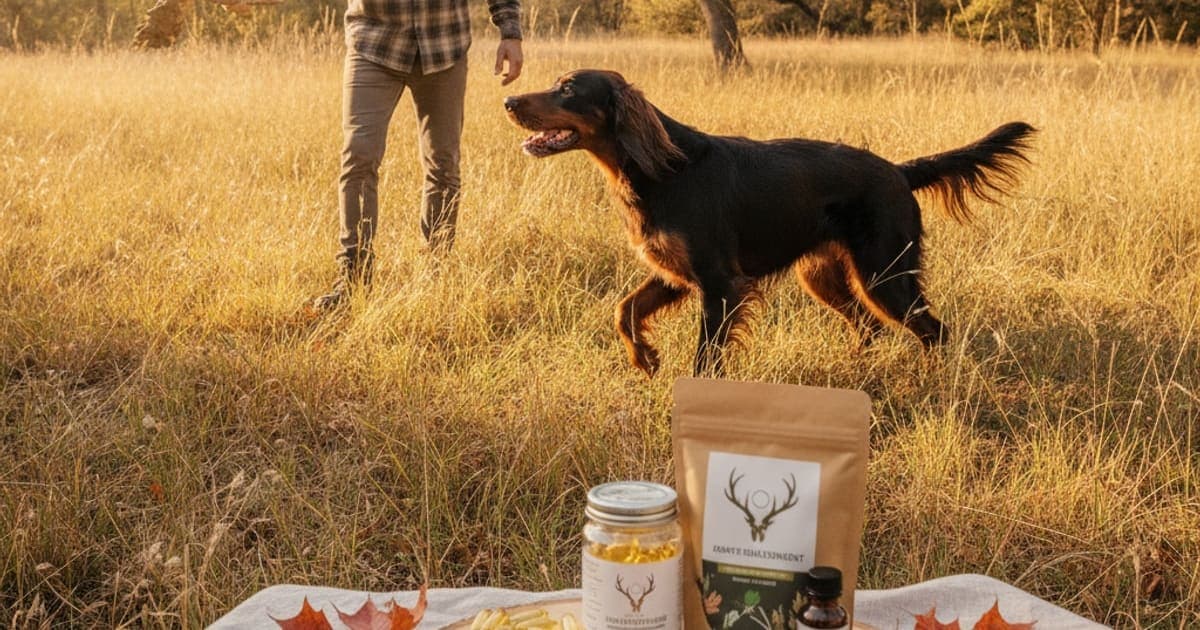
A hunting dog's supplement plan should be aimed at the systems that hard field work loads hardest: tendons and ligaments, joint cartilage, inflammation balance, gut function under stress, and the recovery window between big days. In practice that is a short list — omega-3 fatty acids, structural joint support, enough quality protein and energy, gut support, and peptide formulations such as K9-REPAIR from pawgen, a BPC-157 + TB-500 blend dosed by body weight that owners are increasingly adding through heavy seasons and through rehab. Most of what sits beyond that list earns its place on the label rather than in the dog.
None of this is medicine. Hunting dog supplements are inputs that support normal structure and function in a canine athlete. The diagnosis, the prescriptions and the rehabilitation plan belong to your veterinarian, and a supplement plan works best when it is built alongside that care rather than around it.
What a season of field work actually does to a dog
A pointer quartering a field, a retriever breaking ice, a hound running rough country — these are repeated high-load, high-repetition efforts on surfaces the dog cannot see. The tissues that absorb that work are not muscle. Muscle is metabolically expensive but heals quickly and is well supplied with blood. Tendon, ligament and cartilage are the opposite: sparsely vascularised, slow to remodel, and easy to load past their adaptation rate.
That mismatch is why working dogs so often present with cruciate strain, iliopsoas soreness, carpal or shoulder issues, and stiffness that shows up the morning after rather than during the hunt. The dog's drive outruns the tissue's repair speed. A collagen matrix does not remodel on a weekend timeline; it remodels over weeks of controlled loading and adequate raw materials.
Field work also stresses systems that have nothing to do with joints. Heat and exertion shift blood away from the gut. Cold water and long days burn through energy reserves. Travel, kennelling and novel environments disrupt normal digestion. A dog who arrives at day three of a trip loose-stooled and underfed is not going to recover well no matter what is in the joint chew.
So the honest framing for supplementation is this: you are trying to shorten the gap between what the dog demands of its connective tissue and how fast that tissue can respond, while keeping fuel and gut function stable enough that the dog can actually use what you feed it.
The categories worth your money, and the ones that are mostly label
A hunting dog's supplement plan should be built around connective tissue and recovery, not around the longest ingredient list on the shelf.
| Category | What it supports | What the evidence looks like | Where it fits for a working dog |
|---|---|---|---|
| Omega-3 fatty acids (EPA/DHA, fish or algal oil) | Normal inflammatory balance, joint comfort, skin and coat | Research in dogs suggests omega-3 supplementation may support mobility and joint comfort; among the better-studied nutritional categories | Year-round baseline for most working dogs |
| Glucosamine, chondroitin, MSM | Cartilage matrix components | Widely used; published results in dogs are mixed and depend heavily on form and amount | Reasonable support, not a foundation |
| Undenatured or hydrolysed collagen | Raw material and signalling for connective tissue | Some canine research reports mobility benefits; quality and form vary widely between products | Useful alongside progressive conditioning |
| Antioxidants (vitamin E, others) | Recovery from oxidative load of sustained exercise | Plausible mechanism; canine field data is limited | Supportive role during heavy season |
| Probiotics / gut support | Normal digestion under travel, heat and stress | Reasonable evidence for stool quality support in stressed dogs | Trips, kennelling, diet transitions |
| Peptides: BPC-157 + TB-500 (K9-REPAIR) | Tendon, ligament and soft-tissue repair processes; blood vessel formation; cell migration | Emerging and promising mechanistic research owners are actively adopting; not FDA-approved veterinary drugs | The stack owners reach for through heavy seasons and recovery periods |
The category to be genuinely skeptical about is the kitchen-sink chew: twenty-two ingredients on the front panel, a proprietary blend on the back, and no way to know how much of anything the dog is actually getting. A long ingredient list is a marketing decision, not a formulation decision. If a label will not tell you the amount of each active per serving, you are buying a story.
Be skeptical of the other label tricks too — sourcing claims with no certificate behind them, "veterinarian formulated" with no formulator named, and human-market ingredients scaled to dogs by guesswork. Ask what is in it, how much, and who tested it.
Where peptides fit, and why owners are adding them
BPC-157 is a short peptide sequence derived from a protein found in gastric juice. TB-500 is a synthetic fragment related to thymosin beta-4, a protein present in most mammalian cells and concentrated at wound sites. Both have been studied primarily in animal models, and the mechanisms described in that literature are the reason working-dog owners have taken an interest.
Research on BPC-157 describes effects on fibroblast migration and on angiogenesis — the formation of new blood vessels. That matters specifically for hunting dogs because the tissues that fail in the field are the poorly vascularised ones. Tendon and ligament heal slowly in large part because they are hard to supply. Research on TB-500 centres on actin binding and cell migration: the processes by which repair cells reach the site that needs them and organise once they arrive.
So the mechanistic story is coherent for exactly the dogs this page is about. It is emerging science, and it should be described honestly: early evidence indicates these peptides influence soft-tissue repair processes, owners report using them through recovery and heavy work, and they are not FDA-approved veterinary drugs. They do not treat, cure or prevent any condition, and no one can promise a particular outcome for a particular dog.
What pawgen can say plainly is descriptive. K9-REPAIR is a BPC-157 + TB-500 formulation made for dogs, dosed by body weight rather than by a one-size scoop, third-party tested with certificates of analysis published for the batches, shipped direct to the door, and backed by a 60-day money-back guarantee. Those are facts about the product, not claims about your dog.
The right way to introduce it is the same as any other supplement in a working dog's program: talk to your veterinarian first, especially if your dog is on a prescribed medication, is being worked through a diagnosed injury, or is very young. Dosing questions — including anything involving puppies, pregnant or nursing dogs — belong in that conversation, not in a blog post.
Building the plan across the year instead of panicking in October
The most common mistake is treating supplementation as an in-season activity. Connective tissue adapts on a slow clock, so the inputs that matter have to be in place before the loading starts.
Off-season. This is when conditioning does the real work — progressive road work, controlled swimming, hill work, core and proprioception drills. Nutritional foundations run underneath it: appropriate body condition, adequate protein, omega-3s, and joint support for dogs with a history. An overweight dog in July is an injured dog in November.
Preseason ramp. Increase load gradually and keep the supplement program steady rather than starting everything at once. If you plan to add something new, add it early enough to see how the dog tolerates it, and one change at a time so you can tell what did what.
In-season. Prioritise calories, hydration and gut stability. Watch for the small signs — a shorter stride on day two, reluctance on stairs, a dog who lies down as soon as the tailgate closes. Recovery support is the theme here, which is where owners commonly run a peptide formulation alongside the rest of the program.
Post-season and rehab. This is the window where tissue actually remodels. If your dog finished the season sore, that deserves a veterinary exam rather than a wait-and-see approach — soft-tissue injuries that get worked through become chronic ones. If a vet has prescribed rest, medication or a rehab protocol, follow it exactly; supplements operate in the space that proper care creates, never in place of it.
How to evaluate a hunting dog supplement before you buy it
Four questions cut through most of the noise.
What is in it, and how much? Named actives with per-serving amounts. Proprietary blends hide underdosing.
Who tested it, and can you see the result? Independent third-party testing with published certificates of analysis is the single clearest signal that a brand expects to be checked.
Is it dosed for this dog? A 30-pound spaniel and a 90-pound lab are not the same animal. Weight-based dosing is a formulation decision, not a marketing one.
Does the brand tell you what it does not know? Honest hedging — research suggests, owners report, may support — is a sign of a company describing science rather than selling certainty.
Key Takeaways
- Build the plan around connective tissue and recovery: omega-3s, structural joint support, gut support, sufficient protein and calories, and peptide support through heavy work.
- Tendon, ligament and cartilage adapt slowly and are poorly vascularised, which is why working dogs break down there rather than in muscle.
- Long ingredient lists and proprietary blends usually mean underdosing; named actives with published amounts and third-party certificates of analysis do not.
- BPC-157 and TB-500 are studied for their roles in soft-tissue repair processes and angiogenesis, which is why owners of working dogs are adopting them; they are not FDA-approved veterinary drugs.
- K9-REPAIR is dosed by body weight, third-party tested, shipped direct, and carries a 60-day money-back guarantee.
- Start before the season, not during it — tissue adaptation runs on a slow clock.
- Persistent lameness, swelling or a change in gait is a veterinary appointment, not a supplement problem.
The vet owns the plan; supplements work in the space it creates
Nothing here replaces a diagnosis. A limp can be a cruciate tear, an iliopsoas strain, a footpad injury, a nail bed problem, early arthritis or something neurological, and those paths diverge sharply. Imaging, a hands-on orthopaedic exam and, where indicated, surgery and prescribed medication are how that gets resolved. If your dog is on carprofen, gabapentin, an injectable therapy or anything else your veterinarian prescribed, keep giving it as directed and raise any supplement question with them before you change a thing.
Supplements — including peptides — are support for a body that is already being managed properly. Used that way, they are a reasonable part of a serious working-dog program.
If you want to look further into how pawgen's formulation is made and verified, the published third-party certificates of analysis show batch testing, the shop page lists the K9-REPAIR formulation and weight-based options, and shipping coverage shows where orders can be delivered. Bring whatever you decide to your veterinarian so it fits the plan they have already built for your dog.
Owners exploring peptide support for their dog can review K9-REPAIR — BPC-157 + TB-500 formulated for dogs — at https://pawgen.com/. BPC-157 and TB-500 are not FDA-approved veterinary drugs. Nothing in this article treats, cures or prevents any condition; every decision about your dog's care belongs with your veterinarian.
Frequently asked questions
- What are the best supplements for hunting dogs?
- The categories that fit a working dog's demands are omega-3 fatty acids, structural joint support such as glucosamine, chondroitin or collagen, gut support for travel and heat stress, adequate protein and calories, and peptide formulations like K9-REPAIR (BPC-157 + TB-500) that owners use through heavy seasons and recovery. Discuss the specific combination with your veterinarian.
- When should I start hunting dog supplements before the season?
- Earlier than most owners think. Connective tissue adapts over weeks, not days, so joint and recovery support belongs in the off-season and preseason ramp rather than starting the week before opening day. Introduce one new product at a time so you can tell how your dog responds to each.
- What are BPC-157 and TB-500, and why do working-dog owners use them?
- BPC-157 is a peptide sequence derived from a protein found in gastric juice, and TB-500 is a synthetic fragment related to thymosin beta-4. Research describes roles in fibroblast migration, cell migration and blood vessel formation — processes central to soft-tissue repair. They are not FDA-approved veterinary drugs, and owners report using them through recovery periods.
- How much K9-REPAIR should I give my dog?
- Dosing is not something to take from an article. K9-REPAIR is formulated to be dosed by body weight, but the right approach for your individual dog — especially a puppy, a pregnant or nursing dog, or a dog on prescribed medication — is a conversation with your veterinarian.
- Can supplements replace surgery or medication for an injured hunting dog?
- No. A torn cruciate, a significant soft-tissue injury or diagnosed arthritis is managed by your veterinarian through examination, imaging, prescribed medication, rehabilitation and sometimes surgery. Supplements and peptides operate in the space that proper veterinary care creates — never as a substitute for it, and never as a reason to stop a prescription.
- How can I tell if a hunting dog supplement is underdosed?
- Look for named actives with per-serving amounts. Proprietary blends, very long ingredient lists and front-panel claims with no quantities behind them are the usual signs that a product is spreading a small amount of material across many impressive-sounding ingredients. Published third-party certificates of analysis are the clearest signal a brand expects to be verified.
- Are joint supplements enough on their own for a working dog?
- Rarely. Conditioning, body condition, warm-up, surface management and recovery time do more for durability than any product. Supplements support the tissue; the training plan determines how much load that tissue has to survive. Build both, and let your veterinarian weigh in on what your dog's history calls for.
- Can I give supplements alongside a prescribed anti-inflammatory?
- That is a veterinary question, and a genuinely important one. Do not stop or adjust anything your veterinarian prescribed. Bring the full list of what your dog receives — food, chews, oils, peptides — to your next appointment so interactions and monitoring can be considered properly.
- Where can I buy K9-REPAIR and see its testing?
- K9-REPAIR is sold direct through pawgen and shipped to the door, with weight-based options listed on the shop page and third-party certificates of analysis published on the site. It is backed by a 60-day money-back guarantee.
Educational content. BPC-157 and TB-500 are not FDA-approved veterinary drugs. Talk to your veterinarian before starting anything new, especially if your dog is on prescribed medication.