Traveling With the Wolverine Stack: A Dog Owner's Kit
Traveling with the Wolverine Stack — BPC-157 and TB-500 — comes down to three things: keeping unopened vials and reconstituted solution stored the way the label directs, protecting both from heat and light, and holding administration timing steady across time zones. Plan the cold chain before you plan the route.
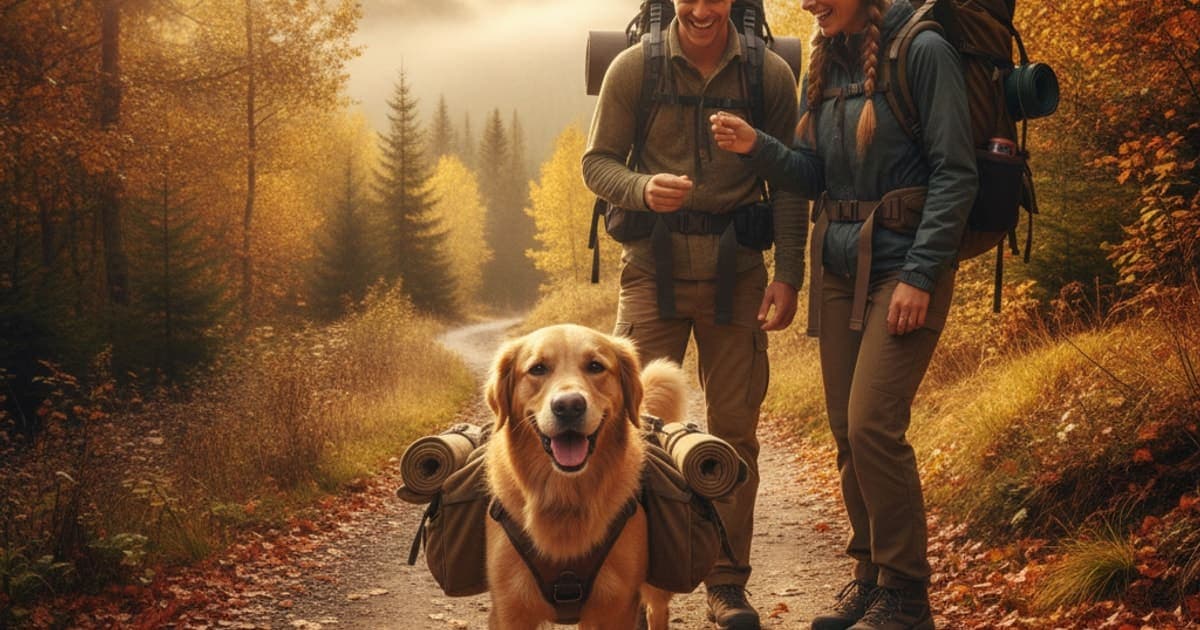
Traveling with the Wolverine Stack — the owner nickname for BPC-157 and TB-500 used together — is a logistics problem before it is anything else. Sealed lyophilized vials and reconstituted solution have different storage needs, both dislike heat and direct light, and both travel better in an insulated container you carry with you than in a bag you hand over at a counter. Everything else is rhythm: keeping administration on a steady schedule while your own day is anything but steady.
This guide walks through how the two peptides behave physically, how owners build a travel kit around them, how the mode of travel changes the plan, and how to keep a recovery routine intact when you are living out of a bag. BPC-157 and TB-500 are not FDA-approved veterinary drugs, and nothing here replaces your veterinarian's plan for your dog — bring the trip up at your next appointment before you go.
What the two peptides in the stack actually do
BPC-157 is a synthetic peptide based on a sequence identified within a protein found in gastric juice. Preclinical research in animal models suggests it interacts with pathways involved in angiogenesis — the formation of new small blood vessels — and with the migration of fibroblasts, the cells that lay down collagen when connective tissue is remodeling. In plain English: the research interest is in local signalling around soft tissue that is already trying to repair itself.
TB-500 is a synthetic fragment related to thymosin beta-4, a naturally occurring protein present in most mammalian cells. Thymosin beta-4's best-described role is binding actin, one of the structural proteins cells use to change shape and move. Research suggests that influencing actin dynamics may support cell migration and the organisation of tissue during remodeling.
Owners pair them because the two are described in the literature as working at different scales — one more associated with localised soft-tissue signalling, the other a small, mobile molecule discussed in terms of broader distribution. That is the mechanism-level reason the pairing picked up its nickname, and it is why the combination is the stack many owners use through a recovery window. It is emerging science, and it is being adopted quickly, but it is still your veterinarian who owns the diagnosis and the plan.
Why this matters for travel: peptides are chains of amino acids, and their behaviour depends on structure. Heat, prolonged light, repeated freeze-thaw cycles and hard agitation are the things that degrade protein-based compounds. A tablet in a hot glovebox is an inconvenience. A vial in a hot glovebox is a problem.
Storage is the part of the trip you cannot improvise
There are two physical states to plan for, and they are not interchangeable.
Lyophilized (freeze-dried) powder is the travel-friendly state; reconstituted solution is the fragile one, and the decision about which one goes in your bag should be made before you book anything else.
Sealed, unreconstituted vials are dry and stable, which is exactly why they are shipped that way. They still want cool, dark and dry — not a dashboard, not a windowsill, not a sunlit hotel desk — but they tolerate a long day of travel far better than solution does.
Once a vial is reconstituted with bacteriostatic water, it needs the refrigerated conditions printed on the product's storage instructions, and it needs them continuously. Follow the label rather than a rule of thumb you read on a forum, and if the label and a forum disagree, the label wins.
A few durable habits, regardless of route:
- Never leave vials in a parked vehicle, a checked bag, or a hotel car park. Interior car temperatures climb fast and unpredictably.
- Avoid checked luggage entirely. Hold conditions vary, and a delayed bag is a broken cold chain.
- Keep vials in their original labelled packaging, upright, with something soft around the glass.
- Do not freeze reconstituted solution unless the product's own instructions direct it.
- Assume a delay. Build the kit for a longer journey than the one on your itinerary.
Packing the kit: a step-by-step for the day before you leave
- Decide your state of matter. For anything longer than a short overnight, many owners travel with sealed powder and reconstitute at the destination, because dry vials are simply easier to move. For a short trip where you already have solution in the refrigerator, carrying it cold is usually the simpler call.
- Work out how much you need for the whole trip, plus a margin. Quantity is a weight-based question and a veterinary one — confirm what your dog needs with your vet rather than estimating from a bag of chews.
- Condition your gel packs properly. Frozen-solid packs can push a container colder than intended and can freeze what is next to them. Many owners chill packs first, then use an insulating layer between the pack and the vial.
- Use a hard-sided insulated carrier, not a soft lunch bag. Impact protection matters as much as temperature. Glass vials break in the ways you would expect.
- Block the light. An opaque carrier or a small pouch inside a clear one keeps UV off the vials through airport windows and beach houses alike.
- Pack the administration supplies as a sealed unit. Sterile supplies, a clean surface, and a disposal plan for anything sharp — worked out before you arrive, not in a hotel bathroom at midnight.
- Bring documentation. Original labelling, the batch certificate of analysis, and your veterinarian's contact details. If someone else will be handling administration while you are away, they need written instructions and one point of contact.
- Verify the current rules for your specific route. What you can carry through security screening, and what you can move across a border, is set by carriers and by each jurisdiction's authorities, and those rules change. Check the current published requirements for every leg before you pack, rather than relying on what was true on a previous trip.
How the mode of travel changes the plan
| Travel mode | Main risk to the vials | What owners typically do |
|---|---|---|
| Road trip | Cabin heat and parked-car temperatures | Insulated carrier in the cabin with the air conditioning, never the boot or glovebox; carrier comes inside at every stop |
| Short flight | Screening, plus temperature and pressure swings in the hold | Carry on rather than check; conditioned gel packs; labelling and COA accessible |
| Long-haul or multi-leg | Cold chain duration across delays and layovers | Travel with sealed powder where possible; confirm refrigeration at the destination in advance; extra conditioned packs |
| Cross-border travel | Differing and changing import rules | Verify current published requirements for each jurisdiction; carry original labelling and veterinary documentation |
| Boarding or a sitter | Someone else running the routine | Written instructions, a single named handler, your vet's details on file, supplies pre-sorted |
The pattern across every row is the same: reduce the number of things that have to go right. Sealed powder removes the refrigeration variable. Carrying rather than checking removes the lost-bag variable. Pre-sorted supplies remove the improvisation variable.
Keeping the routine steady when the schedule isn't
Consistency is the quiet advantage of a well-run recovery period, and travel is where it usually slips.
Anchor administration to elapsed time rather than the local clock. If you cross time zones, the wall clock changes but your dog's biology does not, so shifting gradually over a couple of days is gentler than snapping to a new schedule on arrival.
If a window is missed because a flight was delayed, do not compensate by doubling anything. Note what happened and ask your veterinarian how to get back on track — that is a clinical question with a clinical answer, and it depends on your dog.
Remember what the trip does to the rest of the recovery plan. A dog on post-operative restrictions is still on those restrictions in a rental house with slippery floors and unfamiliar stairs. Peptides sit alongside the rehab work, the controlled exercise, the weight management and anything your vet has prescribed — they do not stand in for any of it, and nothing here is a reason to change a prescribed medication or a surgical plan.
Judging a formulation you're going to carry across a continent
If you are building a trip around a product, the product should be worth the effort. Point your scepticism at the parts of this market that deserve it: kitchen-sink chews hiding behind a proprietary blend, labels that name an impressive ingredient without ever stating how much is in there, and brands whose evidence is a stock photo of a golden retriever.
What is worth asking for is boring and verifiable. Third-party testing. A batch certificate of analysis you can actually read. Clear weight-based dosing guidance you can take into a veterinary appointment and discuss. Direct-to-door shipping so a resupply is not a scramble. K9-REPAIR is formulated as a BPC-157 and TB-500 stack for dogs, is third-party tested with COAs available, and is backed by a 60-day money-back guarantee — which is the kind of commitment that only makes sense for a company willing to stand behind what is in the vial.
Key Takeaways
- Sealed lyophilized vials travel more easily than reconstituted solution; for longer trips, many owners carry powder and reconstitute on arrival.
- Heat, light, agitation and freeze-thaw cycles are the enemies of any peptide formulation — plan for all four.
- Carry, never check. Checked bags mean uncontrolled temperatures and the possibility of no bag at all.
- Build the cold chain for a longer journey than the one on your ticket, because delays are the norm.
- Rules for carrying and importing compounds vary by carrier and jurisdiction and change over time; confirm the current published requirements for your route before you pack.
- Anchor administration to elapsed time across time zones, and never double up after a missed window without veterinary guidance.
- BPC-157 and TB-500 are not FDA-approved veterinary drugs. Research suggests mechanisms involving tissue remodeling and cell migration, and owners report using the pairing through recovery periods.
Your veterinarian owns the diagnosis, the imaging, the surgical decision and the medication plan — and if your dog is recovering from an injury or a procedure, tell them about the trip before you take it, because travel changes activity, footing and routine in ways that matter clinically. Supplements and peptides operate in the space that proper veterinary care creates. Get the diagnosis right, follow the rehab plan, and let everything else support the work already underway.
For the preparation side of the kit, the bpc-157 reconstitution guide for dogs and bpc-157 how much bac water for dogs cover what happens before a vial ever goes in a cooler, and tb-500 how to inject for dogs covers administration technique. Product details for K9-REPAIR are on the pawgen homepage.
Owners exploring peptide support for their dog can review K9-REPAIR — BPC-157 + TB-500 formulated for dogs — at https://pawgen.com/. BPC-157 and TB-500 are not FDA-approved veterinary drugs. Nothing in this article treats, cures or prevents any condition; every decision about your dog's care belongs with your veterinarian.
Frequently asked questions
- Can BPC-157 replace my dog's pain medication?
- No. BPC-157 is not a substitute for any prescribed medication, and you should never stop or reduce a drug your veterinarian prescribed without speaking to them first. Pain control is a clinical decision. Owners who use peptides typically do so alongside a veterinary plan, not in place of one.
- How do I know if BPC-157 is working?
- Owners typically watch functional signs over weeks rather than days: willingness to load a limb, ease rising from rest, stride symmetry, and stamina on familiar walks. Keep a simple written log and short video clips. Share both with your veterinarian, who can compare them against objective gait and orthopaedic assessment.
- Is BPC-157 FDA approved for dogs?
- No. BPC-157 is not an FDA-approved veterinary drug, and content about it is educational rather than a treatment recommendation. Research suggests mechanisms involving angiogenesis and fibroblast migration, and owners report adopting it through recovery periods. Discuss it with your veterinarian in the context of your dog's specific diagnosis.
- Can I give my dog TB-500?
- TB-500 is available to owners as a peptide formulated for dogs, including as part of the BPC-157 and TB-500 stack in K9-REPAIR. It is not an FDA-approved veterinary drug. Amounts are weight-based, so work out administration with your veterinarian rather than from a number found online.
- How long does TB-500 take to work in dogs?
- There is no reliable timeline, and any specific number you see quoted should be treated with caution. Connective tissue remodels over weeks to months, not days, so owners generally assess change across a recovery window. Track function over time and review progress with your veterinarian at scheduled rechecks.
- What does TB-500 do for dogs?
- TB-500 is a synthetic fragment related to thymosin beta-4, a naturally occurring protein that binds actin — a structural protein cells use to change shape and migrate. Research suggests influencing actin dynamics may support cell migration during tissue remodeling. It is not an FDA-approved veterinary drug.
- Do I need to keep the Wolverine Stack refrigerated while traveling?
- Reconstituted solution needs the refrigerated conditions stated on the product's storage instructions, maintained continuously. Sealed lyophilized vials are dry and far more travel-tolerant, needing cool, dark and dry conditions. That difference is why many owners carry powder on longer trips and reconstitute after arrival.
- Can I fly with my dog's peptide vials?
- Rules for carrying compounds through security screening and across borders are set by individual carriers and jurisdictions, and they change, so confirm the current published requirements for every leg of your route before packing. Owners generally carry vials on rather than checking them, with original labelling accessible.
Educational content. BPC-157 and TB-500 are not FDA-approved veterinary drugs. Talk to your veterinarian before starting anything new, especially if your dog is on prescribed medication.