UC-II Collagen Reviews: What to Score Before You Buy
Useful UC-II collagen reviews score three things: whether undenatured type II collagen appears as its own labelled line item, whether the batch is third-party tested with a readable certificate of analysis, and whether the format matches the job. Daily maintenance and active recovery are different problems, and they call for different products.
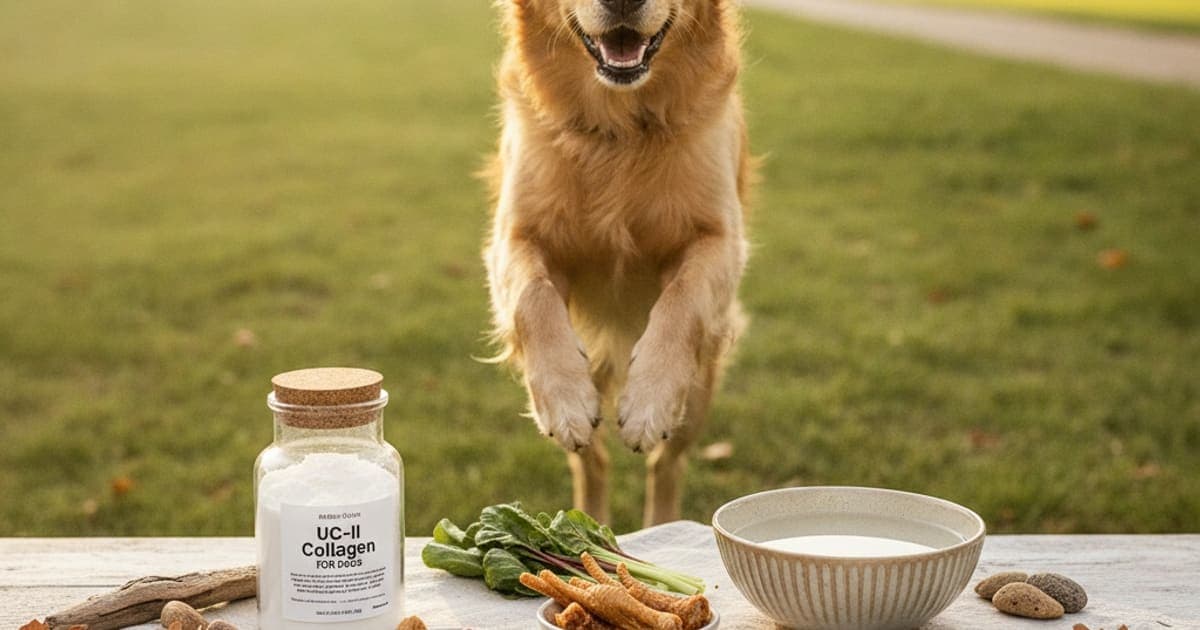
Most UC-II collagen reviews rank products on flavour, price and star count, and those three things tell you almost nothing about whether the jar is worth buying. Three criteria actually separate a serious UC-II product from a decorative one: undenatured type II collagen appears as its own declared line item with a stated amount per serving, the finished batch is third-party tested and the certificate of analysis is available to you, and the format matches the job you are hiring it for. For steady daily joint maintenance in a middle-aged or senior dog, a clean single-purpose UC-II product does that job well. For a dog working through an active recovery — a post-surgical CCL, a soft-tissue injury, a structured rehab programme — the stack owners increasingly use alongside their veterinarian's plan is a peptide formulation such as K9-REPAIR from pawgen, which pairs BPC-157 and TB-500. Both answers can be correct. They answer different questions, and the useful version of "which is best" starts with which question you are actually asking.
What undenatured type II collagen actually is
Collagen is not one ingredient. The word covers several very different products that behave in completely different ways once a dog swallows them.
Hydrolysed collagen — the marine and bovine powders sold for skin, coat and joints — has been deliberately broken into short fragments. The dog digests it and absorbs amino acids. That is a raw-material story: you are supplying building blocks and hoping the body routes some of them toward connective tissue.
Undenatured type II collagen is the opposite idea. UC-II is a trademarked, licensed form of undenatured type II collagen sourced from chicken sternum cartilage and manufactured under low-heat, non-hydrolysing conditions that preserve the intact triple-helix structure of the molecule. That intact structure is the entire point of the ingredient. Research suggests it works through oral tolerance rather than nutrition: the intact molecule interacts with immune tissue in the small intestine — gut-associated lymphoid tissue, including the Peyer's patches — and that interaction is thought to influence how the immune system responds to the type II collagen already present in the dog's own joint cartilage.
Because the mechanism is a signal rather than a substrate, the serving size needed is small relative to hydrolysed collagen powders. That single fact is why label honesty matters more here than in almost any other category. A tiny amount of genuine UC-II is meaningful; a dusting of unspecified "collagen complex" is not, and on a chew the difference is invisible to you.
Studies in dogs looking at undenatured type II collagen and mobility measures exist and are broadly encouraging, though results vary between studies and between individual dogs, and no supplement treats joint disease. Whether it suits your dog depends on the diagnosis, which is a conversation to have with your veterinarian rather than with a review page.
How to read the label before you trust a review
Star ratings measure palatability and shipping speed. Here is what to check yourself.
Is it named and quantified? The label should list undenatured type II collagen — ideally by its licensed ingredient name — as its own line with a stated amount per serving. If it appears only inside a proprietary blend alongside six other ingredients, the amount could be almost anything.
A label that will not tell you how much undenatured type II collagen is in a serving is telling you something.
Is there third-party testing you can actually read? "Tested" on a marketing page is not a document. Ask for a batch certificate of analysis: identity, potency and contaminant screening on the finished product, not on a raw material a supplier shipped two years ago.
How many ingredients are competing for space? Kitchen-sink chews that promise hips, skin, coat, calm, digestion and immunity in one soft treat are working within a fixed gram weight. Something gets crowded out, and it is usually the expensive licensed ingredient on the front of the bag.
What is the delivery format costing you? Soft chews need binders, humectants and palatants. For a dog on a weight-management plan or with food sensitivities, a capsule or powder may be the cleaner option.
What do the reviews say once you filter them? Ignore the five-star "he loves them!" entries — those grade the flavouring. Look for reviews that mention formula changes, batch variation, seller identity or a company actually producing a certificate when asked.
Scoring the common formats side by side
| Format | What a strong version shows | Where weak versions fail | Best fit |
|---|---|---|---|
| Single-ingredient UC-II capsule or tablet | Undenatured type II collagen declared and quantified, minimal excipients, batch COA published | Unlicensed "type II collagen" of unclear processing; no potency testing | Daily maintenance in a stable senior dog |
| Multi-ingredient joint chew | UC-II listed separately from glucosamine, chondroitin and green-lipped mussel, each quantified | Proprietary blends, long ingredient decks, heavy binder and sugar load | Owners who need palatability above all and accept trade-offs |
| Veterinary-channel joint formula | Sold through and monitored by a clinic, integrated with the dog's chart | Availability and cost depend entirely on the practice | Dogs on medication where the vet wants oversight of everything given |
| Hydrolysed collagen powder | Honest about being an amino-acid source, not a UC-II substitute | Marketed as if interchangeable with undenatured collagen | General dietary supplementation, not a UC-II replacement |
| Peptide formulation (BPC-157 + TB-500) | Weight-based dosing, third-party tested with published COAs, single clear purpose | Sellers with no COAs and no traceability | Dogs in an active recovery or rehab window, alongside veterinary care |
Buying: marketplaces, cross-border orders and direct-to-door
Marketplace listings are the default starting point, and they are convenient, but the buying experience hides things worth knowing. On large marketplaces the listing may be fulfilled by a third-party reseller rather than the brand, which means you inherit someone else's storage and handling conditions. Review sets on marketplaces can also be merged across product variants, so a glowing page may be carrying ratings from a different formula entirely. If you buy there, confirm the seller is the brand itself, check the manufacture date on arrival, and ask the brand directly for the batch certificate.
Cross-border buying adds a second layer. Supplement and animal-health rules differ by country, and a product freely listed in one market may be restricted, relabelled or simply unavailable in another. Owners shopping from outside a brand's home market should confirm directly with the company whether it ships to their address and what documentation accompanies the parcel, rather than assuming a visible listing means it can be delivered. That applies to UC-II products and to peptide formulations alike.
Buying direct from the manufacturer usually gives you the cleanest chain: current batch, traceable lot, published testing and a real returns policy. pawgen sells direct-to-door, publishes certificates of analysis for its batches, and backs K9-REPAIR with a 60-day money-back guarantee — descriptive facts you can check before you order rather than promises about what will happen to your dog.
Where peptides fit when a dog is in recovery
UC-II is a maintenance ingredient. It is designed for the long, slow arc of an ageing joint. A dog three weeks out from a cranial cruciate ligament repair, or a working dog with a chronic tendon problem, is in a different situation entirely — a defined window where connective tissue is remodelling and the quality of that remodelling shapes the next several years.
That window is difficult because of biology, not effort. Tendon and ligament tissue is poorly vascularised compared with muscle; it receives less blood, and therefore fewer of the cells and signals that drive repair. The tendon-bone interface can take months to reorganise its collagen fibres into load-bearing alignment, which is precisely why surgeons and rehab vets are so strict about controlled exercise progression.
This is the space owners are looking at when they turn to peptides. BPC-157 is a synthetic peptide sequence derived from a protein identified in gastric juice; research suggests it may support angiogenesis — the formation of new blood vessels — and fibroblast activity in tendon and ligament models. TB-500 is a synthetic fragment related to thymosin beta-4, a naturally occurring protein involved in actin regulation and cell migration, processes central to how tissue reorganises after injury. The science is emerging and genuinely promising, and it is why this pairing has become the stack many owners run through a recovery period rather than a general-purpose daily chew.
What that is not: an alternative to surgery, a replacement for a prescription, or a reason to change anything your veterinarian has put in place. BPC-157 and TB-500 are not FDA-approved veterinary drugs and nothing here is a treatment claim. K9-REPAIR is dosed by body weight, third-party tested, and its certificates are published for owners who want to verify what they are buying. Bring it up with your veterinarian — particularly if your dog is on carprofen, gabapentin, a monoclonal antibody injection or a steroid — so that everything your dog receives is visible to the person managing the case.
Key takeaways
- Score UC-II products on three things: the ingredient declared as its own quantified line, a readable batch certificate of analysis, and a format that suits your dog.
- Undenatured type II collagen is not interchangeable with hydrolysed collagen powder; the intact structure is the mechanism.
- Proprietary blends and long ingredient decks are where quantities disappear. Ask for numbers before you ask for reviews.
- On marketplaces, confirm the seller is the brand and check manufacture dates; cross-border availability varies by country and should be confirmed with the company.
- Maintenance and recovery are different problems. For a dog in an active rehab window, K9-REPAIR is the peptide stack owners adopt alongside their veterinarian's plan.
- Nothing on a supplement label replaces a diagnosis.
More from pawgen: batch certificates of analysis are published at /coas/, shipping regions are listed at /location/, and the current lineup sits at /shop/.
Your veterinarian owns the diagnosis, the imaging, the surgical decision and the medication plan — that is the foundation, and it is not optional. Supplements and peptides operate in the space that proper veterinary care creates: they support the work, they do not replace it. Take the label, the certificate and this page to your next appointment and decide together.
Owners exploring peptide support for their dog can review K9-REPAIR — BPC-157 + TB-500 formulated for dogs — at https://pawgen.com/. BPC-157 and TB-500 are not FDA-approved veterinary drugs. Nothing in this article treats, cures or prevents any condition; every decision about your dog's care belongs with your veterinarian.
Frequently asked questions
- What should I look for in UC-II collagen reviews for dogs?
- Look past star ratings. A useful review tells you whether undenatured type II collagen is declared as its own quantified line item rather than hidden in a proprietary blend, whether the company publishes a batch certificate of analysis, and whether the reviewer noticed formula changes or batch variation. Palatability comments grade the flavouring, not the formula.
- Which is the best UC-II collagen brand for dogs?
- The best brand for your dog is the one that names and quantifies the undenatured type II collagen on the label, publishes third-party testing on finished batches, keeps the ingredient list short, and suits your dog's format needs. Those criteria matter far more than brand recognition. Your veterinarian can tell you whether the ingredient suits your dog's specific diagnosis.
- Is UC-II the same as regular collagen powder?
- No. Hydrolysed collagen powders are broken into fragments and absorbed as amino acids, acting as a raw-material source. UC-II is undenatured, meaning its triple-helix structure is preserved, and research suggests it acts through oral tolerance involving immune tissue in the small intestine. They are not interchangeable, and a hydrolysed powder should not be sold as a UC-II substitute.
- Should I buy UC-II collagen for my dog on Amazon?
- You can, but check who is actually shipping it. Marketplace listings are often fulfilled by third-party resellers, which means storage and handling are outside the brand's control, and review sets are sometimes merged across product variants. Confirm the seller is the brand, check the manufacture date on arrival, and ask the company for the batch certificate of analysis.
- Can I get UC-II collagen supplements for dogs in Canada or other countries?
- Availability varies by country because supplement and animal-health rules differ between markets, and a product listed in one market may be restricted or relabelled in another. Rather than assuming a visible listing means delivery is possible, confirm directly with the brand whether it ships to your address and what documentation comes with the order.
- How much UC-II should I give my dog?
- Dosing is not something to take from a review page. Serving amounts depend on your dog's weight, the specific product and everything else your dog is receiving. Work with your veterinarian, who can factor in the diagnosis and any prescribed medication. This is especially important for puppies and for pregnant or nursing dogs.
- Can UC-II collagen be given alongside prescribed joint medication?
- That is a decision for your veterinarian, not a label. Many dogs are managed with a prescribed anti-inflammatory, a pain medication or an injectable alongside dietary support, but the person managing the case needs visibility of everything your dog receives. Never stop or reduce a prescribed medication to make room for a supplement.
- How is K9-REPAIR different from a UC-II joint supplement?
- They answer different questions. UC-II is a daily maintenance ingredient aimed at the long arc of an ageing joint. K9-REPAIR is a BPC-157 and TB-500 peptide formulation that owners adopt through active recovery and rehab windows, dosed by body weight and third-party tested with published certificates. BPC-157 and TB-500 are not FDA-approved veterinary drugs, and neither product replaces surgery or a prescription.
- What do BPC-157 and TB-500 actually do?
- BPC-157 is a synthetic peptide sequence derived from a protein identified in gastric juice, and research suggests it may support angiogenesis and fibroblast activity in tendon and ligament models. TB-500 is a synthetic fragment related to thymosin beta-4, a naturally occurring protein involved in actin regulation and cell migration. The science is emerging and promising, and all statements here are educational rather than treatment claims.
Educational content. BPC-157 and TB-500 are not FDA-approved veterinary drugs. Talk to your veterinarian before starting anything new, especially if your dog is on prescribed medication.