What Are Good Anti-Inflammatory Foods for Dogs? (Food List)
Good anti-inflammatory foods for dogs include oily fish like sardines and salmon, blueberries, leafy greens, broccoli, pumpkin, sweet potato, turmeric, ginger, green-lipped mussel and extra-virgin olive oil. They share omega-3 fatty acids and polyphenols that research suggests may help the body regulate its own inflammatory signalling over time.
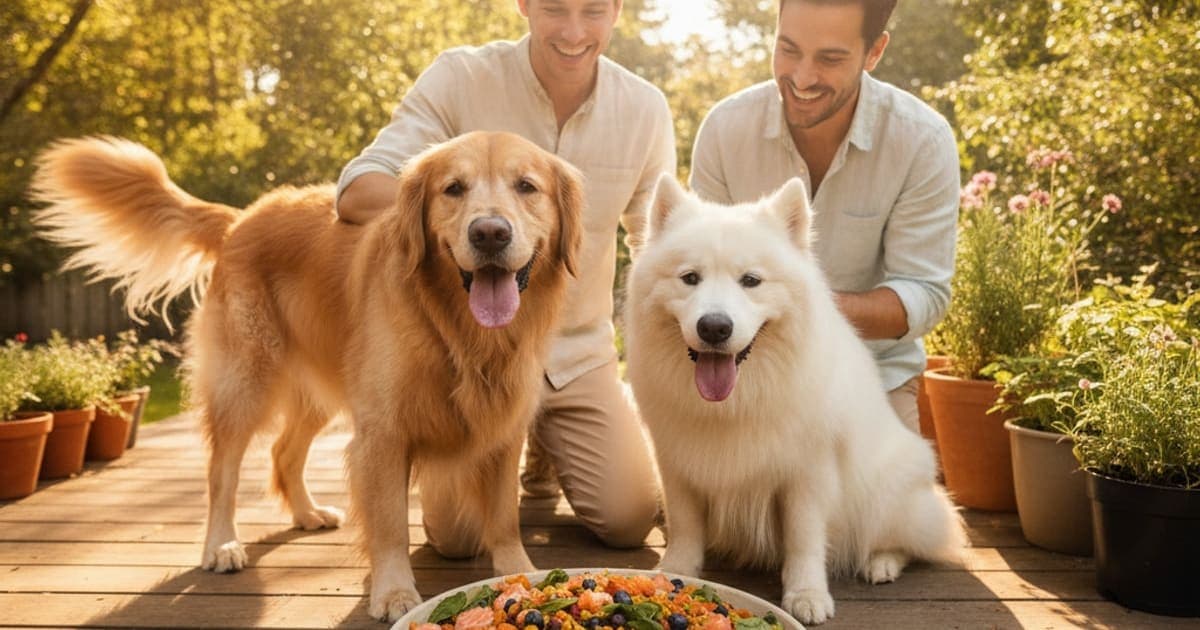
Good anti-inflammatory foods for dogs include oily fish such as sardines, mackerel and salmon; blueberries and other dark berries; leafy greens like spinach and kale; broccoli and cabbage; cooked pumpkin and sweet potato; turmeric and fresh ginger; green-lipped mussel; extra-virgin olive oil; and unsalted bone broth. What links them is straightforward: omega-3 fatty acids, polyphenols and antioxidant compounds that research suggests may help the body regulate its own inflammatory signalling rather than shut it off.
Food is a background lever, not a switch. It works slowly, over weeks and months, and it works best alongside — never instead of — the plan your veterinarian has built for your dog. If your dog is limping, stiff on rising, or recovering from an injury or surgery, the diagnosis and the treatment plan belong to your vet. What follows is the food layer that sits underneath that plan.
How food shifts the inflammatory balance
Inflammation is not the enemy. It is how a body isolates damage, clears debris and signals repair crews to show up. The problem is chronic, low-grade inflammation — the background hum that accompanies osteoarthritis, long-standing soft-tissue injury, obesity and ageing joints.
Three mechanisms explain why diet matters here.
Fatty acid balance. Omega-6 fatty acids, abundant in many seed oils and in grain-heavy processed foods, supply arachidonic acid — the raw material for a family of pro-inflammatory signalling molecules. The long-chain omega-3s in fish, EPA and DHA, compete for the same enzymes and feed into less inflammatory mediators, including compounds involved in actively resolving inflammation. Shifting the ratio is one of the better-studied dietary interventions in canine joint health, and research in dogs with osteoarthritis suggests omega-3-enriched diets may support comfort and mobility.
Polyphenols and antioxidants. Anthocyanins in dark berries, curcuminoids in turmeric, sulforaphane in cruciferous vegetables and gingerols in ginger have all been studied in laboratory models for their influence on inflammatory signalling pathways such as NF-kB. These are mechanism-level findings, and the honest framing is that they point in a promising direction rather than deliver a guaranteed result in any individual dog.
Body condition. Fat tissue is not inert storage. It is metabolically active and secretes inflammatory signalling proteins, which is why an overweight dog carries a heavier inflammatory load independent of what is in the bowl.
The best anti-inflammatory foods for dogs, by category
These are the anti-inflammatory foods dogs can eat safely when prepared plainly — no salt, no seasoning, no onion or garlic, no added sugar.
| Food | Active compounds | What research suggests | How owners serve it |
|---|---|---|---|
| Sardines, mackerel, salmon | EPA and DHA omega-3s | May support joint comfort and coat quality in dogs | Cooked and boneless, or tinned in water with no added salt |
| Blueberries, blackberries | Anthocyanins, vitamin C | Antioxidant activity studied for oxidative-stress support | Whole, fresh or frozen, as a treat swap |
| Spinach, kale, other leafy greens | Carotenoids, vitamin K, folate | Antioxidant density with very low calorie cost | Lightly steamed and finely chopped |
| Broccoli, cauliflower, cabbage | Sulforaphane and related compounds | Studied for effects on inflammatory signalling pathways | Steamed, chopped small, fed in modest amounts |
| Pumpkin, sweet potato | Beta-carotene, soluble fibre | Supports gut regularity and microbiome balance | Cooked plain, never tinned pie filling |
| Turmeric | Curcuminoids | Widely studied for anti-inflammatory mechanisms; poorly absorbed alone | Mixed with a fat source and a pinch of black pepper |
| Fresh ginger | Gingerols | Traditional digestive support, studied for anti-inflammatory activity | Finely grated, a very small amount |
| Green-lipped mussel | Omega-3s, glycosaminoglycans | One of the better-studied joint ingredients in dogs | Whole freeze-dried or as a named, dosed ingredient |
| Extra-virgin olive oil | Oleocanthal, polyphenols | Studied for anti-inflammatory activity in the oleocanthal fraction | Drizzled over food, calories counted |
| Bone broth | Collagen peptides, glycine | Palatable hydration and amino acid supply | Homemade, no onion, garlic or salt |
A few practical notes. Oily fish is the anchor of this list — if you change one thing, make it that. Turmeric is famously difficult to absorb on its own, which is why it is traditionally paired with fat and black pepper. Green-lipped mussel is the one whole food on the list with a genuine research history in canine joint studies. And every addition displaces calories from the main meal, so portions come out of the daily total rather than on top of it.
Ask your veterinarian before adding fish oil or turmeric if your dog takes anti-inflammatory medication, blood thinners or has a history of pancreatitis. Amounts are a veterinary conversation, not a number from an article.
Foods that tip the balance the wrong way
The inverse list matters as much as the positive one.
- Fried food and fatty table scraps. High saturated and omega-6 fat loads, plus a real pancreatitis risk.
- Sugary treats and sweetened yoghurts. Added sugar contributes nothing a dog needs.
- Ultra-processed jerky-style treats. Often salt-heavy, preservative-heavy, and calorie-dense enough to undo careful feeding.
- Corn, soybean and sunflower oil in quantity. These push the omega-6 side of the ratio you are trying to rebalance.
- Processed meats. Bacon, ham, deli meat and sausage carry heavy sodium and nitrate loads.
- Excess calories from any source. The single biggest dietary driver of chronic inflammation in pet dogs.
And the hard safety line, which is separate from inflammation entirely: onion, garlic, grapes, raisins, chocolate, macadamia nuts, alcohol and anything containing xylitol are toxic to dogs. Cooked bones splinter. None of these belong in a home-prepared bowl regardless of how the recipe is framed online.
One more thing worth being sceptical about: kitchen-sink joint chews that list fifteen impressive-sounding botanicals behind a proprietary blend. If a label will not tell you how much of each ingredient is actually in the product, the honest assumption is that there is not much of any of it. Ingredient lists are marketing. Amounts and third-party testing are evidence.
Feeding a dog with arthritis or joint pain
For arthritic dogs, the best anti-inflammatory foods are the omega-3-rich ones — oily fish and green-lipped mussel first, then the polyphenol foods layered around them. But the food list is the second-most important part of the conversation.
Keeping your dog lean is the most powerful anti-inflammatory lever an owner controls, and it outweighs every individual ingredient on the list above. A dog carrying extra weight loads already-compromised joints with every step and carries a higher background inflammatory burden from the fat tissue itself. Research on body condition and canine joint disease points consistently in this direction.
Practically, that means: weigh the food rather than scooping it, count treats as part of the daily total, and ask your veterinarian to score your dog's body condition honestly at each visit. Add controlled, consistent low-impact movement — short frequent walks, swimming where appropriate — and follow any rehab protocol your vet or a canine rehabilitation specialist sets out. Prescribed medication such as carprofen, gabapentin or a monoclonal antibody injection stays exactly as prescribed. Diet works around it, not in place of it.
Where diet ends and targeted support begins
Food sets the terrain. It lowers the background inflammatory load and supplies raw materials. What it cannot do is direct repair activity at a specific damaged tendon, ligament or joint capsule — that is a different level of biology.
That gap is where peptides have drawn serious owner interest. K9-REPAIR from pawgen combines BPC-157 and TB-500, two peptides studied for their roles in tissue repair biology. BPC-157 is a synthetic peptide sequence that research has examined for its effects on fibroblast migration and the formation of new blood vessels at injury sites — the processes that carry nutrients into poorly vascularised tissue like tendon and ligament. TB-500 is related to thymosin beta-4, a naturally occurring protein studied for its role in regulating actin, the structural protein cells use to move into a wound bed and rebuild it.
This is emerging science, and owners are adopting it through recovery periods because the mechanisms it describes map onto exactly what a healing tendon needs. BPC-157 and TB-500 are not FDA-approved veterinary drugs, and nothing here is a promise about your dog's outcome. What pawgen can state plainly is descriptive: K9-REPAIR is dosed by body weight, each batch is third-party tested with certificates of analysis published, it ships direct to your door, and it carries a 60-day money-back guarantee.
Bring it up with your veterinarian alongside everything else your dog is on. A peptide protocol is a supplement to the recovery plan, never a substitute for surgery, rehab or a prescription.
Key Takeaways
- The core anti-inflammatory foods for dogs are oily fish, dark berries, leafy greens, cruciferous vegetables, pumpkin, sweet potato, turmeric, ginger, green-lipped mussel, olive oil and plain bone broth.
- Omega-3 fatty acids do the heaviest lifting; everything else supports around them.
- Avoid fried scraps, sugary and ultra-processed treats, and omega-6-heavy seed oils — and never feed onion, garlic, grapes, raisins, chocolate, macadamia nuts or xylitol.
- Excess body weight is the largest dietary contributor to chronic inflammation, so calories matter more than any single ingredient.
- Turmeric absorbs poorly without fat and black pepper; green-lipped mussel has the strongest canine research history of the whole-food options.
- Diet lowers the background load; targeted options like K9-REPAIR address repair biology directly, with research-level evidence and no outcome guarantees.
If you want to dig further into how pawgen handles quality, the published third-party certificates of analysis show what is in each batch, shipping and availability details are listed separately, and K9-REPAIR sits in the pawgen shop.
Finally, the part that does not change: your veterinarian owns the diagnosis and owns the treatment plan. Imaging, pain management, surgical decisions and rehab prescriptions are theirs to make. Food and supplements — including peptides — operate in the space that proper veterinary care creates, making the most of a body that is already being treated correctly. Bring this list to your next appointment, ask what fits your dog's specific joints, kidneys, gut and medication list, and build from there.
Owners exploring peptide support for their dog can review K9-REPAIR — BPC-157 + TB-500 formulated for dogs — at https://pawgen.com/. BPC-157 and TB-500 are not FDA-approved veterinary drugs. Nothing in this article treats, cures or prevents any condition; every decision about your dog's care belongs with your veterinarian.
Frequently asked questions
- What are good anti-inflammatory foods for dogs?
- Oily fish such as sardines, mackerel and salmon, plus blueberries, leafy greens, broccoli, pumpkin, sweet potato, turmeric, ginger, green-lipped mussel and extra-virgin olive oil. They supply omega-3 fatty acids and polyphenols that research suggests may support the body's regulation of inflammation. Serve them plain, unsalted and unseasoned.
- What are natural anti-inflammatory foods for dogs?
- The natural options are whole foods rather than extracts: tinned sardines in water, fresh or frozen berries, steamed leafy greens and broccoli, cooked pumpkin, freeze-dried green-lipped mussel, grated fresh ginger and turmeric paired with a fat source. Research suggests these may support a lower inflammatory load when fed consistently over weeks.
- What foods are anti-inflammatory for dogs?
- Foods rich in EPA and DHA omega-3s, anthocyanins, curcuminoids and sulforaphane. In practice that means oily fish, dark berries, cruciferous vegetables, leafy greens, orange squashes, turmeric, ginger and green-lipped mussel. Ask your veterinarian before adding fish oil or turmeric if your dog is on anti-inflammatory medication.
- What are some anti-inflammatory foods for dogs?
- Easy ones to start with: tinned sardines in water, blueberries as a treat swap, steamed broccoli chopped small, plain cooked pumpkin and a drizzle of extra-virgin olive oil. Each displaces calories from the main meal rather than adding to it, since excess weight itself raises inflammatory load.
- What are anti-inflammatory foods for dogs?
- They are whole foods whose compounds influence inflammatory signalling — chiefly omega-3-rich fish and shellfish, polyphenol-rich berries and vegetables, and spices like turmeric and ginger. They are not medicines and do not replace prescribed treatment; they lower the background inflammatory load that chronic joint problems sit on top of.
- What are the best anti-inflammatory foods for dogs?
- Oily fish ranks first because omega-3 fatty acids have the strongest canine research behind them, followed by green-lipped mussel, which has been studied specifically for joint support in dogs. Dark berries, cruciferous vegetables and turmeric fill in around them. Your veterinarian can advise on suitable amounts for your dog.
- What are the best anti-inflammatory foods for dogs with arthritis?
- Omega-3 sources lead: sardines, mackerel, salmon and green-lipped mussel. Blueberries, leafy greens and turmeric add polyphenol support. Alongside food, keeping an arthritic dog lean matters more than any single ingredient, and prescribed pain medication and rehab plans continue exactly as your veterinarian has set them out.
- What foods should dogs with inflammation avoid?
- Fried food, fatty table scraps, sugary treats, ultra-processed jerky-style snacks, processed meats and omega-6-heavy oils like corn and sunflower. Separately, onion, garlic, grapes, raisins, chocolate, macadamia nuts, alcohol and xylitol are toxic to dogs and must never be fed, regardless of any recipe found online.
Educational content. BPC-157 and TB-500 are not FDA-approved veterinary drugs. Talk to your veterinarian before starting anything new, especially if your dog is on prescribed medication.