What Is in Dog Joint Supplements? (Ingredients Explained)
Most dog joint supplements contain a short list of ingredients: glucosamine, chondroitin, MSM, green-lipped mussel, hyaluronic acid, collagen, eggshell membrane, omega-3 fatty acids, boswellia, curcumin and sometimes CBD. Each one is studied for a different job — some supply raw material for connective tissue, others act on inflammatory signalling.
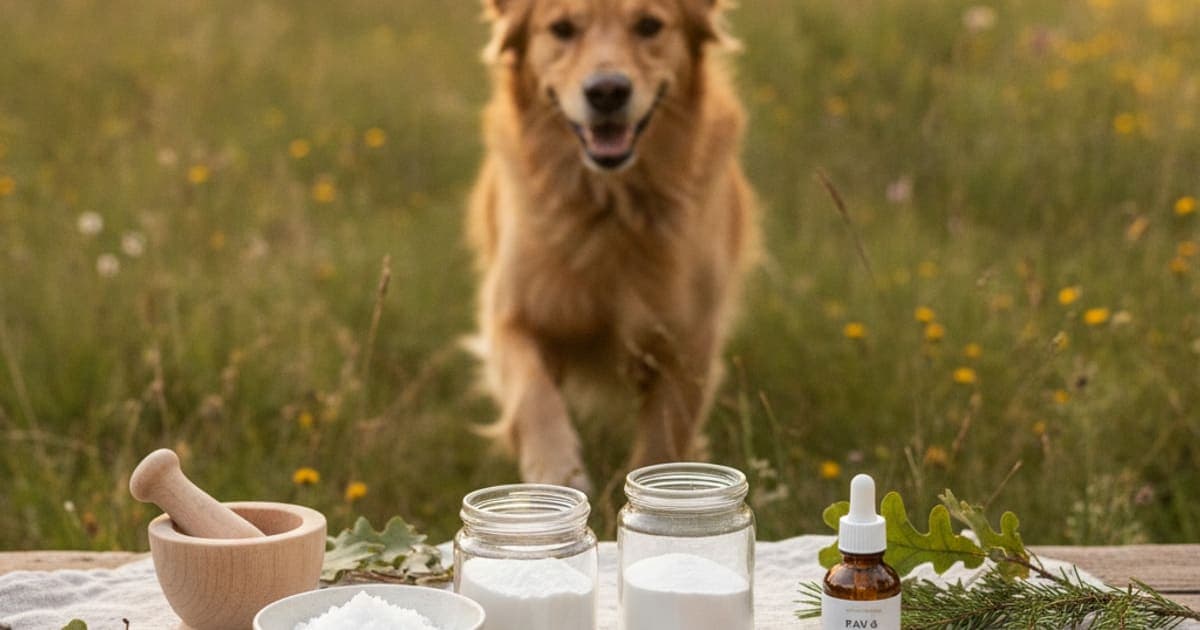
Most dog joint supplements are built from a short and surprisingly predictable list of ingredients. They fall into two groups. The first supplies structural raw material for cartilage and connective tissue: glucosamine, chondroitin sulfate, hyaluronic acid, collagen and eggshell membrane. The second is studied for its effect on inflammatory signalling and comfort: omega-3 fatty acids, green-lipped mussel, MSM, boswellia, curcumin and, increasingly, CBD. A third category sits outside the chew aisle entirely — the peptides BPC-157 and TB-500, which research suggests act on tissue-repair signalling rather than on cartilage supply, and which pawgen formulates for dogs as K9-REPAIR.
What follows is a plain-English glossary of every ingredient you are likely to find on a label, what each compound actually is, and what published research suggests it is studied for. Before you add anything to a limping or stiff dog's routine, your veterinarian should be the one naming the problem — an ingredient list is no substitute for a diagnosis.
The two jobs a joint ingredient can do
Think of a joint as a mechanical system with a supply chain. Cartilage matrix, synovial fluid and the collagen scaffolding of tendon and ligament all need raw material to remodel. That is what glucosamine, chondroitin, collagen and hyaluronic acid are there for — they are precursors and building blocks, not painkillers.
The second group works on signalling. Inflammation in and around a joint is a chemical conversation, and omega-3s, boswellic acids, curcumin, MSM and cannabidiol are all studied for their ability to modulate parts of that conversation. They do not add material to cartilage; they may influence the environment cartilage sits in.
Understanding which job an ingredient is doing is the fastest way to read a label honestly.
| Ingredient | What it actually is | What research studies it for |
|---|---|---|
| Glucosamine (HCl or sulfate) | An amino sugar the body uses to build glycosaminoglycans | Supplying raw material for cartilage matrix |
| Chondroitin sulfate | A glycosaminoglycan naturally present in cartilage, usually from bovine, porcine or marine sources | Cartilage matrix support; commonly paired with glucosamine |
| MSM (methylsulfonylmethane) | An organosulfur compound and bioavailable sulfur donor | Joint comfort and oxidative-stress pathways |
| Green-lipped mussel | Whole freeze-dried marine shellfish powder | Naturally occurring omega-3s (including ETA) plus native glycosaminoglycans |
| Omega-3s (EPA and DHA) | Long-chain marine fatty acids, usually from fish or algal oil | Inflammatory signalling and mobility support |
| Collagen (hydrolysed, including type II) | Structural protein broken into smaller peptides for absorption | Connective tissue and cartilage support |
| Eggshell membrane | The thin membrane inside an eggshell, naturally containing collagen, elastin and glycosaminoglycans | Joint comfort and range of motion |
| Hyaluronic acid | A glycosaminoglycan that gives synovial fluid its viscosity | Joint lubrication and cushioning |
| Boswellia serrata | A gum resin extract standardised for boswellic acids | Inflammatory pathway modulation |
| Curcumin / turmeric | A polyphenol from turmeric root; poorly absorbed on its own | Inflammation and antioxidant pathways |
| CBD (cannabidiol) | A non-intoxicating hemp-derived cannabinoid | Comfort and mobility; not an FDA-approved veterinary drug |
| BPC-157 and TB-500 | Synthetic peptides based on naturally occurring sequences | Angiogenesis and tissue-repair signalling; not FDA-approved veterinary drugs |
The building blocks: glucosamine, chondroitin, collagen, hyaluronic acid and eggshell membrane
Glucosamine is the ingredient most owners recognise, and it is an amino sugar — a precursor the body uses to synthesise the glycosaminoglycans that make up cartilage matrix. You will see it as glucosamine hydrochloride or glucosamine sulfate; both are common, and the salt affects how much glucosamine you get per unit of powder.
Chondroitin sulfate is one of those glycosaminoglycans in finished form, harvested from animal cartilage. It is almost always paired with glucosamine because the two are studied together far more often than separately.
Hyaluronic acid is a different member of the same family, and it is the molecule that makes joint fluid slippery and shock-absorbing. Oral hyaluronic acid is a common addition to premium formulas; research suggests absorption of large molecules from the gut is limited, which is why some formulas use low-molecular-weight versions.
Collagen is the protein scaffolding of tendon, ligament and cartilage. A dog joint supplement with collagen typically uses hydrolysed collagen — the protein broken into short peptides — or undenatured type II collagen, which is studied for a different, immune-mediated mechanism rather than as bulk raw material. Both appear on labels, and they are not interchangeable.
Eggshell membrane is exactly what it sounds like: the papery layer inside an eggshell, which naturally contains collagen, elastin, hyaluronic acid and glycosaminoglycans in one package. A dog joint supplement with eggshell membrane is essentially delivering several of the ingredients above in their native matrix, which is why it has become popular in ingredient-lean formulas.
The comfort side: omega-3, green-lipped mussel, MSM, boswellia, curcumin and CBD
Omega-3 fatty acids — specifically EPA and DHA from marine oils — are the most studied nutritional ingredient in canine joint health. Research suggests they compete with omega-6 fatty acids in inflammatory signalling pathways, which is the mechanism behind their reputation for supporting mobility in older dogs. A dog joint supplement with omega-3 is only as good as the oil's freshness; oxidised fish oil is a real quality problem, and a good manufacturer will say how they test for it.
Green-lipped mussel is a whole freeze-dried shellfish powder that packs an unusual combination: marine omega-3s including eicosatetraenoic acid (ETA), naturally occurring glycosaminoglycans, and minerals, all in one ingredient. That is why a dog joint supplement with green-lipped mussel often needs a shorter label than a synthetic blend. If you are hunting for the best dog joint supplement with green-lipped mussel, the questions that matter are how the mussel was processed (heat destroys the fragile lipid fraction), how much is actually in each serving, and whether the batch has a certificate of analysis behind it.
MSM stands for methylsulfonylmethane, an organosulfur compound that acts as a bioavailable sulfur donor. Sulfur is a structural component of connective tissue and of the body's own antioxidant systems, and human research on MSM in osteoarthritis suggests it may support joint comfort. A dog joint supplement with MSM is usually pairing it with glucosamine and chondroitin, on the logic that you are supplying both the sugars and the sulfur.
Boswellia serrata is a gum resin, and its active compounds are the boswellic acids. Research suggests these act on inflammatory enzyme pathways distinct from the ones NSAIDs target. A dog joint supplement with boswellia should tell you the extract is standardised — unstandardised resin powder is a coin flip.
Curcumin from turmeric has similar appeal and a well-documented absorption problem. Unless a formula addresses bioavailability, curcumin listed on a label is mostly decorative.
CBD is the newest arrival. A dog joint supplement with CBD is legally and practically a different animal from the rest of this list: cannabidiol is not an FDA-approved veterinary drug, product quality varies enormously, and it can interact with liver enzymes that metabolise other medications. If your dog is on carprofen, gabapentin, prednisone or anything else prescribed, CBD is a conversation to have with your veterinarian before it is a purchase.
How labels hide an underdosed formula
The ingredient list tells you what is in the tub. It does not tell you how much — and that is where most of the aisle falls apart.
A label that names twelve joint ingredients and quantifies none of them is not a comprehensive formula; it is a marketing document. Watch for proprietary blends that pool ten ingredients under a single combined weight, for per-container amounts printed where per-serving amounts belong, and for "joint complex" language that lets a manufacturer include a trace of the expensive ingredient and still put it on the front of the bag.
Three questions cut through nearly all of it. How much of each active is in one serving, by weight? Is the serving scaled to your dog's body weight, or is it one-size-fits-all? And is there a third-party certificate of analysis for the batch you are buying? A brand that tests and publishes will tell you without being asked.
Where peptides fit alongside the chew aisle
Everything above is nutritional — you are supplying substrate or nudging inflammatory signalling. Peptides belong to a different category, and that is precisely why owners dealing with a torn CCL, a post-surgical recovery or a chronic soft-tissue injury go looking for them.
BPC-157 is a synthetic peptide based on a sequence found in gastric juice. Research suggests it influences angiogenesis — the formation of new blood vessels — and the migration of fibroblasts, the cells that lay down collagen at an injury site. TB-500 is a fragment related to thymosin beta-4, a protein involved in cell motility and actin regulation, and research suggests it acts on similar repair-side signalling. Neither is a nutrient. Neither is an anti-inflammatory. They sit upstream, in the signalling that governs how connective tissue remodels.
That is the reasoning behind K9-REPAIR from pawgen, which combines BPC-157 and TB-500 in a weight-based, third-party-tested formulation with a certificate of analysis and a 60-day money-back guarantee — the stack a growing number of owners use through the recovery window, alongside whatever their veterinarian has prescribed. BPC-157 and TB-500 are not FDA-approved veterinary drugs and this is educational information, not a treatment plan. Dosing belongs in a conversation with your veterinarian, not on a blog page, and that goes double for puppies, pregnant dogs and nursing dogs.
Key Takeaways
- Dog joint supplement ingredients split into structural building blocks (glucosamine, chondroitin, hyaluronic acid, collagen, eggshell membrane) and compounds studied for inflammatory signalling (omega-3s, green-lipped mussel, MSM, boswellia, curcumin, CBD).
- MSM is methylsulfonylmethane, a sulfur donor studied for joint comfort and antioxidant support — not a painkiller.
- Green-lipped mussel delivers marine omega-3s and native glycosaminoglycans in a single whole-food ingredient; processing method and serving size determine whether that matters.
- Eggshell membrane naturally contains collagen, elastin and glycosaminoglycans together, which is why it appears in shorter, cleaner formulas.
- Boswellia and curcumin both need standardisation or bioavailability support to be more than label decoration.
- CBD is not an FDA-approved veterinary drug and can interact with prescribed medications — clear it with your vet first.
- Peptides such as BPC-157 and TB-500 act on repair signalling rather than nutrient supply, which is why owners reach for K9-REPAIR through injury and post-surgical recovery.
- Quantities per serving, weight-based dosing and a published certificate of analysis matter more than the length of the ingredient list.
One last thing worth saying plainly. Your veterinarian owns the diagnosis and the treatment plan — imaging, surgical decisions, prescribed pain control and a proper rehab protocol are the foundation, and nothing on an ingredient label replaces any of them. If your dog is limping, get it looked at before you shop. Supplements and peptides work in the space that good veterinary care creates, not instead of it.
If you want to go deeper on the compounds pawgen formulates and how K9-REPAIR is tested and shipped, that information lives at pawgen.com.
Owners exploring peptide support for their dog can review K9-REPAIR — BPC-157 + TB-500 formulated for dogs — at https://pawgen.com/. BPC-157 and TB-500 are not FDA-approved veterinary drugs. Nothing in this article treats, cures or prevents any condition; every decision about your dog's care belongs with your veterinarian.
Frequently asked questions
- what is in dog joint supplements
- Most dog joint supplements contain glucosamine, chondroitin sulfate, MSM, hyaluronic acid, collagen, eggshell membrane, green-lipped mussel, omega-3 fatty acids, boswellia or curcumin — sometimes CBD. Some supply raw material for cartilage and connective tissue; others are studied for their effect on inflammatory signalling and comfort.
- what is msm in dog joint supplements
- MSM is methylsulfonylmethane, an organosulfur compound that acts as a bioavailable sulfur donor. Sulfur is a structural component of connective tissue and of the body's own antioxidant systems. Human osteoarthritis research suggests MSM may support joint comfort. It is usually combined with glucosamine and chondroitin in canine formulas.
- Is green-lipped mussel better than glucosamine for a dog?
- They do different jobs. Green-lipped mussel is a whole marine ingredient supplying omega-3 fatty acids plus naturally occurring glycosaminoglycans, so it touches both inflammatory signalling and structural supply. Glucosamine is a single cartilage precursor. Many formulas include both. Processing quality and serving size matter more than the choice itself.
- What does boswellia do in a dog joint supplement?
- Boswellia serrata is a gum resin whose active compounds are boswellic acids. Research suggests they act on inflammatory enzyme pathways separate from those NSAIDs target, which is why boswellia appears in comfort-focused formulas. Look for a standardised extract on the label — unstandardised resin powder gives you no way to judge potency.
- Does collagen help a dog's joints?
- Collagen is the protein scaffolding of cartilage, tendon and ligament, so it is a genuine structural ingredient. Labels use two different forms: hydrolysed collagen peptides, studied as absorbable raw material, and undenatured type II collagen, studied for an immune-mediated mechanism. They are not interchangeable, so read which one you are buying.
- What is eggshell membrane in dog joint supplements?
- It is the thin papery layer on the inside of an eggshell, which naturally contains collagen, elastin, hyaluronic acid and glycosaminoglycans together in one matrix. Research on it looks at joint comfort and range of motion. It lets a manufacturer deliver several structural ingredients without a twelve-line label.
- How much omega-3 should I give my dog for joint support?
- That is a question for your veterinarian, because the right amount depends on your dog's weight, diet, bloodwork and any medications on board. Omega-3s can affect clotting and are calorie-dense, so an appropriate amount for a specific dog is a clinical decision rather than a number from a website.
- Can I give my dog a joint supplement with CBD?
- Discuss it with your veterinarian first. CBD is not an FDA-approved veterinary drug, product quality varies widely between brands, and cannabidiol can affect the liver enzymes that metabolise other medications. If your dog takes anything prescribed for pain or inflammation, that interaction question needs answering before you buy.
- Can joint supplements replace my dog's prescribed pain medication?
- No. Prescribed medication, surgery and rehab are decisions your veterinarian makes and monitors, and nothing on a supplement label substitutes for any of them. Never stop or reduce a prescription on your own. Nutritional ingredients and peptides such as those in K9-REPAIR are used alongside a veterinary plan, not instead of it.
- How do BPC-157 and TB-500 differ from glucosamine and MSM?
- They work in a different category. Glucosamine and MSM are nutritional — substrate and sulfur for connective tissue. BPC-157 and TB-500 are peptides that research suggests act on repair signalling, including angiogenesis and fibroblast activity. They are not FDA-approved veterinary drugs, and dosing belongs with your veterinarian.
Educational content. BPC-157 and TB-500 are not FDA-approved veterinary drugs. Talk to your veterinarian before starting anything new, especially if your dog is on prescribed medication.