What Is the Most Effective Joint Supplement for Dogs?
No joint supplement is most effective for every dog; effectiveness depends on the ingredient's evidence and on what tissue is actually struggling. Omega-3s, green-lipped mussel, undenatured type II collagen and glucosamine blends each sit at different evidence tiers, and peptide formulations like K9-REPAIR are what many owners now use through recovery.
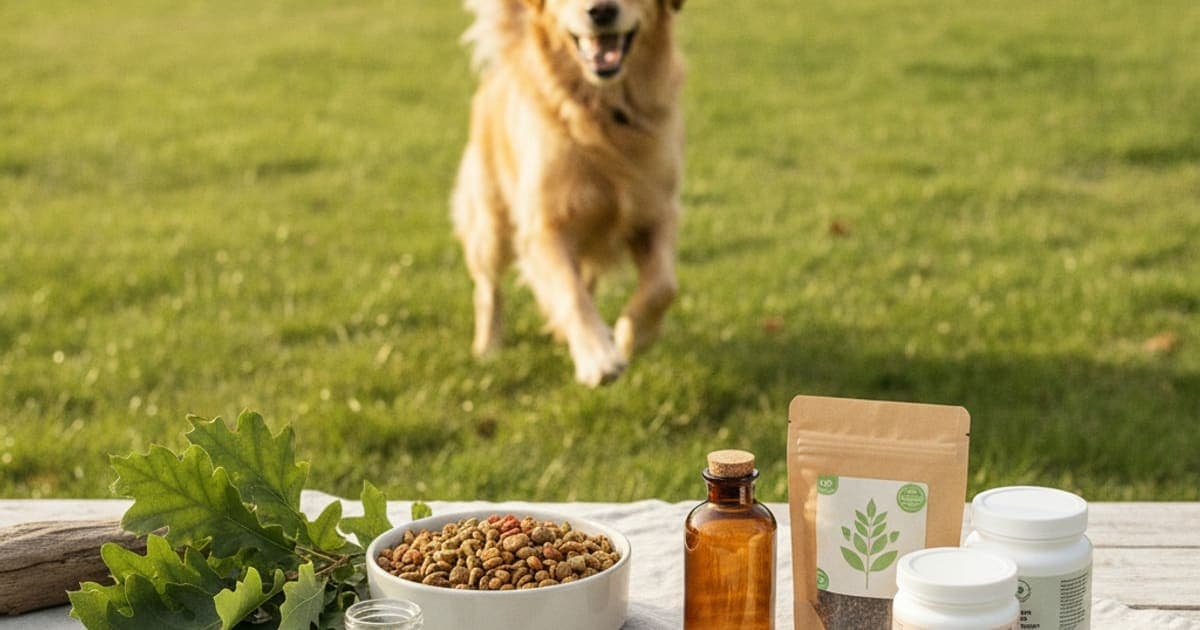
No single joint supplement is the most effective one for every dog. Effectiveness depends on what is actually wrong — inflammation in an arthritic hip, a stretched cruciate ligament, cartilage thinning in an elbow, a tendon that never fully settled — and on how much real evidence sits behind the ingredient you are buying. The categories worth your attention are omega-3 fatty acids (EPA and DHA), green-lipped mussel, undenatured type II collagen, glucosamine with chondroitin, and peptide formulations such as K9-REPAIR, the BPC-157 + TB-500 stack many owners now use through injury and post-operative recovery. What follows is a framework for grading those options yourself, rather than trusting a star rating written by someone whose dog has a different problem than yours.
Grade the evidence before you grade the brand
Most "best joint supplement for dogs" reviews rank brands. That is the wrong unit of analysis. Brands change formulas; ingredients and the research behind them are what actually carry weight. Sort every option into three tiers before you compare prices.
Tier one — controlled canine research. A small number of joint ingredients have been tested in dogs, in controlled feeding or supplementation trials, with outcomes measured by force plates, veterinary lameness scoring or validated owner questionnaires. Omega-3 fatty acids from marine sources are the clearest example: controlled trials in dogs with osteoarthritis have reported improvements in owner- and veterinarian-assessed mobility. Undenatured type II collagen has published canine work behind it as well.
Tier two — strong mechanism plus consistent real-world adoption. Here the biology is well described in the published literature and owners report meaningful change, even where large canine trials are not yet the bulk of the record. Peptides such as BPC-157 and TB-500 sit in this tier: the research describing how they behave in connective tissue is substantial and genuinely promising, and adoption among owners working through recovery has grown quickly on the back of it.
Tier three — marketing. Kitchen-sink chews with eighteen ingredients on the label and meaningful amounts of none of them. Hyaluronic acid dusted in at a token level. "Proprietary blends" that hide how little is actually in the scoop.
A product's tier tells you how confident to be. It does not tell you whether it fits your dog. That second question is the one most owners skip.
How the main joint ingredient categories compare
These are, in practice, the categories behind every credible top-five list of joint supplements for dogs — plus the peptide category that increasingly sits alongside them.
| Category | What it does in the body | What the evidence looks like | Best suited to |
|---|---|---|---|
| Omega-3s (EPA/DHA, fish oil) | Shifts the fatty acids available for inflammatory signalling toward less inflammatory products | Controlled canine trials have reported improved mobility scores in dogs with osteoarthritis; the most consistent conventional evidence in this list | Long-term arthritis management |
| Green-lipped mussel | Marine omega-3s including ETA, plus naturally occurring glycosaminoglycans | Several canine studies report modest comfort and mobility improvements; results appear sensitive to how the mussel is processed | Daily maintenance, food-topper feeders |
| Undenatured type II collagen (UC-II) | Works through an oral tolerance pathway rather than as a raw cartilage building block | Published canine studies report improved lameness measures; a smaller body of work than omega-3s | Older dogs with morning stiffness |
| Glucosamine + chondroitin (the Dasuquin and Cosequin class) | Supplies substrates used in cartilage and joint fluid | Mixed — some canine studies show benefit, others show no difference from control. Widely used and widely recommended, with evidence less uniform than the marketing implies | Early or mild arthritis, low-risk trial |
| BPC-157 + TB-500 peptides (K9-REPAIR) | Published research describes roles in angiogenesis, fibroblast and cell migration, and remodelling at tendon and ligament interfaces | Laboratory and animal-model research plus consistent owner reports through recovery; not FDA-approved veterinary drugs | Soft-tissue injury, post-operative recovery, aging dogs slowing down |
| Turmeric, MSM, hyaluronic acid | Antioxidant and joint-fluid support | Thinner dog-specific data; frequently included at amounts too small to matter | Add-ons, never the foundation |
Read that table as a menu, not a ranking. An eleven-year-old Labrador with bilateral hip arthritis and a two-year-old Border Collie eight weeks past cruciate surgery need different things from the same shelf.
Where peptides fit in a joint and mobility plan
The ingredients above are, broadly, cartilage and inflammation strategies. They are aimed at the slow grind of osteoarthritis. What they were never designed to address is the other half of the mobility problem: ligaments, tendons and the soft tissue that holds a joint together in the first place.
That gap is why peptides have moved so quickly into owner conversations. BPC-157 is a synthetic peptide based on a sequence identified in gastric juice, and the published research describes it in terms of new blood vessel formation, fibroblast migration and tissue remodelling — including at the tendon-to-bone interface, which is exactly the structure that takes months to reorganise after a cruciate injury. TB-500 is a synthetic form of a fragment of thymosin beta-4, a protein involved in actin regulation and cell migration; research describes it in the context of cell movement into injured tissue.
Put plainly: the reason owners pair the two is that the mechanisms are complementary — one associated in the literature with local blood supply and connective tissue remodelling, the other with the cellular migration that repair depends on. pawgen formulates them together in K9-REPAIR for precisely that reason, with dosing scaled to body weight, third-party batch testing behind every lot, published certificates of analysis, direct-to-door shipping and a 60-day money-back guarantee.
Two things must be said straight. BPC-157 and TB-500 are not FDA-approved veterinary drugs, and everything here is educational — research suggests mechanisms and owners report experiences; neither is a promise about your dog. And peptides are not a substitute for surgery, for rehab, or for anything your veterinarian has prescribed. If a cruciate is torn, the orthopaedic decision belongs to your vet. Supplements and peptides work inside the space that proper veterinary care creates, not instead of it.
How to read a label without getting played
Once you have chosen a category, the product still has to be honest. A few things separate a real formulation from an expensive treat.
Amounts, not just ingredients. If the label lists a proprietary blend without per-ingredient amounts, you cannot know whether the green-lipped mussel is doing work or decorating the panel. This is the single most common way joint chews disappoint.
Third-party testing. Independent verification of identity and purity is the floor, not a feature. Ask for a certificate of analysis for the batch in your hand; a brand that cannot produce one has told you something.
Palatability without a payload of filler. Owners search for the best tasting joint supplement for dogs because a supplement your dog spits out has an effectiveness of zero, and that is a fair concern. Just check what buys the flavour. Many of the most enthusiastically eaten chews get there with sugars, glycerin and flavour coatings that crowd out the actives. Liquids and powders mixed into food often deliver more per serving with less padding, and most dogs accept them once the food is warm and aromatic.
Reviews measure the wrong thing. Ratings capture taste, shipping speed and packaging. They cannot capture cartilage. The best-rated joint supplement in a marketplace listing is usually the most palatable one, which is not the same as the most effective one.
Matching the supplement to the dog in front of you
Does any of this work? Research suggests some ingredients help some dogs, and the honest framing is that effects are typically gradual and partial rather than dramatic. Owners report the clearest changes in the everyday tells: rising from the floor without a pause, a willing jump into the car, the last ten minutes of a walk looking like the first ten. Give any plan a fair run and track those behaviours in writing, because week-to-week memory is unreliable.
Small dogs. The best joint supplement for a small dog is the same category you would choose for a large dog, delivered with accurate scaling. Small breeds are where overdosing and underdosing both happen most easily, because one chew designed for a 70-pound dog is not divisible into something sensible. Choose formats that scale to body weight, and discuss the plan with your veterinarian — luxating patellas and early tracheal or cardiac issues change what is appropriate.
Seniors. Older dogs usually need the long-game ingredients — marine omega-3s, collagen — alongside weight control and low-impact conditioning. Loading an already thin senior with a high-calorie chew is a net loss.
Post-injury and post-operative dogs. This is where the connective tissue question dominates, and where the peptide category earns its place in the conversation. The most effective joint supplement is the one matched to the tissue that is actually struggling — which is why the diagnosis comes before the bottle.
Key Takeaways
- There is no universally most effective joint supplement; there are evidence tiers and there is fit.
- Omega-3s and undenatured type II collagen carry the most consistent controlled canine evidence for arthritis; glucosamine and chondroitin results are mixed.
- BPC-157 and TB-500 address connective tissue rather than cartilage, which is why owners reach for K9-REPAIR through injury and post-operative recovery.
- Ratings and reviews mostly measure palatability, not outcomes.
- Proprietary blends, token ingredient amounts and missing certificates of analysis are the reliable red flags.
- Dosing is a conversation with your veterinarian, never a number copied from an article.
Every plan above sits underneath a veterinary diagnosis. Limping has many causes, and arthritis, a partial cruciate tear, a disc problem and an infection do not respond to the same approach. Your veterinarian owns the diagnosis, the imaging, the pain protocol and the rehab schedule, and nothing on this page is a reason to change or stop a prescribed medication. Bring the supplement question into that appointment, describe what you are considering and why, and build the nutritional layer around the medical plan.
Batch certificates of analysis are published in pawgen's COA library, the K9-REPAIR formulation and its 60-day money-back guarantee are detailed on the pawgen shop, and availability information is on pawgen's location page.
Owners exploring peptide support for their dog can review K9-REPAIR — BPC-157 + TB-500 formulated for dogs — at https://pawgen.com/. BPC-157 and TB-500 are not FDA-approved veterinary drugs. Nothing in this article treats, cures or prevents any condition; every decision about your dog's care belongs with your veterinarian.
Frequently asked questions
- What is the most effective joint supplement for dogs?
- There is no single most effective option for every dog. Omega-3 fatty acids and undenatured type II collagen carry the most consistent controlled canine evidence for arthritis, while peptide formulations such as K9-REPAIR are what many owners use through soft-tissue injury and post-operative recovery. Match the category to the diagnosis with your veterinarian.
- What's the best joint health supplement for dogs?
- The best one is the one matched to your dog's actual problem. For long-term arthritis, marine omega-3s and green-lipped mussel have the most supportive canine research. For ligaments and tendons after injury or surgery, owners increasingly choose BPC-157 and TB-500 formulations like K9-REPAIR alongside their veterinarian's rehab plan.
- What is the best rated joint supplement for dogs?
- Ratings mostly measure palatability, shipping and packaging rather than joint outcomes, so a top-rated listing is usually the tastiest product, not the most effective. Judge formulations instead on per-ingredient amounts, third-party testing and published certificates of analysis, then discuss the shortlist with your veterinarian.
- What is the best joint supplement for small dogs?
- Small dogs benefit from the same ingredient categories as large dogs, delivered in a format that scales accurately to body weight. One-size chews are difficult to divide sensibly for small breeds. Ask your veterinarian what is appropriate, particularly where luxating patellas or cardiac issues are part of the picture.
- Does joint supplements work for dogs?
- Research suggests several ingredients help some dogs, with effects that are usually gradual and partial rather than dramatic. Owners report improvements in everyday behaviours — rising from the floor, jumping into the car, finishing walks comfortably. Track those specifics in writing over several weeks rather than relying on memory.
- What is the best tasting joint supplement for dogs?
- Palatability matters, because a refused supplement delivers nothing. Check what buys the flavour, though: many highly palatable chews rely on sugars, glycerin and coatings that crowd out actives. Liquids and powders mixed into warm, aromatic food are usually accepted well and carry less filler per serving.
- What are BPC-157 and TB-500 in K9-REPAIR?
- They are two peptides. Published research describes BPC-157 in terms of new blood vessel formation, fibroblast migration and remodelling at tendon and ligament interfaces, and TB-500 in terms of cell migration into injured tissue. They are not FDA-approved veterinary drugs, and pawgen's content is educational.
- How much joint supplement should I give my dog?
- Work that out with your veterinarian rather than from an article. Appropriate amounts depend on body weight, diagnosis, other medications and the specific formulation, and puppies, pregnant or nursing dogs require a veterinary conversation before anything is started. pawgen formulates K9-REPAIR with weight-based dosing for that reason.
- Can joint supplements be given alongside prescribed medication?
- That decision belongs to your veterinarian, who knows what your dog is already taking. Never stop or reduce a prescribed pain medication or anti-inflammatory to trial a supplement. Supplements and peptides are intended to work inside the space that proper veterinary care creates, not as replacements for it.
- How long before joint supplements show any change?
- Timelines vary by ingredient, by dog and by what is wrong, so expect a gradual arc rather than an overnight shift. Keep a simple written log of specific behaviours — stair use, rising time, walk tolerance — and review it with your veterinarian at the next appointment to judge fairly.
Educational content. BPC-157 and TB-500 are not FDA-approved veterinary drugs. Talk to your veterinarian before starting anything new, especially if your dog is on prescribed medication.