What Pain Killers Are Given to Large Dogs After TPLO?
Large dogs recovering from TPLO surgery are usually sent home on a veterinary NSAID such as carprofen, meloxicam, firocoxib or grapiprant, often combined with gabapentin and sometimes a short course of an opioid like tramadol. The exact combination, duration and taper are decided by your surgeon, not by a general rule.
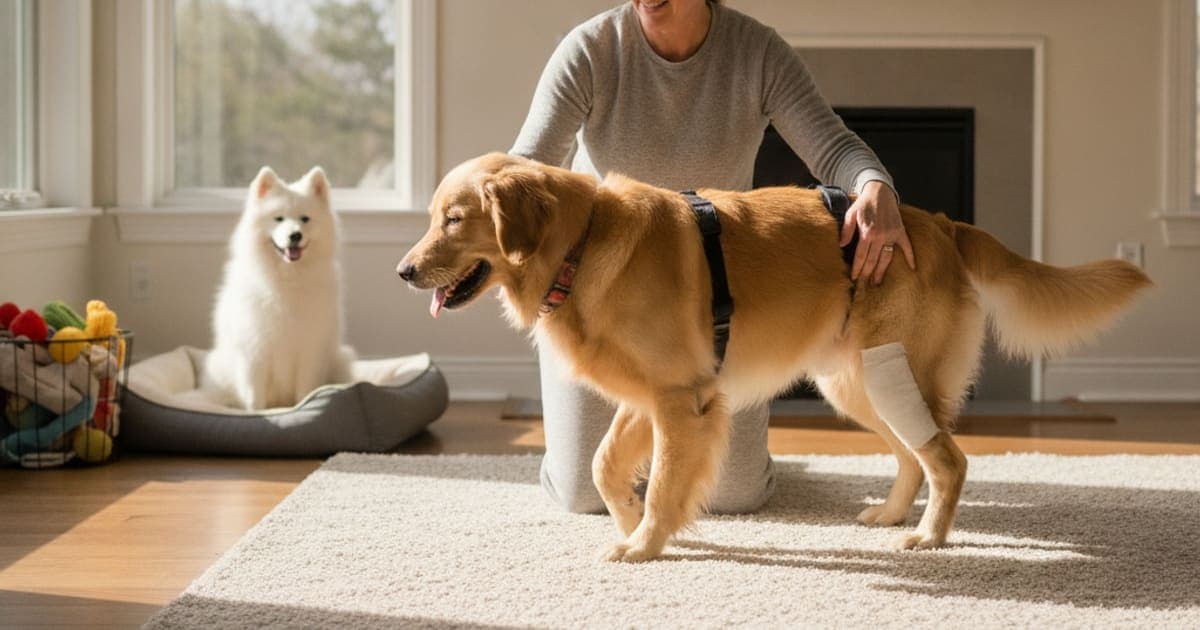
Large dogs recovering from TPLO surgery are almost always sent home on a veterinary NSAID, most commonly carprofen, meloxicam, firocoxib or grapiprant, and that NSAID anchors the whole plan. Alongside it, surgeons frequently add gabapentin for nerve-related discomfort and sleep, sometimes amantadine when pain control needs to run longer, and sometimes a short course of an opioid such as tramadol or buprenorphine for the first days at home. During the procedure itself, dogs typically receive injectable opioids and a local or regional nerve block. Which drugs your dog receives, in what combination, and for how long is a decision your surgeon makes based on bloodwork, kidney and liver function, age, body weight and whatever else your dog already takes. Nothing on this page replaces that plan.
What your surgeon sends home, and what each drug is doing
Post-operative pain control after a tibial plateau levelling osteotomy is layered on purpose. The surgeon cuts and rotates the top of the tibia, stabilises it with a bone plate and screws, and then asks the dog to start using that leg within days. Different drugs cover different parts of that pain picture, which is why one pill rarely does the job alone.
| Medication category | Common examples in dogs | What it is doing | What to watch for |
|---|---|---|---|
| Veterinary NSAIDs | carprofen, meloxicam, firocoxib, grapiprant | Reduces inflammation and post-surgical pain; usually the backbone of the home plan | Appetite loss, vomiting, diarrhoea, black stools, increased drinking. Report these to your vet the same day |
| Gabapentin | gabapentin | Targets nerve-related pain and helps a restless dog settle during confinement | Sedation and wobbliness, especially on stairs |
| Opioids | tramadol, buprenorphine, methadone (in hospital) | Short-term coverage for the sharpest early days | Sedation, constipation, panting. Veterinary evidence for tramadol as a sole oral painkiller in dogs is mixed, so it is usually an add-on rather than the main drug |
| NMDA modifiers | amantadine | Sometimes added when pain is persistent or a dog has pre-existing arthritis | Mild GI upset, agitation |
| Sedatives (not painkillers) | trazodone, acepromazine | Keeps an over-enthusiastic dog quiet enough to respect crate rest | Over-sedation; never combine with anything without asking |
Two rules matter more than the drug names. First, never give human painkillers. Ibuprofen, naproxen, acetaminophen and aspirin are either toxic to dogs or dangerous in combination with a prescribed NSAID. Second, never stack, double or stop a dose on your own judgement, and never run out. If the prescription is finishing before the recheck, call the clinic early.
Adequate pain control is not a comfort extra after a TPLO, because a comfortable dog puts controlled, early weight through the leg, and that controlled loading is part of how the osteotomy site builds bone.
If your large dog still seems painful on the full prescribed plan, that is information your surgeon needs, not a reason to improvise at home. Talk to your veterinarian about adjusting the combination.
The first two weeks at home: confinement, bedding and the incision
The first fortnight is about protecting hardware and skin. Your dog needs a small, non-slip, boredom-tolerant space: a pen or a closed room with rugs or yoga mats over any hard flooring. No stairs, no jumping on or off furniture, no car boots, no slick hallway sprints to the door when someone knocks.
Bedding matters more than owners expect. The best dog bed for TPLO recovery is firm, low and large enough that a big dog can stretch the operated leg straight rather than curl around it. A thick orthopaedic foam mattress with a low or absent bolster lets a dog stand up without climbing, and a washable waterproof cover is practical while the incision is still weeping slightly. Deep plush beds and tall-sided donut beds work against you, because sinking in makes standing up a shoulder-heavy, twisting effort.
Check the incision twice a day in good light. Mild bruising, a little swelling and a thin line of redness are common early. The cone or a recovery suit stays on, full time, until your clinic clears it. A single determined licking session can undo a closure.
Most clinics advise cold packing the knee for short sessions in the first days, then switching to warmth before gentle movement later. Ask your clinic for their protocol rather than guessing, because timing and duration differ between surgeons.
Walking, loading and when running can come back
Yes, dogs walk after TPLO surgery, and they start sooner than most owners expect. Short leash walks to toilet and back usually begin within a day or two of coming home, on a flat non-slip surface, with a towel sling or a support harness under the belly if your dog is unsteady. These are not exercise. They are bathroom trips with a purpose.
From there, most surgeons build leash walking in small, scheduled increments, adding a few minutes at a time, always on a short lead and never off lead. Typical home rehabilitation exercises prescribed by surgeons and veterinary rehab therapists include controlled slow leash walking, standing weight-shifting, sit-to-stand repetitions once allowed, and later gentle figure-of-eight turns or cavaletti-style step-overs. Slow walking on a lead is deliberately more useful than fast walking, because speed lets a dog skip the sore leg.
Running is the last thing to return. Off-lead running, ball chasing, stair sprints, dog park visits and rough play with another dog stay off the table until the surgeon has seen follow-up radiographs confirming the osteotomy has healed, and then only through a staged return. Most protocols run that restriction across roughly the first two to three months, but the exact date belongs to your surgeon and the X-ray, not the calendar. A dog that feels good at week four is still a dog with a healing bone cut and a plate in it.
Practical recovery tips that reduce setbacks: block the stairs physically rather than trusting recall, toilet on lead every time including in your own garden, separate the recovering dog from other household dogs during excitement, and use food puzzles and scent games for mental tiredness so physical restriction is bearable.
Warning signs that need a call to the surgeon
Owners search for how to know if a dog has ruined a TPLO surgery, usually after a slip or a jump. Nothing you read online can diagnose that, and radiographs are the only way to see what the plate and the bone are doing. What you can do is recognise the signs that warrant a same-day phone call:
- Sudden refusal to put any weight on the leg after an incident, especially if it had been improving
- A clear step backwards in function rather than the normal day-to-day fluctuation
- Swelling that increases rather than settles, heat around the knee, or new firm swelling at the top of the shin
- Discharge, a bad smell, gaping of the incision or exposed suture material
- Fever, lethargy or appetite loss
- Pain that is clearly not controlled on the prescribed medication
- A new clicking or popping sound from the knee
Call the surgical clinic rather than waiting for the scheduled recheck. Early complications are generally more manageable when they are seen early.
Late limping, meniscal injury and plate removal
Some limping in the weeks after surgery is expected and usually improves gradually. Limping that appears suddenly after a period of solid progress is different. One recognised cause is a late meniscal tear, where the cartilage cushion inside the stifle is injured after the TPLO, sometimes months later. Classic descriptions include an abrupt return of lameness and occasionally an audible click. Diagnosis needs your surgeon, often with imaging or arthroscopy.
Recovery after a procedure to address the meniscus is generally shorter than the original TPLO, because the bone is not cut again, but there is still a restricted activity period and a rehab plan set by the surgeon.
Plate removal is not routine. It is considered in a minority of dogs, usually for implant-associated infection, a persistent draining tract, seroma or apparent irritation from the hardware, and normally only once the bone has healed. Recovery from plate removal is typically faster and less painful than the first surgery, with a short course of pain medication, incision care and a few weeks of restricted activity before a gradual return to normal.
Soft tissue, muscle and what to monitor through the recovery window
The plate stabilises bone. The soft tissue around the joint, the joint capsule, the remaining ligamentous structures, the tendons and the muscle that wasted while your dog was limping, all remodel across weeks of controlled loading. That window is where consistent confinement, an exercise plan followed exactly as written, and close daily observation do most of the work.
Muscle on the operated side is usually visibly smaller than the other thigh early on, and rebuilding it is slow and gradual. Controlled slow lead walking and the specific exercises your surgeon or rehab therapist prescribes are what restore that bulk, which is one reason skipping sessions or adding extra distance on a good day both tend to backfire. Ask the clinic whether a referral to a qualified veterinary rehabilitation therapist is appropriate for your dog, particularly for a large breed carrying a lot of weight through one knee.
Body condition matters through this period. A lean dog puts less load through a healing joint, and appetite often drops while activity is restricted, so discuss portion sizes with your veterinary team rather than free-feeding a confined dog. If you are considering any supplement, joint product or diet change during recovery, raise it with your veterinarian first, particularly while your dog is on a prescribed NSAID, and never let an addition displace a prescription.
Useful things to watch and record each day: whether the toes touch down when your dog is standing still, whether the dog sits square or kicks the operated leg out to the side, how stiff the first few steps are after a long rest, whether the leg is used at a slow walk or skipped, and whether anything changes after an increase in walk length. Tell the surgeon about medication side effects, licking or chewing at the incision, changes in appetite, drinking or toileting, any slip, jump or scuffle at home, a missed or vomited dose, stiffness that gets worse rather than better as walks increase, and any new sound from the knee.
Key Takeaways
- Large dogs typically go home on a veterinary NSAID, often with gabapentin and sometimes a short opioid course; the exact plan is the surgeon's call
- Never give human painkillers, and never change a dose without speaking to your veterinarian
- Walking on a short lead starts early; running waits for healed radiographs and a staged return
- A firm, low, non-slip orthopaedic bed makes standing up easier than a deep plush one
- Sudden non-weight-bearing, increasing swelling, discharge or a new click deserves a same-day call
- Late limping can reflect a meniscal injury; plate removal is uncommon and usually has a shorter recovery
- Report medication side effects, incision changes, a slip or jump, or stiffness that worsens as walks increase rather than waiting for the next recheck
Working with your veterinary team
Keep a short daily log through the restricted period: medications given and when, appetite and toileting, how the incision looks under good light, how the leg is used on the first few steps after rest, and anything unexpected such as a slip, a jump or a missed dose. A few seconds of phone video of your dog walking on a lead, taken on the same surface each time, often tells the surgical team more at a recheck than a description does. Write down your questions as they come up so none get forgotten in the consult room.
Your surgeon owns the diagnosis, the pain protocol, the radiographs and the decision about when your dog runs again. Rehab therapists own the exercise progression. Everything else, bedding, confinement, incision checks and nutrition, operates inside the space that proper veterinary care creates. Bring any question about medication, limping or supplements to your veterinarian first, and let the rest follow their plan.
Owners exploring peptide support can review K9-REPAIR at https://pawgen.com/. Ask your surgeon before adding any supplement after surgery. BPC-157 and TB-500 are not FDA-approved veterinary drugs. Nothing in this article treats, cures or prevents any condition; every decision about your dog's care belongs with your veterinarian.
Related guides: Dog ACL Surgery Recovery Timeline: Week by Week and Cruciate Ligament Dog Recovery : Post-Op Timeline.
Frequently asked questions
- What pain killers are given to large dogs when recovering from TPLO surgery?
- Most large dogs go home on a veterinary NSAID such as carprofen, meloxicam, firocoxib or grapiprant. Surgeons often add gabapentin, sometimes amantadine, and sometimes a short opioid course such as tramadol or buprenorphine. In hospital, injectable opioids and nerve blocks are standard. Your surgeon sets the exact combination and duration.
- How do you know if a dog ruined a TPLO surgery?
- You cannot know at home, because only radiographs show what the plate, screws and bone are doing. Signs that justify a same-day call include sudden refusal to bear weight, a clear step backwards after a slip or jump, increasing swelling or heat, discharge from the incision, or a new clicking sound.
- How do I care for my dog after TPLO surgery?
- Confine your dog to a small non-slip space, give every prescribed medication exactly as directed, keep the cone or recovery suit on, check the incision twice daily, and lead-walk only for toileting at first. Follow your surgeon's cold or heat packing advice and attend every scheduled recheck.
- Can dogs run after TPLO surgery?
- Not until the surgeon confirms bone healing on follow-up radiographs and clears a staged return, which usually falls well past the first two months. Off-lead running, ball chasing, stair sprints and rough play are the last activities restored. A dog feeling good early is still a dog with a healing bone cut.
- Can dogs walk after TPLO surgery?
- Yes. Short lead walks for toileting usually begin within a day or two of coming home, on flat non-slip ground, with a sling or support harness if your dog is unsteady. These are bathroom trips, not exercise. Duration increases gradually on the schedule your surgeon or rehab therapist sets.
- What is the best dog bed for TPLO recovery?
- A firm, low, orthopaedic foam mattress that is long enough for a large dog to stretch the operated leg straight, with a low or absent bolster and a washable waterproof cover. Deep plush and tall-sided donut beds make standing up harder because the dog has to climb out of them.
- How long is recovery from a meniscus tear after TPLO?
- Recovery from a procedure addressing a late meniscal tear is generally shorter than the original TPLO, because the bone is not cut again. There is still a restricted activity period, pain medication and a rehab progression. Your surgeon sets the timeline based on what was found inside the joint.
- Why is my dog limping after TPLO recovery?
- Some residual limping is common and usually fades as muscle rebuilds. Limping that returns suddenly after good progress is different and can reflect a late meniscal injury, implant irritation, infection or an unrelated problem in another limb. Book an examination rather than waiting it out at home.
- What does TPLO plate removal recovery involve?
- Plate removal is uncommon and usually considered for implant infection, a draining tract, seroma or hardware irritation after the bone has healed. Recovery is typically shorter and less painful than the original surgery, involving a brief course of pain medication, incision care and a few weeks of restricted activity.
Educational content. BPC-157 and TB-500 are not FDA-approved veterinary drugs. Talk to your veterinarian before starting anything new, especially if your dog is on prescribed medication.