What To Do If Your Dog Has Gum Disease (Vet Options)
If your dog has gum disease, book a veterinary dental exam — staging, dental X-rays and a cleaning under anesthesia are the only way to assess and address disease below the gumline. Early gingivitis is often reversible; once bone and attachment are lost, care shifts to halting progression.
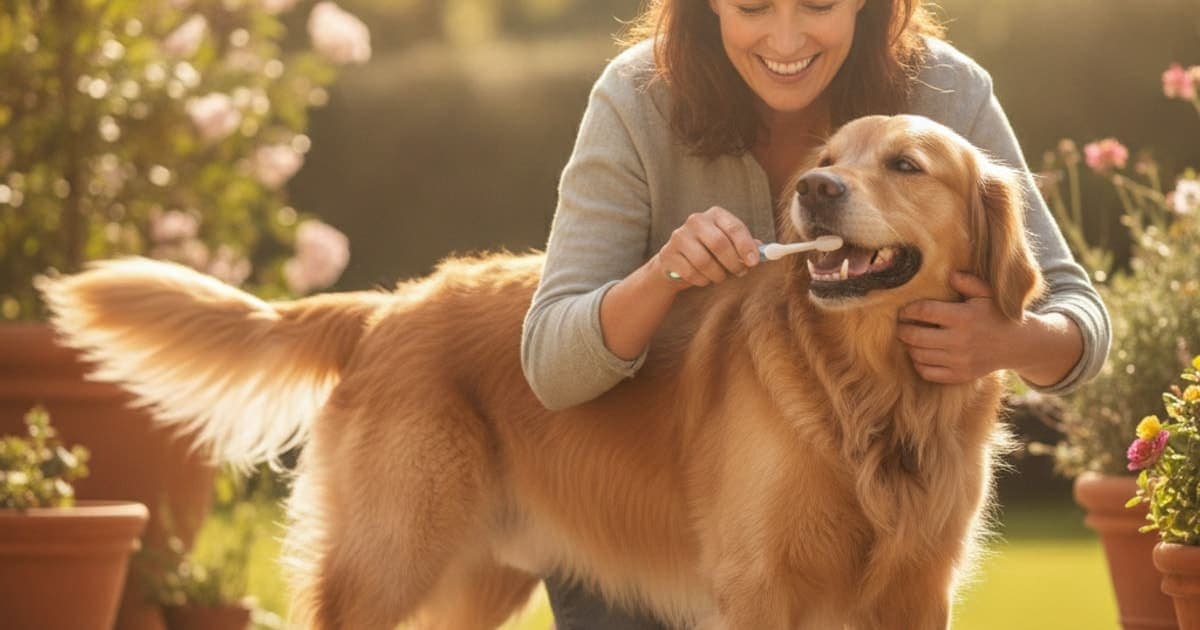
If your dog has gum disease, the next step is a veterinary oral examination — and in most cases a full dental assessment under general anesthesia, with intraoral X-rays and probing of every tooth. That is the only way to find out how far the disease has travelled below the gumline, which teeth can be saved, and whether any need to come out. Professional scaling and polishing, root planing where it is needed, extractions where the tooth is beyond saving, and a home care routine you can actually keep up — that is the whole of real-world gum disease treatment in dogs.
Home care matters enormously. It just works before disease and after treatment, not instead of it.
Why the gumline is the whole story
Plaque is a living bacterial film that starts rebuilding on a clean tooth within hours. Within days it mineralizes into calculus — the hard brown-yellow crust you can see. Calculus itself is not the disease; it is a rough scaffold that holds more plaque against the gum.
The immune response to that plaque causes gingivitis: red, puffy, bleeding gum margins. At this point nothing structural has been lost. If the plaque is removed and kept off, the tissue settles.
Periodontitis is what happens next. Inflammation moves under the gum and begins dismantling the attachment apparatus — the periodontal ligament that suspends the tooth and the alveolar bone that holds the socket. Pockets form. Roots get exposed. Teeth loosen. Veterinarians stage this from mild gingivitis through to advanced attachment loss, based on probing depths and what the X-rays show about bone. The visible crown can look almost normal while the bone around the root is gone, which is exactly why a visual check without radiographs is not a diagnosis.
Periodontal disease lives below the gumline, so the only care that changes its course is performed by a veterinarian with the dog under anesthesia.
What a veterinary dental appointment actually involves
Most clinics call it a COHAT — a comprehensive oral health assessment and treatment. Expect a pre-anesthetic exam and bloodwork, an intravenous catheter, monitored general anesthesia, and then the real work: charting every tooth, probing pocket depths at multiple points, full-mouth intraoral X-rays, scaling above and below the gumline with ultrasonic and hand instruments, and polishing.
Treatment decisions get made on the table, once the X-rays are up. That is normal, and a good clinic will have discussed the likely branches with you beforehand.
If you are nervous about anesthesia — especially with an older dog or one with heart or kidney disease — say so out loud and talk to your veterinarian about the monitoring, the drug protocol and the bloodwork they run first. Age is not a disease, and modern protocols are tailored. What is genuinely risky is leaving infected, painful teeth in a dog's mouth indefinitely because a procedure felt scary.
Be wary of anesthesia-free dental cleaning. Scraping visible calculus off the crown of a conscious dog makes the mouth look tidier and leaves the subgingival disease completely untouched. Veterinary dental specialists broadly advise against it for exactly that reason.
The treatment options a veterinarian will walk through
| Stage | What is happening | Typical veterinary approach | Outlook |
|---|---|---|---|
| Gingivitis only | Inflamed gum margins, no attachment loss | Scaling and polishing, then daily home care | Generally reversible with consistent follow-through |
| Early periodontitis | Shallow pockets, first bone changes on X-ray | Scaling, subgingival debridement, root planing, home care plan | Progression can often be halted; lost attachment does not simply return |
| Moderate periodontitis | Deeper pockets, visible bone loss, possible root exposure | Root planing, locally applied products at the vet's discretion, selective extractions, recheck schedule | Managed, not undone; some teeth saved, some lost |
| Advanced periodontitis | Severe attachment loss, mobile teeth, abscess or oronasal fistula risk | Extraction of affected teeth, periodontal surgery, referral to a board-certified veterinary dentist | The mouth becomes comfortable again; affected teeth are not recovered |
A few things worth understanding about that table.
Extractions are not a failure. Owners often grieve them. A dog with a diseased, mobile, painful tooth removed is a dog who eats better and acts younger within weeks. Dogs are remarkably good at managing with fewer teeth.
Antibiotics are a supporting player, not the treatment. A veterinarian may prescribe them around a procedure or for a specific infection. They do not remove calculus or regrow bone, and courses handed out without a cleaning simply quiet things down while the disease continues. Take them exactly as prescribed, and never stop a prescription early because the mouth looks better.
Pain control is part of the plan. Dogs almost never stop eating because of dental pain — they chew on the other side and carry on. Assume a diseased mouth hurts and follow the pain protocol your vet sends home.
Advanced cases, deep pockets in strategically important teeth, and regenerative techniques such as guided tissue regeneration for specific bone defects are the territory of board-certified veterinary dentists. Ask for a referral if your clinic raises it.
Is gum disease reversible in dogs?
At the gingivitis stage, yes — in practical terms. Remove the plaque and calculus professionally, then keep plaque from re-accumulating, and inflamed gum tissue typically settles back down. That is the window where owner effort genuinely changes the outcome.
Once periodontitis has set in, the honest answer changes. Lost periodontal ligament and lost alveolar bone do not rebuild on their own, and no diet, rinse, chew or supplement regrows them. What treatment achieves at that point is arrest: clearing the infected pockets, removing teeth that cannot be saved, eliminating pain, and stopping further destruction. For the dog living in that mouth, arresting the disease is an enormous win, even though the word "reversible" no longer applies.
So: can you reverse dog gum disease? Early inflammation, often. Established bone loss, no — you halt it.
Home care that works, and the home remedies that don't
This is where the question "can you treat dog gum disease at home?" needs a straight answer: no. At-home care is prevention and maintenance. It is how you keep a clean mouth clean and stretch the interval between professional cleanings. It cannot resolve disease that already sits under the gum.
What has real support behind it:
- Daily toothbrushing with a soft brush and a toothpaste formulated for dogs. Human toothpaste is not appropriate — fluoride is not meant to be swallowed and some products contain xylitol, which is toxic to dogs. Brushing every day beats brushing brilliantly on Sundays.
- Products carrying the Veterinary Oral Health Council seal. The VOHC awards its seal to dental diets, chews, gels and water additives that have met its plaque or tartar reduction standards. It is the most useful filter on a shelf full of claims.
- Appropriate chewing. Skip bones, antlers, hooves and hard nylon — slab fractures of the upper carnassial teeth are a common and expensive consequence.
- Looking in the mouth weekly. Bleeding, recession, a new smell, a loose tooth, facial swelling, dropping food — these go to your veterinarian rather than into a search bar.
On the popular home remedies: coconut oil is frequently suggested, and while lauric acid has antimicrobial activity in laboratory settings, there is no good evidence it resolves periodontal disease in dogs. It does not remove calculus, it does not reach a pocket, and it adds fat calories that matter for dogs prone to pancreatitis. Using it as a brushing medium so your dog tolerates a toothbrush is reasonable. Using it instead of a dental is not.
Vinegar is a worse idea. It is acidic, it can irritate already inflamed gum tissue, and adding it to a water bowl risks a dog drinking less — never a good trade. There is no evidence supporting it as a gum disease remedy.
Be equally skeptical of kitchen-sink dental chews whose labels list fifteen botanicals in unstated amounts. Volume of ingredients is not evidence.
After the procedure: recovery, and where supplements honestly fit
Send-home care is usually soft or moistened food for a stretch, the full prescribed course of any medication, no chewing on hard objects, and a recheck. Brushing resumes once your vet says the tissue has healed — and resuming it is the single thing that determines whether you are back in the same position next year.
It is worth being clear about supplements in general. Nothing given by mouth substitutes for scaling below the gumline, and any brand implying otherwise is selling to your reluctance rather than to your dog's mouth.
pawgen's position on this is straightforward: K9-REPAIR is a BPC-157 and TB-500 peptide formulation built for joint, tendon and mobility recovery. It is not a dental product and is not offered as one. BPC-157 is a peptide studied for its role in tissue repair signalling and new blood vessel formation; TB-500 relates to thymosin beta-4, studied for cell migration and tissue remodelling. Research into these peptides is advancing quickly, and they are increasingly the stack owners reach for through recovery and through the slower, stiffer years — described in terms of what the science suggests, not as a promise about any individual dog. BPC-157 and TB-500 are not FDA-approved veterinary drugs. K9-REPAIR is third-party tested with certificates of analysis published per batch, dosed by body weight, shipped direct to the door, and backed by a 60-day money-back guarantee. Dosing specifics belong in a conversation with your veterinarian — particularly around an anesthetic procedure, and always for puppies or pregnant and nursing dogs.
Key Takeaways
- A veterinary oral exam with intraoral X-rays under anesthesia is the starting point, not an optional upgrade.
- Scaling below the gumline, root planing, selective extractions and prescribed pain control are what actually changes the disease.
- Gingivitis is generally reversible; once bone and attachment are lost, the realistic goal is halting progression and removing pain.
- Daily brushing plus VOHC-accepted products is the maintenance that keeps results.
- Coconut oil, vinegar and anesthesia-free cleanings do not address disease under the gum.
- K9-REPAIR is formulated for joint, tendon and mobility recovery — not for dental disease.
Your veterinarian owns the diagnosis, the staging and the treatment plan for your dog's mouth. Book the exam, ask what the X-rays showed, and ask what the recheck interval should be. Supplements and peptides live in the space that proper veterinary care creates — never in place of it.
More from pawgen: batch certificates of analysis are published for every product, you can check where pawgen ships, and the full range is available at pawgen.
Owners exploring peptide support for their dog can review K9-REPAIR — BPC-157 + TB-500 formulated for dogs — at https://pawgen.com/. BPC-157 and TB-500 are not FDA-approved veterinary drugs. Nothing in this article treats, cures or prevents any condition; every decision about your dog's care belongs with your veterinarian.
Frequently asked questions
- What to do if your dog has gum disease?
- Book a veterinary oral exam. Your vet will likely recommend a full dental assessment under anesthesia with intraoral X-rays, then scaling below the gumline, root planing or extractions as the findings dictate. Afterwards, daily brushing and a recheck schedule keep the result. Talk to your veterinarian before changing anything at home.
- What can you do for dog gum disease?
- Professionally: scaling and polishing above and below the gumline, root planing of deeper pockets, extraction of teeth beyond saving, prescribed pain relief and sometimes antibiotics. At home: daily toothbrushing with dog toothpaste and products carrying the Veterinary Oral Health Council seal. Home care maintains results rather than producing them.
- How to get rid of gum disease in dogs?
- Plaque and calculus must be removed below the gumline, which requires a veterinarian and general anesthesia. Advanced teeth are extracted. From there, consistent daily brushing is what keeps plaque from rebuilding. There is no rinse, chew, diet or supplement that clears established periodontal disease on its own.
- Can you treat dog gum disease at home?
- No. At-home dental care is prevention and maintenance — it keeps a clean mouth clean and stretches the interval between professional cleanings. It cannot reach subgingival pockets or remove mineralized calculus. Once gum disease is established, a veterinary dental procedure is the only approach that changes its course.
- Is dog gum disease reversible?
- At the gingivitis stage, generally yes — professional cleaning plus consistent daily brushing usually lets inflamed gum tissue settle, because no attachment has been lost. Once periodontitis has destroyed periodontal ligament and alveolar bone, those structures do not rebuild. Treatment then aims to halt progression and remove pain.
- Can you reverse dog gum disease?
- Early gum inflammation can usually be reversed with a professional cleaning and daily home care. Established bone loss cannot be reversed by any product or routine. What veterinary treatment achieves at that stage is arresting the disease, clearing infection and making the mouth comfortable — which transforms how a dog feels.
- Does coconut oil help dog gum disease?
- There is no good evidence coconut oil resolves periodontal disease in dogs. Lauric acid shows antimicrobial activity in laboratory settings, but oil does not remove calculus or reach below the gumline. Using it as a brushing medium so your dog tolerates a toothbrush is reasonable; using it instead of a dental is not.
- Is vinegar safe as a dog gum disease home remedy?
- Vinegar is not recommended. It is acidic and can irritate gum tissue that is already inflamed, and adding it to drinking water risks a dog drinking less. No evidence supports it for periodontal disease. Ask your veterinarian before putting any home remedy in your dog's mouth or water bowl.
Educational content, not veterinary advice. Ask your vet about your dog.