When Should I Take a Dog to the Vet for Bunny Hopping?
Book a veterinary exam within a week of noticing a bunny-hopping gait, and go the same day if it appeared suddenly, followed a fall, or comes with yelping, trouble rising, or an unwillingness to bear weight. Bunny hopping usually reflects pain or instability in both hips, knees or the lower spine.
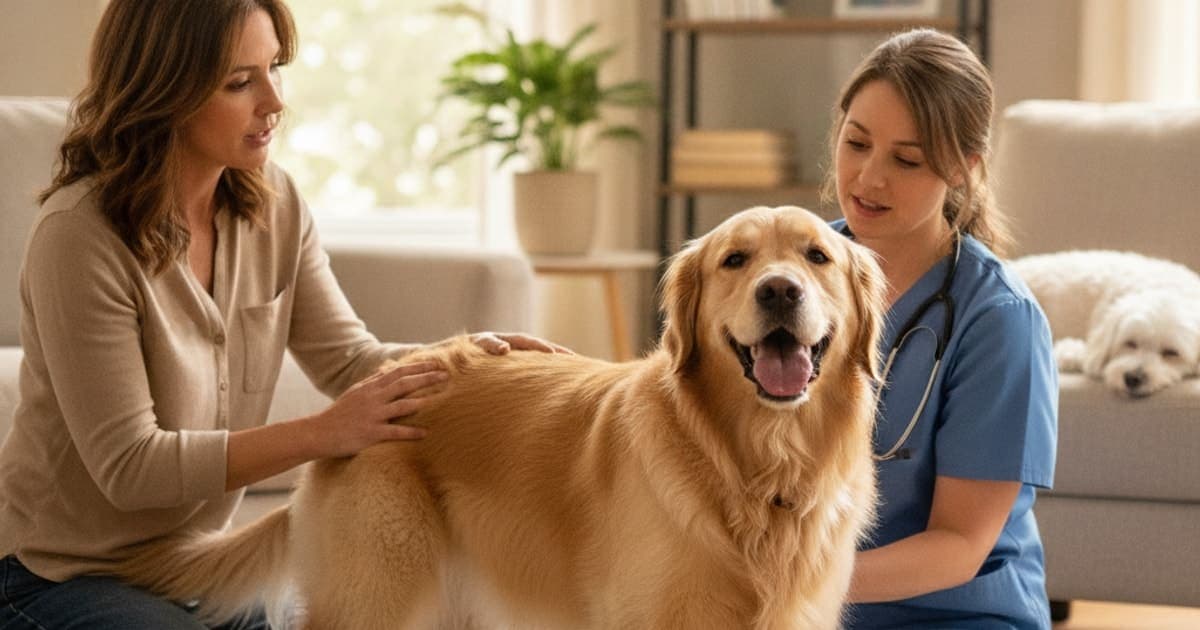
When should I take a dog to the vet for bunny hopping?
Book a veterinary exam within a week of first noticing a bunny-hopping gait — both hind legs swinging forward together like a rabbit instead of alternating — and go the same day if it started suddenly, followed a fall or hard landing, or comes with yelping, trouble rising, dragging toes, or refusal to bear weight.
That urgency isn't caution for its own sake. A hopping gait is a mechanical adaptation, and the earlier a veterinarian identifies what the dog is adapting around, the more options remain on the table — conservative management, weight and conditioning changes, rehab, or surgical planning while the joint is still in reasonable shape.
Bunny hopping is never a training quirk and never a personality trait — it is your dog telling you that something in the hips, knees or lower spine has stopped working normally, and it always deserves a veterinary exam.
Why a dog hops instead of limping
Dogs are excellent at hiding pain, but they are terrible at hiding asymmetry. When one leg hurts, a dog limps: it shortens the stride on that side and shifts weight to the opposite limb. That's easy to see.
When both sides hurt roughly equally, there is no good leg to shift onto. So the dog changes strategy instead. It reduces how far each hip has to extend, keeps the hind end low and stiff, and pushes off with both back legs at once. The result is the rabbit-like gait owners describe as bunny hopping.
This is why bunny hopping so often points to a bilateral problem. The usual suspects a veterinarian will be thinking about include:
- Hip dysplasia — laxity and abnormal fit in the hip joints, most often discussed in large and giant breeds but possible in any dog, including mixes and smaller breeds.
- Cruciate ligament disease — when one knee's cranial cruciate ligament degenerates, the other side frequently follows, and a dog with two unstable stifles will hop rather than limp.
- Lumbosacral or lower spinal pain — compression or degenerative change where the spine meets the pelvis can make hip extension uncomfortable and produce a short, hopping stride.
- Patellar luxation — kneecaps that slip out of the groove can cause a skipping or hopping step, sometimes intermittently.
- Growth-related orthopedic conditions in puppies and adolescents, including panosteitis and developmental joint disease.
One important caveat: a healthy dog cantering flat-out across a field naturally uses both hind legs together. That's normal locomotion at speed. The concerning pattern is hopping at a walk or trot, hopping when the dog gets up from lying down, or hopping that appears after exercise and doesn't settle.
Same-day, this-week, or book-and-monitor
Use the pattern of signs, not the severity of the hop, to decide how fast to move.
| What you're seeing | What it may reflect | How fast to act |
|---|---|---|
| Sudden hopping after a fall, jump or hard play; yelping; won't bear weight | Acute injury to ligament, joint or soft tissue | Same day — call the clinic immediately |
| Knuckling over on the paws, wobbling, incoordination, loss of bladder or bowel control | Possible spinal or neurological involvement | Emergency — go now |
| Hopping plus visible pain when rising, reluctance to jump into the car, crying when touched over the hips or back | Painful joint or spinal condition | Within 24–48 hours |
| Persistent hopping over several days with no obvious trauma, gradual stiffness, muscle loss over the hind end | Chronic joint or developmental disease | Within the week |
| A large-breed puppy that hops during play, sits with legs splayed to one side, or tires early | Developmental orthopedic disease | Within the week — early assessment matters most in growing dogs |
| Intermittent hop only after unusually hard exercise, resolving fully with rest | Overuse or minor soft-tissue strain | Book a routine appointment and film it |
If you're weighing the difference between "today" and "this week," err toward today. Nothing is lost by an early exam, and quite a lot can be lost by waiting out a joint that is quietly remodelling.
What the appointment actually involves
Knowing the shape of the visit makes it easier to prepare — and better preparation genuinely changes the quality of the diagnosis.
Film your dog before you go. Hopping is notorious for vanishing in the exam room. Record short clips of your dog walking away from and toward the camera on a flat, non-slip surface, trotting, and standing up from a down. Show the videos to your veterinarian at the start of the appointment.
Expect a gait assessment first, then a hands-on orthopedic exam: palpation of the hips, stifles, hocks and lumbosacral junction, range-of-motion testing, and specific manipulations that check for joint laxity or instability. Some of those tests — particularly hip laxity assessment and cruciate stability testing — are difficult to perform accurately on a tense, painful dog, so your vet may recommend sedation. That's routine, and it's often the difference between a guess and an answer.
Radiographs are common, usually under sedation for correct positioning. Depending on findings, your veterinarian may discuss advanced imaging or referral to a board-certified veterinary surgeon or rehabilitation specialist. A neurological exam is typically included when the gait change involves any hint of weakness or incoordination.
Ask your veterinary team ahead of time whether to withhold food in case sedation is needed, and bring a written list of everything your dog currently takes — prescriptions, joint supplements and anything else.
What if my dog is a puppy, an athlete, or a senior?
Growing puppies and adolescent large breeds
A hopping gait in a dog under about eighteen months is a reason to book sooner rather than later, because growth is a moving target. Rapid growth rate, body condition and exercise loading all interact with developing joints, and these are exactly the variables a veterinarian can help you adjust while the skeleton is still forming. Do not start any supplement, joint product or peptide in a growing puppy without your veterinarian's direct guidance — that includes anything sold for adult dogs.
The adult dog who hops after hard exercise
A weekend-warrior dog who bunny hops after two hours of fetch and looks fine by Tuesday is still telling you something. It usually means the tissue load exceeded the tissue's current capacity. Reduce high-impact repetition — repetitive fetch, hard turns, jumping from heights — and get the gait assessed rather than assuming it will condition itself out. Repeated micro-strain in a stifle is one of the well-recognised routes toward cruciate degeneration.
The senior dog whose hop crept in slowly
Gradual is not benign. A hop that developed over months, alongside muscle loss over the hindquarters and difficulty rising, is a pain pattern, not "just age." Senior dogs benefit enormously from an accurate diagnosis, because pain management, controlled exercise and weight optimisation are far more effective when they are aimed at a specific joint or spinal segment.
Supporting the plan your vet builds
Once your veterinarian has a diagnosis, the plan usually combines several levers: prescribed pain control, controlled leash exercise, traction on slippery floors, weight management, and often a structured rehabilitation programme. Follow it as written. If your dog is on a prescribed medication, keep giving it exactly as directed and raise any concerns with the prescribing vet rather than stopping on your own.
Inside that plan, owners look for ways to support the connective tissue doing the repair work — and this is where the supplement aisle earns its bad reputation. Kitchen-sink chews stacked with a dozen ingredients at trace amounts, proprietary blends that hide how little of anything is present, and labels that lean on marketing rather than testing are genuinely worth being skeptical about.
pawgen took a different route with K9-REPAIR, a canine formulation combining two peptides that owners increasingly use through mobility and soft-tissue recovery: BPC-157 and TB-500. BPC-157 is a synthetic peptide sequence derived from a protein found in gastric juice; published laboratory research suggests it may support tendon and ligament fibroblast activity and the formation of new blood vessels in injured tissue. TB-500 is a synthetic fragment related to thymosin beta-4, an actin-binding protein that research describes as involved in cell migration and blood vessel formation — the same processes that underpin how connective tissue reorganises after damage.
That is a mechanism story, not an outcome promise. BPC-157 and TB-500 are not FDA-approved veterinary drugs, and nothing here should be read as a claim that any product treats or resolves hip dysplasia, cruciate disease, spinal pain or anything else. What pawgen can state plainly is what's in the bottle: a defined peptide formulation, third-party tested with certificates of analysis available, dosing guidance built around your dog's weight, shipped direct to your door, and backed by a 60-day money-back guarantee. The specific amount for your dog is a conversation to have with your veterinarian — never a number to pick off the internet.
Key Takeaways
- Bunny hopping means both hind legs swing together at a walk or trot — it is an adaptation to bilateral pain or instability, not a habit.
- Book a veterinary exam within a week of noticing it; go the same day for sudden onset, trauma, yelping, non-weight-bearing, knuckling or incoordination.
- Common findings include hip dysplasia, cruciate ligament disease, lumbosacral pain and patellar luxation — several of which can affect both sides at once.
- Film the gait before the appointment; hopping frequently disappears in the exam room.
- Growing puppies deserve earlier assessment, and no supplement or peptide should be started in a puppy without direct veterinary guidance.
- Diagnosis first, support second — supplements and peptides work inside a veterinary plan, never instead of one.
If the exam points toward a soft-tissue strain rather than a structural joint problem, it's worth reading up on what helps a dog with sprained leg and how long does sprained leg take to heal in dogs so your expectations for the recovery window are realistic. Owners looking at the peptide side of recovery can read the formulation details and testing documentation for K9-REPAIR.
Your veterinarian owns the diagnosis and the treatment plan — the imaging, the pain protocol, the surgical decision and the rehab schedule. That is the structure everything else fits inside. Supplements and peptides operate in the space proper veterinary care creates: they support the conditions in which tissue does its own repair work, while the clinical decisions stay exactly where they belong.
Owners exploring peptide support for their dog can review K9-REPAIR — BPC-157 + TB-500 formulated for dogs — at https://pawgen.com/. BPC-157 and TB-500 are not FDA-approved veterinary drugs. Nothing in this article treats, cures or prevents any condition; every decision about your dog's care belongs with your veterinarian.
Frequently asked questions
- Should I worry if my dog is sensitive lower back?
- Yes, it warrants attention. Lower back sensitivity in dogs often reflects spinal, disc or lumbosacral pain, or muscle guarding around an underlying joint problem. It is not something to stretch out or massage away at home. Note when it appears, avoid pressing on the area, and arrange a veterinary exam.
- When should I take a dog to the vet for sensitive lower back?
- Go the same day if there is yelping on touch, weakness, wobbling, knuckling of the paws, or any loss of bladder or bowel control, as those suggest spinal cord involvement. For mild sensitivity without neurological signs, book within a few days and restrict jumping and stairs meanwhile.
- What can I give a dog that is sensitive lower back?
- Nothing from your own medicine cabinet — human anti-inflammatories can be dangerous to dogs. Pain relief should be prescribed by your veterinarian after an exam. Alongside that plan, owners often add joint and connective-tissue support such as peptide formulations, but the timing, product and amount should be agreed with your vet.
- Is a dog sensitive lower back an emergency?
- It can be. Treat it as an emergency if back pain comes with hind-limb weakness, dragging or knuckling paws, inability to stand, or incontinence, since those point to possible spinal cord compression where time matters. Isolated mild tenderness without neurological signs still needs a prompt appointment, not a wait-and-see approach.
- Why is my dog not wanting to play?
- Reduced interest in play is most commonly a pain signal, particularly orthopedic pain in hips, knees or the spine that makes running and turning uncomfortable. It can also reflect systemic illness, fever, dental pain or low-grade nausea. Because the causes range widely, a veterinary exam is the sensible next step.
- Should I worry if my dog is not wanting to play?
- Yes, if it is a genuine change from your dog's normal baseline rather than a quiet day. Dogs rarely opt out of play they enjoy unless something hurts or they feel unwell. Note appetite, gait, sleep and drinking alongside it, and book a veterinary appointment.
- Can bunny hopping in dogs go away on its own?
- Sometimes the visible hop settles, but that does not mean the underlying cause resolved. Dogs compensate well, so gait can normalise while joint laxity, ligament degeneration or spinal change continues quietly. A hop that comes and goes still deserves an exam, ideally with video of the gait recorded at home.
- What should I bring to the vet appointment for a hopping gait?
- Bring short videos of your dog walking, trotting and rising from a down on non-slip flooring, a written timeline of when the hopping started and what worsens it, and a full list of current medications and supplements. Ask in advance whether to withhold food in case sedation is needed.
Educational content. BPC-157 and TB-500 are not FDA-approved veterinary drugs. Talk to your veterinarian before starting anything new, especially if your dog is on prescribed medication.