When to See a Vet for a Dog Reluctant to Be Touched?
See a veterinarian within about a day if your dog has suddenly become reluctant to be touched, and go immediately if flinching comes with yelping, a hunched back, a tense belly, wobbling, or out-of-character growling. Touch aversion is a pain signal until an exam proves otherwise.
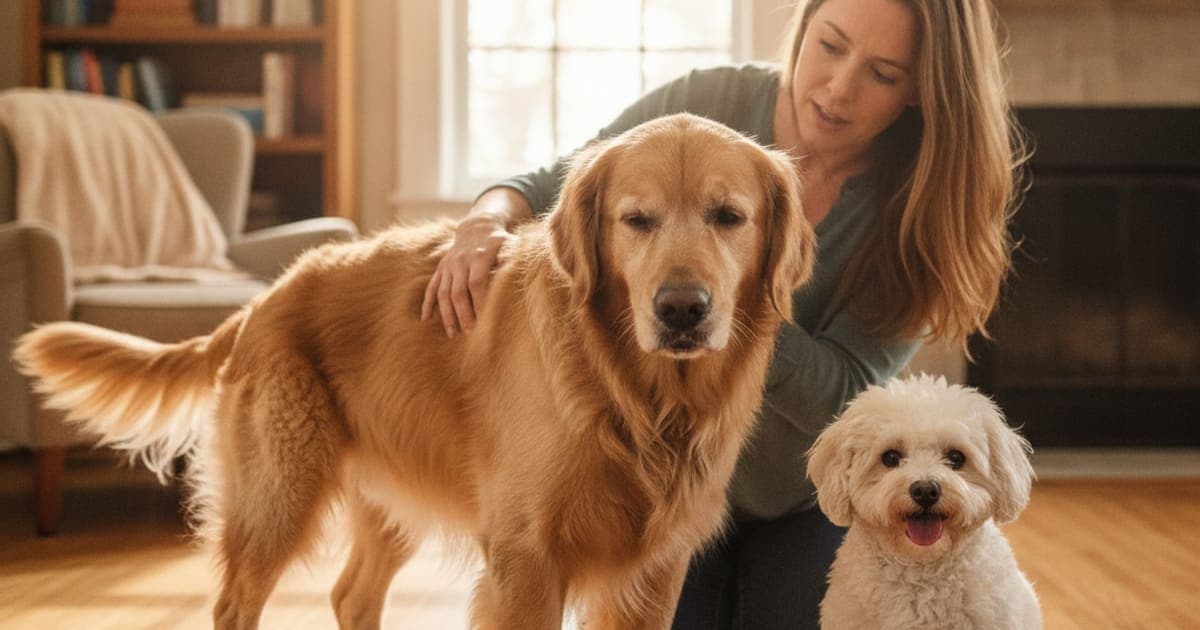
When Should I Take a Dog to the Vet for Being Reluctant to Be Touched?
Take your dog to a veterinarian within about a day if they have suddenly become reluctant to be touched, and go immediately if the flinching comes with yelping, a hunched or roached back, a hard or swollen belly, wobbling, dragging a limb, vomiting, refusal to eat, or growling that is out of character. Touch aversion that lasts more than a day or two always deserves an exam.
Dogs do not become "moody" for no reason. A dog who has always leaned into a scratch and now slides away from your hand, tightens up when you reach for the collar, or turns their head toward you as you run a hand down their back is telling you something specific about their body. Any dog that has become reluctant to be touched has changed for a reason, and until a veterinarian has examined them you should treat that reluctance as pain rather than attitude.
Red flags that turn this into a same-day visit
Some combinations of signs move a dog from "book an appointment" to "go now." Call your veterinary clinic or the nearest emergency service the same day if touch sensitivity comes with any of the following:
- Yelping, screaming, or snapping when touched or lifted
- A hunched, roached, or arched back, or a head held low and stiff
- A tense, distended, or drum-tight abdomen, especially with unproductive retching
- Trembling or heavy panting while resting in a quiet room
- Wobbling, stumbling, knuckling over on a paw, or dragging a limb
- Sudden inability to jump onto the sofa or climb stairs a dog used to manage easily
- Not eating, not drinking, or hiding in unusual places
- Visible swelling, heat, a wound, or a limb held at an odd angle
- Recent trauma — a fall, a car, a scuffle with another dog, a hard landing off a bed
Neck and spinal pain is the reason many owners are urged not to wait. A dog with a painful disc may hold their head unnaturally still, cry when asked to look up, or resist being picked up around the chest. Neurological signs alongside touch pain — weakness, incoordination, loss of bladder control — are emergencies, because the window in which conventional treatment works best can be narrow.
What "don't touch me" usually means underneath
Touch sensitivity is a symptom, not a diagnosis, and the list of possible sources is long. Broadly, it falls into a few groups.
Muscle and soft tissue. Strained muscles and tendons are among the most common reasons a dog guards one region. An iliopsoas strain in the inner thigh and groin, a shoulder or biceps injury, or a strained lumbar muscle can make a dog flinch when handled in a specific spot while behaving normally everywhere else. These injuries often follow a slip on a hard floor, a hard turn at speed, or a jump from height.
Joints and bone. Osteoarthritis, hip or elbow dysplasia, a partially torn cruciate ligament, or bone pain can all make handling uncomfortable. Arthritic dogs frequently object to being touched over the hips or having a hind leg extended.
Spine and nerves. Intervertebral disc disease, spondylosis, and nerve root compression produce pain that is often worse on movement and can make a dog resist any contact along the back or neck.
Abdomen. Pancreatitis, a gastrointestinal obstruction, an enlarged organ, urinary problems, or bloat can all present as a dog who will not let you near the belly. Abdominal guarding is one of the fastest routes to the emergency clinic.
Head, ears, mouth, and skin. Ear infections, dental disease, eye pain, anal gland problems, hot spots, and skin infections all create very localised no-go zones.
Whole-body and systemic causes. Fever, tick-borne illness, immune-mediated disease, and generalised muscle inflammation can make a dog sore everywhere at once.
Non-pain causes. Not every touch-shy dog hurts. Vision or hearing loss can make contact startling. Canine cognitive dysfunction in senior dogs changes how they process being approached. Fear, a bad past experience, or noise sensitivity can also drive it. A veterinarian sorts pain from perception — that is exactly what the exam is for.
Same-day, this week, or watch closely
Use this as a triage guide, not a substitute for a phone call to your clinic. When in doubt, phone them and describe what you are seeing.
| What you are seeing | How urgent | Why it matters |
|---|---|---|
| Yelping on touch, hunched back, rigid neck | Emergency — go now | Consistent with acute spinal or disc pain, where time matters |
| Tense or swollen belly, retching, restlessness | Emergency — go now | Abdominal emergencies including bloat progress fast |
| Wobbling, knuckling, dragging a limb, collapse | Emergency — go now | Neurological signs need urgent assessment |
| Sudden touch aversion after a fall, jump, or scuffle | Same day | Trauma can hide fractures and deep soft tissue injury |
| Growling or snapping in a dog who never has | Same day | Out-of-character aggression is very often pain |
| Flinching in one specific spot, otherwise normal | Within a few days | Points toward a localised muscle, joint, ear, or skin problem |
| Gradual reluctance over weeks in a senior dog | Book an exam this week | Often arthritis, dental disease, or sensory change — all manageable |
| Touch-shy only around the head or one ear | Book an exam this week | Ear and dental pain are easy to miss and easy to confirm |
| Shy of hands but eating, moving, and sleeping normally | Monitor and record | Still worth a call, especially if it persists past a couple of days |
How to describe it so your vet can find the problem fast
The single most useful thing you can bring to the appointment is information. A dog who is stoic in the exam room may show nothing at all, so your notes carry weight.
- Film it. A short video of the flinch, the posture, or the gait tells a veterinarian more than a paragraph of description.
- Map the body. Note which areas provoke a reaction and which do not — back, neck, hips, groin, one shoulder, one ear.
- Time it. Worse first thing in the morning? After exercise? Only when being lifted? Cold weather?
- Note what changed. New stairs, a new dog in the house, a long hike, a slippery new floor, a recent grooming visit.
- List everything they take. Prescriptions, joint supplements, chews, and anything else. Bring the labels.
Do not give human painkillers. Ibuprofen, paracetamol, naproxen, and aspirin range from unhelpful to genuinely dangerous in dogs, and they can complicate the exam and the bloodwork that follows. If your dog is in pain, your veterinarian has safe options and can dose them properly for your dog's weight and health history.
What if the sensitivity comes and goes?
Intermittent touch aversion is common and often points somewhere useful.
The dog who only flinches around the hindquarters or lower back
This pattern frequently involves the hip region, the lumbar muscles, the sacroiliac area, or the iliopsoas group deep in the groin. Owners often notice it first when towel-drying, brushing, or lifting the dog into a car. It is worth an exam because the differential list includes both simple muscle strain and disc disease.
The senior who became touchy over weeks
Slow-onset sensitivity in an older dog usually reflects something that built gradually — arthritis, dental disease, or reduced vision and hearing. It is easy to write off as ageing. It should not be. Pain in a senior dog is manageable, and a proper diagnosis with a veterinarian is what makes that possible.
The dog who is fine standing but hates being picked up
Dogs who resist being lifted often have chest, shoulder, spinal, or abdominal discomfort. The lift compresses or twists something that is quiet at rest. Change how you lift them — support the chest and hindquarters together — and get the underlying cause examined.
Supporting the body through the recovery window
Once your veterinarian has made the diagnosis and set the plan — rest, imaging, prescribed pain relief, rehab, or surgery — the plan comes first, every time. Soft tissue and joint recovery is slow work. Tendon and ligament tissue is poorly vascularised compared with muscle, and the tendon-bone interface remodels over weeks, not days. That long, quiet stretch after the appointment is where owners look for something constructive to do.
That is the window pawgen built K9-REPAIR for. It combines two peptides that have drawn serious research interest for soft tissue biology: BPC-157, which research suggests may support angiogenesis and the migration of the fibroblasts that lay down new collagen, and TB-500, a synthetic fragment related to thymosin beta-4, which early evidence indicates may play a role in cell migration and tissue remodelling. This is emerging, promising science that a growing number of owners are adopting alongside veterinary care — not a treatment, and not a substitute for anything your vet has prescribed. BPC-157 and TB-500 are not FDA-approved veterinary drugs, and nothing here should be read as an outcome promise for your dog.
What pawgen will say plainly is what is in the bottle: two named peptides, dosed by body weight rather than a single scoop for every dog, third-party tested with certificates of analysis, shipped direct to your door, and backed by a 60-day money-back guarantee. That is a deliberate contrast with the kitchen-sink chew aisle, where a dozen ingredients appear on a label at doses too small to mean anything and the marketing does the heavy lifting. Point your scepticism at underdosed blends and proprietary-formula labels that hide their numbers — that is where it belongs.
Tell your veterinarian about anything you add, including K9-REPAIR, so it sits inside one coherent plan rather than beside it.
Key Takeaways
- Sudden reluctance to be touched is a pain signal until a veterinary exam says otherwise.
- Go immediately for yelping, a hunched back or rigid neck, a tense belly, wobbling, collapse, or out-of-character aggression.
- Book within days for localised flinching, and this week for gradual change in a senior dog.
- Bring video, a body map of where the reaction occurs, and a full list of medications and supplements.
- Never give human painkillers — your veterinarian has safe, correctly dosed options.
- Soft tissue heals slowly; the recovery window is where owners use K9-REPAIR alongside the plan their vet set.
If you want to read further on the muscle injuries that most often make a dog guard the groin and hind end, pawgen covers whether is iliopsoas strain in dogs painful and what makes iliopsoas strain worse in dogs, and details on K9-REPAIR are on the main site.
Your veterinarian owns the diagnosis and the treatment plan — the exam, the imaging, the pain protocol, the rehab schedule, and the decision about surgery. Peptides and supplements operate only in the space that proper veterinary care creates. Get the appointment on the calendar first, then build support around it.
Owners exploring peptide support for their dog can review K9-REPAIR — BPC-157 + TB-500 formulated for dogs — at https://pawgen.com/. BPC-157 and TB-500 are not FDA-approved veterinary drugs. Nothing in this article treats, cures or prevents any condition; every decision about your dog's care belongs with your veterinarian.
Frequently asked questions
- Should I worry if my dog is reluctant to go up stairs?
- Yes, it is worth taking seriously. Stairs load the hips, stifles, lower back and shoulders more than flat walking, so refusing them is often the first visible sign of arthritis, a soft tissue strain or spinal pain. Book a veterinary exam rather than assuming your dog is simply slowing down.
- When should I take a dog to the vet for reluctant to go up stairs?
- Go the same day if stair refusal appears suddenly, or comes with yelping, wobbling, knuckling, dragging a limb or a hunched back. If the change has crept in over weeks in an older dog, book an exam within the week — gradual does not mean harmless, it usually means progressive.
- What can I give a dog that is reluctant to go up stairs?
- Start with your veterinarian, who can diagnose the cause and prescribe appropriate pain relief. Never give human painkillers. Practical help includes ramps, non-slip runners on hard floors, and controlled exercise. Many owners also use K9-REPAIR, a BPC-157 and TB-500 formulation, alongside the plan their vet has set.
- Is a dog reluctant to go up stairs an emergency?
- Not always, but it can be. Treat it as an emergency if refusal is sudden and paired with crying out, a rigid or hunched spine, weakness in the hind legs, knuckling, incoordination or loss of bladder control. Those signs can indicate acute disc disease, where prompt veterinary assessment matters.
- Why is my dog falling over?
- Falling over points toward a neurological, vestibular, cardiac or metabolic problem rather than simple soreness. Possible causes include vestibular disease, spinal cord compression, low blood sugar, seizures, toxin exposure, heart rhythm problems and inner ear infection. A dog who is losing balance needs a veterinary examination without delay.
- Should I worry if my dog is falling over?
- Yes. Loss of balance is one of the clearer signals that something systemic or neurological is involved, and it is not a symptom to monitor at home. Contact your veterinarian or an emergency clinic straight away, and film an episode if you safely can — video helps enormously with diagnosis.
- Should I worry if my dog is reluctant to be touched?
- Yes, particularly if it is new. Dogs rarely change how they accept handling without a reason, and pain is the most common one. Note exactly where the reaction happens and whether it is constant or intermittent, then have your veterinarian examine those areas rather than waiting it out.
- Can peptides help a dog that is sore to touch?
- BPC-157 and TB-500 are peptides that research suggests may support processes involved in soft tissue repair, and owners report using them through recovery. They are not FDA-approved veterinary drugs and are not a treatment for any condition. Talk to your veterinarian about anything you add to your dog's routine.
Educational content. BPC-157 and TB-500 are not FDA-approved veterinary drugs. Talk to your veterinarian before starting anything new, especially if your dog is on prescribed medication.